Trafigura Orchestrates Major Aluminum Smelter Investment in Egypt Amidst Global Supply Volatility
By Staff Writer, USA Mining News
May 6, 2026 – In a strategic move poised to significantly reshape the global aluminum supply landscape, commodity trading titan Trafigura has announced it is engaged in active negotiations with the Egyptian Aluminium Company (Egyptalum) and the Metallurgical Industries Holding Company (MIH) for the construction of a substantial new aluminum smelter in Egypt. This ambitious project, detailed in a term sheet signed recently, underscores the growing imperative for supply chain diversification and resilience within the international metals industry, particularly in light of ongoing geopolitical tensions.
A Strategic Partnership for Industrial Expansion
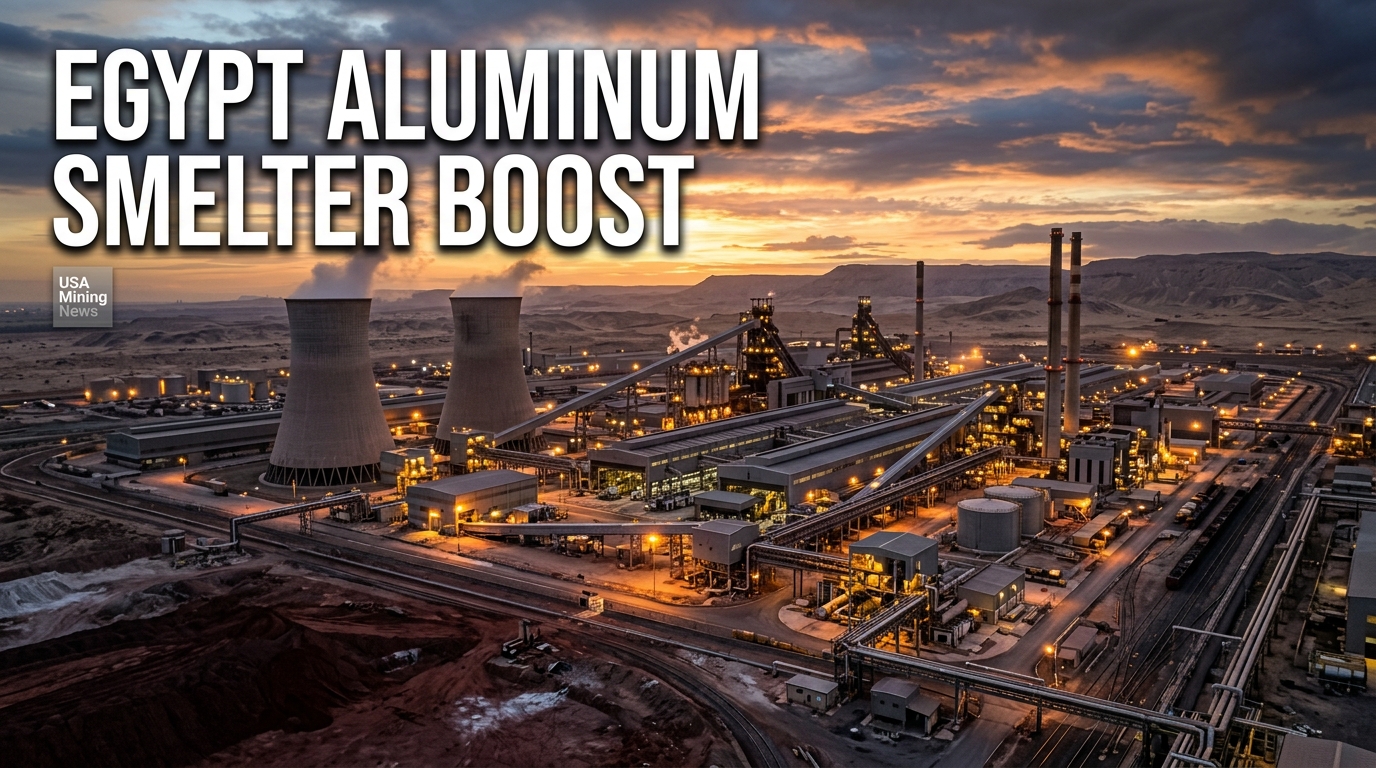
The proposed venture outlined in the newly signed term sheet envisions the establishment of a specially incorporated company tasked with the construction, ownership, and operation of a state-of-the-art 300,000-tonne-per-annum (tpa) primary aluminum smelter. Complementing this core facility will be an integrated 150,000-tpa anode plant, critical for the electrolytic process that produces primary aluminum. Both facilities are slated to be co-located at Egyptalum’s existing Nag Hammadi complex, leveraging established infrastructure and operational expertise. This integration of anode production is a strategic choice, ensuring a secure and efficient supply of essential raw materials for the smelting process and reducing reliance on external sourcing for a key consumable.
Trafigura, a global leader in commodity trading and logistics, will participate in this new company not merely as a commercial counterparty but as a multi-faceted strategic partner. Its involvement will span several crucial roles:
- Minority Equity Investor: Demonstrating direct financial commitment and shared risk in the project’s success.
- Debt Provider: Contributing essential financing for the capital-intensive construction phase.
- Long-Term Offtake Counterparty: Guaranteeing a market for a significant portion of the smelter’s output, providing revenue stability.
- Feedstock Supply Counterparty: Ensuring the consistent provision of critical raw materials, such as alumina, which Trafigura has historically supplied to Egypt.
This comprehensive involvement highlights Trafigura’s deep strategic interest in securing future flows of a vital industrial metal and reinforces its commitment to the project’s long-term viability and success.
Operational Scale and Investment Magnitude
The scale of this proposed expansion is significant for Egyptalum and for Egypt’s industrial footprint. Trafigura estimates that once fully operational, the new facilities will nearly double the Nag Hammadi site’s current annual production capacity. This substantial increase in output would position Egypt as a much more prominent player in the regional and global aluminum markets.
The total investment costs projected for this ambitious undertaking are estimated to be between $750 million and $900 million. This considerable capital outlay underscores the size and complexity inherent in establishing world-class primary aluminum production facilities. Historically, aluminum smelters are among the most capital-intensive industrial projects, requiring significant upfront investment in power generation or access, sophisticated processing equipment, and specialized infrastructure. Such an investment range indicates a commitment to modern, efficient, and technologically advanced operations designed for long-term competitiveness.
Addressing Global Supply Shortfalls and Geopolitical Impacts
This initiative by Trafigura, Egyptalum, and MIH arrives at a particularly critical juncture for the global aluminum market. The industry has been grappling with significant supply disruptions and escalating demand, exacerbating an already tight market. A primary driver of recent volatility has been the ongoing conflict in the Middle East, which has had tangible impacts on regional output. Strikes on key smelters in both the United Arab Emirates (UAE) and Bahrain have crippled production in the Gulf region, an area that historically accounts for approximately 9% of the world’s total aluminum supply. This unforeseen reduction from a significant production hub has sent ripples through global supply chains.
While China, the world’s largest producer and consumer of aluminum, has provided some relief to global buyers, with its exports projected to hit record levels this year, its ability to fully alleviate the international shortage is constrained. The majority of China’s primary aluminum supply is still expected to remain within its domestic market, partly due to Beijing’s existing tariffs on exports and robust internal demand driven by its expansive manufacturing and infrastructure sectors. Consequently, despite high Chinese output, the availability of primary aluminum in markets outside China remains historically low.
Trafigura’s own market analysis further emphasizes this scarcity, estimating that over the past decade, the world outside of China has drawn down a staggering 6 million tonnes of aluminum inventory. This sustained depletion has left global stocks at critically low levels, making the market highly susceptible to further disruptions and price volatility. Against this challenging backdrop, Gonzalo De Olazaval, Trafigura’s head of metals and minerals, highlighted the strategic importance of the new Egyptian smelter in a press release. He stated, “The new smelter will provide an important additional source of primary aluminum — supporting supply chain diversification and resilience across global markets.” This project directly addresses the urgent need for new, stable, and strategically located sources of the lightweight metal, crucial for industries ranging from automotive and aerospace to construction and renewable energy.
Trafigura’s Expanding Footprint and Deep-Rooted Egyptian Ties
This proposed smelter project is not an isolated venture but rather a natural evolution of Trafigura’s longstanding and robust commercial relationship with Egypt. The company has maintained a significant presence in the North African nation for over 20 years, establishing itself as one of Egypt’s largest suppliers of essential commodities. This includes a consistent supply of metals, most notably alumina – a key precursor to aluminum production – which Trafigura has supplied to Egypt since 2005. Beyond metals, Trafigura is also a major supplier of liquefied natural gas (LNG) to the country, highlighting its broad engagement with Egypt’s energy and industrial sectors.
Gonzalo De Olazaval further elaborated on the significance of the partnership, stating, “A significant milestone has been reached with the signing of the term sheet and the start of exclusive negotiations. We are pleased to be working with Egyptalum, a counterparty with proven expertise in the aluminum industry, and to have the support of the Egyptian government through MIH. By building on existing facilities, Egypt has the potential to become a major producer, and we look forward to supporting the country in realizing that ambition.” This statement underscores the strategic synergy between Trafigura's global trading capabilities, Egyptalum's operational expertise, and the Egyptian government’s industrial development objectives.
Furthermore, the Egyptian project aligns seamlessly with Trafigura’s broader corporate strategy to secure long-term flows of metal to supply its diverse global customer base. The company recently underscored this commitment through a similar investment in a new smelter currently under development in Indonesia. These strategic investments in new production capacities reflect Trafigura’s proactive approach to future-proofing its supply chains and mitigating the risks associated with an increasingly volatile global commodity market.
Implications for Egypt and the Global Aluminum Market
For Egypt, the successful execution of this project would represent a substantial leap forward in its industrialization efforts, particularly within the energy-intensive realm of primary metals production. The nearly doubled capacity at Nag Hammadi would enhance the country's economic diversification, create high-value employment opportunities, and establish Egypt as a more significant regional industrial powerhouse. The sustained government support through the Metallurgical Industries Holding Company indicates a strong national commitment to fostering such strategic long-term investments. Given aluminum smelting's high energy demands, Egypt's emerging role as an LNG supplier and its broader energy strategy will be crucial enablers for the project’s competitiveness and sustainability.
Globally, the new Egyptian smelter offers a beacon of hope for market stability. Adding 300,000 tpa of primary aluminum capacity, roughly equivalent to a significant portion of the deficits observed in the past decade outside China, provides a much-needed buffer against ongoing supply shocks. It promotes supply chain diversification by offering an alternative source that is geographically distinct from traditional production hubs currently facing geopolitical risks. This contributes to greater global market resilience, a critical factor for manufacturers relying on a stable and affordable supply of aluminum.
Future Outlook and Next Steps
While the signing of the term sheet signifies a major step forward, the project remains in the phase of exclusive negotiations. The involved parties will now work diligently to finalize the definitive agreements required to move from concept to construction. This process typically involves detailed engineering studies, environmental impact assessments, securing financing, and obtaining all necessary regulatory approvals. While no specific timeline for groundbreaking or production commencement has yet been announced, the rapid progression to a term sheet underscores the strategic importance and urgency attached to this collaboration.
As the global mining and metals industry continues to navigate complex geopolitical landscapes and evolving demand patterns, strategic investments like Trafigura’s proposed Egyptian smelter will be instrumental in ensuring robust and reliable supply chains. For investors and industry professionals, this development represents a clear signal of continued confidence in the demand for primary aluminum and a proactive approach to addressing the structural imbalances currently defining the market.