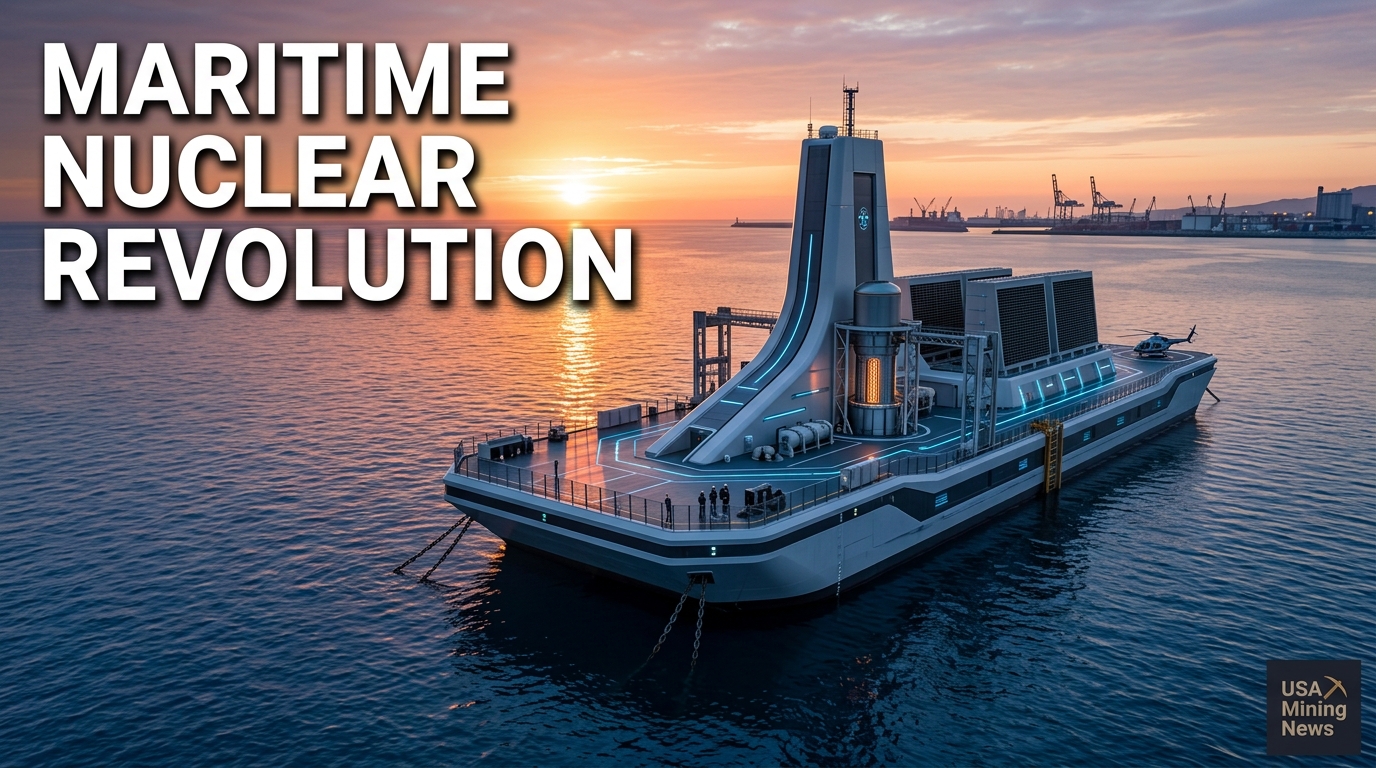
WASHINGTON – The global energy landscape is poised for a significant transformation within the maritime sector, as the United States prepares to host the ministerial launch of the International Atomic Energy Agency’s (IAEA) new initiative, Atomic Technologies Licensed for Applications at Sea (ATLAS). Scheduled for August 26–27, 2026, in Washington, D.C., this pivotal event will gather ministers, policymakers, and industry leaders from across the globe to advance the secure and safe integration of nuclear technologies into maritime operations. This initiative is expected to have far-reaching implications, not least for the mining industry, which supplies the foundational materials for these advanced nuclear solutions.
The ATLAS Initiative: Forging a Global Framework for Maritime Nuclear
The core objective of the ATLAS initiative is to establish a robust international framework designed to navigate the intricate legal and regulatory complexities associated with deploying nuclear applications at sea. This framework is critical for enabling the widespread and responsible adoption of these innovative technologies. Building upon the IAEA’s extensive global authority and unparalleled experience in nuclear safety, security, and safeguards, ATLAS will provide a standardized, high-integrity platform to support the next generation of civil nuclear deployments.
A key principle of ATLAS is its technology-neutral approach. This ensures that the initiative can accommodate a diverse range of advanced nuclear designs and applications while consistently upholding the highest international standards for safety, security, and nonproliferation. By focusing on these fundamental tenets, ATLAS aims to foster confidence and facilitate the responsible expansion of nuclear energy into new maritime domains.
Strategic Leadership and Vision from Key Players
The United States Department of Energy (DOE) is spearheading the hosting efforts, signaling America's strong commitment to advanced nuclear innovation. U.S. Secretary of Energy Chris Wright articulated the nation’s strategic priorities, stating, “DOE remains focused on unleashing American energy dominance, accelerating innovation, and advancing sources of energy that are affordable, reliable, and secure for the American people.” Secretary Wright emphasized that hosting the ATLAS launch directly supports this mission, strategically positioning the U.S. nuclear and maritime sectors at the vanguard of advanced energy innovation, while simultaneously promoting global safety and security.
The IAEA, under the leadership of Director General Rafael Mariano Grossi, views nuclear energy as a crucial solution for the maritime industry's pressing challenges. Director General Grossi highlighted the current crossroads facing the global maritime sector, which grapples with immense pressure to maintain long-distance, high-speed operations while ensuring reliability and energy security. He declared, “Nuclear energy is fast emerging as a game-changer. Small modular reactors offer a safe and viable option for maritime transport and offshore energy systems—delivering high energy density and long operating cycles that eliminate the need for frequent refueling.” These intrinsic advantages, Grossi noted, position the maritime sector at the forefront of advanced energy innovation.
Advanced Applications: FNPPs and Nuclear-Powered Vessels
The ATLAS initiative specifically targets the deployment of advanced nuclear applications such as floating nuclear power plants (FNPPs) and civil nuclear-powered ships. These technologies leverage the significant advancements in reactor design, particularly Small Modular Reactors (SMRs). SMRs are characterized by their compact size, modular construction, and enhanced safety features, offering distinct advantages for maritime applications.
- High Energy Density: SMRs provide a substantial amount of power from a relatively small footprint, making them ideal for space-constrained maritime vessels and offshore platforms.
- Long Operating Cycles: Unlike conventional fossil fuel systems that require frequent refueling, SMRs can operate for many years (often 5-10 years or more) without needing to be refueled, significantly reducing operational downtime and logistical complexities.
- Reduced Emissions: As a carbon-free energy source during operation, maritime nuclear power offers a pathway for the shipping industry to meet increasingly stringent emissions reduction targets and decarbonization goals.
FNPPs, in particular, hold transformative potential. These self-contained nuclear power units can be deployed to provide electricity to remote or coastal communities lacking robust grid infrastructure. Beyond power generation, FNPPs can support energy-intensive industrial activities such as large-scale desalination, providing fresh water to arid regions, and supplying power to offshore oil and gas production facilities. This flexibility also extends to disaster response and recovery efforts, where FNPPs could offer resilient and rapidly deployable power sources to affected areas.
Showcasing American Innovation: The "Industry Day"
Preceding the ministerial launch, an "Industry Day" will be held on August 25, 2026. This dedicated event will serve as a critical platform for America’s leading nuclear and maritime companies to exhibit their cutting-edge technologies and innovative solutions. The Industry Day aims to underscore American innovation and solidify the nation’s energy dominance, which will be instrumental in supporting the global expansion of civil maritime nuclear applications. This showcase will allow industry stakeholders, potential investors, and international partners to engage directly with the technologies and expertise that the U.S. sector offers.
The Imperative for Global Collaboration
The successful implementation and long-term impact of the ATLAS initiative are intrinsically linked to robust global partnerships and close collaboration. The IAEA emphasizes that a concerted international approach is vital for ensuring the credibility, scalability, and sustained influence of nuclear power in the maritime domain. Key stakeholders whose collaboration is essential include:
- IAEA Member States: For policy alignment, regulatory harmonization, and resource sharing.
- International Maritime Organization (IMO): To integrate nuclear safety and security standards within existing maritime conventions and regulations.
- Other International Organizations: To ensure a comprehensive and multi-faceted approach to governance and oversight.
- Port Authorities: For developing appropriate infrastructure and protocols for receiving and servicing nuclear-powered vessels and FNPPs.
- National Regulators: To establish consistent and rigorous licensing and operational oversight.
- Industry: To drive technological development, ensure operational excellence, and facilitate commercial deployment.
This multi-stakeholder approach aims to build a harmonized global regulatory environment, which is paramount for the safe, secure, and commercially viable deployment of maritime nuclear technologies.
Implications for the Mining and Raw Materials Sector
While the immediate focus of ATLAS is on maritime applications and regulatory frameworks, the initiative carries profound implications for the global mining and raw materials sector, particularly for producers of uranium and other critical minerals. The expanded deployment of SMRs, whether on land or at sea, represents a significant potential increase in demand for nuclear fuel.
- Uranium Demand: Each new SMR or FNPP will require an initial core load of enriched uranium, followed by regular, albeit infrequent, refueling cycles. A global increase in maritime nuclear applications will translate into stable, long-term demand growth for uranium mining companies. This provides a clear investment signal for exploration and production, encouraging the development of new uranium resources and the expansion of existing operations worldwide.
- Critical Minerals for Advanced Reactors: Beyond uranium, advanced nuclear reactors like SMRs rely on a diverse array of critical minerals and specialized materials for their construction and operation. These include, but are not limited to, specialized alloys for reactor vessels and internal components (e.g., nickel, chromium, molybdenum, zirconium), rare earth elements for control rod mechanisms and instrumentation, and graphite for certain moderator designs. An acceleration in SMR deployment will drive demand for these critical minerals, necessitating robust supply chains and diversified sourcing strategies for the nuclear industry.
- Powering Mining Operations: The concept of FNPPs providing reliable, carbon-free electricity to remote or coastal communities could extend to supporting large-scale mining operations in isolated regions. Many mining projects, especially those in developing regions or areas with limited grid access, rely on expensive and polluting diesel generators. FNPPs could offer a clean, reliable, and potentially more economical power solution, reducing operational costs and environmental footprints for the mining sector. Similarly, FNPPs could power desalination plants crucial for water-intensive mining processes in arid zones.
- Maritime Logistics and Infrastructure: The growth of civil nuclear-powered ships will require specialized port infrastructure and logistical capabilities for servicing and potential refueling. This development could lead to broader improvements in global maritime infrastructure, which indirectly benefits the mining industry’s own extensive reliance on sea transport for moving raw materials and finished products.
Outlook and Next Steps
The ministerial launch of ATLAS on August 26–27, 2026, marks a pivotal moment in the global energy transition. It represents a concrete step towards realizing the immense potential of nuclear energy to decarbonize the maritime sector and provide reliable power to underserved regions. The establishment of a unified international framework is crucial for de-risking investments and accelerating the adoption of these transformative technologies. For the mining industry, ATLAS signifies a clear signal of growing long-term demand for its products, reinforcing the strategic importance of secure and diverse supply chains for the minerals essential to a sustainable energy future. The coming years will see intense collaboration as the framework takes shape, paving the way for a new era of advanced nuclear applications at sea.