In the global mining sector, the pursuit of critical minerals and the processing of increasingly complex ore bodies are pushing operational boundaries to unprecedented levels. Across every stage of the mining value chain, from initial crushing and meticulous conveying to aggressive slurry transport, advanced leaching, and intricate refining processes, equipment is subjected to environments that challenge the very limits of material endurance. Historically, selecting materials that were merely “strong enough” might have sufficed. However, as of late 2026, industry insights prominently highlight that these conventional approaches and traditional coatings are increasingly falling short, leading to significant operational inefficiencies, heightened safety risks, and substantial financial repercussions.
The Escalating Demands of Modern Mineral Processing
Modern mineral processing operations present a confluence of extreme stresses that demand a revolutionary approach to material science. Equipment components must endure simultaneous exposure to formidable challengers:
- Impact: The relentless bombardment from heavy ore in crushing and milling circuits.
- Abrasion: The erosive wear from high-velocity slurries and particulate matter in pipelines and pumps.
- Pressure: Sustained internal pressures in reactors and pipework, particularly in advanced hydrometallurgical circuits.
- Heat: Elevated temperatures characteristic of leaching, oxidation, and refining stages.
- Corrosion: The aggressive chemical attack from acids, bases, and other reagents used in leaching and solution purification.
- Oxygen-Rich Environments: Conditions common in processes like Pressure Oxidation, where materials must not only resist chemical attack but also maintain integrity under oxygenation, often exacerbating safety complexities.
These severe conditions apply to a vast array of equipment, including pumps, pipelines, valves, tanks, agitators, and vessel linings. The failure of any single critical component can trigger a cascade of issues, leading to production halts, extensive repair costs, and, critically, potential safety incidents for site personnel. The industry's drive towards extracting more value from lower-grade ores or processing metallurgically challenging deposits necessitates these harsher operating conditions, making material resilience an even more pressing concern.
Beyond "Strong Enough": The Imperative for Advanced Materials
The reliance on conventional materials or general-purpose coatings is rapidly becoming economically unfeasible. When equipment components fail prematurely, the costs extend far beyond the mere replacement of parts. Unplanned downtime can result in millions of dollars in lost production revenue daily, depending on the scale and commodity prices. Furthermore, the labor costs associated with emergency repairs, the logistics of expediting new parts, and the potential environmental liabilities associated with containment breaches all contribute to a compelling case for investing in superior material solutions.
Recognizing this critical gap, the mining sector is increasingly turning to modern material selection methodologies and sophisticated engineered surface technologies. These innovations are designed not just to delay failure, but to fundamentally transform the longevity and reliability of process equipment, ensuring sustained operational capacity even in the most aggressive scenarios. The focus has shifted from merely preventing immediate failure to optimizing lifecycle costs through enhanced durability and predictable performance.
Innovations in Engineered Surface Technologies: The Callidus BM-1600 Example
Leading the charge in this specialized field are companies developing bespoke solutions for these demanding applications. One notable example highlighted in recent industry discussions, including partner content from Score Mining, is the patented BM-1600 coating system developed by Callidus. This advanced coating system is specifically engineered for critical components that face dual threats of corrosion and abrasion in severe-service environments, particularly within hydrometallurgical processes.
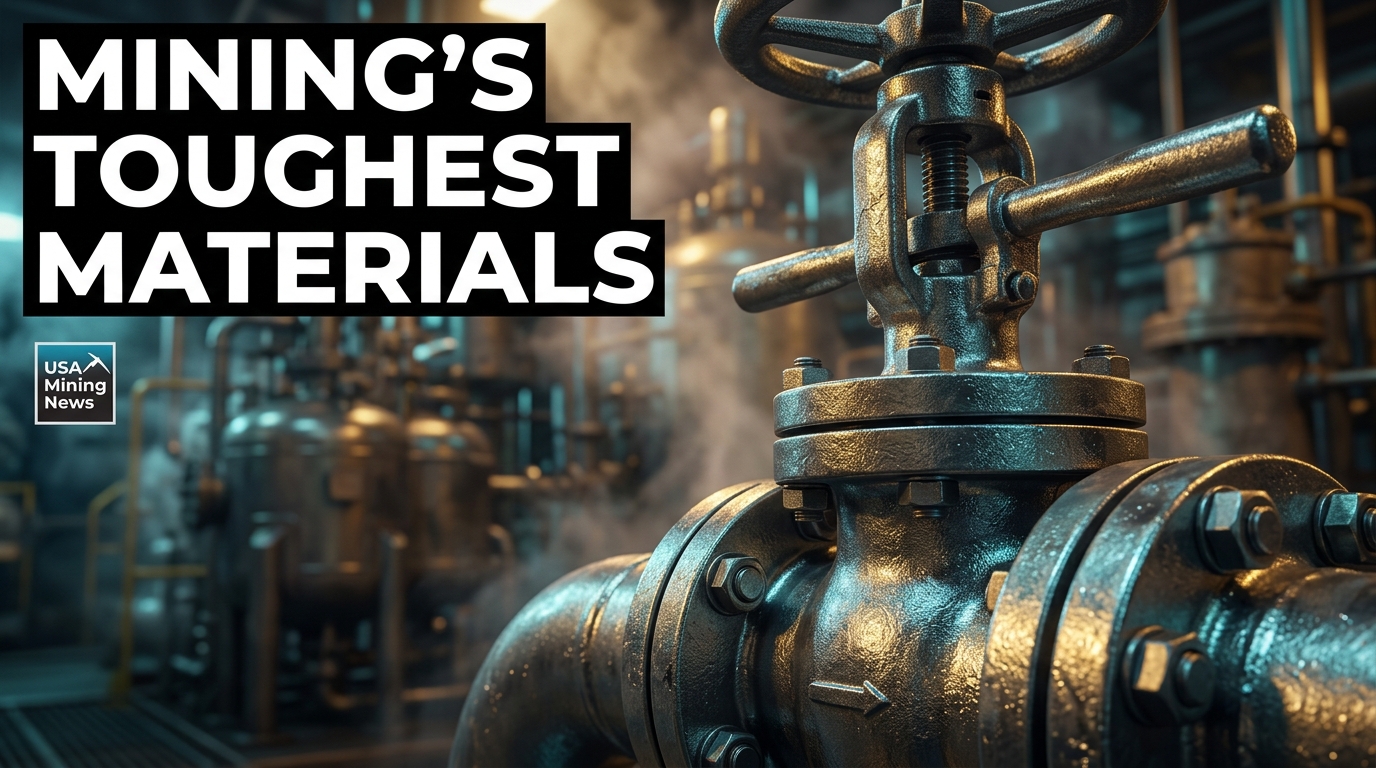
The BM-1600 system targets primarily isolation and control valves, which are vital components in regulating flow and managing pressure in complex chemical circuits. Its design offers comprehensive protection, effectively creating a resilient barrier against both chemical degradation and erosive wear. The efficacy of the BM-1600 system has been demonstrably proven, with case studies indicating an impressive increase in the operational life of valve trim by 400%. This extends the mean time between failures (MTBF) significantly, transforming maintenance schedules and operational reliability.
The primary applications for such a robust coating system include critical processes such as:
- High-Pressure Acid Leaching (HPAL): A hydrometallurgical process typically used for extracting valuable metals like nickel and cobalt from laterite ores. HPAL involves subjecting finely ground ore slurries to high temperatures (240-270°C) and pressures (40-60 atmospheres) in the presence of sulfuric acid. The extreme acidity and temperature create one of the harshest corrosive environments in the industry.
- Pressure Oxidation (POX): Another hydrometallurgical process, predominantly used for treating refractory gold and copper ores. POX involves oxidizing sulfide minerals under high temperature (180-230°C) and pressure (15-25 atmospheres) in an oxygenated environment. This process generates highly acidic solutions and can create conditions conducive to severe erosion due to abrasive particulates moving at high velocities.
In these challenging settings, the dual protection offered by BM-1600 directly addresses the primary modes of failure, making a substantial difference in operational continuity and cost management.
Enhancing Safety and Operational Efficiency
The impact of selecting the right materials extends profoundly into two intertwined critical areas: safety and operational efficiency. When components are designed and treated to withstand extreme conditions, the risk of catastrophic failure is dramatically reduced. In high-pressure, high-temperature, or chemically aggressive systems, a component failure can lead to:
- Chemical Leaks: Posing severe environmental hazards and direct threats to personnel health.
- Pressure Releases: Creating explosive risks or mechanical dangers from uncontrolled energy release.
- Equipment Fires: Especially in oxygen-rich environments where material compromise can quickly escalate.
By leveraging advanced materials that offer superior integrity, mining operations significantly bolster workplace safety, protecting their human capital and operating licenses. Parallel to this, the reduction in unplanned downtime translates directly into substantial gains in operational efficiency and profitability. With components lasting 400% longer, maintenance intervals can be stretched, planned downtime can be optimized, and production schedules become far more predictable. This predictability allows for consistent output, better inventory management, and more stable revenue streams, avoiding the costly ripple effects of unexpected outages. Reduced maintenance frequency also lowers labor costs associated with repairs and minimizes exposure of maintenance personnel to hazardous environments.
Strategic Implications for the Mining Industry
The widespread adoption of advanced material selection and engineered surface technologies carries significant strategic implications for the broader mining industry:
- Capital Expenditure (CAPEX) & Operational Expenditure (OPEX) Optimization: While initial investment in specialized materials or coatings might be higher, the extended lifespan of components leads to lower total cost of ownership over time, reducing both recurring OPEX for replacements and repair, and deferring future CAPEX for new equipment.
- Sustainable Mining Practices: Longer-lasting components mean less material consumption for replacements, reduced waste generation from failed parts, and a generally smaller environmental footprint for maintenance activities. This aligns with global efforts towards more sustainable and responsible mining.
- Unlocking New Resources: The capability to reliably operate in harsher conditions allows mining companies to confidently pursue and process lower-grade or more complex ore bodies that might have previously been deemed uneconomical or technically too challenging. This expands the global resource base for critical minerals.
- Competitive Advantage: Companies that effectively integrate these technologies can gain a distinct competitive edge through higher asset utilization rates, lower operating costs, and enhanced risk management.
The Future Outlook: A New Standard for Durability
Looking ahead, the trend towards increasingly harsh processing conditions is set to continue as the industry seeks to maximize value from finite resources and meet growing demand for essential metals. In this evolving landscape, advanced material selection will transition from a specialized consideration to a fundamental pillar of equipment design and operational strategy.
The insights from manufacturers like Callidus, showcasing solutions such as the BM-1600 system, underscore a clear path forward where material science innovation directly drives productivity, safety, and profitability. Mining companies will increasingly need to collaborate with material science experts and engineering firms to integrate these solutions earlier in the project lifecycle, from design and procurement through to ongoing maintenance regimens. This proactive approach will establish new benchmarks for equipment durability and operational resilience, ensuring that the mining industry can continue to deliver the raw materials vital to global development and technological advancement.
Ultimately, the rigorous demands of modern mineral processing necessitate a complete departure from accepting "strong enough." The future of mining operations hinges on forging components with materials and surface treatments that are engineered for extremes, thereby securing a more reliable, safer, and economically viable industry for decades to come.