Aluminum’s US Comeback Hinges on Power, Not Tariffs, Industry Advocates Say
By Amanda Stutt | May 29, 2026
The United States’ ambitious drive to rejuvenate its domestic aluminum production capacity, a cornerstone of its industrial policy, stands at a critical juncture. Despite concerted efforts from both Republican and Democratic administrations, and a recent surge in global aluminum prices, policy advocates tracking the sector contend that the success of this industrial resurgence hinges far more on securing long-term access to abundant, affordable industrial-scale electricity than on the application of protective tariffs. This insight, highlighted in a new report, forces a reevaluation of the dominant strategies attempting to transform the US aluminum landscape.
Global Market Volatility and Reshoring Imperatives
The global aluminum market is currently navigating a period of heightened volatility, marked by significant supply disruptions and escalating prices. Geopolitical instability, particularly impacting critical shipping lanes like the Strait of Hormuz, has throttled supply, contributing to a dramatic spike in spot prices and a notable slump in exchange inventories. This week, aluminum prices reached a four-year high, underscoring the urgency for nations to bolster domestic production and enhance supply chain resilience.
Against this backdrop, the concept of reshoring core industrial capacities, including primary aluminum production, has gained considerable traction in the United States. Following decades of decline that saw the number of operational primary aluminum smelters in the US plummet from over 30 in 1980 to just four today, both the Biden and Trump administrations have outlined aggressive policies aimed at reversing this trend. The Biden administration has leaned on grants, loans, and incentives provided by the Inflation Reduction Act, while former President Donald Trump primarily advocated for tariffs as a mechanism to shield domestic producers from foreign competition.
Tariffs: A Mixed Impact on Trade Flows
A recent report from California-based environmental advocacy group Industrious Labs, an organization dedicated to decarbonizing heavy industries, provides a detailed examination of the impact of increased tariffs on aluminum imports. According to the report, which analyzed data from the Aluminum Import Monitor, since tariffs on primary aluminum were raised to 50%, imports — particularly from Canada — have dropped significantly.
Canada holds a pivotal role as the largest foreign supplier of aluminum to the US, historically accounting for approximately 44% of total imports. The data indicates a clear shift: in 2024, the US imported 2,745 kilotonnes (kt) of primary aluminum from Canada. By 2025, this figure had fallen to 1,950 kt, representing a 29% decrease. This reduction followed the implementation of Section 232 tariffs on aluminum, which were initially increased to 25% in February 2025 and subsequently escalated to 50% in June 2025.
Annie Sartor, Senior Campaigns Director at Industrious Labs, acknowledged the complexity of these trade dynamics. "Usual caveat that we believe the tariffs to have been the driving factor, but aren’t the only macroeconomic factors in play," Sartor told MINING.COM. This nuanced perspective suggests that while tariffs undoubtedly influenced trade patterns, other global economic forces contributed to the shifting landscape, further complicating the pathways to genuine domestic resurgence.
The Overriding Challenge: Industrial-Scale Electricity
Despite the demonstrable impact of tariffs on import volumes and the renewed strategic interest in expanding US primary aluminum capacity, Sartor emphasized that tariffs are not the ultimate solution. Instead, she identifies access to reliable and affordable electricity as the industry's most significant bottleneck. "There’s a really unpredictable commodity market right now around aluminum," Sartor noted in a recent interview, underscoring the myriad challenges facing producers.
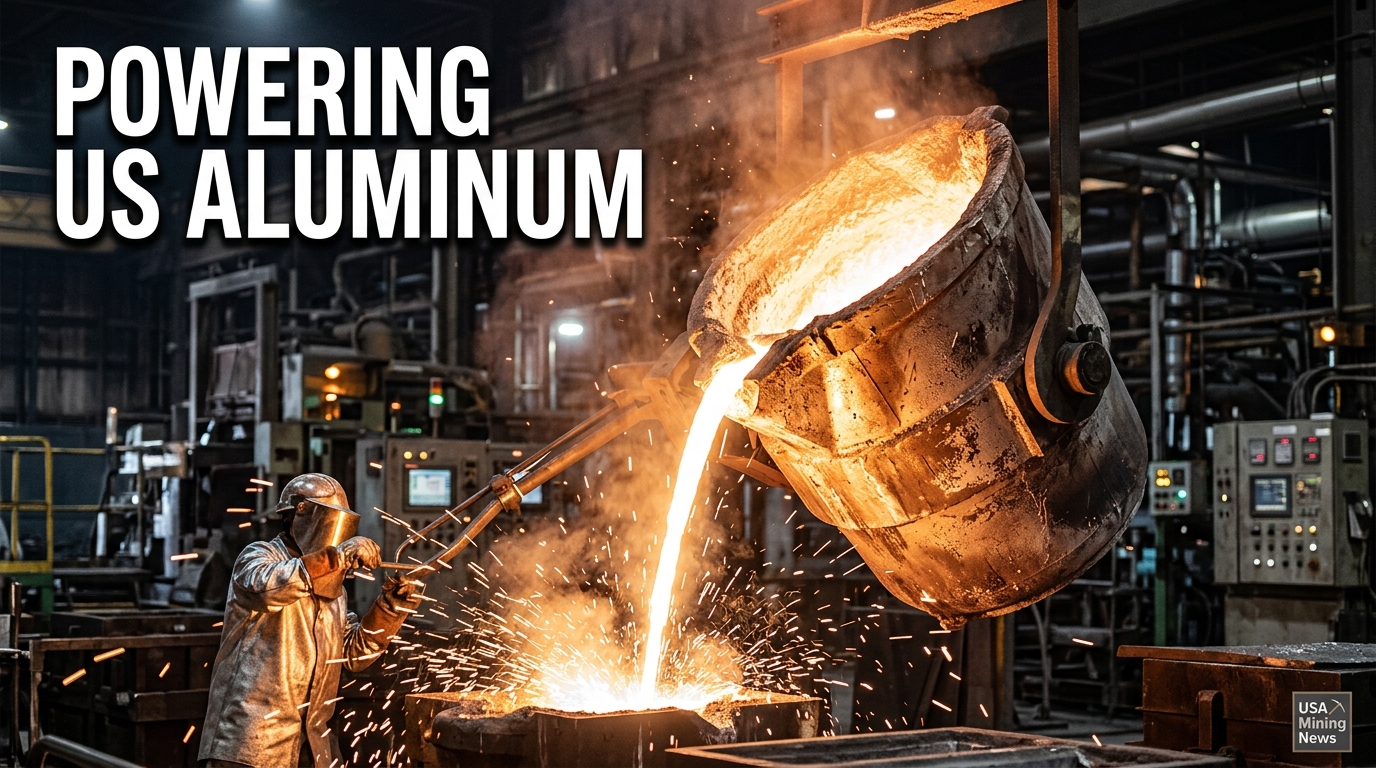
Primary aluminum smelting is renowned as one of the world's most energy-intensive industrial processes. A new, state-of-the-art facility can demand more than 500 megawatts of dedicated power supply annually, a consumption level roughly equivalent to that of a mid-sized city. Securing such a colossal and consistent power supply is a prerequisite for any new smelter project, often proving more challenging than the financing or construction itself, as it requires extensive grid capacity and long-term, competitive power contracts.
This challenge is further compounded by intense competition for grid access across North America. The burgeoning demand from data centers and hyperscalers, driven by the digital economy's insatiable appetite for computing power, is creating enormous strain on electrical grids. "Aluminum producers are being scooped by data centers and hyperscalers," Sartor explained. "They can simply pay more for the power." This dynamic places traditional heavy industries, which operate on tighter margins and require long-term price stability, at a severe disadvantage.
Domestic Capacity and Future Prospects
Currently, the United States operates only four primary aluminum smelters, a stark contrast to Canada’s ten. Alcoa maintains facilities in Massena, New York, and Warrick, Indiana, while Century Aluminum operates plants in Sebree, Kentucky, and Mt. Holly, South Carolina. Efforts to expand this limited footprint are underway but face significant lead times and energy-related hurdles.
Last year, Century Aluminum announced an investment of approximately $50 million to restart over 50,000 metric tons of idled production at its Mt. Holly smelter in South Carolina. More recently, Emirates Global Aluminium (EGA) and Century Aluminum entered into a joint development agreement to construct the first new primary aluminum production plant in the United States since 1980. This ambitious project is slated for Oklahoma, an emerging refinery hub, marking a significant step toward rebuilding domestic capacity.
However, the timeline for such endeavors is extensive. Sartor highlighted the considerable delay inherent in bringing new capacity online: "It would be great if you could just turn on an aluminum smelter in 30 days and start making metal. But the industry operates on much longer timelines." Indeed, building a new aluminum smelter and bringing it to full operational capacity typically takes about five years. Crucially, the proposed EGA-Century smelter in Oklahoma, despite receiving a US Department of Energy grant, remains dependent on securing a viable long-term electricity agreement before construction can even commence.
Evolving North American Market Dynamics
The trade relationship between Canada and the United States has historically fostered an integrated North American aluminum market. In this synergy, Canada, with its abundant hydropower resources, particularly in Quebec and British Columbia, has traditionally supplied significant volumes of low-carbon primary aluminum. The US, in turn, has focused more on secondary or recycled aluminum production. "The aluminum industry sees itself as a North American market," Sartor remarked. "Canada makes a lot of primary aluminum. The United States makes a lot of secondary or recycled aluminum. Together, when we’re working as a single market, that works great."
However, recent events signal a shift in this historically stable relationship. On Friday, the same day mining giant Rio Tinto commenced a $1.5 billion expansion of its AP60 low-carbon aluminum smelter in Quebec, it also announced that shipments of the metal to the US have rebounded to levels seen before former President Trump’s tariff offensive. This indicates a resilience in Canadian supply to the US despite previous trade tensions.
Concurrently, a new dynamic is emerging as some Canadian producers increasingly redirect shipments toward Europe. Driven by strengthening demand for lower-carbon metals under the European Union’s Carbon Border Adjustment Mechanism (CBAM), European markets are offering new opportunities. This redirection highlights a potential risk for the US: prolonged trade disruptions or an inability to competitively source low-carbon aluminum could permanently shift established supply chains away from the United States. "As time goes on, the stickiness of these new trade relationships starts to get stickier," Sartor cautioned, implying that temporary market adjustments could evolve into long-term strategic realignments.
Future Outlook: Securing the Energy Frontier
The pathway to a robust US primary aluminum sector is intricate and multifaceted. While tariffs have had an immediate, albeit temporary, effect on import volumes, they do not address the foundational requirements for domestic production growth. The central challenge remains the availability of reliable, competitively priced, and preferably clean, industrial-scale electricity.
For mining industry professionals and investors, this underscores the critical importance of evaluating not just market prices and trade policies, but also the underlying energy infrastructure and regulatory environment. Future investments in primary aluminum capacity will necessitate comprehensive strategies that prioritize long-term power purchase agreements, grid modernization, and policies that encourage the development of dedicated clean energy sources for heavy industry. Absent such fundamental energy solutions, the vision of a thriving US primary aluminum industry, capable of meeting burgeoning domestic and global demand, risks remaining largely aspirational, with vital projects stalled in the pre-construction phase awaiting the most basic input: power.