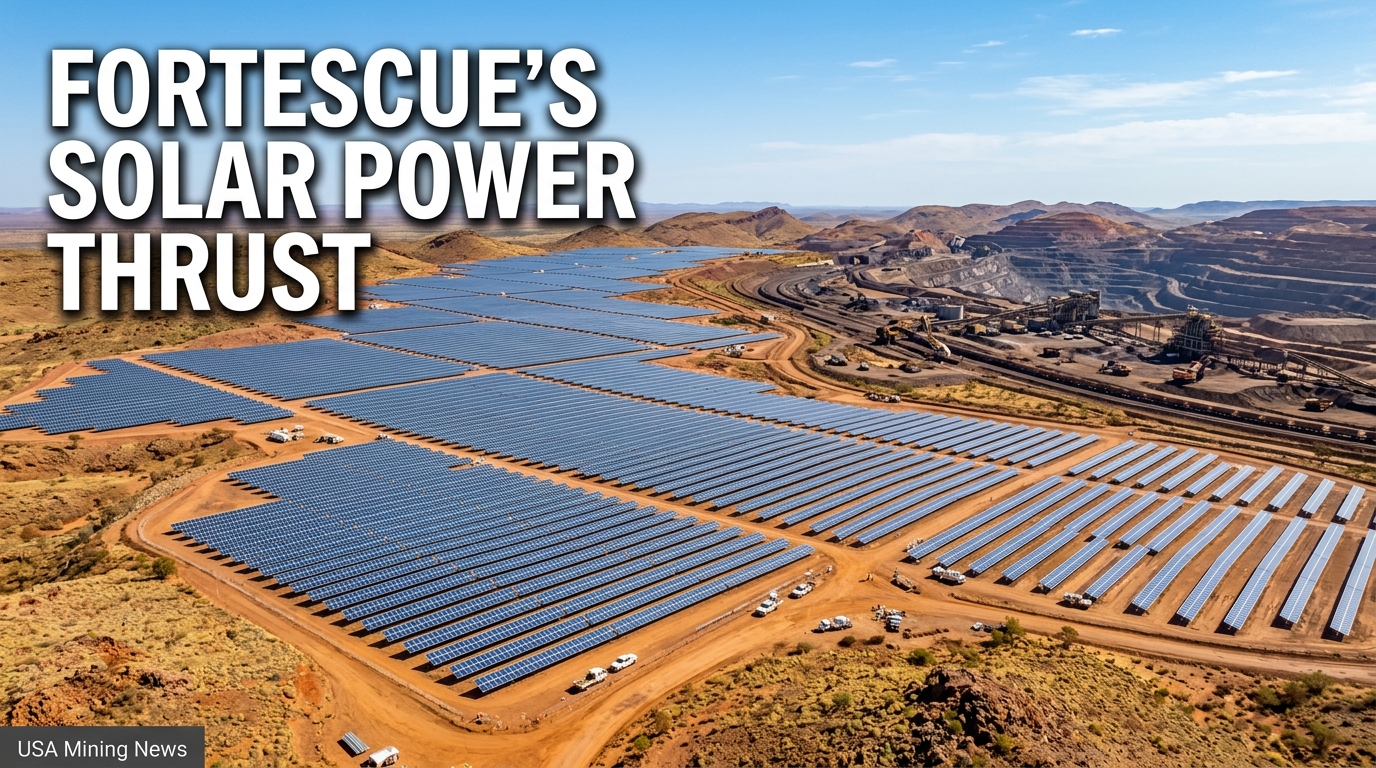
Perth, Australia – May 25, 2026 – Fortescue (ASX: FMG), a global leader in iron ore production, has announced a momentous acceleration in its ambitious decarbonization strategy, commencing construction on two cornerstone projects within its integrated renewable energy ecosystem in Western Australia’s Pilbara region. The company has officially broken ground on the 690MW Turner River solar farm and initiated the build of a substantial 650MWh battery energy storage system (BESS) at its flagship Cloudbreak mine. These developments are critical components of Fortescue’s pioneering "Real Zero" plan, aimed at eliminating fossil fuel emissions from its terrestrial iron ore operations by 2028.
Fortescue's Ambitious Renewable Energy Buildout
The Turner River solar farm, with its impressive 690MW capacity, represents a pivotal milestone for Fortescue. According to company statements, this facility constitutes the final solar generation installation required to realize its "Real Zero" decarbonization objective. Once completed in 2028, the Turner River project will integrate with Fortescue’s existing and under-construction solar assets across the Pilbara. These include the 440MW Solomon Airport solar farm, the 190MW Cloudbreak solar farm (distinct from the BESS), and the 100MW North Star Junction solar farm.
The cumulative renewable energy capacity generated from these four solar installations alone will exceed 1.4 gigawatts (GW). To put this into perspective for the general public, Fortescue notes that this capacity is sufficient to power approximately half a million Australian homes. From an industrial standpoint, this represents a monumental shift for a mining operation of Fortescue’s scale, significantly reducing its reliance on traditional fossil fuel-based power generation for its energy-intensive mining, processing, and transportation activities. The construction of the Turner River facility is anticipated to be a large-scale endeavor, involving the installation of more than 1 million solar panels over its build period.
Complementing this robust solar capacity is the strategic deployment of advanced battery energy storage systems. The Cloudbreak BESS, targeted for completion in the 2027 fiscal year, is designed to deliver 74MW of power for approximately eight hours, providing essential energy stability and grid reliability. This system will comprise 124 individual battery units, seamlessly integrated directly into the Cloudbreak solar farm infrastructure. The ability to store and dispatch significant amounts of renewable energy for extended periods is crucial for mitigating the intermittency inherent in solar power, ensuring a consistent and reliable power supply to the demanding operations of a major iron ore mine. Fortescue has also confirmed the successful commissioning of two additional battery energy storage systems at its Eliwana and North Star Junction operations, further solidifying the reliability of renewable power across its Pilbara network.
Strategic Network Infrastructure and Diversification
Beyond individual generation and storage assets, Fortescue is concurrently building out a comprehensive high-voltage transmission network likened to a regional grid. The company has already constructed over 480 kilometers of this vital infrastructure across the Pilbara. This network is designed to physically connect Fortescue’s disparate renewable energy assets – including solar farms, wind farms, and battery storage systems – to its extensive mining, rail, and port operations. Upon its full completion, the transmission network is projected to extend beyond 620 kilometers, creating a unified and resilient renewable energy system capable of efficiently distributing electricity across its vast operational footprint.
Further diversifying its renewable energy portfolio and enhancing system resilience, Fortescue continues construction on the 133MW Nullagine wind farm. Wind energy provides a complementary profile to solar power, often generating electricity during different periods or conditions, thereby optimizing overall renewable energy availability and reducing reliance on any single source. This integrated approach to generation, storage, and transmission is foundational to achieving the operational stability required for continuous mining operations.
Electrification of Mobile Mining Fleets
In parallel with its significant investments in renewable energy infrastructure, Fortescue is aggressively pursuing the electrification of its heavy mobile mining fleet, addressing one of the most emissions-intensive aspects of mining operations. This transition from traditional diesel-powered machinery to electric alternatives requires both significant capital investment and technological innovation. The company has already made substantial progress, with 16 electric excavators and an electric drill actively operating across its iron ore sites. Looking ahead, Fortescue has set an ambitious target to have approximately half of its excavator fleet operating on electric power by the end of 2026, demonstrating a rapid pace of adoption for this capital-intensive equipment.
A key development on the haulage front is the imminent deployment of Fortescue’s first battery-electric haul truck, expected to be operational before the end of the current year. This is a critical step, as haul trucks consume vast amounts of diesel and represent a significant portion of Scope 1 emissions in surface mining. To support the large-scale rollout of these battery-electric haul trucks across the Pilbara, Fortescue has commenced commissioning its first in-house developed 6MW fast charger. This proprietary technology is designed for efficiency, capable of fully charging a heavy-duty haul truck in approximately 30 minutes, minimizing downtime and maximizing operational continuity.
Fortescue is also actively collaborating with original equipment manufacturers (OEMs) to advance electrification across the full spectrum of mining equipment. The company reports that facility testing of XCMG’s prototype battery-electric wheel loader, dozer, grader, and water cart is in its final stages. These crucial supporting vehicles are preparing for shipment from China to the Pilbara for rigorous site testing under real-world mining conditions. Such partnerships are vital for the broader industry, driving the innovation and commercialization of zero-emission mining equipment.
The "Real Zero" Decarbonization Imperative
The aggressive timeline and comprehensive nature of Fortescue’s "Real Zero" decarbonization plan underscore a fundamental shift in corporate strategy, driven by both environmental responsibility and economic pragmatism. Dino Otranto, Fortescue’s CEO of Metals and Operations, succinctly articulated the company’s proactive stance, stating, "While others are still debating whether decarbonization is possible, Fortescue is getting on with building what’s needed to do it."
Otranto emphasized that "The technology is here. The economics are improving every year. And anyone watching global fuel markets can see exactly why electrification and renewable power matter more than ever." This statement highlights a convergence of factors: the maturation and cost-effectiveness of renewable energy technologies, the compelling economic argument for energy independence from volatile fossil fuel markets, and the increasing global imperative to address climate change. By investing heavily in a self-sufficient renewable energy ecosystem, Fortescue aims to insulate its operations from fuel price volatility, enhance its environmental stewardship, and secure its social license to operate in an increasingly carbon-conscious world.
Moving first in such a large-scale transformation positions Fortescue as a global leader in sustainable mining. Otranto further underscored this, noting, "Our solar farms, transmission lines, wind generation and batteries are being built right now across the Pilbara. We are moving first because the economics, the technology and the national interest are all pointing in the same direction." This holistic approach integrates power generation, storage, transmission, and consumption, representing a significant capital commitment but also a long-term strategic advantage for the company.
Industry Implications and Future Outlook
Fortescue’s "Real Zero" journey in the Pilbara carries profound implications for the global mining industry and its stakeholders. Firstly, its aggressive, tangible actions provide a powerful case study for what is achievable in decarbonizing heavy industry. As one of the world's largest iron ore producers operating in a remote, energy-intensive environment, Fortescue's success will serve as a beacon, challenging other mining majors to accelerate their own emission reduction efforts and demonstrating the viability of large-scale renewable integration and fleet electrification.
Secondly, this initiative validates the technological readiness of both renewable energy systems and heavy electric mining equipment. The swift adoption of electric excavators, the development of specialized fast charging infrastructure, and the testing of new electric prototypes signal a maturing market for zero-emission mining solutions. This will likely stimulate further innovation and competition among equipment suppliers, ultimately benefiting the entire sector by making these technologies more accessible and cost-effective.
Economically, Fortescue’s strategy is a bold bet on long-term operational resilience. By decoupling its energy costs from volatile global fuel markets, the company aims to achieve greater cost certainty and potentially lower operating expenses over time. This financial prudence, combined with strong environmental performance, positions Fortescue favorably with ESG-focused investors and a growing cohort of environmentally conscious consumers.
Looking ahead, the successful implementation of Fortescue’s Real Zero plan by 2028 will not only solidify its position as a sustainability leader but also provide invaluable real-world data and lessons learned for the broader industry. The integration challenges, performance metrics of electrified fleets, and grid management of a vast renewable network in a harsh environment will be closely watched. Fortescue's ongoing investments are not merely about reducing carbon footprints; they are about fundamentally re-engineering the energy architecture of large-scale mining, paving the way for a more sustainable and economically robust future for the sector.