Florida-Based Advanced Magnet Lab Secures Pivotal $2 Million DLA Contract for Domestic Heavy Magnet Production
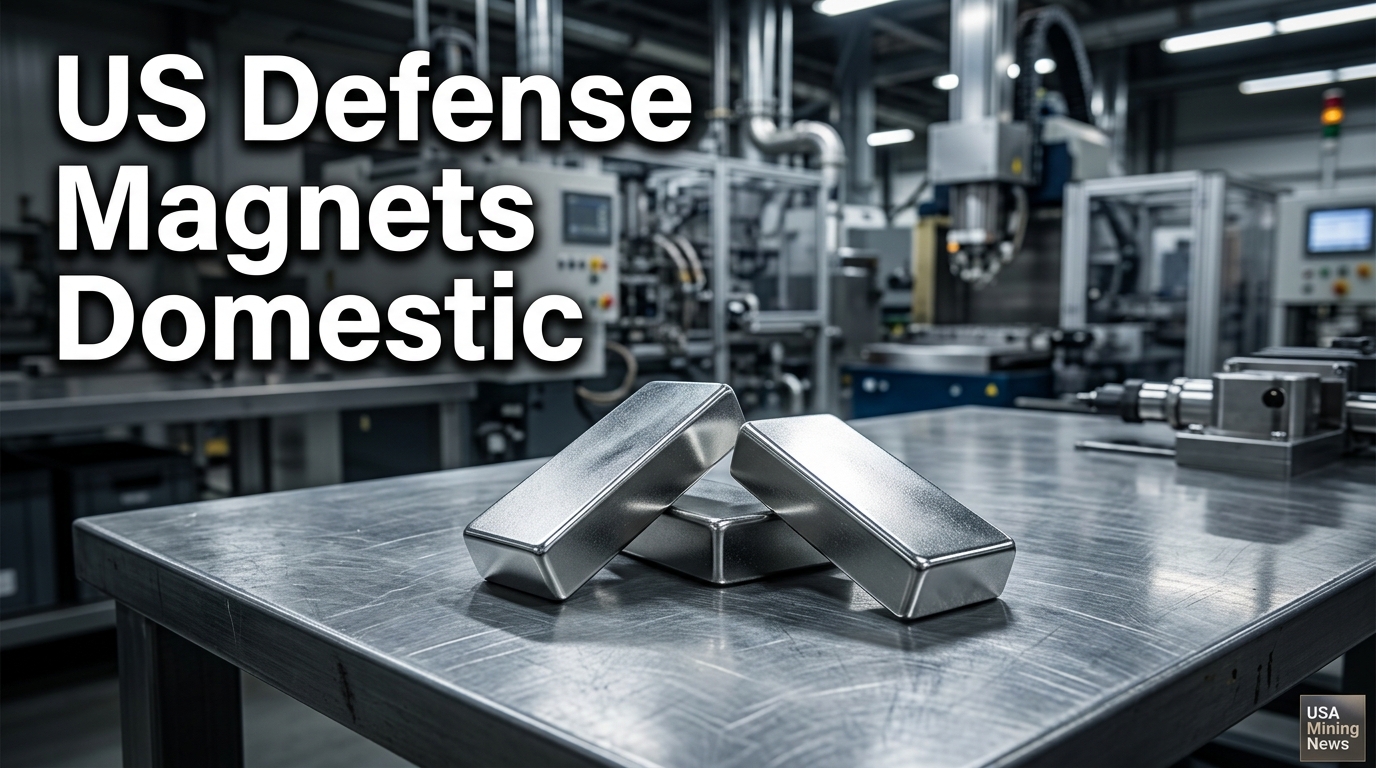
In a move poised to significantly bolster the United States’ domestic supply chain for critical magnet materials, Advanced Magnet Lab (AML), a privately held company based in Florida, announced on Tuesday, May 19, 2026, it has been awarded a $2 million contract by the Defense Logistics Agency (DLA). This substantial investment is earmarked for the qualification of domestic production of high-grade sintered neodymium-iron-boron (NdFeB) PM-Wire magnets, crucial components vital to a wide array of defense and commercial applications. The contract underscores a concerted effort by the U.S. government to fortify its industrial base, ensuring reliable access to strategically important materials and advanced manufacturing capabilities.
The DLA contract is not merely a financial allocation; it represents a strategic imperative to develop robust manufacturing solutions that will enable widespread domestic production and qualification of these sophisticated permanent magnets. AML has articulated clear plans for the rapid scaling of manufacturing capabilities, aiming to serve a multitude of end-use applications across both defense and commercial industries. This initiative aligns with a broader national strategy to de-risk critical mineral supply chains, a concern that has gained increasing urgency across geological, geopolitical, and economic landscapes in recent years. For the mining industry, this signifies a direct demand pull for domestic rare earth element sourcing and processing, driving investment and innovation further upstream.
Driving Domestic Production for National Security
The impetus behind the DLA’s investment in AML is multifaceted, rooted deeply in national security and economic resilience. Sintered NdFeB magnets are indispensable in numerous high-performance technologies, including advanced guidance systems, electric motors, sensors, and power generation systems, all of which are critical for modern defense platforms. Historically, the global supply chain for these magnets, and the rare earth elements from which they are derived, has been concentrated in a few geographic regions, creating vulnerability for nations like the United States. This contract seeks to mitigate such dependencies by fostering indigenous manufacturing prowess.
AML’s long-standing relationship with U.S. government agencies, including the Department of War and the Department of Energy, in developing permanent magnet-based solutions and manufacturing processes, positions the company as a trusted partner in this critical endeavor. The two-year contract with the DLA specifically facilitates comprehensive supply chain management, alloying, and permanent magnet manufacturing. This includes meticulous alloy composition optimization for key NdFeB magnet grades such as N48SH and N35EH, achieved through the implementation of advanced manufacturing techniques. These particular grades offer superior magnetic properties, essential for stringent defense performance requirements where reliability and efficiency cannot be compromised. The ability to control and optimize these alloy compositions domestically is a significant step towards ensuring both quality and supply security, impacting demand for specific rare earth feedstocks.
AML's PM-Wire: Reimagining Magnet Materials and Manufacturing
Central to AML’s ability to meet the ambitious goals of this DLA contract is its novel manufacturing process, dubbed PM-Wire. The company highlights that PM-Wire significantly simplifies the production of permanent magnets while simultaneously expanding the possibilities for magnet design, material selection, and performance characteristics. This innovative approach promises a paradigm shift in magnet manufacturing, offering greater flexibility and efficiency compared to traditional methods. Importantly, AML emphasizes that the PM-Wire process is engineered for rapid industrialization, designed to integrate seamlessly within existing magnet-making frameworks, which could accelerate its deployment and impact across the industry.
Beyond its current focus on sintered NdFeB permanent magnets, AML is actively engaged in developing permanent magnets utilizing a diverse array of other magnet materials and alloys. This strategic diversification reflects a broader industry trend towards exploring alternatives to traditional rare earth-intensive magnets, driven by supply chain concerns and performance aspirations. These include:
- Samarium Iron Nitride (SmFeN): A promising alternative for high-temperature applications.
- Manganese Bismuth (MnBi): Known for its performance at elevated temperatures, offering potential as a rare earth-free or reduced-rare-earth magnet option.
- Anisotropic NdFeB: Advanced forms of NdFeB designed for enhanced magnetic performance through precise alignment of crystal grains.
- (Mischmetal-Nd) FeB: A particularly significant development, as AML’s approach with this composition allows for the creation of permanent magnets that utilize fewer critical rare earth elements. This innovation not only addresses the scarcity and cost associated with certain heavy rare earth elements but also provides clear traceability of inputs for end-use customers, a growing requirement for ethical sourcing and supply chain transparency.
This multi-pronged approach to material development underscores AML's commitment to challenging the "rare earth status quo," as phrased by the company, by seeking solutions that are both technologically superior and supply-chain resilient. For mining companies, this signals an evolving market where demand might shift between different rare earth elements or even incorporate non-rare earth alternatives.
A Collaborative Ecosystem for Supply Chain Resilience
Recognizing the complexity of establishing a robust domestic supply chain for critical minerals and their derivatives, AML has forged strategic collaborations with a specialized consortium of U.S. and European rare earth suppliers and innovators. This collaborative ecosystem is vital for integrating mining, processing, and manufacturing capabilities to ensure a secure and traceable supply of critical inputs. Key partners in this initiative include:
- Phoenix Tailings: A Massachusetts-based rare earth metals producer, directly contributing to the upstream supply of processed rare earth materials. Their involvement is crucial for providing domestically sourced rare earth feedstocks.
- Ionic Rare Earths Limited: As a miner, refiner, and recycler of traceable magnet and heavy rare earths, Ionic Rare Earths plays a pivotal role in establishing both primary and secondary sources of these critical elements, emphasizing sustainability and supply chain transparency.
- Momentum: A Dallas, Texas-based critical minerals processing company, essential for transforming raw rare earth concentrates into the refined materials required for magnet manufacturing.
This integrated approach, spanning the entire value chain from mining and refining to manufacturing, highlights the intricate dance required to establish resilience in the critical minerals sector. It also underscores the importance of public-private partnerships in addressing these national strategic priorities. The cooperation among these diverse entities is crucial for ensuring the integrity and reliability of the domestic magnet supply, moving beyond simple production to address the full life cycle of these materials.
A Turning Point for the U.S. Rare Earth Magnet Industry
Wade Senti, President of Advanced Magnet Lab, eloquently captured the significance of this moment, stating in a news release, "We are at a true turning point for the U.S. rare earth magnet industry, and AML is immensely proud to be partnering with the U.S. government, the defense industry, and supply chain partners to meet the problem head-on." His statement reflects the profound implications of this contract not just for AML, but for the broader U.S. industrial and defense landscape. The challenge of securing critical rare earth magnets has been a persistent concern for years, and this contract signifies a decisive step towards addressing it comprehensively.
The future outlook for the U.S. rare earth magnet industry, invigorated by initiatives like AML’s DLA contract, appears decidedly more robust. The focus on domestic production, innovative manufacturing processes like PM-Wire, and the development of alternative magnet materials promises to reduce reliance on potentially volatile foreign supply chains. Furthermore, the emphasis on traceability with materials like (Mischmetal-Nd) FeB caters to increasing demand for ethically sourced and environmentally responsible materials, which is becoming a significant factor for both defense and commercial customers. This evolution will inevitably shape the demand patterns for various rare earth elements and processing technologies within the mining and minerals sector for years to come. The success of this collaboration could serve as a model for other critical mineral supply chain re-shoring efforts, cementing the U.S. position in advanced materials manufacturing.