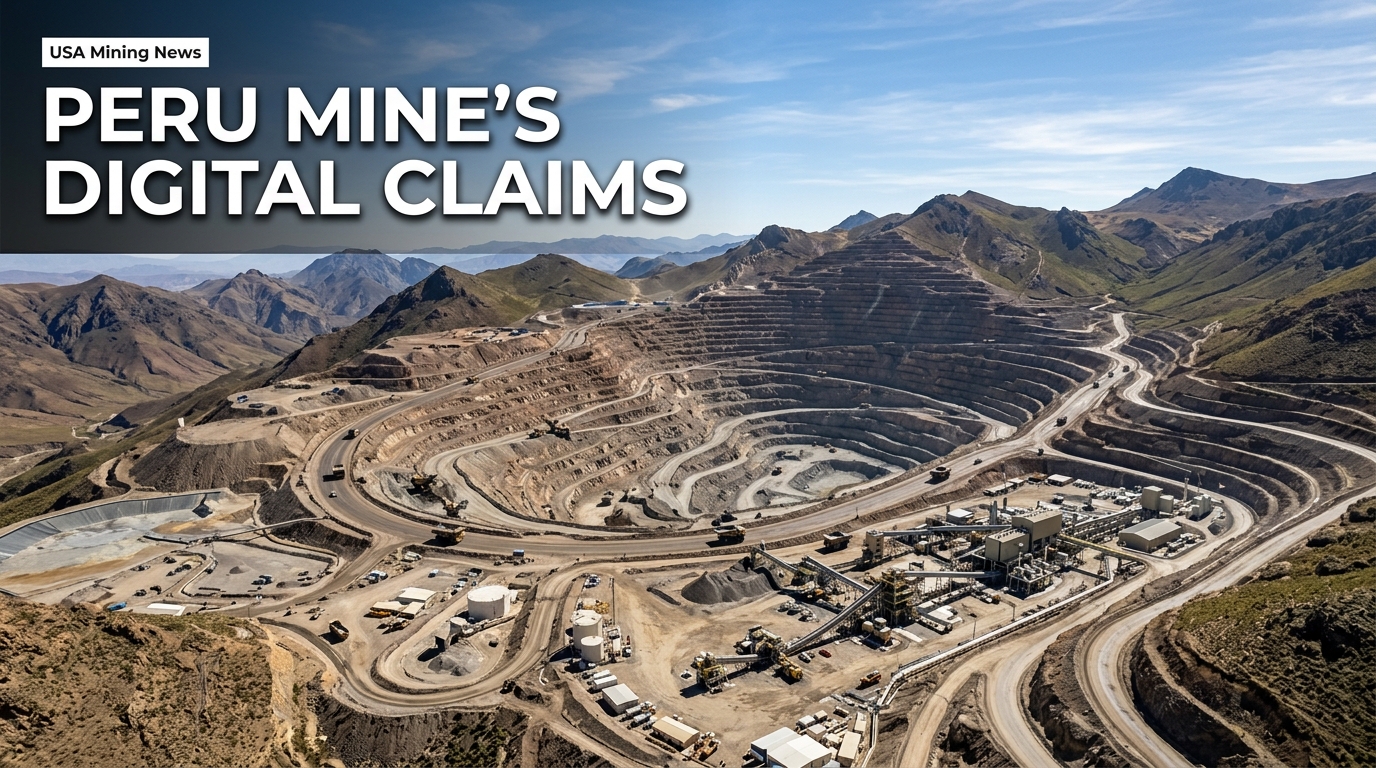
NGOs Question Anglo American’s ‘Digital Mine’ Claims at Quellaveco, Sparking Industry Dialogue on ESG Verification
In a development poised to resonate across the global mining industry, a coalition of non-governmental organizations (NGOs) has lodged a formal challenge against Anglo American’s assertions regarding verifiable environmental and community outcomes at its state-of-the-art Quellaveco copper mine in Peru. The report, published on May 14, 2026, directly questions whether the advanced digital strategies implemented at what Anglo American has championed as a ‘digital mine’ are delivering the promised, demonstrable benefits for both the natural environment and local populations near the operation. This scrutiny, brought to light by journalist Alejandro Gonzalez, highlights a growing demand for rigorous, transparent reporting of Environmental, Social, and Governance (ESG) performance, especially as mining companies increasingly integrate sophisticated technologies into their operations with claims of enhanced sustainability.
The Quellaveco mine, strategically located on Peru’s Pacific coast, represents a significant investment for Anglo American and a cornerstone of its global copper portfolio. Copper, a critical mineral for the global energy transition, fuels innovations in electric vehicles (EVs), renewable energy infrastructure, and modern electronics. As such, the operational efficiency and sustainability profile of major copper projects like Quellaveco are under intense scrutiny from investors, regulators, and civil society alike. Anglo American has positioned Quellaveco as a beacon of modern mining, leveraging extensive digitalization to optimize processes, enhance safety, and minimize its environmental footprint. However, the recent challenge from NGOs suggests a disconnect between technological ambition and on-the-ground, verifiable impact.
The Promise of the Digital Mine
The concept of a ‘digital mine’ embodies the mining industry's embrace of Industry 4.0 paradigms. For companies like Anglo American, this typically involves deploying a suite of advanced technologies aimed at integrating and optimizing every aspect of the mining value chain. Key components of a digital mine often include:
- Internet of Things (IoT): Sensors embedded in equipment, infrastructure, and even environmental monitoring systems collect vast amounts of real-time data.
- Artificial Intelligence (AI) and Machine Learning (ML): Algorithms analyze this data to predict equipment failures, optimize haulage routes, improve processing plant efficiency, and model environmental impacts.
- Automation and Robotics: Autonomous drills, trucks, and other heavy machinery operate with minimal human intervention, improving safety and precision.
- Digital Twins: Virtual models of physical assets and processes allow for simulations and predictive analysis, enabling better decision-making.
- Advanced Analytics: Sophisticated platforms aggregate data from disparate sources to provide holistic operational oversight and performance insights.
The proclaimed benefits of such digitalization are comprehensive: increased productivity, reduced operational costs, enhanced worker safety, and, crucially, improved environmental stewardship. For Quellaveco, Anglo American has highlighted how digital tools are intended to reduce water consumption, manage tailings more efficiently, lower energy usage, and provide real-time environmental monitoring. These advancements are typically presented as central to achieving modern mining's commitment to responsible resource extraction.
The Core of the Challenge: Verifiable Outcomes
The NGOs' report does not necessarily dispute Anglo American's implementation of digital technologies itself. Instead, the core of their challenge, as reported on May 14, 2026, lies in the lack of verifiable environmental and community outcomes. This distinction is critical for the mining industry. It implies that simply having advanced technology in place is insufficient; companies must also demonstrate, through transparent and robust data, that these technologies are delivering tangible, positive impacts. The concerns likely center on several key areas:
- Environmental Impact Assessment and Monitoring: Are the digital tools effectively minimizing pollution, preserving biodiversity, and managing water resources, and is there independent verification of these claims?
- Community Engagement and Benefits: Do the digital efficiencies translate into verifiable improvements in local community well-being, economic development, or a reduction in social impacts? Is the data on community relations transparent and accessible?
- Transparency and Accountability: Are the data collected by digital systems being shared with stakeholders, and is there an independent mechanism to audit and validate the reported outcomes against stated sustainability goals?
For mining operations in regions like Peru, where communities often have a deep connection to the land and a history of environmental concerns related to resource extraction, the concept of "verifiable outcomes" is paramount. A map detail of Peru’s Pacific coast, as noted in the original reporting, underscores the geographical context where resource development often intersects with delicate ecosystems and long-established communities.
Market and Industry Context: The ESG Imperative
This challenge to Anglo American's Quellaveco project is not an isolated incident but rather indicative of broader trends within the global mining sector. ESG factors have moved from being a niche concern to a central pillar of investment decisions, corporate strategy, and public perception. Investors increasingly demand clear, measurable, and independently verified ESG performance metrics from mining companies. Failure to demonstrate robust ESG credentials can lead to reduced access to capital, increased regulatory scrutiny, and a tarnished reputation.
Moreover, the concept of a "social license to operate" (SLO) has become non-negotiable for mining companies globally. An SLO is the ongoing acceptance of a company's operations by local communities and stakeholders. Losing or failing to secure an SLO can lead to operational delays, increased costs, and even project abandonment – issues that have plagued numerous major projects in various jurisdictions over the past decade. For Anglo American, a company with significant global reach and a commitment to responsible mining, the NGO challenge at Quellaveco represents a direct test of its sustainability claims and its ability to maintain its SLO in a critical mining jurisdiction.
The industry's push towards digitalization is largely fueled by the dual aims of efficiency and sustainability. Companies tout digital solutions as a way to mine more responsibly. However, the NGO critique suggests that technological advancement alone does not guarantee or automatically translate into verifiable positive ESG impacts. There is a clear call for a shift from claims based on technological implementation to evidence-based reporting of actual environmental and social improvements.
Implications for Anglo American and the Future Outlook
For Anglo American, this report by NGOs presents a significant reputational challenge. As a leading global diversified mining company, its credibility on sustainability performance is vital. The company will likely need to engage directly with the NGOs' findings, providing detailed data and, potentially, inviting independent verification of its environmental and community programs at Quellaveco. The outcome of this dialogue could influence how Anglo American positions its 'digital mine' narrative going forward and how it communicates its ESG performance to shareholders and the public.
More broadly, this incident serves as a crucial learning opportunity for the entire mining industry. It underscores several critical aspects for the future of responsible mining:
- Beyond Hype to Evidence: Claims of "smart" or "digital" mining must be backed by concrete, verifiable data demonstrating improved environmental and social metrics.
- Transparency and Data Accessibility: The industry will face increasing pressure to make ESG performance data accessible and understandable to a wider range of stakeholders, including local communities and independent auditors.
- Independent Verification: The need for third-party auditing and verification of sustainability claims will intensify, moving beyond internal reporting to an era of external validation.
- Stakeholder Engagement: Meaningful and transparent engagement with local communities and civil society organizations is crucial, even with the most advanced technologies, to build trust and ensure that reported outcomes reflect lived realities.
The challenge at Quellaveco, as reported on May 14, 2026, signals that while digital transformation offers immense potential for the mining industry, its true value will ultimately be judged by its ability to deliver demonstrable, verifiable, and equitable benefits to all stakeholders. The conversation shifting from technological prowess to concrete, measurable outcomes marks a maturing of the sustainability agenda in the global mining sector, demanding a more rigorous and transparent approach from even the most technologically advanced operators.