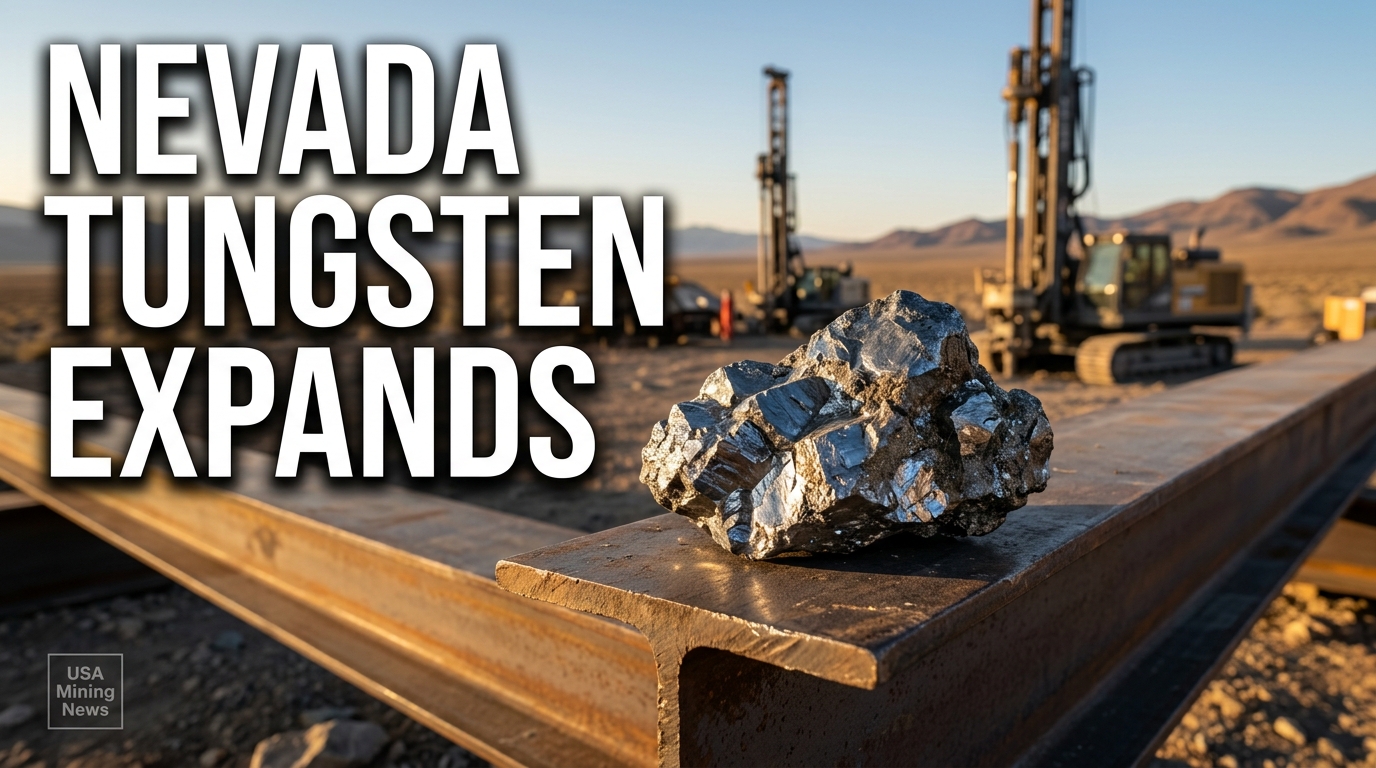
Reno, Nevada – Spartan Metals has secured a significant regulatory advancement for its Eagle Tungsten-Silver-Rubidium Project in White Pine County, Nevada, with the U.S. Bureau of Land Management (BLM) formally approving seven new drill pads at its Tungstonia Claims. Announced on September 24, 2026, this approval elevates the total number of authorized drill sites at the property to 32, providing Spartan Metals with critical flexibility to expand its ongoing core drilling program into high-priority targets identified through detailed geological and geophysical work. This development is a pivotal step for the Vancouver-based exploration and development company as it endeavors to delineate a substantial resource in a region increasingly vital for critical minerals production.
Strategic Expansion at the Eagle Project
The latest BLM approval is not merely an incremental addition; it represents a strategic pivot in Spartan Metals’ exploration methodology at the Tungstonia Claims. White Pine County, Nevada, is a historically prolific mining region known for a variety of metallic deposits, and the Eagle project aims to build upon this legacy. The authorization for seven additional drill pads, bringing the total to 32, significantly enhances Spartan's ability to systematically explore a broader and deeper footprint of its claims. This expansion is crucial for any mineral exploration company, as it allows for comprehensive testing of geological models and the potential identification of new mineralization zones beyond initial discoveries.
The expanded drilling authorization follows earlier foundational work and initial drilling. With roughly 550 meters of a planned 3,000-meter core drilling program already completed at the Eagle project, the company is poised to accelerate its exploration efforts. The ability to move operations to these newly approved sites is expected to provide a more comprehensive understanding of the subsurface geology and potential resource endowment, particularly as the company refines its interpretation of the extensive vein systems present at Tungstonia.
Leveraging Advanced Geophysical Techniques
A key differentiator for the selection of these new drill pads is Spartan Metals' reliance on advanced geophysical survey results. Specifically, the sites were chosen based on data derived from magnetotelluric (MT) and direct-current induced polarization (DCIP) surveys. These sophisticated techniques provide invaluable insights into the subsurface electrical properties of rocks, which can correlate with the presence of mineral deposits.
- Magnetotelluric (MT) surveys measure natural variations in the Earth's magnetic and electric fields to map electrical resistivity at significant depths. This method is particularly effective for identifying large-scale structures and alteration zones that may host mineralization.
- Direct-Current Induced Polarization (DCIP) surveys involve injecting current into the ground and measuring the voltage response, including chargeability, which indicates the ability of rocks to store electrical charge. This property is often associated with disseminated sulfide mineralization, making DCIP a powerful tool for detecting potential ore bodies.
The integration of these geophysical datasets with traditional geological mapping, surface geochemistry, and observed quartz-vein and greisen development has allowed Spartan Metals to pinpoint targets with higher confidence. However, as the company prudently notes, geophysical anomalies require confirmation through drilling and do not constitute direct evidence of mineralization. This caveat underscores the systematic and rigorous approach necessary in modern mineral exploration, where multiple lines of evidence are triangulated before committing significant capital to drilling.
Brett Marsh, President and CEO of Spartan Metals, highlighted the transformative impact of these surveys. “When we permitted the original sites at Tungstonia we were working from mapping, surface geochemistry and the legacy workings,” Marsh stated. “The geophysical results enhanced our geological interpretation of the system beneath those workings and throughout the Tungstonia Claims, and it identified new, high-priority targets. This Notice modification gives us the sites, and the flexibility lets us drill where our data interpretation gives us the best chance for success.” This statement emphasizes the data-driven strategy employed by Spartan and the value of advanced geophysics in refining exploration targets.
Targeting Diverse Mineralization Styles
The new drill pads are strategically positioned to test a variety of mineralization styles and extensions identified through the integrated geological and geophysical program. This multi-pronged approach reflects a comprehensive understanding of the complex geological setting at Tungstonia and aims to maximize the probability of discovery. The specific targets include:
- Depth extensions of five separate vein systems: These are likely known mineralized structures that have shown promise near the surface, and the new pads will allow Spartan to test their continuity and grade at greater depths, potentially unlocking significant tonnage.
- The Spartan A, B, and C vein complex: This suggests a cluster of interrelated vein systems, which could collectively form a significant mineralized zone requiring detailed delineation.
- A south-east tungsten anomaly: This geophysical or geochemical anomaly specifically points to a new area with potential for tungsten mineralization, which is a primary commodity for the project.
- Areas identified as possible carbonate replacement and skarn targets: These are highly prospective geological environments for tungsten and other polymetallic mineralization. Indeed, Spartan confirmed the presence of two tungsten skarn zones at the Tungstonia claims in June 2026, making these new targets particularly exciting for their potential to expand known mineralization. Skarn deposits, formed by metasomatic alteration of carbonate rocks, are often high-grade and can host significant mineral resources.
Furthermore, some of the new drill pads have been designed to facilitate multiple holes drilled at different angles and directions from a single site. This innovative approach is not only operationally efficient but also environmentally conscious, as it minimizes the overall surface footprint of the drilling program while maximizing the subsurface data gathered. This method aligns with modern best practices in responsible exploration.
Operational Progress and Future Trajectory
With approximately 550 meters of the planned 3,000-meter core drilling program already completed, Spartan Metals is actively engaged in advancing the Eagle project. The receipt of the new BLM approvals means that the company can now seamlessly transition its drilling operations to these high-potential locations without significant delays. This continuous operational flow is vital for maintaining momentum in exploration and providing a steady stream of data to inform further geological modeling and potential resource estimations.
The ongoing drilling program is expected to generate a wealth of geological and assay data. This information will be critical for defining the scope and scale of mineralization at Tungstonia, leading to future resource estimation and economic evaluations. The flexibility to test multiple targets from a reduced number of surface disturbances showcases a thoughtful and efficient exploration strategy.
Nevada's Role in Critical Minerals and Tungsten Market Context
The Eagle project's focus on tungsten, silver, and rubidium places it squarely within the context of global critical minerals supply chains. Nevada is a tier-one mining jurisdiction, consistently ranking among the top global destinations for mining investment due to its rich mineral endowment, established infrastructure, and predictable regulatory environment. Projects like Spartan's contribute directly to strengthening domestic mineral supply, a key strategic imperative for the United States.
- Tungsten: Designated as a critical mineral by the U.S. government, tungsten is indispensable for various industrial and high-tech applications, including aerospace, defense, electronics, and cemented carbides for cutting tools. Its market is often subject to supply chain risks, with a significant portion of global production concentrated in a few countries, making diversified, secure domestic sources highly desirable.
- Silver: While often considered a precious metal, silver also has extensive industrial applications, particularly in electronics, solar energy, and medical technologies. Its dual role as an investment asset and industrial commodity makes it a robust component of any polymetallic deposit.
- Rubidium: A lesser-known but increasingly important specialty metal, rubidium is used in high-tech applications such as GPS systems, fiber optics, night vision devices, and atomic clocks. While its market is smaller than tungsten or silver, its strategic value in advanced technologies is growing, making its presence in the Eagle project a valuable potential byproduct.
For the mining industry and investors, Spartan Metals' progress at the Eagle project signifies a continued commitment to developing strategic mineral assets within the United States. The successful exploration and potential development of such projects directly contribute to national economic security and reduce reliance on foreign imports for essential raw materials.
Outlook for Spartan Metals and the Eagle Project
The newly approved drill pads mark a significant milestone for Spartan Metals. The immediate future will see the company continue its core drilling program, with a focus on executing the refined strategy at these high-priority targets. The market will keenly await assay results from the ongoing and planned drilling, which will provide the concrete data necessary to assess the economic potential of the tungsten-silver-rubidium mineralization at Tungstonia.
Successful drilling could lead to an updated geological model, maiden or expanded mineral resource estimates, and potentially pave the way for preliminary economic assessments. These steps are crucial for unlocking shareholder value and attracting further investment into the project. The diligent collaboration with the BLM throughout the permitting process also underscores the importance of maintaining strong relationships with regulatory bodies, which is fundamental for long-term project success in the mining sector.
In conclusion, Spartan Metals’ latest BLM approval for additional drill pads at its Eagle Tungsten-Silver-Rubidium Project is a strategic move, enabling a more targeted and comprehensive exploration program. Leveraging advanced geophysics and adopting efficient drilling practices, the company is well-positioned to unlock the full potential of its Tungstonia Claims, contributing to Nevada’s rich mining landscape and bolstering the domestic supply of critical minerals vital for the future economy.