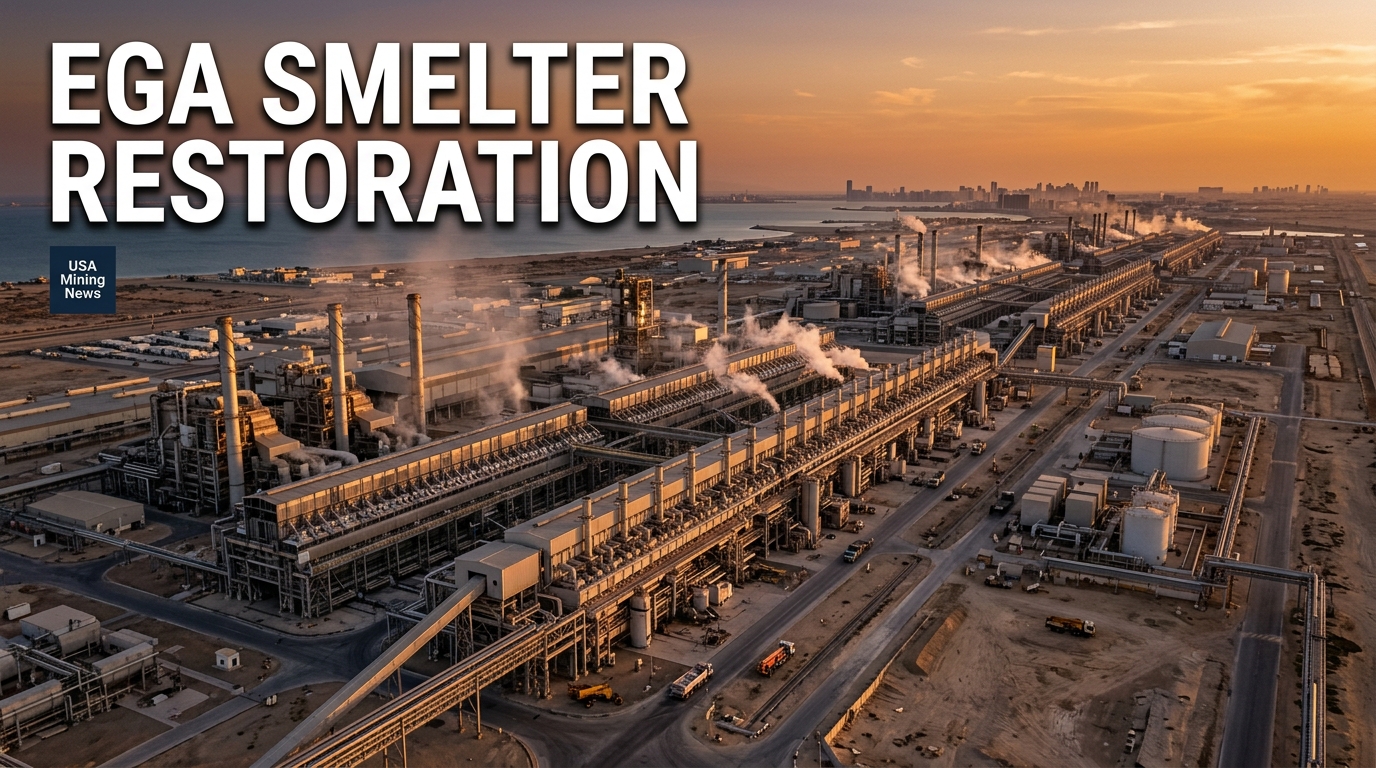
In a significant demonstration of operational resilience, Emirates Global Aluminium (EGA) has reported substantial progress in restoring its vital Al Taweelah smelter in Abu Dhabi, United Arab Emirates. As of August 27, 2026, the company confirmed that 25% of its reduction cells, specifically 315 out of a total of 1,262, have been successfully restarted following an emergency shutdown initiated after an Iranian attack significantly damaged the facility in March. This critical update signals a robust recovery trajectory for one of the world's largest single-site aluminum smelters, a key player in the global aluminum supply chain.
Resilient Recovery Underway at Al Taweelah
The journey back to full capacity for EGA's Al Taweelah smelter has been a meticulously managed, phased operation since the unprecedented incident earlier this year. The restart of 315 reduction cells represents a quarter of the smelter's total operational capability, a testament to the dedication of the approximately 1,000 personnel involved in the restoration efforts. These teams are working across all three potlines at the Al Taweelah facility to expedite the process, focusing on safety and efficiency.
The phased re-energization of the potlines underscores the complex nature of smelter operations. Potline 1 was the first to resume operation on May 26, providing an initial stream of hot metal critical for subsequent restarts. This was followed by Potline 3 on July 13, and most recently, Potline 2 on August 3. Each restarted reduction cell, a fundamental component in the electrolysis process of aluminum production, requires approximately one week to stabilize and reach its full production potential. The initial hot metal produced is not only being cast into finished aluminum products at the Al Taweelah Casthouse but is also strategically utilized to aid in the restart of additional reduction cells, creating a self-sustaining momentum for recovery.
Strategic Context: The March Attack and Its Aftermath
The damage to the Al Taweelah smelter in March, resulting from an Iranian attack on the Khalifa Economic Zone Abu Dhabi, posed an immense challenge for EGA and the broader global aluminum industry. Such an event, impacting critical industrial infrastructure within a major economic zone, highlights the geopolitical risks that can influence commodity markets and supply security. The immediate aftermath necessitated an emergency shutdown, which in a continuous process industry like aluminum smelting, is a complex and costly undertaking, often leading to prolonged recovery periods.
The Al Taweelah smelter, which commenced operations in 2009 with a second phase completed in 2013, represents a significant investment and a strategic asset for the UAE and the global aluminum market. Its multi-billion dollar infrastructure is crucial for primary aluminum production, making the attack a serious concern for supply stability. EGA CEO Abdulnasser Bin Kalban acknowledged the magnitude of the task, stating, "The restoration of production at Al Taweelah is the biggest challenge we have ever faced at EGA." This sentiment underscores the extraordinary circumstances and the intensive effort required to bring such a sophisticated facility back online after substantial disruption.
Operational Complexities and Phased Return to Capacity
The process of restoring a primary aluminum smelter, particularly one of Al Taweelah's scale, is a highly technical and capital-intensive endeavor. Reduction cells, often referred to as potlines, are electrochemical reactors where alumina is dissolved in a molten salt electrolyte and then reduced to pure aluminum through electrolysis. Damage to these cells, especially widespread damage across multiple potlines, requires not only physical repair but also careful re-commissioning to ensure the chemical and electrical stability of the entire system.
EGA's strategy of phased restarts, beginning with Potline 1, demonstrates a methodical approach to managing these complexities. By bringing a portion of capacity online, the company can generate internal resources (hot metal) and valuable operational data to refine the restart procedures for subsequent potlines. This approach minimizes risks associated with a simultaneous full-scale restart and allows for continuous learning and adaptation. Bin Kalban further emphasized this, noting, "This work is led by a dedicated team of experts, and we are applying decades of experience as well as innovative new methods to make safe progress as fast as possible." The goal of achieving full production by the first quarter of 2027 reflects a confident yet realistic timeline given the scale of the original damage and the intricate nature of the restoration.
Navigating Supply Chains: Alumina Refinery and Recycling Plant Operations
Beyond the smelter restoration, EGA is also managing other critical components of its integrated operations. The connected alumina refinery, which processes bauxite into alumina (the primary feedstock for smelters), is currently operating at around 50% of its usual output. However, EGA has clarified that the recovery of aluminum production at the Al Taweelah smelter is not reliant on the alumina refinery returning to full capacity. This indicates strategic inventory management, diversified sourcing, or contractual arrangements that allow the smelter to operate independently of its immediate upstream facility's full recovery. Future increases in the refinery's output will be determined by broader supply chain dynamics and sourcing considerations, highlighting the company's flexible approach to raw material procurement.
In parallel with these recovery efforts, EGA is also advancing its sustainability initiatives. Production ramp-up at EGA’s newly established Al Taweelah recycling plant remains on schedule, with expectations of reaching full production by the end of Q4 2026. This focus on aluminum recycling aligns with broader industry trends towards circular economy principles and reduced carbon footprints. The successful commissioning and operation of the recycling plant will diversify EGA's product portfolio and enhance its environmental credentials, contributing to a more sustainable aluminum supply chain.
Market Implications and Future Outlook
The robust recovery at Al Taweelah holds significant implications for the global aluminum market. The United Arab Emirates is a major producer of primary aluminum, and EGA is a cornerstone of this output. Disruptions from such a large facility can lead to price volatility and supply chain anxieties, particularly for industries heavily reliant on aluminum, such as automotive, aerospace, packaging, and construction. EGA’s steady progress in restoring production helps to mitigate these concerns, providing greater certainty for downstream industries and investors.
The commitment to reaching full production by Q1 2027 provides a clear timeline for the market to anticipate the full return of EGA's substantial output. This sustained recovery demonstrates not only the operational prowess of EGA but also the broader resilience of the global mining and metals sector to geopolitical and operational shocks. The company’s ability to mobilize a large workforce, apply expert knowledge, and innovate under pressure sets a precedent for crisis management in large-scale industrial operations. As the Al Taweelah smelter continues its phased return to full strength, it reinforces the strategic importance of robust infrastructure and skilled human capital in maintaining global commodity flows.