US Intensifies Strategic Push for Access to Venezuela’s Mineral Riches
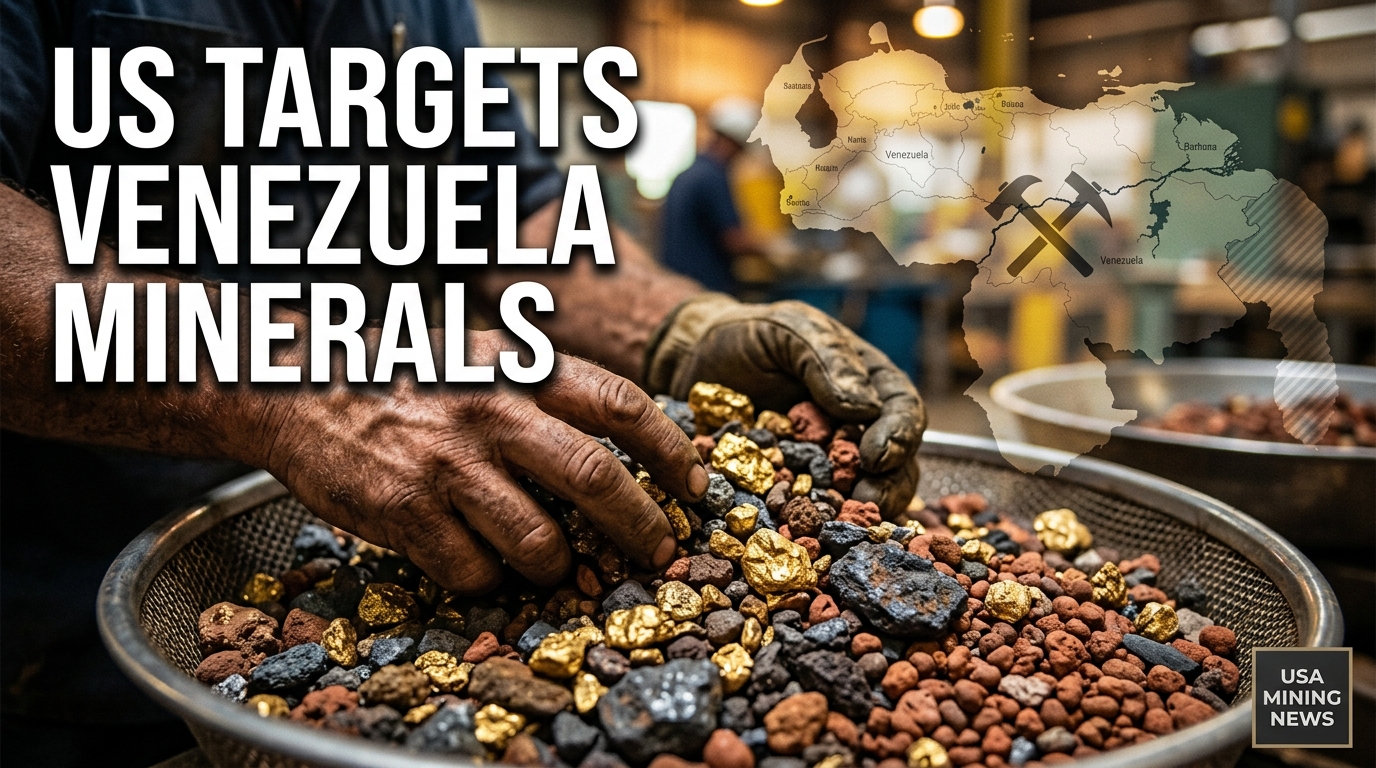
Washington D.C. – September 10, 2026 – The United States is reportedly intensifying its efforts to secure greater access to Venezuela’s vast mineral resources, including significant gold deposits, as part of a broader strategy to expand its economic involvement in the South American nation’s resource sectors. This strategic exploration, initially reported by Reuters based on insights from three sources familiar with internal discussions, signals a potentially transformative shift in US foreign and economic policy towards Venezuela, with profound implications for global mineral supply chains and regional geopolitical dynamics.
The initiative follows prior US engagement in Venezuela’s oil industry and is seen as a deliberate move to open the door for substantial new US investment in mining and critical minerals. This pivot underscores Washington's commitment to diversifying its critical mineral supply sources, enhancing economic security, and strategically positioning itself in a region where geopolitical influence is increasingly contested.
A Strategic Re-Engagement: US Policy Shifts
Sources, who requested anonymity due to the sensitive nature of the discussions, have indicated that the US administration is considering a range of policy options to facilitate investment by US companies in Venezuela's mineral sector. Among these considerations is a draft executive order specifically focused on critical minerals, though its final form remains subject to revision. Parallel to policy development, US officials have engaged directly with representatives from American mineral companies, conducting assessments of their interest in Venezuela’s rich, albeit complex, mining resources.
A pivotal development occurred in March 2026 when the US Treasury Department’s Office of Foreign Assets Control (OFAC) issued specific authorizations for certain transactions involving Venezuelan gold. These initial authorizations, which encompassed activities linked to the state-controlled miner Minerven, were subsequently extended to include a broader array of minerals of Venezuelan origin. Critically, these OFAC authorizations permitted specific mining services and negotiations over potential investment contracts, effectively laying a preliminary framework for US companies to explore and potentially enter the Venezuelan mining sector with a degree of regulatory clarity not seen in years.
The overarching objective behind increasing US presence in Venezuela’s mining industry aligns with a wider strategic imperative: to synchronize Venezuela’s natural resources with Washington’s economic and strategic interests. This initiative is also explicitly designed to counter the burgeoning influence of China across Latin America, where Beijing has significantly expanded its footprint in infrastructure, energy, and resource development.
Venezuela's Rich, Yet Challenged, Mineral Endowment
Venezuela is known to possess a formidable mineral endowment. Its sector is estimated to contain substantial deposits of gold, iron ore, bauxite, and nickel, positioning it as a potentially significant global supplier. A government report from 2018 provided specific resource estimates, detailing:
- Gold: 644 tonnes
- Iron Ore: 14.68 billion tonnes
- Bauxite: 321.5 million tonnes
- Nickel: 407,885 tonnes
Despite these impressive figures, the Venezuelan mineral sector is grappling with a multitude of challenges that could complicate foreign investment. A primary concern is the outdated nature of much of the geological data, which introduces significant uncertainty for resource estimation and project development planning—a critical factor for mining companies assessing investment viability. Furthermore, widespread illegal mining operations present significant security, environmental, and revenue leakage challenges, often operating outside government control and impacting legitimate concession areas. Control over certain reserves also remains uncertain, a legacy of complex political and social dynamics within the country.
In an effort to address some of these structural issues and attract new investment, Venezuela’s lawmakers approved a new mining law in April 2026. This legislation reasserts government ownership over all mineral deposits, a common practice in many resource-rich nations, and notably introduces a royalty rate of up to 13% on the gross production value. While intended to provide a clearer regulatory framework, the efficacy of this new law in overcoming historical investor apprehension remains to be seen.
Previous international investment in Venezuela has frequently been impacted by governmental decisions. A notable example is the non-renewal of Anglo American’s mining concession for the Loma de Niquel nickel site in 2012, an incident that served as a stark reminder of the sovereign risk associated with doing business in the country and contributed to a cautious stance among major international miners.
Economic and Geopolitical Motivations
For the United States, increased access to Venezuela’s critical minerals is not merely an economic opportunity; it is a strategic imperative driven by a desire to fortify its supply chains. Global events in recent years have highlighted vulnerabilities in critical mineral supply, particularly for materials essential to high-tech industries, renewable energy technologies, and defense applications. By fostering investment in Venezuela, the US aims to reduce its reliance on a concentrated pool of suppliers, many of whom are geopolitical rivals, and enhance the resilience of its industrial base. This move aligns with broader "friend-shoring" or "near-shoring" initiatives, seeking to secure resources from politically aligned or geographically proximate nations.
For Venezuela, the potential re-engagement of US companies could offer a lifeline for its struggling economy, providing a legitimate pathway for foreign direct investment, job creation, and infrastructure development. Such investment could also help formalize the mining sector, potentially curbing illegal mining activities by offering structured, regulated alternatives and generating much-needed government revenue through royalties and taxes. However, the success of such engagement will heavily depend on Venezuela’s ability to provide a stable, transparent, and predictable operating environment.
Operational and Investment Landscape: Navigating Risks and Opportunities
The prospect of US companies entering Venezuela’s mining sector presents a complex blend of significant opportunity and considerable risk. For potential investors, the outdated geological data will necessitate extensive and costly exploration programs before committing to development. Furthermore, the prevalence of illegal mining operations poses not only security risks for personnel and assets but also creates competition for resources and complicates land tenure issues. Companies would need robust strategies to navigate these on-the-ground challenges, likely requiring strong engagement with local communities and government authorities.
Despite these hurdles, the sheer scale of the estimated resources, particularly for critical minerals like nickel and bauxite, could be a powerful draw for major diversified mining companies and specialist critical mineral developers. The new mining law, while introducing a significant royalty rate, could, if consistently applied, offer a more predictable regulatory framework than has existed historically. Success for US companies will hinge on meticulous due diligence, robust risk management protocols, and potentially a phased investment approach, starting with smaller, less capital-intensive projects before scaling up.
The Road Ahead: What to Watch For
The coming months and years will be crucial in determining the trajectory of US-Venezuelan mineral sector engagement. Key indicators to watch include:
- The finalization and implementation of the proposed US executive order on critical minerals, particularly if it provides specific incentives or guarantees for investment in challenging jurisdictions.
- Any formal announcements of Memoranda of Understanding (MOUs) or initial investment agreements between US companies and Venezuelan entities.
- Venezuela's practical efforts to implement its new mining law, particularly concerning transparency, enforcement against illegal operations, and the establishment of clear permitting processes.
- The broader geopolitical context in Latin America, including the evolving nature of Chinese investment and influence in the region.
This strategic overture by the US represents a high-stakes play in the global race for critical minerals and regional influence. While the potential rewards in terms of resource access and geopolitical alignment are substantial, the path forward is fraught with operational, political, and regulatory complexities that will require careful navigation from all parties involved. For the mining industry, Venezuela remains a compelling, if challenging, frontier that could reshape future supply dynamics.