Blue Lagoon Resources Achieves Critical Milestone with First Finalized Gold Output from Dome Mountain Mine
Vancouver, British Columbia – October 15, 2026 – Blue Lagoon Resources, a prominent Canadian mineral exploration company, has announced a pivotal achievement in its operational trajectory: the successful completion of its first finalized production of gold and silver concentrate from the Dome Mountain Gold and Silver Mine. Located near Smithers, British Columbia, Canada, this development signals the transition of Dome Mountain from an exploration and development project into a revenue-generating asset, a crucial phase for any junior mining company.
The confirmation of initial finalized concentrate shipments represents not only a technical success but also a significant step towards validating the economic viability of the Dome Mountain project. This milestone underscores Blue Lagoon’s capabilities in executing a full mining cycle, from resource extraction to product sales, providing a tangible return on investment and demonstrating operational competence to the broader mining community and its stakeholders.
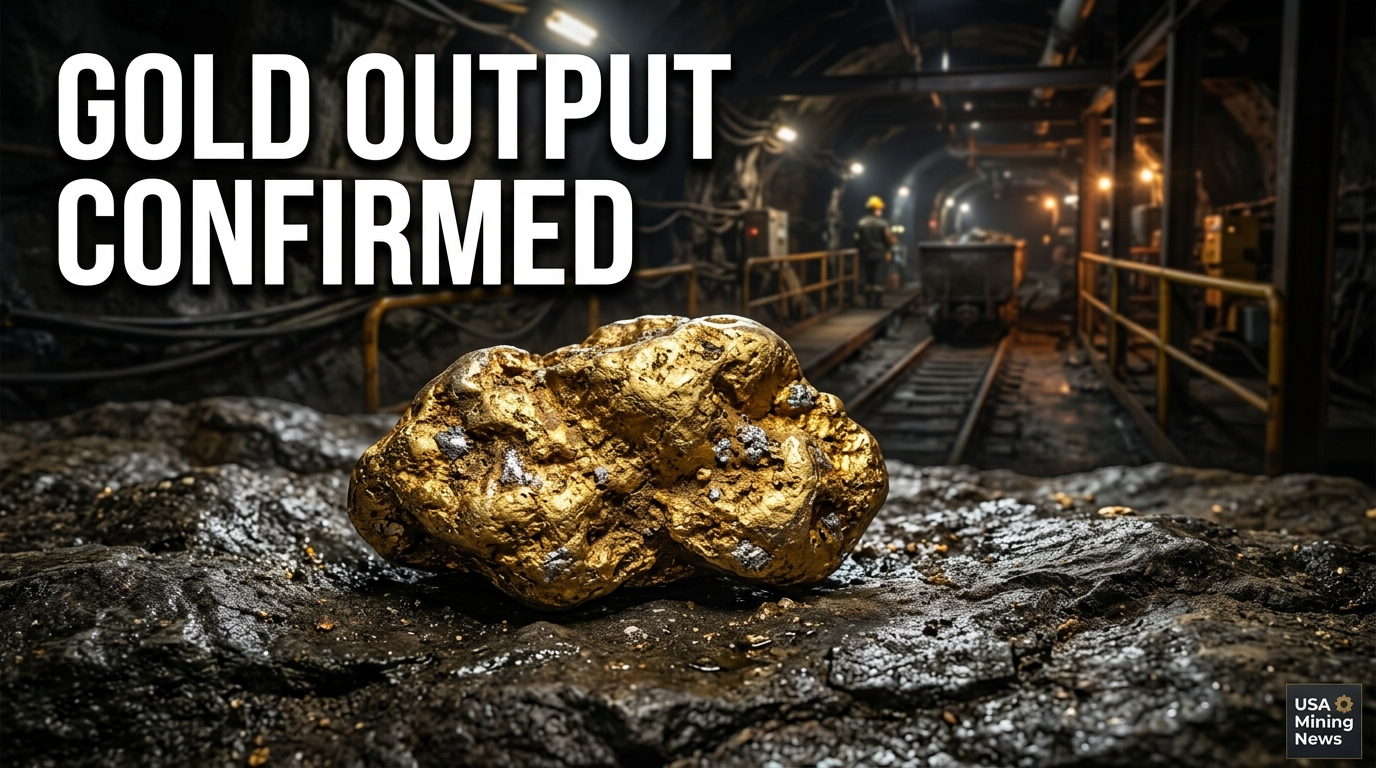
First Gold Output Confirmed at Dome Mountain
The initial finalized shipment of concentrate from the Dome Mountain mine contained a robust 992 ounces of gold and 4,181 ounces of silver. These precious metals were derived from 341.6 dry tonnes (dt) of concentrate, the final figures for which were provided by Ocean Partners, the project’s offtake partner. This confirmation is particularly significant as it represents the culmination of extensive underground development and processing efforts, marking the first time Blue Lagoon Resources has officially confirmed a complete production and sales cycle for the mine.
To date, Blue Lagoon has received approximately 11.6 million USD, equivalent to C$16.5 million, in provisional payments. These payments are for various gold and silver concentrate shipments already made from the Dome Mountain site. While these figures are unaudited and gross of costs, they provide a strong indication of the project’s immediate cash-generating potential. For a junior miner, establishing such cash flow is fundamental for sustaining operations, funding ongoing development, and mitigating reliance on equity financing, thereby reducing dilution for shareholders.
Operational Process and Material Handling
The journey to this first finalized output began in mid-November 2025, when Blue Lagoon commenced transporting mineralized material from the Dome Mountain site. A total of 21,400 tonnes of material had been sent to Nicola Mining’s milling facility, located near Merritt, British Columbia, by September 30, 2026. This logistical undertaking, spanning over ten months, highlights the significant infrastructure and planning required to maintain a consistent supply chain in remote mining regions.
Of the material transported, approximately 17,400 tonnes have already undergone processing at Nicola Mining’s facility. A further 4,000 tonnes currently await treatment, indicating a continuous pipeline of feed material for the mill. Processing operations at Nicola Mining’s 150-tonne-per-day facility officially commenced in February 2026. The initial milling campaign processed 5,002 dry tonnes, which included a considerable amount of lower-grade development material. Prior to processing, assays of this material had estimated it contained approximately 1,200 ounces of gold at a grade of roughly seven grams per tonne (g/t).
The use of a third-party custom milling facility like Nicola Mining’s is a common and often strategic choice for junior mining companies. It allows them to bypass the substantial capital expenditure and operational complexities associated with building and operating their own processing plants, enabling a faster route to production and cash flow. This collaborative approach leverages existing infrastructure and expertise, reducing both financial risk and the timeline to market.
Grades, Recoveries, and Future Shipments
A positive trend observed since the initial processing campaign has been a notable improvement in mill-feed grades from subsequent batches. These later shipments have consistently reported grades in the range of 8–10 g/t gold, a significant uplift from the initial 7 g/t. Such an increase in feed grade directly correlates with higher metal production per tonne of ore processed, enhancing the economic efficiency of the operation. Furthermore, the processing has consistently achieved an average gold recovery of approximately 92%, which is a strong performance metric for a conventional flotation circuit. A high recovery rate ensures that a maximum amount of valuable metal is extracted from the ore, optimizing the overall profitability of the mining process.
The concentrate also maintains a consistent silver-to-gold ratio, remaining at roughly four ounces of silver for every one ounce of gold. This consistent ratio provides predictability for byproduct credits, further contributing to the project’s revenue stream. In addition to the finalized shipment, Blue Lagoon reported that an additional 875 dry tonnes of concentrate were produced and shipped by the end of September 2026. However, final assays for this batch are still pending, which means the exact gold and silver quantities for this material have not yet been disclosed. The provisional payments received for these shipments represent approximately 85% of their estimated value, with final amounts contingent upon confirmed assays, precise weights, and prevailing market prices for gold and silver at the time of settlement.
Blue Lagoon Resources has emphasized that these provisional payments are unaudited and gross of costs, serving as an important distinction for financial transparency. They do not, at this stage, indicate the overall profitability of the Dome Mountain operation, which will be determined by a comprehensive accounting of all operational expenses, including mining, milling, transport, and administrative costs.
Strategic Implications and Industry Context
The confirmation of finalized gold output marks a significant strategic milestone for Blue Lagoon Resources. Rana Vig, Vice-President and CEO of Blue Lagoon, highlighted this achievement, stating, “Operationally, the important development is that Dome Mountain is now functioning through the full production cycle – from underground mining and trucking through milling, concentrate production and sale.” This statement underscores the company’s success in transitioning from an exploration-focused entity to an operating producer, a challenging but often highly rewarding step in the mining industry.
Vig also added, “At the same time, we continue to invest in underground development to provide additional working areas and greater operating flexibility.” This dual focus – on immediate production and ongoing infrastructure development – demonstrates a forward-thinking approach. Investing in additional working areas is crucial for establishing long-term, sustainable production by creating multiple mining fronts, which helps to ensure consistent ore supply to the mill, optimize operational scheduling, and reduce reliance on any single area. This flexibility can also be critical in managing geological variability and adapting to changing operational conditions.
For the broader mining industry, Blue Lagoon’s progress at Dome Mountain serves as a case study in how junior companies can effectively de-risk projects through phased development and strategic partnerships. British Columbia, with its rich mineral endowment and established mining infrastructure, provides a conducive environment for such operations. The province’s regulatory framework, while stringent, offers a clear pathway for responsible resource development, attracting both domestic and international investment.
The Road Ahead for Dome Mountain
With the full production cycle now established, the future outlook for Dome Mountain involves sustained operational activities and continued investment in infrastructure. Blue Lagoon Resources anticipates providing further updates as additional assays are finalized and key operational milestones are achieved. The pending assays for the 875 dry tonnes of concentrate shipped by the end of September 2026 will be crucial in determining the full extent of the Q3 2026 production and revenue figures.
The ongoing underground development is expected to enhance the mine’s capacity and efficiency, potentially leading to increased production rates and lower operating costs per tonne in the future. As the company refines its mining methods and continues to define the resource, there is potential for further optimization of grades and recoveries, which directly impacts the project’s overall profitability. The market prices for gold and silver will also play a significant role in the ultimate financial performance of the mine, as final payments are adjusted based on these prevailing rates.
The success at Dome Mountain could also provide Blue Lagoon with the necessary capital and operational expertise to advance its other exploration projects or to consider future acquisitions. As the company transitions from provisional payments to fully realized revenues, a clearer picture of the project's profitability will emerge, offering valuable insights for investors and setting a precedent for future growth. The mining sector will keenly observe Blue Lagoon’s trajectory as it navigates the complexities of scaling up operations and solidifying its position as a new gold and silver producer.