AI Revolutionizes Copper Exploration in Botswana: Botswana Minerals Uncovers 36 Anomalies
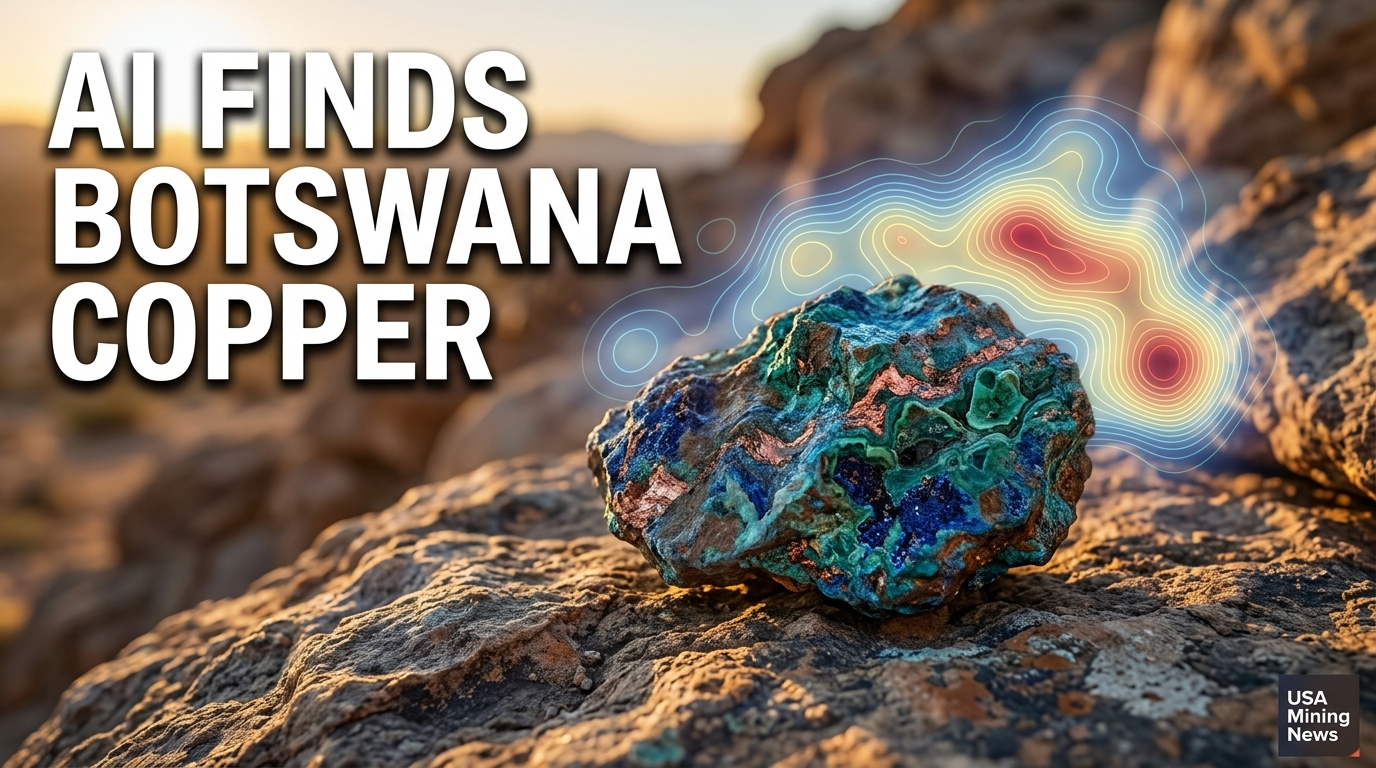
Gaborone, Botswana – May 21, 2026 – In a development poised to reshape mineral exploration strategies across Africa and beyond, Botswana Minerals has announced the discovery of 36 compelling copper anomalies within two of its eight northern Botswana exploration licences. This significant finding, achieved through an advanced artificial intelligence (AI)-assisted study, marks a pivotal moment for the company and the broader mining industry, demonstrating the transformative power of cutting-edge technology in uncovering previously undetected resource potential.
The identified anomalies are clustered into six distinct exploration corridors, situated within a geologically intriguing and historically under-explored region. This critical corridor acts as a natural bridge, linking the renowned Damara Belt in Namibia with the prolific Central African Copperbelt spanning Zambia and the Democratic Republic of Congo (DRC). The implications of this discovery are profound, hinting at an expansion of Africa's known copper production zones and validating the strategic deployment of advanced analytical tools in the quest for essential metals.
A Breakthrough in Geoscientific Intelligence: The Planetary AI Xplore Platform
The cornerstone of this exploration success is the innovative application of Planetary AI’s Xplore platform. This sophisticated system combines the immense computational power of machine learning (ML) with expert geological insights to analyze vast, complex datasets, a methodology increasingly adopted by progressive exploration companies. Unlike traditional exploration methods that can be resource-intensive and time-consuming, AI platforms like Xplore are designed to process and interpret an unparalleled volume of information with speed and precision.
The comprehensive datasets fed into the platform included a multifaceted array of geological information:
- Geological Mapping: Detailed surface and subsurface geological surveys providing fundamental rock type, age, and contact information.
- Structural Data: Analysis of faults, folds, fractures, and other deformational features critical for understanding mineralizing fluid pathways.
- Geophysical Data: Information from various surveys (e.g., magnetics, electromagnetics, gravity) that detect subsurface variations in rock properties associated with mineral deposits.
- Geochemistry: Sampling and analysis of soils, rocks, and water for mineral indicator elements, revealing geochemical footprints.
Remote Sensing: Satellite and aerial imagery analysis to identify surface alterations, structural features, and vegetation patterns indicative of underlying mineralization.
By integrating and cross-referencing these disparate datasets, the AI system was able to identify subtle yet significant patterns that might evade conventional human analysis. This synergy between AI capabilities and human geological expertise is critical, allowing the system to learn from global mineral deposit signatures and apply that knowledge to new, frontier areas, significantly de-risking early-stage exploration.
Strategic Location and Geological Promise: Linking Africa’s Copper Giants
The geographical context of these discoveries is particularly compelling. The under-explored corridor linking Namibia’s Damara Belt with Zambia and the DRC’s Central African Copperbelt represents a highly prospective, yet historically overlooked, geological frontier. The Central African Copperbelt is globally renowned for its immense endowment of sediment-hosted stratiform copper deposits, exemplified by operations like Ivanhoe Mines’ Kamoa-Kakula complex in the DRC, which is celebrated for its high-grade resources and significant production capacity. Similarly, Namibia’s Damara Belt has hosted historical copper production, most notably the Tsumeb mine, which was famous for its exceptionally rich, polymetallic copper-lead-zinc mineralization in structurally controlled carbonate-hosted environments.
The identified anomalies in Botswana exhibit geological traits that suggest potential for several styles of copper mineralization, including:
- Sediment-hosted mineralisation: A common style in the region, often associated with large, stratiform deposits occurring within sedimentary rock sequences. This type aligns with the Kamoa-Kakula analogy.
- Structurally controlled mineralisation: Where mineralizing fluids are focused along faults, shear zones, and other geological structures. This can lead to high-grade vein-style or disseminated deposits and is reminiscent of the Tsumeb mine's characteristics.
- Iron Oxide Copper Gold (IOCG)-style systems: These large, often tonnage-rich deposits are characterized by associations of iron oxides, copper, gold, and sometimes uranium or rare earth elements. While less common than sediment-hosted deposits in the immediate region, their potential for significant scale makes them a highly attractive target.
The geological parallels drawn with deposits like Kamoa-Kakula and Tsumeb immediately elevate the significance of Botswana Minerals' findings, suggesting the potential for substantial, economically viable copper resources within these new target areas.
The Scope of the Discovery: 36 Anomalies Across Eight Licences
The pinpointing of 36 distinct copper anomalies within just two of Botswana Minerals’ eight northern Botswana licences suggests a high degree of prospectivity across its broader land package. The organization of these anomalies into six defined exploration corridors further streamlines future evaluation, allowing for a systematic and cost-effective approach to follow-up work. This concentration of targets in specific corridors enhances the probability of discovering clusters of deposits, potentially leading to the delineation of a new mining district.
John Teeling, Chairman of Botswana Minerals, underscored the profound impact of this new paradigm in exploration. "There is no doubt that AI techniques are revolutionising identification of mineral targets," Teeling stated. "The ongoing analysis of our huge database continues to provide outstanding results. The analysis uses data from copper mines around the world to identify areas with similar geological characteristics, with the next step to rank these anomalies to better focus future fieldwork and any subsequent drilling decisions. This involves deeper AI analysis to support targeted fieldwork." His comments highlight the global comparative analytical power of AI, leveraging known good examples to find new ones, and the iterative nature of AI-driven exploration, which progressively refines targets.
Next Steps on the Ground: Prioritization and Fieldwork
With the initial identification phase complete, Botswana Minerals is now poised to transition to the crucial ground-truthing stage. The company has announced plans to commence initial fieldwork within three months. This period will be intensive, focusing on:
- Refining and Prioritizing: Utilizing deeper AI analysis and initial geological interpretations to rank the 36 identified target areas based on their prospectivity and potential economic viability.
- Developing Field Programmes: Designing specific fieldwork activities, such as detailed geological mapping, rock chip sampling, soil geochemistry, and ground geophysical surveys, for the key corridors identified.
- Planning the Next Stage: Based on the integrated target inventory and initial field results, outlining subsequent phases of exploration, which could include more detailed geophysics, trenching, and ultimately, drilling to define resources.
The swift progression from AI-driven identification to on-the-ground exploration demonstrates the efficiency gains offered by this technology, allowing companies to allocate resources more effectively to the most promising areas, reducing the extensive and often costly blanket coverage characteristic of traditional exploration.
Industry Context: The Global Copper Imperative
This discovery comes at a time when global demand for copper is experiencing unprecedented growth. Often referred to as "Dr. Copper" for its perceived ability to predict economic health, the metal is now more accurately seen as an indispensable component of the energy transition. The rapid global push towards decarbonization, electrification, and renewable energy sources is creating a surging demand for copper within applications such as:
- Electric Vehicles (EVs): Each EV requires significantly more copper than a conventional internal combustion engine vehicle, for its motors, batteries, and wiring.
- Renewable Energy Infrastructure: Wind turbines, solar panels, and the extensive grid infrastructure needed to transmit and distribute renewable energy are highly copper-intensive.
- Datacenters and AI Infrastructure: The rise of digital technologies and AI demands massive computational power, requiring vast amounts of copper for high-speed data transmission and cooling systems.
Industry projections consistently indicate a looming supply deficit for copper in the coming decade, making new, substantial discoveries like those hinted at by Botswana Minerals critically important for meeting future demand and stabilizing prices. Diversifying supply geographical locations also contributes to supply chain resilience.
Botswana's Emerging Role in Global Mineral Supply
Botswana has long been recognized as a premier mining jurisdiction, primarily celebrated for its diamonds, with operations like Orapa and Jwaneng contributing significantly to the national economy. Beyond diamonds, the country also holds significant coal, nickel, and relatively nascent copper resources, such as the Motheo Copper Mine. A major copper discovery, or series of discoveries, in its northern regions could further solidify Botswana's position on the global mining map, enhancing its reputation as a resource-rich nation with a stable regulatory environment and strong governance.
The potential for a new copper district in northern Botswana would not only attract significant foreign direct investment but also create employment opportunities, foster local economic development, and provide a vital new revenue stream for the nation. It represents a strategic diversification away from an over-reliance on diamond revenues, increasing Botswana's economic resilience in a fluctuating global market.
The Future of Exploration: AI and Data-Driven Mining
Botswana Minerals’ success with Planetary AI’s Xplore platform is a testament to a broader trend within the mining industry towards digitally-driven exploration. AI and machine learning are rapidly evolving from niche tools to essential components of modern exploration programs. Their ability to process and interpret vast amounts of diverse geological data, identify subtle patterns, and predict mineral occurrences with higher accuracy is fundamentally changing how new deposits are found.
This shift promises to:
- Reduce Exploration Risk: By prioritizing targets with higher probability, companies can significantly reduce the costs and risks associated with early-stage exploration.
- Increase Success Rates: AI's ability to "see" what traditional methods might miss can lead to more frequent and impactful discoveries.
- Accelerate Discovery Timelines: The speed of data processing allows for quicker identification and follow-up, compressing the exploration timeline.
- Enhance Sustainability: More targeted exploration can reduce the environmental footprint associated with extensive, speculative fieldwork.
As John Teeling highlighted, the "deeper AI analysis" for ranking anomalies is key to optimizing subsequent fieldwork and drilling decisions, ensuring that resources are expended on the most prospective ground.
Investment Implications and Outlook
For investors, this announcement signals heightened prospectivity for Botswana Minerals and potentially for other exploration companies operating in the region. The validation of AI as a powerful discovery tool also bodes well for companies that are early adopters of such technologies. The market will undoubtedly watch Botswana Minerals' upcoming fieldwork with keen interest, as initial results will be critical in determining the scale and economic viability of these newly identified copper targets. The company has indicated that it plans to make further announcements in due course, suggesting ongoing developments that could further enhance its exploration narrative.
In conclusion, Botswana Minerals’ AI-driven discovery of 36 copper anomalies is far more than an isolated finding; it is a powerful demonstration of the future of mineral exploration. By unlocking the potential of an under-explored yet strategically important African geological corridor, and by validating the role of artificial intelligence in this quest, this development underscores Botswana’s growing significance in the global copper supply chain and sets a new benchmark for innovative resource discovery worldwide.