In a global landscape increasingly focused on securing diverse and resilient supply chains for critical minerals, Brazil is positioning itself as a key potential supplier of rare earth elements to Western markets. With the world's second-largest rare earth resource base and a growing portfolio of advanced ionic clay projects, the South American nation is drawing significant attention from governments and the mining industry alike. A recent episode of the
Energy Technology
podcast, published on July 1, 2026, delved into Brazil’s escalating role and the multifaceted challenges it faces, featuring perspectives from leading industry figures.The urgency for diversification has been underscored by the recent G7 declaration on critical minerals, which emphasized the strategic imperative of developing new mining, processing, and recycling capacities among trusted international partners. This geopolitical shift, coupled with an unprecedented surge in demand for rare earths, places Brazil squarely in the spotlight as a nation capable of altering the dynamics of a critical strategic sector.
Brazil’s Strategic Ascent in Critical Minerals
Brazil has long been recognized as a mining powerhouse, with a rich history rooted in mineral extraction. However, the burgeoning demand for rare earth elements (REEs) has dramatically elevated its strategic importance on the global stage. This transformation is driven by several key factors: the rapid expansion of electric vehicles (EVs), the increasing deployment of offshore wind turbines, advancements in electronics, and robust defense applications—all of which rely heavily on specific rare earth elements.
As Western governments actively pursue strategies to de-risk their supply chains from an overwhelming dependence on China, Brazil's inherent geological advantages and political alignment present a compelling alternative. Elizabeth Johnson, Managing Director of Brazil Research at TS Lombard, articulated this sentiment clearly: “Brazil already is a mining country. Within this global push to de-risk supply from China, Brazil understands its potential to play an important role as an alternative supplier.” This understanding is mirrored within Brazil's industrial sector. Rafael Moreno, CEO of Viridis Mining & Minerals, a developer of the Colossus Rare Earth Project in Minas Gerais, highlighted a palpable shift in national priorities, noting: “There’s definitely been a national agenda around critical minerals… Brazil is now seen as an important international partner.” This convergence of national agenda and global demand signals a unique window of opportunity for Brazil to carve out a significant share in the critical minerals market.
The Promise of Ionic Clay Deposits
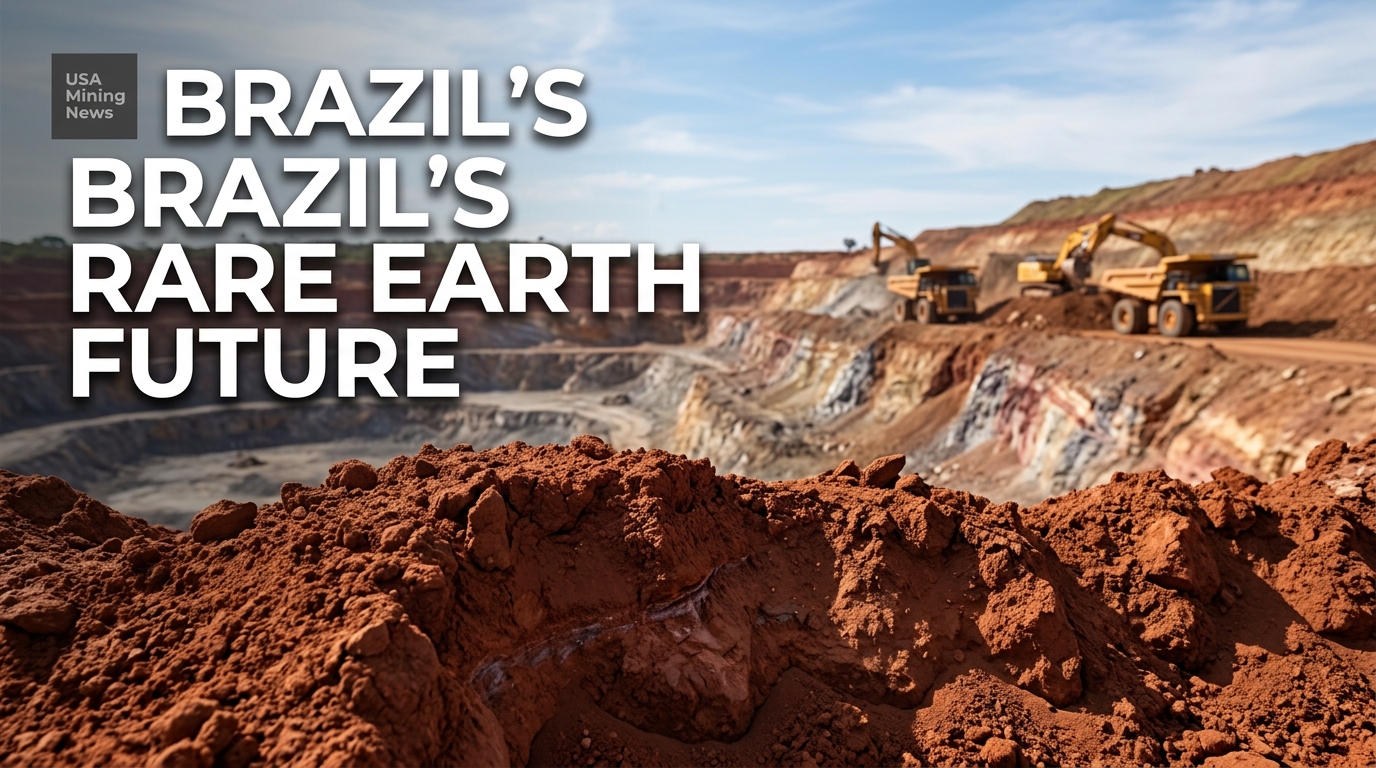
Central to Brazil’s rare earth potential are its ionic clay deposits, which offer significant advantages over conventional hard-rock rare earth projects. The Colossus Rare Earth Project, developed by Viridis Mining & Minerals in Minas Gerais, is a prime example of such a deposit. Unlike hard-rock formations that necessitate energy-intensive crushing and flotation processes to extract rare earths, ionic clay deposits allow for extraction using relatively mild chemical solutions.
These ionic clay systems are particularly attractive for targeting "magnet rare earths," a critical subgroup that includes neodymium, praseodymium, dysprosium, and terbium. These elements are indispensable components in the production of high-strength permanent magnets, which are vital for a diverse array of advanced technologies such as electric vehicle motors, the generators in offshore wind turbines, and sophisticated defense systems. Moreno emphasized the inherent competitiveness of these deposits, stating that their unique characteristics could enable Brazil to compete effectively on both operating costs and environmental performance. The reduced energy consumption and milder chemical processes associated with ionic clay extraction present a more environmentally sustainable mining pathway, which aligns with increasingly stringent global environmental, social, and governance (ESG) standards demanded by investors and consumers alike.
The Race Against Time: Establishing a Market Position
While Brazil’s opportunity in the rare earth sector is substantial, it is also time-sensitive. The global race to diversify rare earth supply is intensely competitive, with numerous other jurisdictions actively advancing their own projects to reduce reliance on the established Chinese supply chain. Nations such as Australia, Canada, the United States, and several African countries are aggressively developing their rare earth capabilities. This creates a finite window for Brazil to establish its position as a major producer.
Moreno articulated this urgency, underscoring that Brazil has only a relatively short period to solidify its standing before competing jurisdictions reach commercial production and capture significant market share. Johnson concurred, pointing to a palpable understanding among Brazilian policymakers regarding this temporal constraint. She noted growing government support for strategic mining projects and concerted efforts to accelerate investment, signaling a commitment to capitalize on this opportunity before the competitive landscape becomes further entrenched. Speed in permitting, financing, and project development will be paramount for Brazil to secure its place in the evolving global rare earth market.
Navigating the Bottlenecks: Mining, Processing, and Financial Certainty
A pivotal discussion within the
Energy Technology
podcast episode focused on identifying the most significant hurdles to the development of alternative rare earth supply chains. This segment highlighted divergent views among experts on where the primary bottlenecks lie, offering valuable insights into the complexities of scaling up a nascent industry.Rafael Moreno, from an operational perspective, argued that the biggest challenge is not the downstream processing capacity but rather the more fundamental task of bringing a greater number of mines into production. He posits that without a robust and consistent supply of raw materials, any subsequent processing infrastructure would be underutilized or non-viable. Conversely, Elizabeth Johnson offered a different perspective, suggesting that long-term pricing signals and commercial certainty are the ultimate determinants of investment decisions. In an industry characterized by significant capital expenditure and long lead times, investors require confidence in stable, favorable market conditions to commit the necessary funds for both mining and processing facilities. Without clear economic incentives and predictable market demand, the risk associated with large-scale rare earth projects remains a deterrent. Adding another layer to the discussion, GlobalData mining analyst Sai Dheeraj highlighted the critical importance of expanding downstream processing capacity within Brazil itself. This expansion is essential if Brazil aims to capture more value from its mineral resources by moving beyond simply supplying raw ores to producing separated oxides or even intermediate rare earth products. Value capture through localized processing not only strengthens a nation’s economic position but also enhances its strategic importance in the global supply chain, reducing reliance on external processing facilities which often constitute another point of supply chain vulnerability.
Beyond Raw Materials: Brazil’s Long-Term Vision
The podcast concluded by exploring Brazil’s longer-term ambitions, delving into whether the country can evolve beyond merely being a supplier of raw materials. The vision extends to Brazil building its own robust downstream processing, separation, and recycling capacity for rare earths. This strategic move would enable Brazil to capture substantially more value within the supply chain, transforming it from an exporter of primary mineral concentrates to a more integrated producer of advanced materials. Such an integrated approach would not only boost Brazil's economy but also enhance its leverage in international trade and technological innovation.
The practical impact of recent G7 commitments on critical minerals development could be significant for projects already underway in Brazil. These commitments generally aim to foster international partnerships, provide financial and technical support, and create frameworks for responsible sourcing. For Brazilian projects, this could translate into easier access to financing, streamlined regulatory pathways for international collaboration, and assured markets for their products among G7 nations. These questions—concerning Brazil's capacity for downstream integration and the tangible effects of global strategic alliances—will undoubtedly shape not only the future trajectory of Brazil’s mining industry but also contribute significantly to the overall resilience and diversification of future global rare earth supply chains. Building out these capabilities will require sustained investment, technological transfer, and enduring international cooperation, cementing Brazil’s role beyond just a geological advantage.
Conclusion: Shaping the Future of Rare Earths
Brazil’s emergence as a promising rare earth supplier presents a critical juncture for both the South American nation and Western economies striving for supply chain resilience. Blessed with the world's second-largest rare earth resource base and a clear geological advantage in ionic clay deposits, Brazil has the foundational elements to become a significant player. The insights from industry experts like Rafael Moreno, Elizabeth Johnson, and Sai Dheeraj underscore that while the geological opportunity is profound, success is contingent upon adept navigation of complex financial, regulatory, and developmental challenges.
The race is on, with a short window to leverage its advantages and establish a firm market position amidst global competition. Brazil's ability to not only accelerate mine development but also to strategically expand its downstream processing capabilities will be paramount. As global geopolitical and economic interests align to diversify critical mineral supplies, Brazil's journey will be closely watched, holding significant implications for the future stability and sustainability of rare earth supply chains worldwide.