Hunter Valley Operations Secures Conditional Approval for Mine Life Extensions Amidst Strict Environmental Mandates
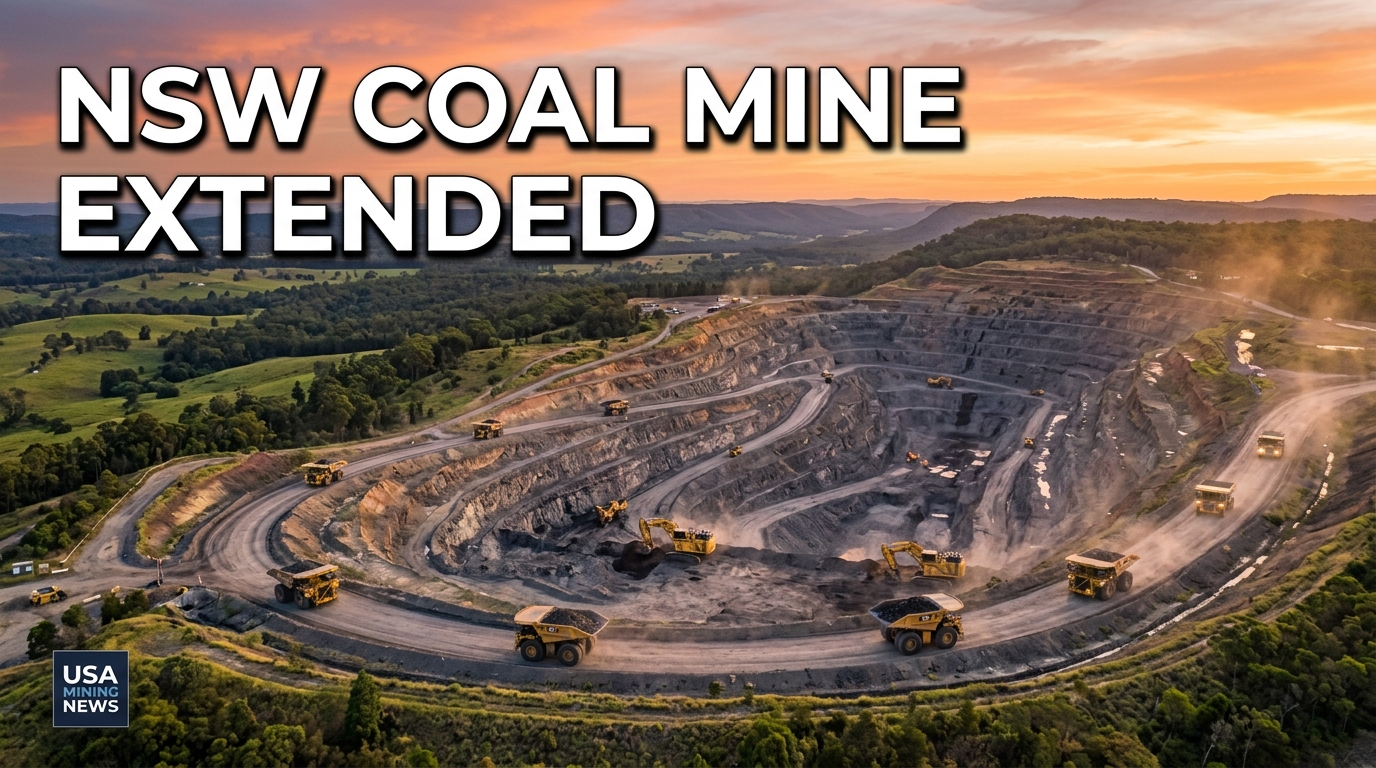
Sydney, NSW, Australia – In a decision poised to significantly impact Australia’s coal sector, the New South Wales (NSW) Independent Planning Commission (IPC) has granted approval for the continuation of open-cut coal mining at Hunter Valley Operations’ (HVO) North and South sites. This critical endorsement, announced on September 30, 2026, allows HVO to recover coal resources within its existing tenements, thereby extending the operational life of HVO North from its current end date of 2026 to 2045, and HVO South from 2030 to 2042. However, this approval comes with a comprehensive suite of conditions, reflecting the increasing global and local scrutiny on the environmental footprint of mining operations, particularly concerning greenhouse gas (GHG) emissions.
The IPC’s Deliberation and Scope of Approval
The IPC’s decision followed the referral of two State significant development applications from NSW’s planning department on June 12, 2026. The Commission undertook an exhaustive review process, underscoring the profound public and regulatory interest in the project. This involved meticulously reviewing 10,576 written submissions and hearing 129 oral submissions over a three-day public hearing. Furthermore, the IPC panel engaged directly with the applicants, local councils, various government departments, the Net Zero Commission, and other relevant regulators. This extensive consultation process highlights the multi-faceted considerations inherent in approving long-term mining projects in a region as economically and environmentally sensitive as the Hunter Valley.
In its Statement of Reasons, the Commission explicitly acknowledged the projected total of 809 million tonnes of GHGs associated with the projects. This figure encompasses emissions from both direct mining operations (Scope 1 and 2) and, critically, the overseas combustion of exported coal (Scope 3). The panel weighed the significant climate impacts of these emissions, both regionally and globally, against the substantial employment and economic benefits proponents cited. This balancing act is increasingly common for mining authorities worldwide as they navigate the complexities of resource extraction in an era of climate change.
Hunter Valley Operations: A Cornerstone of Australian Coal Exports
Hunter Valley Operations is a joint venture, independently managed, with Yancoal holding a 51% stake and Glencore holding 49%. The operation is a major producer of both thermal coal, primarily used for electricity generation, and semi-soft steel-making coal, a vital component in global steel production. The continuation of HVO’s operations is therefore not merely a regional matter but has implications for international energy markets and industrial supply chains.
The Hunter Valley region of NSW is one of Australia's most prolific coal-producing areas, contributing significantly to the national economy through exports, employment, and infrastructure development. The extension of HVO’s mine life ensures the continued contribution of this critical asset to the Australian economy for several more decades. For Yancoal and Glencore, this approval secures long-term revenue streams and reinforces their positions as key players in the global coal market, even as market dynamics shift towards lower-carbon alternatives.
Groundbreaking Conditions for Environmental Mitigation
The IPC’s approval is not unconditional; it imposes a series of stringent requirements designed to minimize the project’s environmental impact, particularly concerning GHG emissions. These conditions represent a significant precedent for future mining approvals in Australia and potentially globally:
- Export Destination Limitations: HVO is directed to limit its coal exports to destinations that possess GHG reduction policies demonstrably consistent with the objectives of the Paris Agreement. This condition is particularly noteworthy as it introduces a layer of global climate policy into local mining approvals, challenging traditional market-driven export strategies.
- Renewable Energy Maximization: The mine operator must maximize the use of renewable energy at the HVO site within four years. This aligns with broader industry trends towards decarbonizing mining operations and reducing reliance on fossil fuels for internal power generation.
- Comprehensive GHG Management Plans: HVO is required to prepare and publish a detailed GHG Mitigation Plan and a Scope 3 Management Plan within specified timeframes. The explicit inclusion of a Scope 3 Management Plan is a critical development, recognizing the vast majority of emissions from coal mining occur when the product is consumed by end-users. This mandates that mining companies take responsibility for emissions beyond their operational boundaries.
- Additional Carbon Offsets: The approval stipulates additional carbon offset purchases beyond those already required under the Commonwealth Safeguard Mechanism. This indicates a higher bar for carbon accountability for projects with significant emission profiles.
- Closure Management Plan: HVO must prepare a comprehensive Closure Management Plan in close consultation with local councils and the community. This plan, subject to the planning department secretary’s approval and regular updates, ensures responsible mine closure and post-mining land rehabilitation, addressing long-term environmental and social liabilities.
- Broader Environmental Safeguards: Beyond GHG emissions, the conditions also address other crucial environmental considerations, including biodiversity protection, water management, noise reduction, and dust suppression. These are standard elements of modern mining approvals but are no less critical for sustainable operations.
These conditions signify a robust regulatory approach that seeks to reconcile the economic imperative of resource extraction with the urgent need for environmental protection and climate action. The focus on Scope 3 emissions and export market considerations signals an evolving landscape where mining companies are expected to play a more active role in the global decarbonization agenda.
The Path Ahead: Federal Approval and Industry Implications
Despite the comprehensive state-level approval, HVO’s continuation project still requires federal environmental approval by the end of December 2026 for operations to proceed uninterrupted. This upcoming federal review will add another layer of scrutiny, particularly concerning the project’s broader national environmental impacts and its alignment with Australia's climate commitments. The federal government’s decision will be closely watched by industry stakeholders, environmental groups, and investors alike, as it will further shape the regulatory framework for large-scale resource projects in Australia.
For the broader mining industry, the HVO approval, with its specific conditions, serves as a significant precedent. It underscores a growing trend where regulatory bodies are moving beyond traditional operational emissions to encompass the entire lifecycle impact of mined commodities. This shift necessitates a re-evaluation of corporate strategies, investment decisions, and operational practices for companies involved in fossil fuel extraction. Mining companies may increasingly need to demonstrate not only operational efficiency and safety but also a clear pathway to managing their full carbon footprint, including Scope 3 emissions, and integrating renewable energy solutions. The requirement to consider the GHG reduction policies of export markets could also lead to a strategic realignment of sales and marketing efforts for coal producers.
Conclusion
The NSW IPC’s conditional approval of the Hunter Valley Operations mine extensions represents a pivotal moment for Australia’s mining sector. It affirms the ongoing economic significance of established coal operations while simultaneously setting a high bar for environmental accountability, particularly in the realm of greenhouse gas emissions. The stringent conditions, especially those pertaining to Scope 3 emissions and export markets, signal a new era of regulatory oversight that demands greater environmental stewardship from mining companies. As HVO proceeds towards securing its final federal approval, the industry will be keenly observing how these groundbreaking conditions are implemented and what broader implications they hold for the future of resource development in a world striving for a lower-carbon economy.