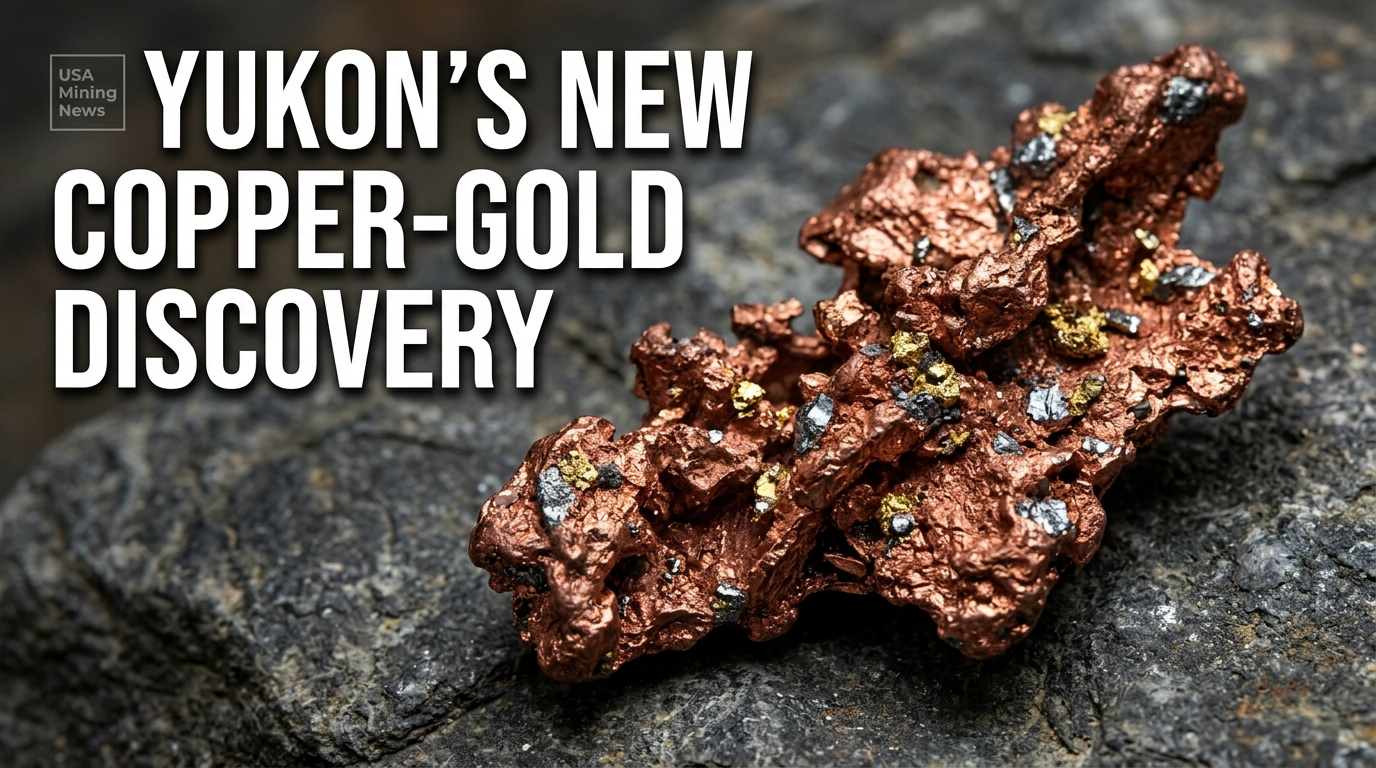
Yukon Metals Unearths Promising Copper-Gold-Molybdenum Porphyry System at Viper Prospect in Canada’s Yukon
WHITEHORSE, YT – October 15, 2026 – Yukon Metals has reported a significant breakthrough in its exploration efforts, announcing the identification of a robust porphyry-style hydrothermal system bearing copper, gold, and molybdenum at its Viper Prospect. This pivotal discovery, situated within the company’s AZ Project approximately 36km south of Beaver Creek in Canada’s resource-rich Yukon Territory, follows a comprehensive 2026 exploration program that has yielded highly encouraging results.
The confirmation of this mineralized system is a critical development for Yukon Metals and underscores the continued potential for major discoveries in the Canadian North. Porphyry deposits are globally significant sources of copper and gold, often characterized by their large tonnage, long operational lifespans, and economic viability. The presence of molybdenum further enhances the prospect's appeal, adding a valuable byproduct to the potential resource profile.
A New Porphyry Discovery in the Yukon
The Viper Prospect, which was formerly known as the Southeast Prospect during initial exploration in 2025, has now emerged as a flagship target for Yukon Metals. The company’s 2026 exploration program was designed to systematically test this area, building upon preliminary indications of mineralization. The focus on a porphyry-style system is particularly noteworthy, as these deposits typically form when hot, mineral-rich fluids ascend from deep within the Earth, depositing metals in a large volume of rock. Their characteristic disseminated and vein-filled mineralization often supports vast, lower-grade operations amenable to bulk mining methods.
The Yukon Territory itself is a geologically prospective region with a long history of mining, known for its significant gold, silver, lead, zinc, and copper deposits. The territory's stable political environment, established regulatory framework, and growing infrastructure make it an attractive jurisdiction for mineral exploration and development. A new discovery of this potential magnitude could further solidify the Yukon’s position as a key player in Canada’s mining sector.
The 2026 Exploration Campaign: Methodical Discovery
Yukon Metals’ 2026 exploration campaign at the Viper Prospect was a multi-faceted approach, integrating several advanced geological and geophysical techniques to provide a detailed understanding of the subsurface geology and potential mineralization. This systematic methodology is crucial for de-risking early-stage exploration and efficiently vectoring towards significant orebodies.
Key components of the 2026 program included:
- Diamond Drilling: The primary tool for direct sampling of the subsurface.
- Drone Magnetic Surveys: Used to map variations in magnetic properties of rocks, often indicative of specific rock types or alteration associated with mineralization.
- Geological Mapping: Detailed surface examination to understand rock units, structures, and alteration patterns.
- Geochemical Sampling: Collection and analysis of soil and rock samples to identify anomalous concentrations of target metals.
- Ground-Induced Polarisation (IP) Surveys: A geophysical technique that measures the chargeability and resistivity of rocks, effective in detecting disseminated sulphide mineralization often associated with porphyry systems.
- Prospecting: Traditional field work involving visual identification of mineral occurrences.
These efforts built upon initial reconnaissance work conducted in 2025, which included soil sampling that first outlined anomalous copper, molybdenum, and gold values at what was then the Southeast Prospect. A reconnaissance hole drilled in 2025, designated AZ25-004, situated approximately 200m north of the main 2026 drill area, provided the initial hint of porphyry-style mineralization, setting the stage for the more intensive follow-up campaign.
Drill Results Unpack Viper's Potential
The core of the 2026 campaign’s success lies in the results from three strategically placed diamond drill holes. These holes, totaling an impressive 1,948m of core, represented the first systematic test of the main Viper target. Crucially, all three holes intersected copper-gold-molybdenum mineralization, providing compelling evidence of a large, contiguous system. A particularly encouraging trend observed across these intersections was the general increase in copper values with depth, a common and highly positive indicator for porphyry deposits, suggesting the potential for higher-grade zones at deeper levels.
Assay results from hole AZ26-008 were particularly noteworthy, returning copper grades of up to 1.85% and gold values of up to 1.97 grams per tonne over a 0.6m interval. While these specific high-grade intervals are important, the broader significance lies in the consistent presence of mineralization across hundreds of meters, indicating the large-scale nature of the system. The multi-phase diorite-gabbro intrusive complex identified beneath the mineralized system further supports the typical geological setting for porphyry mineralization.
Observations of alteration assemblages in both drill core and at surface strongly mirror patterns characteristic of known porphyry deposits worldwide. Alteration is the chemical and mineralogical modification of rocks by hydrothermal fluids, and specific alteration zones are critical pathfinders in porphyry exploration. At deeper intervals within the Viper Prospect, mineralisation is hosted within calc-potassic zones, characterized by the presence of minerals such as magnetite, actinolite, biotite, and K-feldspar. Within these zones, copper sulphides (such as chalcopyrite) and molybdenite occur as both fine disseminations throughout the rock and as infills within hydrothermal veins. Shallower intervals, conversely, exhibit quartz-sericite-pyrite (QSP) alteration, a common "phyllic" alteration zone often found overlying or peripheral to the more potassic core of a porphyry system. The clear zonation of these alteration types provides a robust geological vector for future drilling.
Geophysical and Geochemical Signatures Extend the Target
Beyond the drill bit, the 2026 exploration program utilized geophysical and geochemical methods to extend the footprint of potential mineralization. Anomalous soil geochemistry, which traces dispersed metals in the overburden, combined with a distinct magnetic trend and a coincident IP chargeability anomaly, indicates that the prospective corridor extends east-south-east beyond the immediate vicinity of the current drill area. This suggests that the Viper system is larger than initially defined by drilling, providing significant expansion potential.
An IP chargeability anomaly is particularly relevant for porphyry deposits, as it often highlights zones where disseminated sulphide minerals, such as pyrite and chalcopyrite, are concentrated. The convergence of multiple datasets – geological mapping, geochemical anomalies, magnetic features, and IP responses – provides a powerful, integrated model for guiding further exploration and defining new drill targets.
Strategic Context: Why Viper Matters
The discovery at Viper holds substantial strategic importance for the global mining industry. Copper, gold, and molybdenum are commodities with strong demand drivers. Copper is a critical metal for the global energy transition, essential for electrification, renewable energy infrastructure, and electric vehicles. Gold remains a fundamental safe-haven asset and a component in high-tech applications. Molybdenum, a lesser-known but equally vital metal, is prized for its use in specialty steels, superalloys, and chemical catalysts due to its high strength, corrosion resistance, and high melting point.
Developing a new porphyry deposit in a politically stable and mining-friendly jurisdiction like Canada offers a compelling investment opportunity. The scale potential of porphyries means that if Viper proves to be economic, it could represent a significant, long-term source of these critical metals, contributing to supply security in a world increasingly focused on diversified and ethically sourced raw materials.
Yukon Metals' Vision and Future Outlook
Commenting on the results, Yukon Metals CEO Jim Coates expressed confidence in the prospect’s future. "Viper has developed into a strong copper-gold-molybdenum porphyry target at our flagship AZ property," Coates stated. "All three holes drilled this year encountered hundreds of metres of porphyry-style alteration with locally developed copper-gold-molybdenum mineralisation. With QSP alteration at surface, converging magnetic trends and a coincident IP chargeability high, these results define clear targets for our next round of drilling."
Yukon Metals is now proceeding with further detailed mineralogical, petrographic (study of rock composition and texture), and geochemical studies. The objective of these advanced analyses is to integrate all acquired data into a comprehensive geological model. This refined understanding will be instrumental in precisely identifying and prioritizing future drilling targets at the Viper Prospect, aiming to delineate a maiden resource and advance the project towards economic evaluation.
Broader Implications for the Mining Sector
This discovery by Yukon Metals is a testament to the enduring potential of grassroots exploration, even in relatively well-explored regions. It highlights the importance of systematic exploration programs that leverage modern geological and geophysical techniques. For investors and mining professionals, the Viper Prospect represents a compelling new opportunity in the copper-gold space, especially given the positive market fundamentals for these metals.
The project's advancement will be closely watched as it progresses through the critical stages of resource definition and preliminary economic assessment. Success at Viper could attract significant investment, stimulate further exploration activity in the Yukon, and ultimately contribute to Canada's standing as a global leader in mineral production. As the world increasingly seeks reliable and sustainable sources of metals essential for a modern economy, discoveries such as Viper become ever more critical.