Tragic Landslide Prompts Partial Halt at Codelco's El Teniente Mine, Spotlighting Geotechnical Risks
SANTIAGO, CHILE – October 12, 2026 marked a somber day for the global mining community and Chile's critical copper sector, as Codelco, the world's largest copper producer, announced a partial suspension of operations at its venerable El Teniente mine. This decision followed a tragic landslide incident that claimed the lives of two workers, underscoring the inherent risks associated with mining in geologically complex and environmentally dynamic regions. The incident has initiated a comprehensive investigation by Chilean authorities, drawing attention to the intricate interplay of natural forces, operational methodologies, and safety management in deep underground and open-pit mining environments.
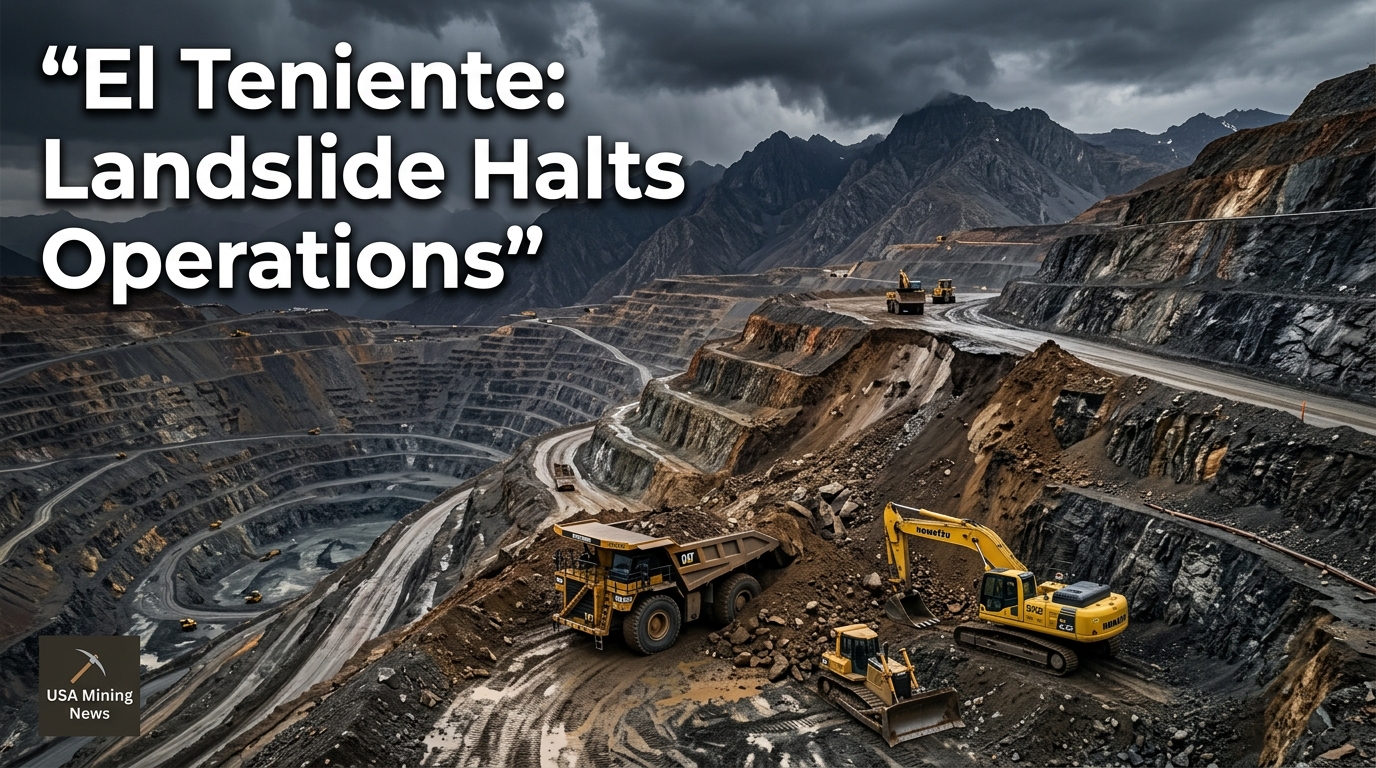
The landslide occurred shortly before 2pm local time on October 12, 2026, specifically in the south pit sector of the El Teniente mine. At the time of the incident, three workers employed by Aura Ingeniería, a contracting firm, were conducting inspection activities in the area. Emergency response teams were immediately deployed, successfully rescuing one worker. However, the search for the remaining two regrettably concluded with the discovery of their bodies later, confirming the fatal outcome of the slide. Codelco, a state-owned enterprise pivotal to Chile's economy, promptly extended its deepest condolences to the families of the victims, acknowledging the profound loss and impact on the mining community.
Details of the Incident and Immediate Response
According to information released by SERNAGEOMIN, Chile's national geological and mining service and the primary mining regulator, the landslide was primarily attributed to heavy rainfall that had impacted central Chile. This meteorological event significantly affected the open-pit operations at El Teniente, where the incident transpired. The confluence of saturated ground conditions and the inherent geological characteristics of the Andes Mountains likely contributed to the slope failure.
Codelco emphasized that "Actions aimed at safeguarding the well-being of the three workers who were in the area at the time of the incident were immediately activated" following the event. This statement highlights the rapid deployment of emergency protocols that are standard in the mining industry, even in the face of unforeseen geological hazards. Beyond immediate rescue efforts, the company confirmed its full cooperation with the ongoing investigations. Chile's investigative police (PDI) and the Public Prosecutor's Office have swiftly taken charge at the mine site, initiating inquiries into the precise circumstances leading to the accident. Such multi-agency involvement is standard practice in significant industrial accidents in Chile, ensuring a thorough and independent examination of safety protocols, operational procedures, and environmental factors.
El Teniente: A Century of Copper Production and Modern Challenges
El Teniente is not merely a mine; it is a monument to Chile's copper heritage and a strategic asset in the global supply chain. Located in the majestic Andes Mountains, approximately 75 kilometers south-east of the capital, Santiago, the mine has been in continuous operation for over a century. Its longevity is a testament to the colossal copper reserves within its vast geological formations. The site is an engineering marvel, featuring an extensive network of more than 4,500 kilometers of tunnels and underground galleries. This makes El Teniente one of the largest underground copper mines in the world, renowned for its block caving method of extraction, which demands meticulous geotechnical planning and execution.
Operating a mine of this scale and age presents a unique set of challenges. As mining progresses deeper and infrastructure ages, managing ground stability becomes increasingly complex. The geological stresses, coupled with the dynamic forces of nature such as seismic activity and extreme weather patterns, require continuous monitoring, advanced engineering solutions, and rigorous safety protocols. The heavy rainfall cited as a factor in the recent landslide is a potent reminder of how environmental conditions, increasingly exacerbated by climate change, can introduce significant risks to even the most robust mining operations, particularly in mountainous terrains prone to erosion and mass wasting.
Previous Geotechnical Concerns: The Andes Norte Project Suspension
The October 2026 landslide at El Teniente’s south pit is not an isolated incident concerning geotechnical stability at the sprawling complex. Just two months prior, in August 2026, Codelco had made another significant announcement regarding its El Teniente Division: the temporary suspension of development and construction work at the crucial Andes Norte project. This earlier suspension was precipitated by concerns over rising seismic risks.
Codelco revealed that recent technical assessments at Andes Norte had detected seismic activity occurring at greater depths than previously observed and managed. This new understanding of the area’s geodynamics necessitated a halt to operations to re-evaluate designs and operational strategies. While the August 2026 suspension at Andes Norte was related to deep-seated seismic activity and the recent landslide to heavy rainfall impacting open-pit operations, both events underscore the persistent and multifaceted geotechnical challenges Codelco faces at El Teniente. They illustrate the critical need for continuous geological assessment, adaptive engineering, and a proactive safety culture to mitigate risks in one of the world’s most challenging mining environments.
The Andes Norte project is a cornerstone of El Teniente's structural transformation plan, designed to extend the mine's operational life by decades and maintain Codelco's leadership in global copper production. Delays or modifications to such projects due to geological concerns have significant implications for future output and capital expenditure, highlighting the economic stakes intertwined with geotechnical stability.
Broader Implications for the Copper Industry and Mine Safety
The tragic events at El Teniente have immediate and long-term implications for Codelco, the Chilean mining industry, and the broader global copper market. For Codelco, the partial halt means a disruption to production, the extent and duration of which will depend on the findings of the investigations and necessary remedial actions. As a significant contributor to global copper supply, any sustained impact on Codelco's output can influence international copper prices and supply dynamics. Investors and analysts will be closely monitoring the situation, not only for production forecasts but also for insights into Codelco's capital expenditure plans for enhancing geological stability and safety.
Beyond production figures, the incident places a renewed spotlight on mine safety, particularly in the context of contractor management. The fact that the deceased workers were employed by Aura Ingeniería underscores the importance of ensuring uniform safety standards and training across all personnel, whether direct employees or third-party contractors. This incident will undoubtedly trigger a comprehensive review of safety protocols, risk assessment procedures, and emergency response plans across the entire Chilean mining sector, reinforced by SERNAGEOMIN's oversight.
Furthermore, the attribution of the landslide to heavy rainfall highlights an emerging challenge for the mining industry globally: the increasing frequency and intensity of extreme weather events due to climate change. Mining operations, especially those in exposed mountainous or remote regions, are increasingly vulnerable to such phenomena. Companies are being forced to integrate climate resilience into their operational planning, infrastructure design, and risk management strategies, considering not only geological stability but also hydrological impacts.
Future Outlook and Operational Continuity
As investigations proceed, Codelco's primary focus will remain on supporting the families of the victims, cooperating fully with authorities, and ensuring the safety of all personnel. The partial suspension at El Teniente’s south pit will likely remain in effect until the immediate area is deemed stable and the root causes of the landslide are thoroughly understood and addressed. This process could involve further geological surveys, slope stability analyses, and potential modifications to mining plans or infrastructure.
The broader El Teniente complex, including the Andes Norte project, will continue to navigate the intricate balance between maximizing copper extraction and meticulously managing the formidable geotechnical and environmental risks inherent to its operations. Codelco’s commitment to modernizing its aging assets and extending mine life through massive investment programs like those at Andes Norte underscores its long-term vision. However, such ambitious plans must be underpinned by an unwavering dedication to safety and a continuous evolution of risk management practices, especially in the face of increasingly complex geological conditions and a changing climate. The events of October 12, 2026, serve as a potent reminder that even in the most technologically advanced mining operations, human lives remain the paramount concern, and vigilance against natural hazards is a perpetual necessity.