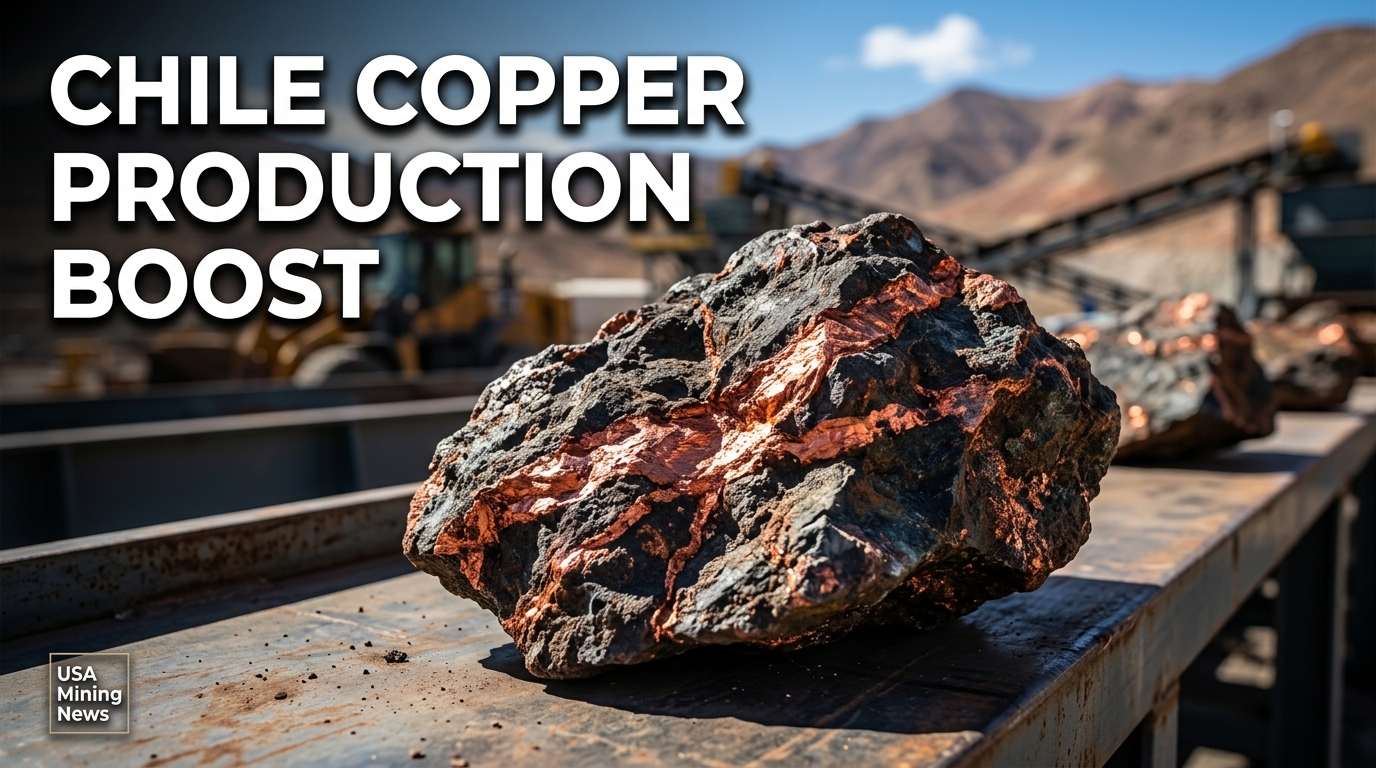
Santiago, Chile – In a strategic move poised to enhance resource utilization and potentially boost copper output, CoTec and Battery Mineral Resources (BMR) have announced a non-binding framework agreement. This collaboration aims to evaluate a proposed partnership designed to increase copper production within BMR’s Punitaqui mining district in Chile. The announcement, initially reported by Shree Mishra on October 16, 2026, signals a commitment to exploring innovative solutions for resource optimization in a key global copper producing region.
Strategic Alliance Formed for Punitaqui Copper Expansion
The core of the agreement between CoTec and BMR is the intention to establish a strategic economic joint venture (JV). While currently non-binding, except for standard provisions like exclusivity and confidentiality, this framework agreement sets the stage for a comprehensive evaluation process. The ultimate formation of the JV is contingent upon successful technical and economic assessments, followed by the negotiation and signing of definitive agreements between the two entities.
The proposed partnership seeks to combine Punitaqui’s significant existing resources, established infrastructure, necessary permits, and experienced workforce with CoTec’s specialized expertise in sourcing and applying advanced technologies for project development. This synergy is intended to unlock new avenues for copper recovery and production growth within the district, which, according to CoTec CEO Julian Treger, holds "significant growth potential beyond the current mine plan."
Targeting Untapped Value: Lower-Grade Ores and Tailings
A primary objective of this collaboration is to assess and implement new methods for recovering copper from previously underutilized or discarded materials. Specifically, the partnership will focus on applying technologies identified or sourced by CoTec to extract copper from lower-grade sulphide mineralization and existing mine tailings at Punitaqui. This approach aligns with a broader industry trend towards maximizing the value from a mine site, as high-grade deposits become scarcer and processing technologies advance.
The initial phase of the assessment will be critical, focusing on two key areas:
- Metallurgical Testing: Detailed laboratory and pilot-scale tests will be conducted to determine the efficacy of CoTec’s proposed technologies on Punitaqui’s specific mineralogy, particularly its lower-grade sulphide ores and tailings.
- Preliminary Technical and Economic Review: This review will evaluate the feasibility and potential profitability of implementing these technologies. It will analyze capital and operating costs, projected recovery rates, and the overall economic viability of new production streams.
The analysis will specifically target opportunities to improve copper recovery from historical and ongoing tailings, evaluate the economic potential of lower-grade mineralization that might have been deemed uneconomic under conventional processing methods, and identify areas for additional growth and potential new copper production streams across the entire Punitaqui mining district.
Julian Treger emphasized this focus, stating, "We believe there are opportunities to increase copper production and unlock additional value by applying CoTec’s resource optimisation and processing solutions to existing resources, lower-grade sulphides and tailings." This statement highlights the strategic imperative to extract maximum value from existing assets, an increasingly vital strategy in an era of complex ore bodies and fluctuating commodity prices.
A Collaborative Model for Resource Optimization
The proposed economic framework for the joint venture is designed to incentivize shared success while respecting existing ownership structures. Under the proposed value-sharing arrangement:
- BMR's Existing Interests: Battery Mineral Resources would maintain full ownership and economic interest in its current operations and existing resources, based on a mutually agreed baseline. This ensures BMR continues to benefit from its established production and asset base.
- Shared Value from New Projects: CoTec and BMR would then share equally in the economic value and any additional copper production that results from projects generated through the application of CoTec’s technologies or new developments identified by the partnership. This model directly links rewards to the success of the innovative solutions introduced by the JV.
Notably, CoTec is expected to fund the cost of approved third-party assessments and tests during this initial evaluation stage. This commitment by CoTec to bear the initial financial burden for specialized assessments demonstrates confidence in the potential of its technological solutions and reduces immediate financial exposure for BMR during the critical evaluation phase. Upon completion of these evaluations, both parties anticipate moving forward to negotiate definitive agreements to implement the proposed JV and pursue any identified development opportunities within the district.
The Broader Industry Context: Copper's Crucial Role and Innovation Imperative
This proposed partnership between CoTec and BMR is particularly relevant given the global copper market dynamics. Copper, often referred to as "Dr. Copper" for its perceived economic predictive power, is a fundamental metal crucial for global industrial activity and, increasingly, for the energy transition. The metal is indispensable for renewable energy technologies, electric vehicles (EVs), and the expansion of electrical grids, driving a projected surge in demand over the coming decades.
Against this backdrop, the mining industry faces significant challenges in meeting future supply requirements. Depleting high-grade deposits, rising capital costs, extended permitting timelines, and increasing environmental scrutiny necessitate innovative approaches. Recovering copper from lower-grade materials and tailings, as proposed at Punitaqui, addresses several of these challenges:
- Extending Mine Life: It allows existing operations to access additional resources within their permitted boundaries, effectively extending the productive life of a mine without requiring new greenfield development.
- Environmental Benefits: Processing tailings can reduce the environmental footprint of past mining activities by extracting valuable metals and potentially improving the stability and composition of waste impoundments.
- Resource Efficiency: It represents a more efficient use of the Earth's finite mineral resources, aligning with principles of a circular economy in mining.
- Technological Advancement: Such projects often drive the development and adoption of advanced hydrometallurgical or bio-metallurgical processing routes, which can be more energy-efficient and environmentally friendly than traditional pyrometallurgical methods.
Chile, where the Punitaqui district is located, is the world's largest copper producer, and developments in its mining sector have global implications. Innovations in resource recovery within Chile set precedents and demonstrate pathways for other major mining jurisdictions. The strategic significance of maximizing output from existing assets in a country so central to global copper supply cannot be overstated.
Next Steps and Future Prospects
The path forward for the CoTec-BMR partnership involves a thorough, multi-stage process. The initial metallurgical testing and economic review, funded by CoTec, will be paramount. If these assessments yield positive results, the focus will shift to the detailed negotiation of the definitive agreements required to formally establish the strategic economic joint venture.
Should the partnership materialize as planned, it holds significant potential for the Punitaqui mining district. Increased copper production, extended mine life, enhanced resource utilization, and the demonstration of advanced processing technologies could all be tangible outcomes. For the broader mining industry, this collaboration offers a compelling example of how combining operational assets with specialized technological expertise can unlock significant value and contribute to the sustainable supply of critical minerals essential for the global energy transition.
The mining world will be closely watching the progress of this non-binding framework, as it could represent a blueprint for future collaborations aimed at optimizing existing resources and securing the vital copper supply needed for a rapidly electrifying future.