U.S. Department of Energy Ignites Nuclear Renaissance with $17.5 Billion Supply Chain Loan, Poising Uranium Sector for Growth
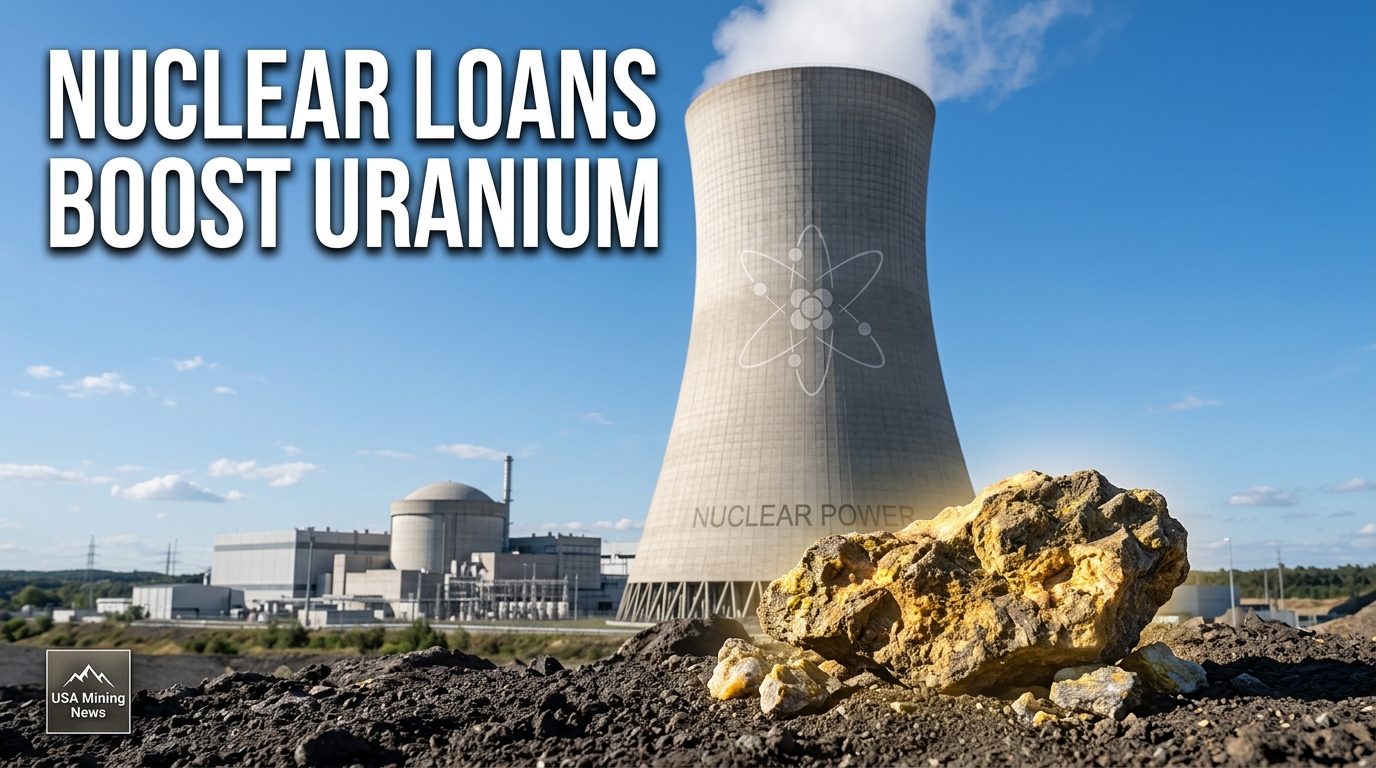
WASHINGTON D.C. – In a clear signal of renewed federal commitment to America's nuclear energy future, the U.S. Department of Energy’s (DOE) Office of Energy Dominance Financing (EDF) announced a conditional loan commitment totaling an impressive $17.5 billion. This landmark financing is specifically earmarked to support the procurement of long-lead time items—critical components requiring extensive manufacturing and delivery schedules—necessary for rebuilding the nation's commercial nuclear supply chain. The initiative is set to accelerate the deployment of 10 new large-scale commercial nuclear reactors across the United States by up to three years, marking a pivotal moment for energy security, industrial resurgence, and, notably, a potential boon for the domestic mining industry.
The announcement, made on June 23, 2026, directly aligns with President Trump’s Executive Order, Reinvigorating the Nuclear Industrial Base, reinforcing the ambitious objective of having 10 new large nuclear reactors with complete designs under construction by 2030. This strategic move aims not only to bolster America's energy independence but also to reclaim its leadership in nuclear power generation, creating significant ripple effects throughout related industrial sectors, including the vital supply of nuclear fuels.
A New Era for U.S. Nuclear Power Infrastructure
According to U.S. Energy Secretary Chris Wright, "Just over one year ago, President Trump directed the Energy Department and its agency partners to unleash the next American nuclear renaissance. To accomplish that mission, these conditional loans will play an important role in reviving the supply chain needed for America to once once again build large-scale commercial reactors. They will also help accelerate the timeline of building those large-scale reactors by up to three years, lowering construction costs and ensuring the United States is able to deliver on President Trump’s bold and ambitious energy addition agenda."
The $17.5 billion American Nuclear Supply Chain Loans will facilitate up to five eligible projects, each sponsored by a partnership between a utility or energy company and Westinghouse Electric Company. Each project will support the construction of two reactors at a single site, culminating in the deployment of 10 new large-scale units nationwide. This structured approach, backed by substantial federal financing, is designed to overcome historical hurdles in nuclear plant construction, including manufacturing bottlenecks and escalating costs, by streamlining procurement processes for critical, long-lead components.
The AP1000® and Critical Long-Lead Items
At the core of this ambitious deployment is the Westinghouse AP1000® unit, currently the only licensed large-scale advanced commercial reactor operating in the United States. Each of these AP1000® reactors is designed to generate 1.1 GW of power. Consequently, the combined output from the 10 new reactors will add 11 GW of clean, baseload electricity to the national grid, sufficient to power nearly 10 million American households. This represents a substantial increase in the nation's carbon-free electricity generation capacity, contributing significantly to energy security and environmental objectives.
Identifying and securing "long-lead items" is paramount in nuclear project development. These are complex, custom-engineered components such as reactor pressure vessels, steam generators, and turbines, which often require years for specialized manufacturing and delivery. The bulk equipment purchase order structure enabled by the EDF loan facilities is critical. By aggregating demand across multiple projects, this approach aims to:
- Drive down costs for individual nuclear components through economies of scale.
- Create significant supply chain efficiencies by allowing manufacturers to plan production cycles more effectively.
- Shorten timelines for nuclear deployment by up to three years, directly addressing one of the most significant challenges in nuclear construction.
Under the terms of these conditional loans, Westinghouse will partner with up to five eligible utilities and energy companies across the nation to procure these essential long-lead items at a fixed price. Each project will be jointly owned by Westinghouse and its respective utility or energy company partner. A key requirement for accessing the DOE loan funds is a substantial upfront equity commitment: Westinghouse and each partner must commit $500 million each ($1 billion total per project). This substantial private sector investment demonstrates strong industry confidence and a shared commitment to the projects’ success. Furthermore, Westinghouse has already signed letters of intent with seven potential partners, each having identified specific project sites, indicating robust interest and readiness for deployment. The purchasing process for each project will be staggered based on the timing of these equity commitments and other relevant factors.
Implications for the U.S. Mining Sector: A Uranium Renaissance?
For the North American mining industry, particularly the uranium sector, the DOE's $17.5 billion commitment to new nuclear builds signals a potentially transformative period. The deployment of 10 large-scale reactors, collectively adding 11 GW of nuclear capacity, represents a significant, sustained increase in demand for nuclear fuel. This long-term demand signal is precisely what the languishing U.S. uranium mining industry has needed.
Historically, the United States has been a significant producer of uranium. However, decades of low prices, high production costs, and competition from international suppliers have led to a near cessation of domestic primary uranium production. Today, the U.S. relies heavily on imported uranium for its existing fleet of reactors. The strategic imperative of rebuilding a domestic nuclear supply chain, as highlighted by Secretary Wright, extends beyond reactor components to the very fuel that powers them.
A robust domestic nuclear industry requires a secure and reliable supply of uranium. This new initiative, therefore, could provide the crucial catalyst for:
- Restarting U.S. Uranium Mines: The prospect of long-term domestic demand could justify the capital investment required to reopen dormant uranium mines and processing facilities.
- Exploration and Development: Increased demand and improved market conditions could spur new exploration efforts across traditional uranium-producing states like Wyoming, Texas, Utah, and New Mexico.
- Supply Chain Security: Reducing reliance on foreign sources for uranium and enrichment services would enhance U.S. energy security, mitigate geopolitical risks, and create domestic jobs across the entire fuel cycle.
- Economic Revitalization: Investment in uranium mining and processing would bring economic opportunities to rural communities, creating skilled jobs and supporting local economies.
While the EDF loan program directly targets reactor component procurement, the overarching goal of "unleashing the next American nuclear renaissance" and achieving "energy dominance" necessitates a comprehensive approach to the nuclear fuel cycle. This implicitly includes a more resilient and domestically sourced uranium supply, making the DOE's investment a powerful indirect signal to uranium producers and investors. The bulk purchase mechanism for reactor parts could logically extend to bulk, long-term contracting for uranium, offering the stability necessary for mining companies to commit to new production.
Beyond the Conditional Commitment: The Road Ahead
It is important to note that the DOE’s announcement is a conditional loan commitment. This indicates the Department's intent to provide financing, but it hinges on certain conditions being met. Before definitive financing documents are finalized and funds are disbursed, DOE and the companies involved must satisfy a range of technical, legal, environmental, and financial prerequisites. This thorough due diligence process ensures the viability and robustness of each project.
Secretary Wright is scheduled to visit Idaho National Laboratory on Thursday, June 25, just two days after the loan announcement. This visit, on the eve of the nation's 250th anniversary, is an opportunity to highlight the broader achievements and future potential of America’s nuclear renaissance under the current administration, further underscoring the strategic importance of nuclear energy in the national agenda.
The DOE's $17.5 billion loan commitment is more than just a financial injection; it is a strategic investment in America's industrial future, energy security, and technological leadership. By de-risking large-scale nuclear construction and revitalizing critical supply chains, the initiative promises to not only bring on line 11 GW of new clean power but also to generate significant opportunities for the U.S. mining sector, particularly in the realm of domestic uranium production. The long-awaited nuclear renaissance appears to be firmly underway, with profound implications for the entire energy and resource value chain.