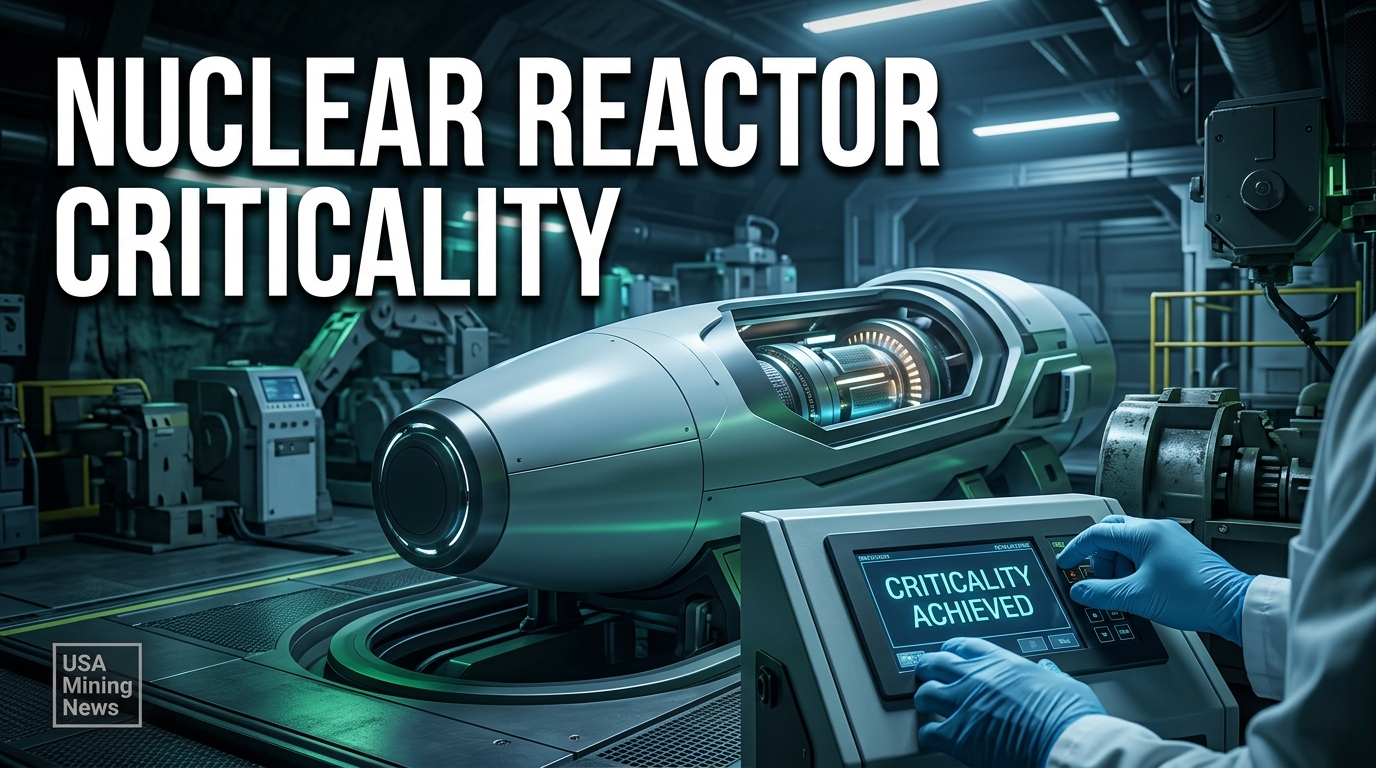
WASHINGTON D.C. – A new era for American energy and, by extension, the global mining industry, commenced on June 4, 2026, as Antares Nuclear’s cutting-edge Mark-0 advanced reactor successfully completed a zero-power fueled criticality demonstration. This historic event, hosted at the U.S. Department of Energy’s (DOE) Idaho National Laboratory (INL), marks a profound milestone in the nation's efforts to rejuvenate its nuclear power capabilities and accelerate the deployment of next-generation reactor technologies.
The criticality demonstration, a crucial phase in bringing a nuclear reactor to operational status, confirms the Mark-0’s ability to operate safely and efficiently. It also lays the groundwork for subsequent reactors of its design to begin producing electricity as early as 2027. This achievement is particularly significant as it represents the first instance in over four decades that a new, privately developed non-light-water reactor has achieved criticality within the United States, positioning it as a vanguard in President Trump's ambitious Reactor Pilot Program.
A New Dawn for American Nuclear Power
The successful criticality of the Mark-0 reactor is more than a technical triumph; it is a powerful symbol of the "rebirth of America’s nuclear industry," as articulated by U.S. Energy Secretary Chris Wright. Speaking on the eve of the nation’s 250th anniversary, Secretary Wright emphasized the historical importance of this moment. “For the first time in more than four decades, a new privately developed non-light-water reactor has reached criticality in the United States,” he stated. “Thank you to President Trump for his bold leadership and thank you to the bold scientists and entrepreneurs at Antares and Idaho National Laboratory who helped make this moment possible. I look forward to seeing continued progress in the American nuclear renaissance."
This pivotal event comes less than a year after President Trump’s May 2025 executive order, which mandated that multiple advanced reactors go critical by a demanding July 4th deadline. Assistant Secretary of Nuclear Energy Ted Garrish highlighted the speed and dedication involved: “The skeptics didn’t believe President Trump's Reactor Pilot Program could achieve criticality in less than a year. Today, we celebrate the first of the pilot projects to reach criticality and the people who rolled up their sleeves to shape the future of nuclear energy in the United States.”
The achievement at INL is the culmination of meticulously planned and executed steps, validating the safety and operational performance of Antares Nuclear’s fission reactor. This critical step will inform the design, development, and, crucially, the licensing processes for future commercial reactor deployments.
The Mark-0: A Blueprint for Future Energy
The Mark-0, designed by Antares Nuclear, represents a significant leap in advanced reactor technology. As a non-light-water reactor, it deviates from the conventional pressurized water reactors (PWRs) and boiling water reactors (BWRs) that form the backbone of the existing global nuclear fleet. These advanced designs often offer enhanced safety features, greater fuel efficiency, and the flexibility to operate at higher temperatures, potentially enabling broader industrial applications beyond electricity generation, such as hydrogen production or industrial heat. While specific technical details of the Mark-0's core design or coolant type were not released, its classification as a "microreactor" suggests a compact, modular design capable of rapid deployment and operation in diverse environments.
The criticality demonstration, conducted at "zero-power," means the reactor achieved a self-sustaining chain reaction without generating significant heat for electricity production. This initial stage is vital for validating nuclear physics models, confirming core design integrity, and ensuring that control systems perform as expected in a safe, low-power environment. It is a prerequisite for progressing to higher power levels and eventual commercial operation.
The Idaho National Laboratory, a site synonymous with groundbreaking nuclear research since 1951, serves as the ideal proving ground. The Mark-0 joins a storied lineage as the 53rd reactor built at the INL site, placing it alongside test reactors that pioneered the blueprint for America's existing nuclear fleet. This rich history provides an unparalleled foundation of expertise and infrastructure for the rigorous testing and validation required for new nuclear technologies.
Catalyzing Innovation: Government Programs and Industry Collaboration
The rapidity with which the Mark-0 achieved criticality is a testament to the efficacy of the DOE’s Reactor Pilot Program. This program leverages DOE authorization to "expeditiously certify and construct first-of-a-kind advanced reactor designs for demonstration." This streamlined approach significantly reduces the time and bureaucratic hurdles typically associated with novel nuclear projects, directly addressing one of the most persistent challenges in nuclear innovation.
Jordan Bramble, CEO of Antares, lauded the program’s transformative impact. "DOE's Reactor Pilot Program has served as a transformative catalyst for American nuclear energy, enabling feats many believed were impossible less than a year ago," Bramble stated. He highlighted the extensive collaboration: "We partnered with experts throughout the DOE and national labs to accelerate our time to commercial impact." Beyond the technical advancements, Bramble underscored the profound gains in understanding the regulatory pathway and strengthening the supply chain—two critical components for scaling advanced nuclear power. He also acknowledged the fostered "camaraderie within our team, DOE, and our partners at Idaho National Laboratory," emphasizing the collaborative spirit essential for such pioneering efforts.
Building on the Reactor Pilot Program’s early successes, the DOE has further solidified its commitment to advanced nuclear energy by establishing the new Nuclear Energy Launch Pad. This initiative aims to "further accelerate the deployment of advanced nuclear technologies," signaling a sustained and intensified push from the federal government to ensure these innovations move from demonstration to widespread commercial impact. Such programmatic support is invaluable for de-risking investments and fostering a vibrant ecosystem for nuclear innovation.
Implications for the Mining Sector: A Resurgent Uranium Market?
For readers of USA Mining News, the successful criticality of the Mark-0 reactor carries significant, long-term implications, primarily for the uranium mining sector and broader nuclear fuel cycle participants. The "rebirth" and "renaissance" language surrounding this event is not mere rhetoric; it signifies a concrete shift in energy policy and investment that will inevitably translate into increased demand for nuclear raw materials.
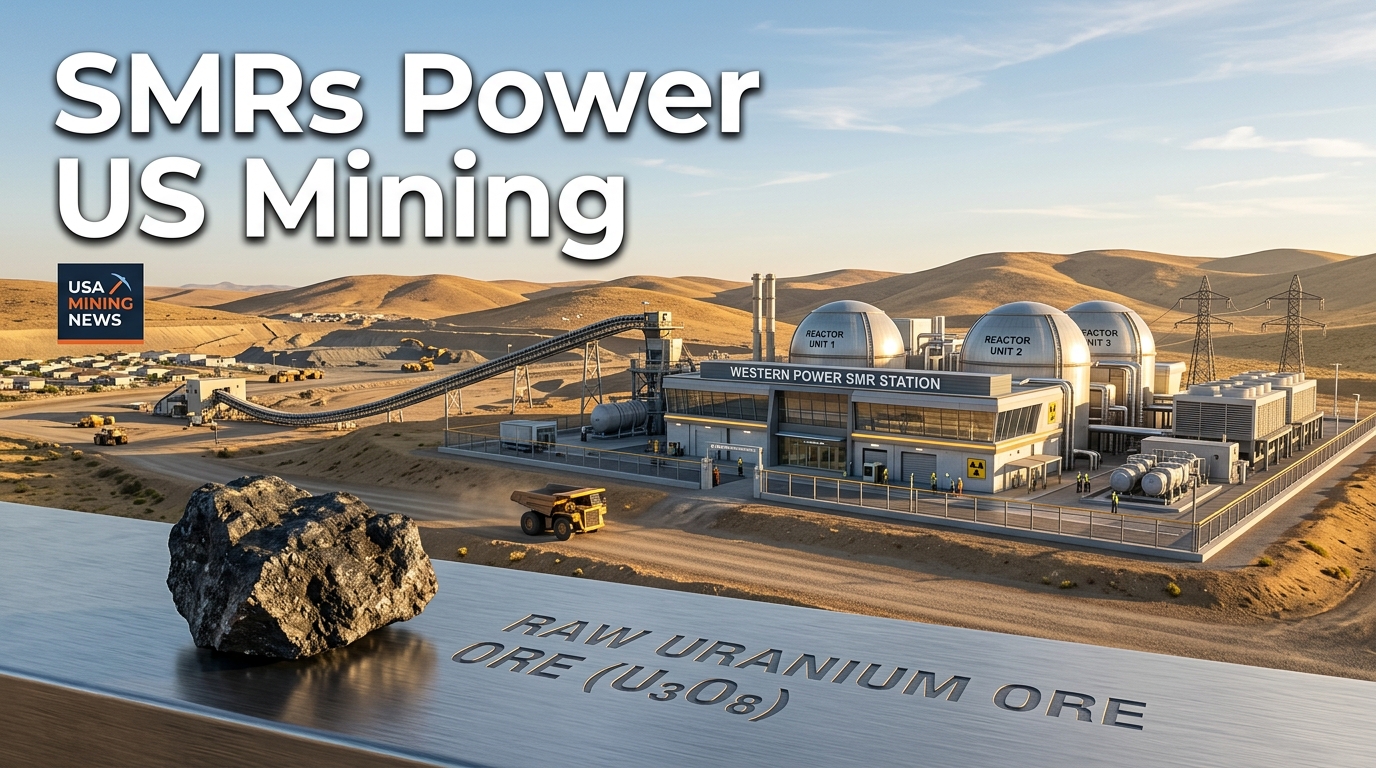
The projected deployment of Mark-0 type microreactors, with electricity production anticipated by 2027, provides a clear demand signal for uranium. While microreactors are individually small in terms of power output, their modularity and ability for widespread deployment across "terrestrial and space applications" as well as for "military installations requiring reliable energy" could aggregate into substantial future uranium requirements. Each reactor, regardless of size, requires an initial fuel load and subsequent refueling over its operational life, creating a consistent, long-term demand curve.
Furthermore, as non-light-water reactors, these advanced designs may offer flexibility in fuel types, potentially opening avenues for different enrichment levels or even alternative fuel cycles (e.g., thorium-based, or higher assay low-enriched uranium - HALEU). The development of such diverse reactor fleets will necessitate a robust and secure fuel supply chain, from exploration and mining of natural uranium to conversion, enrichment, and fuel fabrication. This provides significant opportunities for mining companies to expand exploration efforts, develop new projects, or rationalize existing ones, particularly in politically stable jurisdictions with high-quality deposits.
The explicit mention of strengthening the "supply chain" by Antares CEO Jordan Bramble is a critical cue for the mining industry. It suggests a focus not only on securing the raw uranium but also on the domestic capacity for processing and enriching it. For U.S. mining companies, this could mean increased domestic off-take opportunities, particularly if policy continues to favor domestic sourcing for strategic national security applications. This demand will drive investment into infrastructure, processing facilities, and a skilled workforce across the entire nuclear fuel cycle. The long-term certainty provided by strong governmental backing and tangible progress like the Mark-0 criticality can help de-risk uranium projects that typically require significant upfront capital and have long lead times. It could spur a renewed flurry of activity in historical uranium mining regions and ignite exploration interest in underexplored territories.
The Path Ahead: Commercialization and Deployment
While the criticality demonstration is a monumental achievement, it is also a foundational step. The Mark-0 will now undergo further tests to incrementally increase power levels and demonstrate sustained, safe operation under various conditions. Following these technical validations, the reactor will require full licensure by the Nuclear Regulatory Commission (NRC) before it can be commercialized and deployed for electricity generation. This regulatory pathway, while rigorous, is essential to ensure public safety and build confidence in advanced nuclear technologies.
The applications envisioned for microreactors like the Mark-0 are broad and impactful. Their compact size and inherent safety features make them ideal for remote communities, industrial sites, disaster relief efforts, and providing resilient power to military bases, enhancing energy independence and security. Furthermore, their potential use in space applications hints at a new frontier for nuclear power, leveraging its unparalleled energy density.
The success of the Mark-0 ensures that it will continue to generate valuable learning that will inform and improve future reactor designs, accelerating the deployment curve for the entire advanced nuclear sector. Both the Reactor Pilot Program and the Nuclear Energy Launch Pad are poised to support a pipeline of innovation, ensuring that the Antares Nuclear achievement is not an isolated event but the vanguard of a sustained technological and economic resurgence.
In conclusion, the criticality of Antares Nuclear’s Mark-0 reactor represents a defining moment for American energy. It is a tangible realization of decades of research and a direct response to strategic imperatives for reliable, clean, and secure power. For the mining industry, this marks a clear signal: the nuclear renaissance is here, and with it comes a reinvigorated demand for the essential materials that fuel our future.