Denver, CO – In a significant development for domestic critical mineral supply and environmental remediation, Metals One has formalized an agreement with DISA Technologies to evaluate and potentially process uranium mine waste at its Uravan Belt Uranium-Vanadium Project located in Colorado, US. This strategic partnership, announced on May 15, 2026, focuses on the recovery of saleable uranium and other critical mineral concentrates from abandoned waste dumps, simultaneously addressing legacy environmental issues within the historic Uravan Mineral Belt.
A Strategic Alliance for Uranium and Critical Mineral Recovery
The core of this agreement is a collaboration designed to leverage DISA Technologies' specialized processing capabilities against the resource potential of Metals One's Uravan project. Under the terms of the agreement, DISA will spearhead the exploration and subsequent treatment activities at the Uravan site. Metals One, in turn, is positioned to receive a significant gross revenue share derived from the eventual sale of uranium and critical mineral concentrates, while DISA will assume the responsibilities for operational management and associated costs. This structure minimizes upfront capital expenditure for Metals One while aligning incentives for efficient recovery and remediation.
This renewed collaboration builds upon a previous understanding established between the two companies in September 2025, signaling a progressive move towards commercializing a solution for historically problematic mine waste. The initiative aligns directly with broader US Government objectives aimed at bolstering domestic mineral recovery efforts, particularly for strategic commodities like uranium, which are vital for national energy security and technological advancement.
The Uravan Project: A Legacy of Rich Deposits
Metals One acquired the Uravan project in July 2025, establishing its presence in one of the United States' most historically productive uranium districts. The project encompasses 59 unpatented mining claims situated in close proximity to the renowned historic Buckhorn Mine, a locale celebrated for its past uranium and vanadium production. The Uravan Mineral Belt, spanning parts of southwestern Colorado and southeastern Utah, has a rich history dating back to the early 20th century, a period marked by significant uranium and vanadium extraction crucial for various industrial and defense applications.
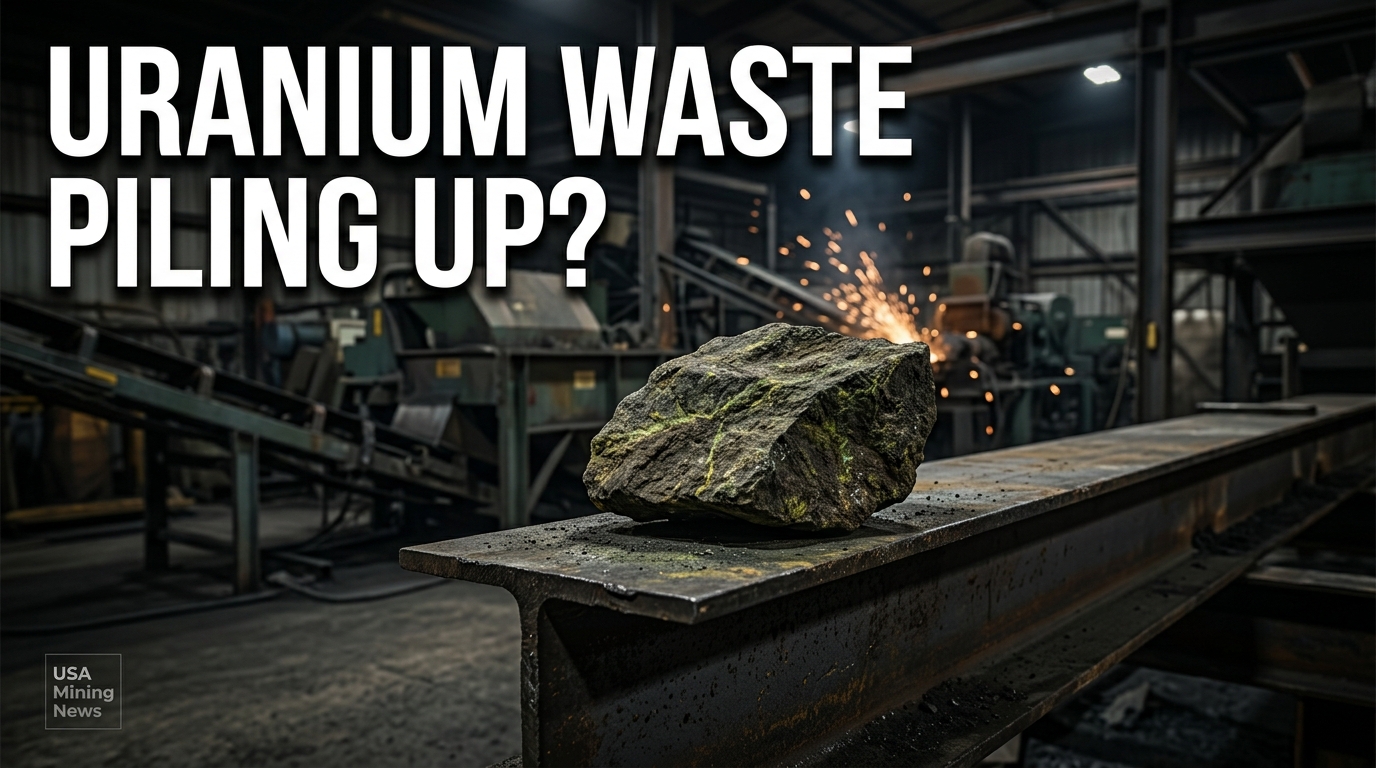
Within the Metals One claim area, eight abandoned uranium waste dumps have been identified as suitable candidates for potential recovery operations. These dumps, remnants of historical mining practices, represent both an environmental burden and a potential deferred resource. Metals One's initial exploration activities in September 2025 yielded compelling results, with assays from historic waste material reporting uranium grades as high as 41,768 parts per million (ppm). Such exceptional grades underscore the significant opportunity for applying modern processing techniques to unlock substantial value that was previously unextractable or deemed uneconomical.
Daniel Maling, Managing Director of Metals One, emphasized the project's strategic location and the inherent value proposition. "The Uravan project sits within one of the US’ most prolifically mined uranium belts," Maling stated. "Assays from Metals One’s initial exploration activities last year indicate the exceptional grades historically mined from within the project, with multiple samples containing uranium and vanadium at ore-grade levels. It follows that there is a significant opportunity to apply DISA’s breakthrough process to remediate abandoned uranium mine waste from the identified sites and recover valuable uranium and critical minerals, whilst improving the environmental legacy from historical mining."
High-Pressure Slurry Ablation (HPSA): A Breakthrough Remediation Technology
At the heart of DISA Technologies' approach is its proprietary High-Pressure Slurry Ablation (HPSA) process. This innovative technology is designed specifically for treating surface dumps, offering a robust solution for extracting target minerals from complex waste materials. A key differentiator for DISA's HPSA process is its licensing by the US Nuclear Regulatory Commission (NRC) for remediation efforts, providing a critical regulatory endorsement that facilitates its deployment on sites with radioactive materials.
The HPSA process operates by deploying modular mobile plants directly at the Uravan site. These mobile units are engineered to efficiently process mine waste, removing significant quantities of uranium and radium content. The modular nature of the plants offers operational flexibility and reduces the logistical complexities often associated with larger, fixed processing facilities. By effectively removing these radioactive elements, the HPSA process not only recovers economically valuable minerals but also concurrently mitigates the environmental hazards posed by these abandoned waste sites, contributing to a cleaner and safer ecological footprint for the region.
The application of such advanced, licensed technology is crucial for addressing the intricate challenges posed by legacy uranium mining sites. The ability of HPSA to target and remove specific radionuclides helps to consolidate hazardous materials, improving the overall environmental legacy from historical mining activities, a critical objective for regulatory bodies and local communities.
Economic Framework and Revenue Sharing for Sustainable Recovery
The financial framework of the agreement between Metals One and DISA Technologies is structured to promote efficiency and shared success. Metals One's entitlement to a gross revenue share from the sale of recovered concentrates provides a direct financial upside tied to the project’s productivity, without shouldering the operational and cost management burden. This arrangement enables Metals One to benefit from its asset base without extensive capital deployment into processing infrastructure.
DISA Technologies, by taking on the operational management and costs, assumes the responsibility for the efficient deployment and operation of its HPSA technology. This includes all aspects from exploration work, through the characterization of mineral quantities, to the eventual production of saleable concentrates. This cost-effective model for Metals One is particularly attractive in the current dynamic commodity market, allowing for participation in the upside of critical mineral pricing while mitigating exposure to processing-related capital and operational expenditures.
The economic viability of processing these waste dumps is significantly enhanced by the reported high uranium grades. Recovering materials at "ore-grade levels" from waste that would otherwise represent an environmental liability transforms a cost center into a profit center, aligning economic incentives with environmental remediation goals. This model could serve as a blueprint for other similar legacy mining sites across the US.
Market Relevance: Domestic Supply Chains and Environmental Stewardship
This collaboration arrives at a crucial juncture for the global mining industry and national strategic interests. The imperative for secure and diversified supply chains for critical minerals, including uranium, has intensified significantly. Geopolitical tensions, coupled with an escalating global demand for clean energy and advanced technologies, have placed a premium on domestic mineral production.
The US government has explicitly articulated its support for increased domestic mineral recovery, recognizing its pivotal role in national security, economic resilience, and energy independence. Uranium, as a primary fuel source for nuclear power, is fundamental to low-carbon electricity generation. Revitalizing domestic uranium production capabilities, even from waste streams, substantially contributes to energy security and reduces reliance on foreign sources.
Beyond the economic and strategic implications, the project holds significant environmental relevance. The remediation of abandoned uranium mine waste dumps addresses historical pollution, reduces public health risks, and restores ecological integrity to affected areas. This dual benefit of resource recovery and environmental improvement exemplifies responsible mining practices and aligns with modern ESG (Environmental, Social, and Governance) principles keenly watched by investors and the public alike.
Next Steps and Future Outlook
The immediate agenda for Metals One and DISA Technologies involves several critical steps. A comprehensive characterization program will be undertaken to accurately estimate the quantities and grades of minerals recoverable from the waste dumps. This detailed assessment is essential for optimizing the HPSA process and providing a robust foundation for commercial planning.
Concurrently, significant effort will be directed towards securing all necessary permits for the processing and recovery operations. Navigating the regulatory landscape, particularly for a project involving radioactive materials and environmental remediation, requires diligent planning and execution. Following successful permitting and processing, the focus will shift to the sale of the resultant uranium and critical mineral concentrates, with revenues subsequently shared between the partners.
The success of the Uravan project has the potential to establish a compelling precedent for the valorization of legacy mine waste across the United States. It offers a tangible pathway for other mining companies and government entities to address historical environmental liabilities while simultaneously contributing to the critical mineral supply chain. As Metals One and DISA Technologies advance their efforts, the industry will keenly observe their progress, recognizing the profound implications this model could have for sustainable resource management and environmental restoration in the decades to come.