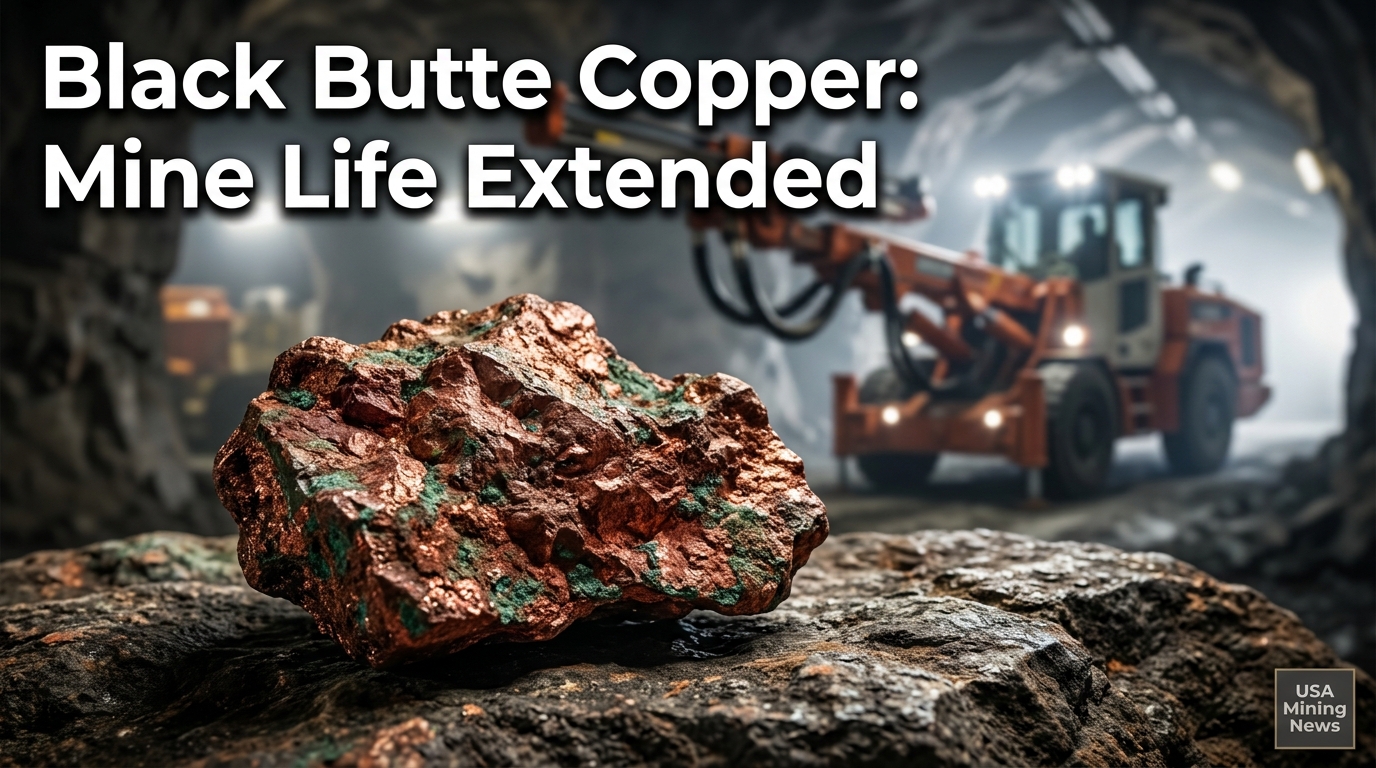
(Helena, Montana) - Sandfire Resources America (TSX-V: SFR) has announced a significant expansion to the projected operational lifespan of its Black Butte copper project in Montana, a move poised to bolster domestic copper supply in the United States. According to an updated Preliminary Feasibility Study (PFS) released on Thursday, July 9, 2026, the inclusion of the newly integrated Lowry deposit is expected to extend the mine's working life from an initial eight years to a robust twelve years. This strategic enhancement arrives as the industry places increasing importance on secure, internal mineral supply chains, particularly for critical metals like copper.
The updated economic study, building upon a previous assessment from 2025, details a substantial increase in probable reserves. The Black Butte project, located approximately 90 kilometers east of Montana’s state capital, Helena, is now estimated to contain 14.3 million tonnes of ore grading 2.6% copper, translating to an impressive 370,000 tonnes of contained red metal. This enhanced resource profile and extended operational horizon solidify Black Butte's standing as one of the highest-grade advanced copper projects within the United States.
Extending the Lifespan: The Lowry Deposit's Impact
The core of this recent development lies in the successful incorporation of the Lowry deposit into the mine plan, a component notably absent from the previous year's study. The Lowry deposit, situated approximately two kilometers from the project's primary Johnny Lee deposit, brings new volumes of high-grade mineralization to the overall resource base. Prior to this update, the Johnny Lee deposit alone hosted 9.5 million probable tonnes grading 2.9% copper, accounting for 270,000 tonnes of contained copper.
Lincoln Greenidge, CEO of Sandfire Resources America, articulated the strategic importance of this development in a recent release. "The new mineral reserve estimate for the Lowry deposit highlights significant growth potential beyond our initial eight-year mine life," Greenidge stated. He further emphasized the critical role of the project within the broader context of national resource security, adding, "These updates position the Black Butte Copper Project as a critical domestic copper asset when secure US mineral supply is paramount." This sentiment resonates strongly with current geopolitical and economic trends that underscore the necessity of robust domestic supply chains for essential commodities, especially those vital for the global energy transition.
From an operational perspective, the integration of Lowry is also projected to yield efficiency gains. Sandfire indicates that the addition could lower unit operating costs by $2.28 to $68.30 per tonne. This cost reduction is expected to be achieved through the planned adoption of mechanized long-hole stoping, an efficient underground mining method, specifically at the Lowry deposit. This optimization underscores a commitment to operational excellence and cost-effectiveness, crucial for enhancing project economics.
Key Economic and Operational Shifts
While the updated PFS confirms significant resource growth and an extended mine life, the financial returns, as presented, remain relatively moderate, a point of consideration for investors and industry observers. Discounted at an 8% rate, the study estimates an after-tax Net Present Value (NPV) of $126 million (C$178.5 million). The project's Internal Rate of Return (IRR) is calculated at 13.3%, with initial capital costs (CAPEX) estimated at $474 million. These figures are based on a long-term copper price assumption of $4.70 per pound.
For context within the mining industry, an IRR of 13.3% is often viewed as presenting a moderate return, particularly for projects requiring substantial initial capital investment in a commodity market known for its cyclical volatility. Many global mining companies and investors often target higher IRRs, typically in the range of 15% to 25% for greenfield projects, to adequately compensate for the inherent risks associated with exploration, development, and operational complexities, as well as the significant capital outlays required. The $474 million initial cost places Black Butte among projects requiring substantial funding, where stronger return metrics might otherwise attract broader investor enthusiasm.
However, despite these moderate return figures, the project demonstrates robust revenue generation potential. Based on forecast annual production of 31,000 tonnes of contained copper over its new 12-year lifespan, Black Butte is projected to generate $3.3 billion in gross revenue. More significantly, the post-tax cash flow over the mine life is estimated at $476 million, representing a substantial 34% increase over the previous study's projections, largely attributable to the extended mine life and increased production volumes from Lowry.
The permitting landscape for the project presents an important nuance. While the Johnny Lee underground mine, its associated processing plant, and comprehensive infrastructure have successfully secured requisite state and federal permits, the updated PFS does not explicitly detail whether the expanded mine plan, which now incorporates the Lowry deposit, will necessitate any amendments to these existing permits. This aspect is crucial for project timelines, as securing additional environmental or operational permits for an expanded footprint can be a protracted and complex process in the United States, especially in jurisdictions with stringent environmental regulations such as Montana.
Strategic Position in the U.S. Copper Landscape
The Black Butte copper project's strategic significance, particularly its role as a "critical domestic copper asset," cannot be overstated in the current global economic and geopolitical climate. Copper is a foundational metal for modern industrial societies, indispensable for electrification, renewable energy infrastructure (such as wind turbines and solar panels), electric vehicles, and countless electronic applications. The transition towards a lower-carbon economy predicates a massive increase in copper demand, leading to national pushes for securing reliable domestic sources.
The United States, traditionally a significant mineral consumer, has an increasing reliance on imported minerals, making projects like Black Butte vital for enhancing national resource independence and economic resilience. The project's high-grade nature further amplifies its importance; a 2.6% copper grade is considered exceptionally good globally, far exceeding the average grades of many new copper projects worldwide, which often fall below 1% or even 0.5%. This high grade translates to more efficient metal extraction, potentially lower processing costs per unit of metal, and reduced environmental footprints per tonne of copper produced when compared to lower-grade operations.
However, the broader market context for copper presents a complex picture. While long-term demand fundamentals remain strong, an adjacent news snippet on July 9, 2026, indicated that "Macquarie says copper price rally still running ahead of reality" and that "copper stockpiles – already at unprecedented levels – continue to build globally." This highlights the short-term volatility and supply-demand imbalances that can influence market sentiment and potentially temper investor enthusiasm, even for promising projects.
Sandfire Resources America: Corporate Context and Market Reaction
Sandfire Resources America, trading on the TSX Venture Exchange under the ticker SFR, experienced a modest share price movement following the announcement. On Thursday morning, the company’s shares fell 2% to 20 cents apiece, valuing the company at C$204.6 million. Over the preceding 12 months, the stock has traded within a range of 19 cents to 55 cents. This relatively muted market reaction, despite the positive operational news of an extended mine life and increased cash flow, suggests that investors may be weighing the moderate IRR and initial CAPEX against the substantial resource upgrade.
For junior mining companies such as Sandfire Resources America, advancing projects to production often involves overcoming significant financing hurdles. Projects with moderate IRRs can sometimes struggle to attract the necessary capital, particularly in a competitive landscape where capital providers seek higher returns to offset risk. The market’s cautious reception underscores the intricate balance between resource potential, project economics, and investor confidence, particularly at this critical pre-production stage.
The Path Forward: Permitting and Development
The next phase for the Black Butte copper project will undoubtedly focus on de-risking the development path, with permitting clarity for the Lowry deposit being paramount. Any requirement for permit amendments related to the expanded footprint could introduce additional timelines and complexities, which would need to be carefully managed to maintain project momentum. Assuming the permitting pathway is clear, the company will then move towards detailed engineering, securing project financing, and making a final investment decision for construction.
Given the project's extended life, Sandfire Resources America may also pursue further exploration activities in the vicinity, potentially identifying additional resources that could further enhance the mine’s longevity and economic value. The timeline from a PFS to commercial production for a project of this scale often spans several years, involving detailed design, procurement, construction, and commissioning phases. Therefore, effective capital management and strategic planning will be essential to navigate these stages successfully and to bring 31,000 tonnes of contained copper to market annually.
In conclusion, the updated Preliminary Feasibility Study for Sandfire’s Black Butte project represents a significant step forward, firmly establishing its potential as a long-life, high-grade copper operation within the United States. While the financial returns require careful consideration from investors, the project’s strategic importance for domestic copper supply and its robust resource base underscore its value. The successful navigation of permitting the expanded scope and securing the necessary development financing will be the critical determinants of Black Butte’s ultimate success in becoming a key contributor to the nation's mineral independence.