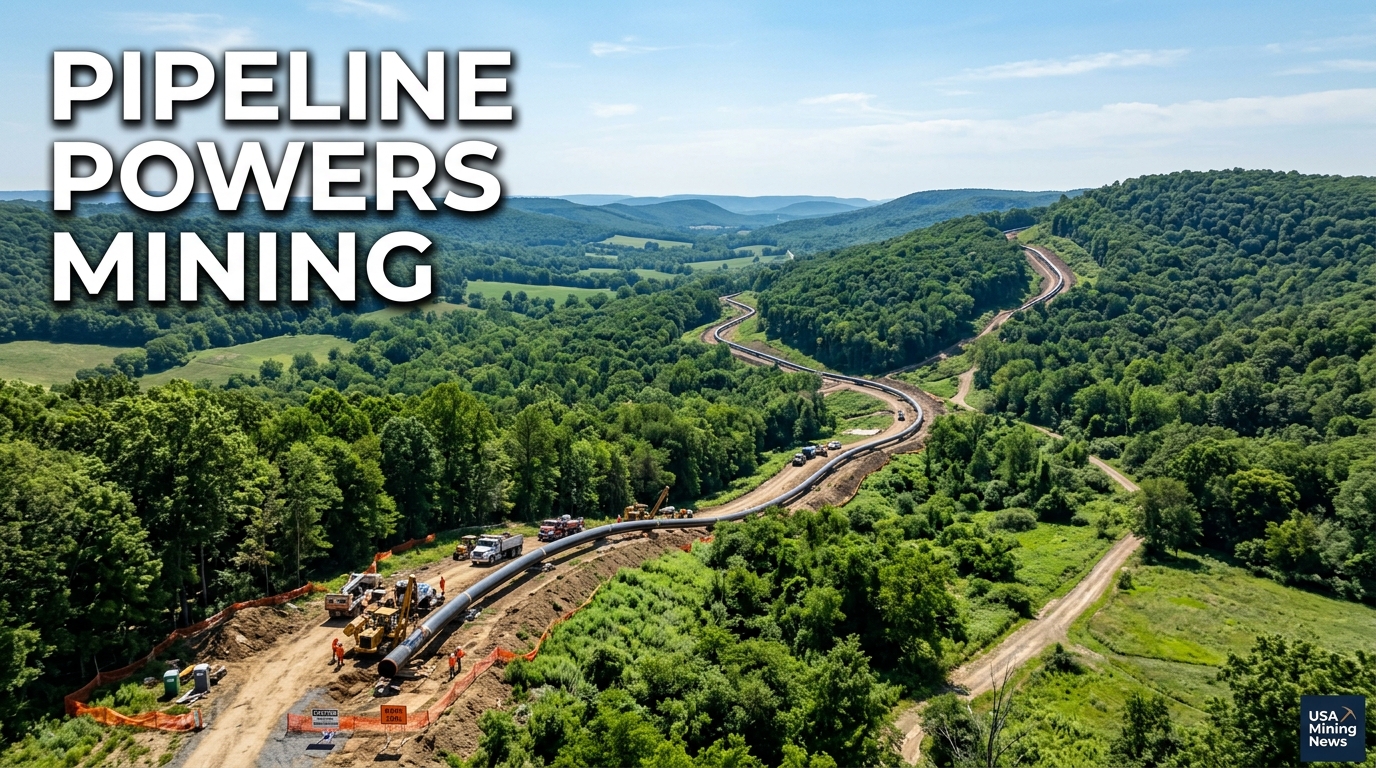
WASHINGTON D.C. – In a significant move to strengthen the nation’s energy infrastructure and bolster its defense capabilities, the U.S. Department of Energy (DOE) announced on October 19, 2026, a commitment of up to $42 million in Defense Production Act (DPA) Title III funding to advance the Constitution Pipeline Project. This crucial investment is earmarked for a proposed 125-mile natural gas pipeline designed to transport vital energy resources from Pennsylvania to New York, addressing long-standing energy access challenges in the Northeastern United States.
The Constitution Pipeline Company, LLC’s initiative is poised to revolutionize energy access for markets across the Northeast, a region that has historically contended with limited availability of low-cost, reliable natural gas. By strategically deploying DPA authorities, the DOE is taking proactive steps to fortify the security of the nation’s energy system and, by extension, its defense industrial base. The project's successful realization is projected to deliver substantial economic benefits, including a dramatic reduction in electricity and home heating costs throughout the region, offering tangible relief to millions of Americans.
A Strategic Imperative: Bridging the Energy Gap
The federal government's decision to leverage DPA funding highlights a profound recognition of the integral role natural gas plays in national security and economic stability. U.S. Secretary of Energy Chris Wright articulated the administration's rationale, stating, “Despite America having an abundant supply of low-cost natural gas, tens of millions of Americans have limited access to this reliable energy source due to a lack of pipeline infrastructure.” Secretary Wright emphasized President Trump’s pledge to curb energy costs and reverse what he termed the "energy emergency" inherited from "17 years of energy subtraction policies."
Secretary Wright further underscored the transformative potential of the Constitution Pipeline, asserting, “That is why he promised to build the Constitution Pipeline – a project that will transform the lives and economic opportunities for Americans across New York and New England. It will also reduce the risk of blackouts during periods of peak electricity demand and make our nation more secure.” This statement frames the pipeline not merely as an infrastructure project, but as a cornerstone of a broader national strategy aimed at energy independence and resilience.
Adding to this perspective, Secretary of the Interior and Chairman of the National Energy Dominance Council Doug Burgum criticized previous policy approaches. “For too long, families and businesses in New York and other blue states have paid the price for anti-energy policies that kneecap production, block critical infrastructure and drive up costs,” Burgum remarked. He lauded President Trump’s pivot towards an "abundance over government-imposed scarcity" philosophy, emphasizing that the investment in the Constitution Pipeline would "help deliver the reliable, secure energy Americans deserve while saving families across the Northeast billions of dollars."
Defense Production Act: A Tool for National Security
The allocation of DPA Title III funding for the Constitution Pipeline project is a direct manifestation of President Trump’s commitment to ensuring that all Americans have access to affordable, reliable, and secure energy. This commitment is intrinsically linked to strengthening infrastructure deemed critical to national defense. The DPA, originally enacted in 1950, empowers the President to direct private industry to prioritize orders for materials or services necessary for the national defense, and to provide financial incentives for domestic production of critical items.
Specifically, Presidential Determination No. 2026-12 identifies natural gas pipelines, along with processing and storage facilities, as essential to national defense. This determination provides the statutory basis for deploying DPA funding to projects like the Constitution Pipeline. The $42 million in DPA funding will be channeled towards crucial pre-construction and permitting activities. These may include, but are not limited to:
- Environmental reviews and assessments, ensuring compliance with federal regulations.
- Detailed engineering and site-preparation work, laying the groundwork for construction.
- Other costs associated with securing required regulatory approvals, streamlining the development process.
Once these essential permits are completed, the funding will also support the deployment of complementary natural gas infrastructure, signaling a comprehensive approach to pipeline development. This investment is part of a larger federal initiative, enabled by the "Working Families Tax Cut," which has appropriated $1 billion in federal funding specifically for energy-related projects deemed critical to national security.
Implications for the Mining Industry
While the immediate focus of the Constitution Pipeline project is on natural gas transportation, its broader implications resonate deeply within the mining industry. The nexus between energy infrastructure and mineral extraction is multifaceted, affecting operational costs, material demand, and the overall regulatory environment. For mining professionals and investors, this development warrants close attention for several key reasons:
1. Energy Cost Reduction and Operational Efficiency:
Mining operations are inherently energy-intensive, requiring substantial power for extraction, processing, and transportation. The promise of "dramatically lower electricity and home heating costs" in the Northeast directly translates into reduced operational expenditures (OPEX) for any mining or mineral processing facilities situated in or near the region. Lower and more stable energy prices can significantly improve profit margins, making existing operations more competitive and potentially stimulating new investments in areas like aggregates, industrial minerals, and potentially even some specialized metal processing facilities.
2. Demand for Mined Materials in Infrastructure:
The construction of a 125-mile natural gas pipeline represents a significant demand driver for various raw materials, many of which are supplied by the mining industry. This includes, but is not limited to:
- Steel: Pipelines are typically constructed from high-strength steel. The production of this steel requires iron ore, metallurgical coal, and other alloying minerals.
- Aggregates: Sand, gravel, and crushed stone are indispensable for trenching, backfilling, road construction for access, and concrete production for compressor stations and other associated infrastructure.
- Industrial Minerals: Materials like limestone (for cement), clays, and various fillers are used in construction and related manufacturing processes that support large-scale infrastructure projects.
This direct demand for mined products creates a positive ripple effect through the supply chain, offering opportunities for domestic mining companies.
3. Regulatory Environment and Project Permitting:
The federal government's utilization of the DPA to expedite a critical energy project signals a shift in approach towards infrastructure development, particularly those deemed essential for national security. Many mining projects, especially those involving critical minerals, face protracted and complex permitting processes. The precedent set by the Constitution Pipeline, where DPA authority is used to streamline environmental reviews and regulatory approvals for a vital national project, could potentially pave the way for similar expedited pathways for critical mineral mining projects. This could involve designating certain mineral projects as national defense priorities, thereby reducing timelines and mitigating regulatory uncertainties.
4. National Security and Supply Chain Resilience:
The Presidential Determination identifying natural gas infrastructure as essential to national defense draws a parallel to the critical minerals sector, which is also increasingly recognized for its national security implications. Reliable energy supply, fueled by natural gas, is fundamental to the entire defense industrial base, which in turn relies heavily on a secure and diversified supply of mined materials. By linking energy stability to national defense, the administration underscores the interconnectedness of foundational industries. Mining, as a provider of the very building blocks for modern economies and defense technologies, stands to benefit from a policy environment that prioritizes domestic resource development and robust infrastructure.
Future Outlook: A Blueprint for Energy Dominance
With the initial DPA funding now secured, Constitution Pipeline Company, LLC can proceed with the critical pre-construction and permitting phases. This systematic approach, backed by federal intervention, aims to mitigate common project delays and accelerate deployment. The successful completion of this 125-mile pipeline will not only alleviate energy shortages in the Northeast but also serve as a tangible example of the administration’s "energy dominance" strategy in action.
The long-term impact is expected to be profound, contributing to a more resilient national energy system and a more robust defense industrial base. For the mining industry, this initiative reinforces the importance of accessible and affordable energy, creates direct demand for mined commodities, and potentially offers insights into future regulatory frameworks for critical infrastructure development. As the nation continues to prioritize energy security and economic competitiveness, the synergy between pipeline infrastructure and the mining sector will remain a pivotal aspect of strategic planning and investment.