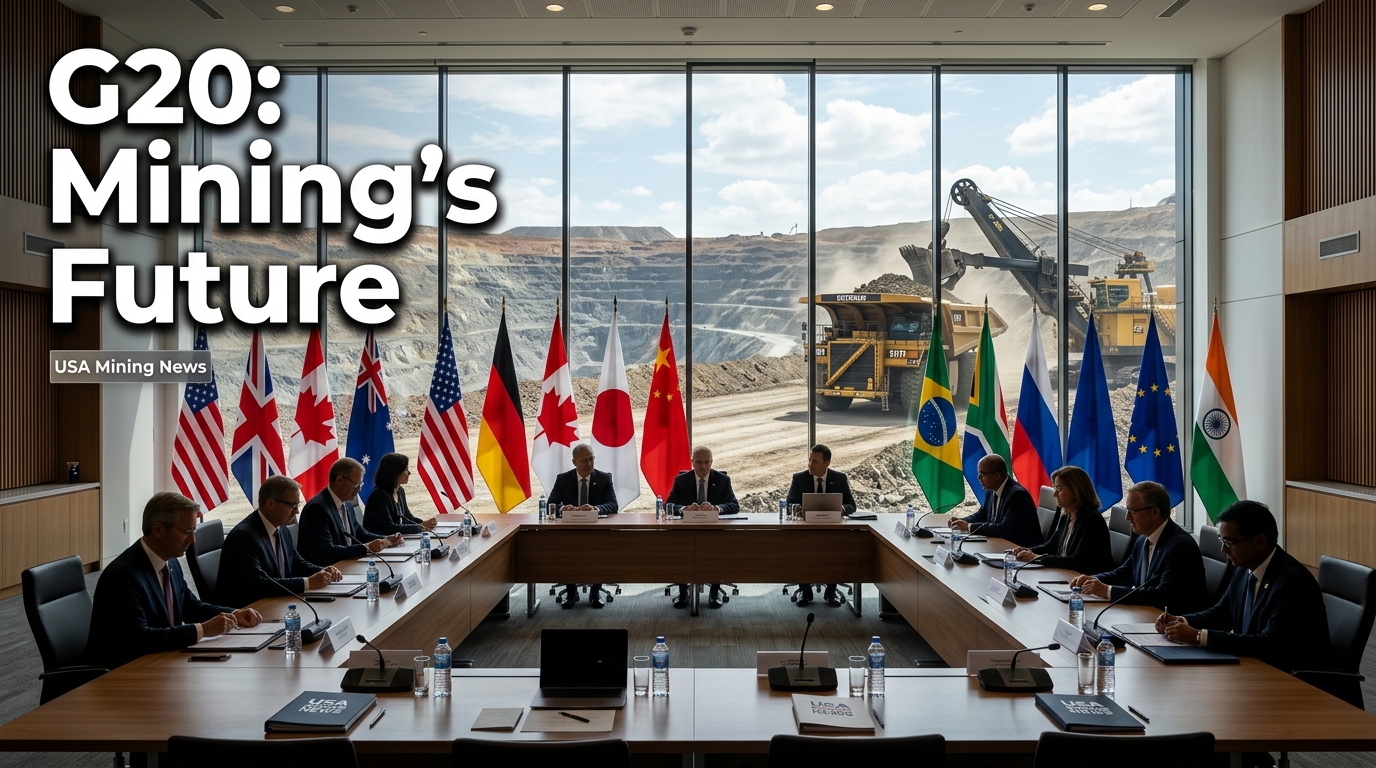
HOUSTON – In a significant move to reshape global energy discourse, the U.S. Department of Energy (DOE), in close coordination with the White House National Energy Dominance Council (NEDC), the U.S. Department of the Interior (DOI), and the U.S. Environmental Protection Agency (EPA), successfully hosted the G20 Energy Abundance Ministerial from September 14–16, 2026, in Houston, Texas. This high-profile gathering brought together G20 Energy Ministers from across the globe to deliberate on critical energy priorities, signaling a clear strategic direction for the international energy landscape.
Reaffirming a Comprehensive Energy Strategy
Under the leadership of President Trump, the United States repositioned the G20 energy dialogue, placing a strong emphasis on the core tenets of affordability, reliability, and security. A cornerstone of this approach was the explicit affirmation of the indispensable role played by traditional hydrocarbons, nuclear energy, and advanced technologies in achieving what the administration terms "energy abundance" – a state seen as crucial for driving sustained economic prosperity worldwide.
The ministerial concluded with a consensus among G20 Energy Ministers on four primary outcomes: advancing energy access and closing the clean cooking gap, strengthening supply chain security, accelerating infrastructure development, and enhancing water resilience. These outcomes are the culmination of nearly a year of dedicated dialogue within the G20 framework, reflecting a concerted effort to champion practical solutions aimed at expanding access to affordable, reliable, and secure energy, expediting critical infrastructure projects, and mitigating vulnerabilities within global energy supply chains.
Addressing Global Energy Access and Critical Gaps
A notable achievement of the ministerial, spearheaded by U.S. Secretary of Energy Chris Wright, was the endorsement of a clean cooking access declaration. This declaration is designed to mobilize greater attention and resources toward scalable, affordable, and reliable solutions to close the clean cooking gap, which currently affects an estimated two billion people globally. The declaration specifically highlighted the efficacy of liquefied petroleum gas (LPG), noting its substantial contribution to roughly 75% of global gains in clean cooking access since 2010. By fostering greater access to clean cooking solutions, the initiative aims to improve indoor air quality and reduce the time spent by individuals, predominantly women, on collecting traditional biomass for fuel.
Building on this commitment, Secretary Wright, alongside Florie Liser, President and CEO of the Corporate Council on Africa, co-hosted a side event focusing on clean cooking. This event convened G20 representatives and private sector executives to explore how robust public-private partnerships can accelerate the deployment of clean cooking solutions, particularly across the African continent. This proactive engagement aims to translate the G20 commitments into tangible actions on the ground.
Secretary Wright underscored the foundational importance of energy in all human endeavors, stating, Energy is the essential ingredient that enables everything we do. A highly energized society brings health, wealth, and opportunity. The consensus reached in Houston advances cooperation to expand the affordable, reliable, and secure energy, infrastructure, and supply chains needed to support prosperity, resilience, and opportunity throughout the world.
Strategic Investments and Project Announcements
The G20 Energy Abundance Ministerial was not solely a forum for policy discussion; it also served as a platform for significant investment announcements that align with the U.S. energy abundance agenda, promising job creation, economic expansion, enhanced manufacturing partnerships, and critical infrastructure development.
- Hitachi Energy's Power Transformer Facility: The Japanese firm Hitachi Energy announced a substantial $528 million investment to construct a new power transformer manufacturing facility in Gallman, Mississippi. This project is projected to create 654 new jobs, significantly boosting local employment and strengthening domestic manufacturing capabilities for essential grid components. Power transformers are vital for the efficient transmission and distribution of electricity, and this investment underscores a commitment to modernizing and securing the grid.
- Caturus and Commonwealth LNG Expansion: Houston-based Caturus unveiled plans for a five-train expansion of its Commonwealth LNG export facility in Louisiana. This expansion is set to add an impressive 7.75 million tonnes per annum (MTPA) of capacity, nearly doubling the project’s planned total capacity to approximately 17.25 MTPA. To put this in perspective, the additional capacity alone represents roughly 7% of the total U.S. LNG export capacity in 2025, highlighting the nation's growing role as a global supplier of natural gas for energy security.
- Continental Resources' Venture in Venezuela: In a move signaling renewed engagement with a significant global oil producer, Continental Resources signed a memorandum of understanding (MoU) with Venezuela's state-owned oil company, PDVSA. This agreement focuses on the development and operation of the 126,000-acre Ayacucho 2 Block within Venezuela's prolific Orinoco Belt. Continental Resources estimates that this block holds approximately 30 billion barrels of oil, representing a substantial potential addition to global oil reserves and a strategic play for the company.
Implications for the Mining Sector
The outcomes and investment announcements from the G20 Energy Abundance Ministerial carry profound implications for the global mining sector. The reaffirmation of hydrocarbons and nuclear energy as essential components of future energy mixes directly drives demand for a range of mined materials:
- Fuels and Base Metals for Traditional Energy: The expansion of oil and gas operations, such as the Continental Resources venture in Venezuela, requires significant quantities of steel for pipelines, drilling equipment, and processing facilities. Similarly, the construction of LNG export terminals like Commonwealth LNG demands massive volumes of steel, concrete (made from industrial minerals), copper for electrical systems, and specialized alloys for cryogenic applications. The ongoing support for nuclear energy implicitly underscores the continuous need for uranium mining and processing.
- Critical Minerals for Advanced Technologies and Grid Modernization: While emphasizing hydrocarbons and nuclear, the ministerial also referenced "advanced technologies." This broadly encompasses renewable energy integration, energy storage, and grid modernization efforts. The Hitachi Energy investment in a transformer manufacturing facility, for instance, will create direct demand for high-purity copper for windings and electrical steel for cores, along with other industrial minerals for insulation and structural components. Secure and reliable power grids are heavily reliant on these materials. The broader push for energy abundance and resilience will inevitably require increased deployment of smart grid technologies, which are mineral-intensive.
- Supply Chain Security: A Mining Priority: The consensus on "supply chain security" is perhaps one of the most direct and impactful outcomes for the mining industry. Global events have repeatedly exposed vulnerabilities in the supply chains for critical minerals, which are essential for everything from advanced defense systems to consumer electronics and clean energy technologies. This G20 outcome signals a renewed international commitment to diversifying sourcing, bolstering domestic processing capabilities, and fostering responsible mining practices to ensure a stable supply of these vital raw materials. Mining companies, therefore, stand to benefit from increased investment and policy support aimed at strengthening these supply chains.
- Infrastructure Development: A Core Demand Driver: The ministerial's focus on "infrastructure development" extends beyond energy facilities to include transport networks, industrial parks, and urban development. All such initiatives are inherently material-intensive, requiring iron ore for steel, copper for wiring, bauxite for aluminum, and a wide array of industrial minerals like aggregates, cement, and gypsum. The global push to enhance infrastructure directly translates into sustained, robust demand for the products of the mining sector.
- Water Resilience: Environmental and Operational Impact: For the mining industry, water resilience is a critical operational and environmental consideration. Mining operations are often water-intensive, and policies promoting water efficiency, recycling, and responsible stewardship will directly influence regulatory frameworks and operational practices within the sector. Innovations in water management technologies, which themselves may require specific minerals, will also see increased focus.
A Global Coalition for Energy Security
The breadth of participation at the G20 Energy Abundance Ministerial underscores the global significance of its outcomes. Representatives from a diverse array of nations and unions were present, including the African Union, Argentina, Australia, Brazil, Canada, China, the European Union, France, Germany, India, Indonesia, Italy, Japan, Mexico, Poland, Russia, Saudi Arabia, South Korea, Türkiye, and the United Kingdom. This wide-ranging attendance highlights a shared international understanding of the challenges and opportunities in the global energy landscape and a collective commitment to fostering energy security and economic growth.
Looking Ahead: Sustaining the Momentum
The G20 Energy Abundance Ministerial in Houston marks a pivotal moment in global energy policy, setting a clear agenda for the coming years. The emphasis on a diversified energy mix, including traditional sources alongside advanced technologies, signals a pragmatic approach to meeting burgeoning global energy demand. For the mining industry, this translates into sustained demand for a broad spectrum of minerals and metals—from those supporting conventional energy infrastructure to those enabling next-generation technologies. The focus on supply chain security and infrastructure development will likely spur increased investment in exploration, extraction, and processing capacities worldwide, offering significant opportunities for growth and innovation within the sector. As G20 nations work to implement the consensus reached in Houston, the mining industry will play an indispensable role in providing the foundational materials necessary to power a more prosperous, resilient, and energy-abundant future.