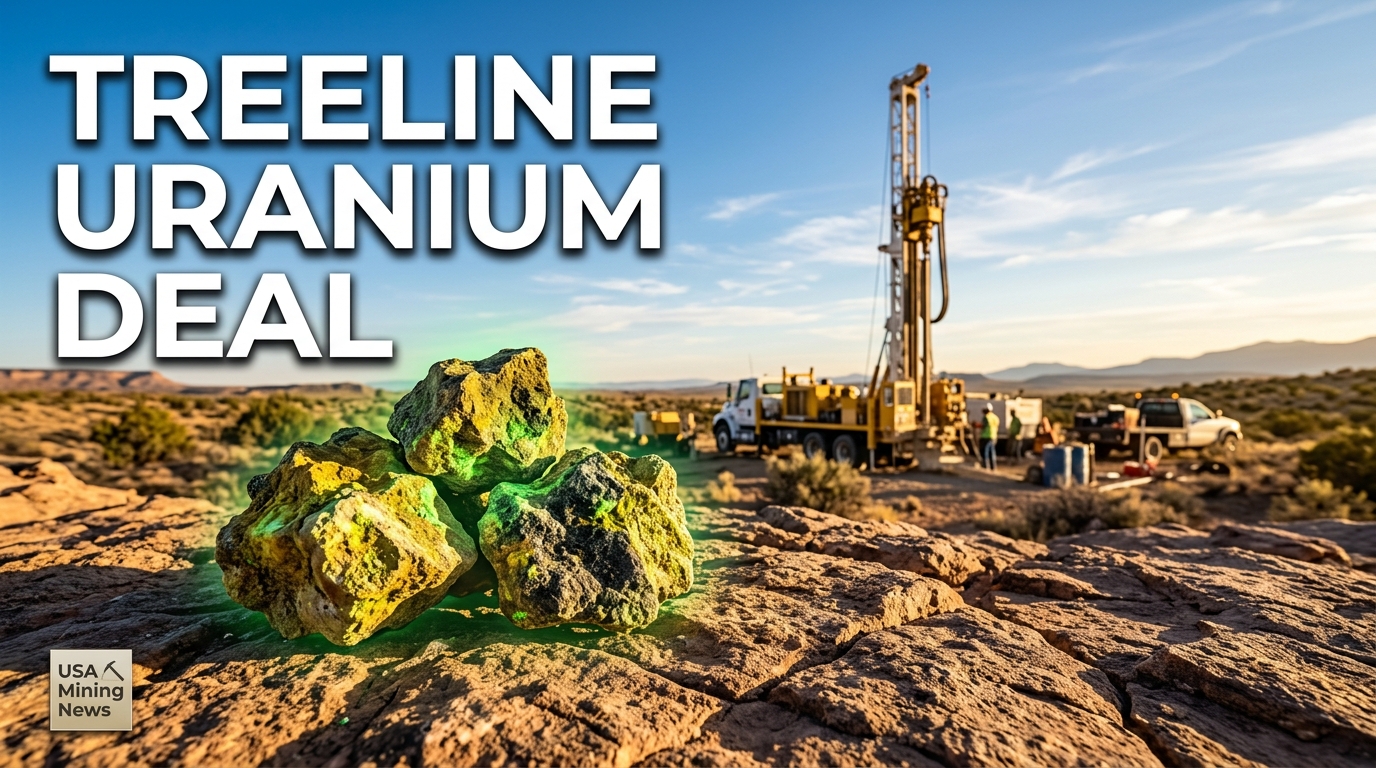
In a notable strategic move within the North American uranium sector, Verdera Energy, an exploration-stage mining company, has entered into a definitive mineral property purchase and sale agreement to divest its Treeline Uranium Project to Americas Uranium. The transaction, announced on September 3, 2026, involves the transfer of a 100% interest in the Treeline property, located in the historically significant uranium-producing region of Cibola and McKinley Counties, New Mexico, US. This acquisition provides Americas Uranium with an asset possessing an estimated 1.02 million pounds of historical triuranium octoxide (U3O8), while allowing Verdera Energy to sharpen its focus on its portfolio of more advanced properties.
Strategic Divestment in New Mexico's Uranium Belt
The Treeline Uranium Project, despite its exploration potential, represents a strategic divestment for Verdera Energy, aligning with the company's stated business plan to concentrate resources on advancing its four large-scale properties that boast historical resources established by prominent oil companies. For Americas Uranium, the acquisition signifies an opportunity to expand its footprint in a region with a well-documented history of uranium exploration and mining, including past operations at the nearby San Mateo mine. The property's location within New Mexico, a state recognized for its significant historical uranium production, offers a compelling backdrop for renewed exploration efforts.
The agreement grants Americas Uranium a complete 100% interest in the Treeline property. This full ownership stake is crucial for an acquiring company as it provides unfettered control over exploration and development decisions, subject only to existing and newly granted royalty structures. Such a move is common in the mining industry where companies seek to consolidate assets and streamline operational management.
Transaction Terms and Financials
The financial consideration for the acquisition is structured to provide both immediate value and a long-term stake for Verdera Energy in the future success of the Treeline Project under new ownership. The agreed-upon terms include:
- Cash Payment at Closing: Americas Uranium will make a cash payment of $100,000 to Verdera Energy upon the completion of the deal. This upfront cash infusion can be vital for exploration-stage companies like Verdera, providing liquidity for ongoing operations or for funding other projects.
- Share Consideration: An additional C$2 million (approximately $1.44 million USD, based on current exchange rates) will be paid in common shares of Americas Uranium. A significant portion of this share consideration, specifically 90%, is structured to be issued in stages over a 36-month period following the closing of the transaction. This phased issuance mechanism is often used to align the interests of the vendor with the long-term performance and value appreciation of the acquiring company's shares. It also helps to manage potential dilution for the acquirer's shareholders.
- Retained Royalties: Verdera Energy will retain two key royalty interests in the property, offering a continued revenue stream should the project advance to production:
- A 1.5% royalty on net proceeds from uranium production.
- A 1.5% net smelter returns (NSR) royalty on other minerals extracted from the property.
These royalties represent a significant potential upside for Verdera, allowing them to benefit from any future successful development without direct operational involvement or capital expenditure. Furthermore, the agreement includes a provision for Americas Uranium to reduce these royalties to 1% across the board by making a C$400,000 payment to Verdera. This optionality provides flexibility for Americas Uranium to potentially decrease future production costs once the project demonstrates economic viability.
The Treeline Uranium Project: A Historical Perspective
The Treeline Uranium Project holds an estimated 1.02 million pounds of triuranium octoxide, as reviewed in January 2005 by Axiom Exploration Group based on historical reports. It is crucial for industry professionals and investors to understand that this estimate is considered historical and does not meet the current stringent requirements of National Instrument 43-101 (NI 43-101) for mineral resource or reserve standards. NI 43-101, a Canadian disclosure standard for mining projects, mandates specific procedures for resource estimation, data verification, and reporting to ensure transparency and reliability. While historical estimates can indicate prospectivity, they typically require further drilling, sampling, and rigorous geological modeling to be upgraded to current compliant resource categories (e.g., Inferred, Indicated, or Measured Resources).
Geologically, uranium mineralization at Treeline has been primarily identified within the Poison Canyon sandstone, a known host rock for uranium deposits in the region. Exploration activities have outlined two primary trends of mineralization:
- The North Trend, which is reported to extend approximately 2,000 feet.
- The South Trend, exhibiting a strike length of roughly 3,250 feet.
These trends suggest a significant scale for potential mineralization and provide clear targets for Americas Uranium's future exploration programs. Understanding the geological controls and continuity of these trends will be paramount for converting the historical estimate into a compliant mineral resource.
Adding to the strategic value, Americas Uranium will also receive a right of first refusal for certain additional mineral rights neighboring the Treeline property. This provision is a significant advantage, enabling the company to potentially consolidate a larger land package around the known mineralization, thereby maximizing exploration efficiency and future development options in the district.
Verdera Energy's Strategic Rationale
Verdera Energy's decision to divest the Treeline Uranium Project is underpinned by a clear strategic vision, as articulated by CEO Janet Lee-Sheriff. "The Treeline Uranium Project transaction is an example of the potential wealth of opportunities available to Verdera from the New Mexico database acquired through the enCore Energy transaction and acquisition of the Kerr McGee New Mexico database," stated Lee-Sheriff. This statement highlights the immense value of historical exploration data, which can unlock new project generation opportunities in mature mining jurisdictions without the prohibitive costs of initial grassroots exploration.
Lee-Sheriff further elaborated on the company's focus: "While Treeline is a good exploration project with potential to expand the historic mineralisation previously outlined, Verdera’s business plan is to focus on advancing its four large-scale properties with historical resources established by name-brand oil companies." This strategic clarity indicates that Verdera is prioritizing projects with a higher level of geological confidence and potentially more advanced development pathways, likely aiming for assets that can more rapidly transition from exploration to economic extraction, thereby optimizing shareholder value.
Such portfolio rationalization is a common and often necessary practice for junior exploration companies, enabling them to allocate finite capital and human resources to projects that best fit their current strategy and maximize their chances of success. Divesting early-stage projects, even those with promising historical data, allows companies to avoid the significant costs and risks associated with greenfield exploration, while still realizing value from their initial discoveries or data acquisitions.
Americas Uranium: Expanding its Portfolio
For Americas Uranium, the acquisition of the Treeline Uranium Project represents a calculated expansion into a region with inherent uranium prospectivity. While the asset is currently at an exploration stage with historical estimates, its location in New Mexico, coupled with established mineralized trends, offers a solid foundation for future work. The inclusion of a right of first refusal on adjacent mineral rights further positions Americas Uranium to potentially build a contiguous, district-scale land position, which is critical for maximizing exploration success and achieving economies of scale in future mining operations.
Companies like Americas Uranium often seek to acquire projects that offer a balance of early-stage upside and geological merit, particularly in a market environment where demand for critical minerals like uranium is robust. The historical context of uranium mining in the area minimizes some of the initial uncertainties typically associated with entirely new exploration frontiers, providing a roadmap for future activities.
Industry Context: Uranium Market Dynamics and New Mexico's Legacy
This transaction unfolds against a backdrop of increasing global interest in uranium, driven by a renewed focus on nuclear energy as a clean, reliable power source in the context of global decarbonization efforts. While uranium prices have experienced volatility over the past decades, the long-term outlook appears positive, encouraging exploration and development activities worldwide.
New Mexico has a rich history in uranium production, particularly during the mid-20th century. The state’s Grants Mineral Belt was once a leading source of uranium globally, and deposits like those found in the Poison Canyon sandstone are well-understood within the geological community. This legacy means that much of the foundational geological knowledge, infrastructure (albeit aging), and local expertise are present, which can significantly de-risk new exploration ventures compared to entirely undeveloped regions.
The importance of compliant mineral resource estimates (NI 43-101 in Canada, or equivalent SEC standards in the US) cannot be overstated in the modern mining industry. These standards are designed to protect investors by ensuring that public disclosures about mineral projects are based on robust scientific and engineering principles. Americas Uranium will undoubtedly prioritize work to upgrade the historical Treeline estimate to a current NI 43-101 compliant resource, a necessary step for attracting further investment and moving towards feasibility studies.
Forward Outlook and Implications
For Verdera Energy, the transaction allows for a sharper focus on its core portfolio, particularly the four large-scale properties with historical resources. The cash and share consideration, along with the retained royalties, provide both immediate financial flexibility and long-term participation in the Treeline Project’s success without direct operational burden. This strategy could position Verdera to accelerate development on its prioritized assets, potentially bringing them closer to production.
Americas Uranium, on the other hand, gains an intriguing exploration asset in a proven uranium district. Their immediate next steps will likely involve reviewing all available historical data, planning further exploration programs, which may include drilling, and ultimately working towards establishing a current NI 43-101 compliant mineral resource estimate for the Treeline Project. Success in these endeavors could significantly enhance Americas Uranium's asset base and market valuation, capitalizing on the strengthening global demand for uranium.
The transaction exemplifies the dynamic nature of the junior mining sector, where strategic acquisitions and divestments are key levers for growth and value creation. It highlights the continued interest in North American uranium assets and the critical role that historical data and strategic focus play in driving corporate decisions in the highly specialized and capital-intensive mining industry.