February 25, 2026 – WASHINGTON D.C. – In a move set to redefine America's energy landscape and provide a substantial boon to the domestic mining sector, the U.S. Department of Energy (DOE) has finalized a historic $26.5 billion loan package. Announced by U.S. Secretary of Energy Chris Wright, this unprecedented financing, channeled through the DOE's Office of Energy Dominance Financing (EDF), targets two wholly owned subsidiaries of Southern Company. The initiative is projected to deliver over $7 billion in electricity cost savings to millions of customers across Georgia and Alabama, while significantly enhancing grid reliability and creating thousands of jobs.
Historic DOE Loan for Southern Company Bolsters U.S. Energy Infrastructure
The announcement on February 25, 2026, marks a pivotal moment for U.S. energy policy and infrastructure investment. Secretary Wright highlighted the loan as the largest government investment ever aimed at directly lowering consumer energy costs and increasing grid reliability. This substantial financial commitment, championed under President Trump’s Executive Order, "Unleashing American Energy," and funded via the "Working Families Tax Cut," is designed to bolster domestic energy production and fortify the nation's electrical grid against future challenges.
Southern Company, a major energy utility serving 9 million customers across the Southeast, is positioned as a key partner in this national energy strategy. The utility had already signaled its commitment to consumer affordability in 2025 by announcing plans for multiyear rate freezes. The newly secured DOE financing is expected to buttress these efforts, with estimates suggesting a reduction in Southern Company’s interest expenses by over $300 million per year once all funds are disbursed, directly facilitating the expedited delivery of lower electricity costs to customers.
Secretary Wright articulated the administration's vision, stating, “Thanks to President Trump and the Working Families Tax Cut, the Energy Department is lowering energy costs and ensuring the American people have access to affordable, reliable, and secure energy for decades to come. The President has been clear: America must reverse the energy subtraction agenda of past administrations and add more reliable power generation to our electrical grid. These loans will not only lower energy costs but also create thousands of jobs and increase grid reliability for the people of Georgia and Alabama.” This clear directive underscores a strategic shift towards robust, diverse energy generation capacity.
Strategic Infrastructure Development: 16 GW Across Diverse Technologies
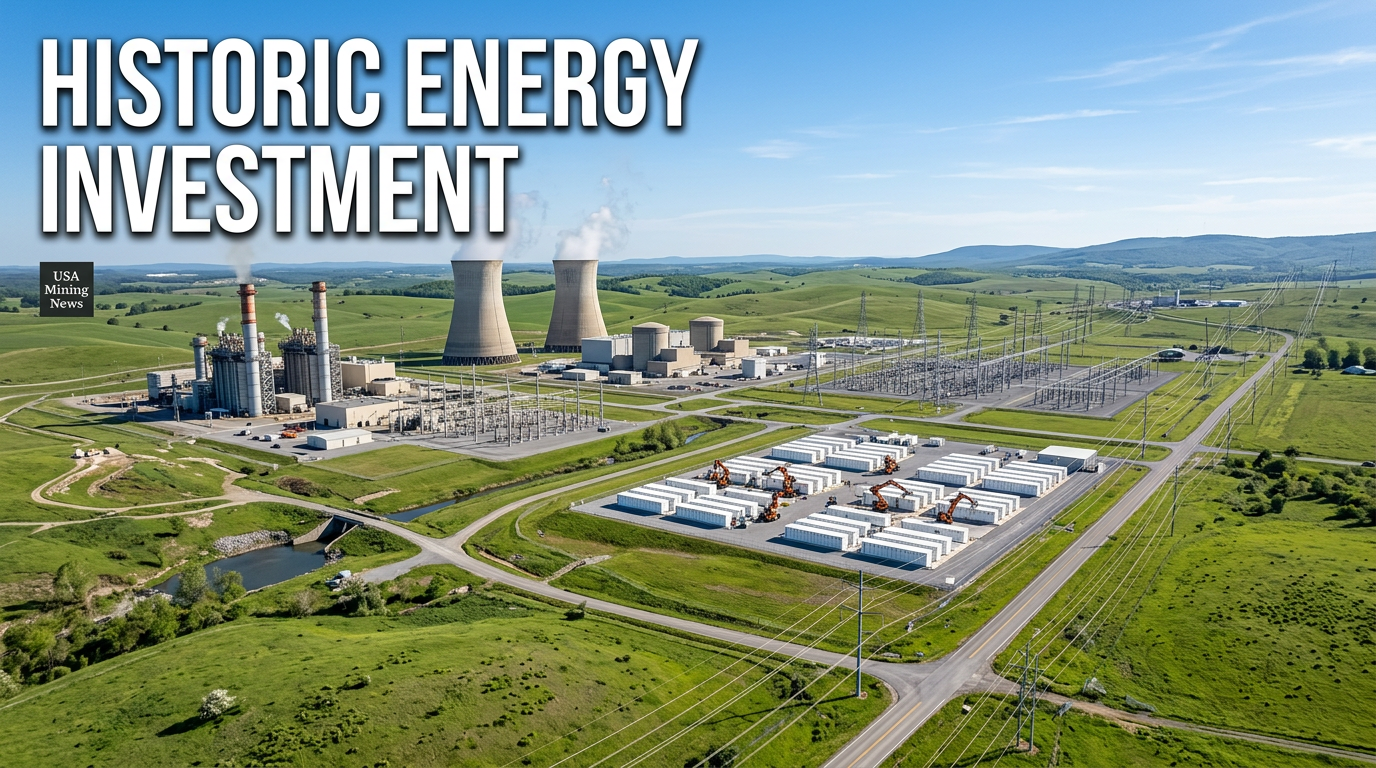
The $26.5 billion investment will support a comprehensive suite of projects designed to either build new capacity or upgrade existing infrastructure, totaling over 16 gigawatts (GW) of firm, reliable power. This multi-faceted approach acknowledges the need for a diversified energy portfolio to ensure grid stability and meet growing demand. The projects include:
- 5 GW of New Gas Generation: The development of new natural gas-fired power plants will provide crucial flexible and dispatchable electricity, often serving as a bridge fuel and essential peaker plant capacity in a transitioning energy mix.
- 6 GW in Nuclear Improved: Through uprates and license renewals for existing nuclear facilities, this segment focuses on maximizing the output and extending the operational lifespan of a critical baseload power source. Nuclear energy is valued for its carbon-free, always-on generation capabilities.
- Hydropower Modernization: Investment in existing hydroelectric facilities will enhance efficiency, reliability, and potentially increase output, leveraging a long-standing renewable energy source.
- Battery Energy Storage Systems: This component addresses the growing need for grid flexibility, enabling the storage of excess electricity and its release during peak demand or when intermittent sources are unavailable.
- Over 1,300 Miles of Transmission and Grid Enhancement Projects: A significant portion of the funds will be dedicated to upgrading and expanding the electrical grid itself, which is vital for delivering power efficiently from generation points to consumers and enhancing overall grid resilience.
This balanced portfolio reflects a strategic commitment to energy diversity, ensuring that the additional 16 GW capacity will integrate firm, reliable sources necessary for a stable grid, while also incorporating modern storage solutions and robust transmission infrastructure.
Catalyzing Core Mineral Demand: A Direct Link to the Mining Sector
While the immediate impact of this loan package is on the energy generation and utility sectors, the implications for the mining industry are profound and direct. Large-scale energy infrastructure projects of this magnitude are inherently mineral-intensive, driving significant demand for a diverse range of mined commodities. The "Unleashing American Energy" directive inherently calls for robust supply chains, many of which originate in the extraction of raw materials.
- Natural Gas Expansion: The development of 5 GW of new gas generation capacity requires substantial quantities of steel for pipelines, processing facilities, and the power plants themselves. Copper is essential for wiring, transformers, and electrical systems. Concrete, derived from limestone and other aggregates, will be critical for construction. Specialized minerals and advanced alloys are also used in high-efficiency gas turbines. The increased demand for natural gas as a fuel source will also indirectly support the fossil fuel extraction sector.
- Nuclear Power Resilience: Enhancing 6 GW of nuclear capacity through uprates and license renewals, while not requiring entirely new reactor builds, still entails significant material inputs. Uranium, the fundamental fuel for nuclear fission, will see continued, reliable demand. Complex alloys, zirconium, and specialized graphite are used in reactor components and fuel rod casings, requiring precision mining and processing. Maintenance, safety upgrades, and digital control system modernizations will also draw upon various mineral resources, including rare earth elements for advanced electronics.
- Grid Modernization and Transmission: The commitment to over 1,300 miles of new and enhanced transmission infrastructure represents a massive undertaking for the copper and aluminum industries. Copper is the preferred material for high-efficiency electrical conductors, while aluminum is widely used for larger overhead transmission lines due to its lighter weight and cost-effectiveness. The construction of new transmission towers will require significant quantities of steel. Additionally, advanced grid monitoring and control systems, often referred to as "smart grid" technologies, rely on various rare earth elements and specialized metals for sensors, communication equipment, and automation.
- Battery Energy Storage Systems: The deployment of utility-scale battery storage is perhaps the most direct and rapidly growing link to critical mineral mining. The predominant battery chemistries, such as lithium-ion, depend heavily on robust supplies of lithium, cobalt, nickel, and graphite. Manganese, vanadium, and other elements are also used in various battery types. This investment signals a sustained and increasing industrial demand for these minerals, incentivizing exploration, extraction, and processing capabilities within the mining sector.
For mining companies, this federal investment creates a clear long-term demand signal. Those involved in the extraction, processing, and supply of key industrial metals, energy minerals, and critical minerals will likely see sustained opportunities as these projects move from planning to execution. The emphasis on "American energy dominance" also implicitly stresses the importance of secure, domestic supply chains for these materials where feasible.
Economic Impact and Consumer Benefits
Beyond the direct energy and mining sector implications, the DOE loan package is designed to yield substantial economic benefits. The $7 billion in electricity cost savings for Georgia and Alabama customers represents tangible financial relief for households and businesses. The annual reduction of Southern Company’s interest expenses by over $300 million further validates the strategic financial engineering of the loan, ultimately benefiting the end-user.
Furthermore, the scale of these infrastructure projects is poised to create thousands of jobs. These jobs will encompass a wide range of skills, from engineering and construction to specialized manufacturing and ongoing operations and maintenance. This multi-sector job creation aligns with the "Working Families Tax Cut" mandate, reinforcing the economic stimulus ambitions of the funding.
The commitment to increased grid reliability is paramount for economic stability and national security. A robust and resilient electrical grid is fundamental to modern society, supporting everything from residential lighting to critical industrial operations. Investments in firm power generation and enhanced transmission reduce the risk of outages and enhance the efficiency of electricity delivery, creating a more stable environment for economic growth.
Southern Company's Proactive Stance and Future Implications
Southern Company's collaboration with the DOE and the Trump Administration positions it as a frontrunner in a new standard for government energy financing. Its proactive approach, including the 2025 announcement of multiyear rate freezes, demonstrates a commitment to both operational excellence and consumer welfare. This partnership could serve as a blueprint for other utilities looking to leverage federal financing to modernize infrastructure, enhance reliability, and manage consumer costs.
The DOE's Office of Energy Dominance Financing (EDF) is clearly setting an aggressive pace for future engagements, ensuring that its loans deliver on the promise of "affordable, reliable, and secure energy." This record-setting loan package signals a clear federal strategy: substantial public investment in traditional and emerging energy infrastructure is a priority, especially when it supports grid stability, strengthens domestic supply chains, and lowers consumer costs. For the mining industry, this translates into a sustained, long-term opportunity to provide the foundational materials upon which America's energy future will be built.