A Mining Perspective on Kentucky's $100 Billion AI Energy Hub
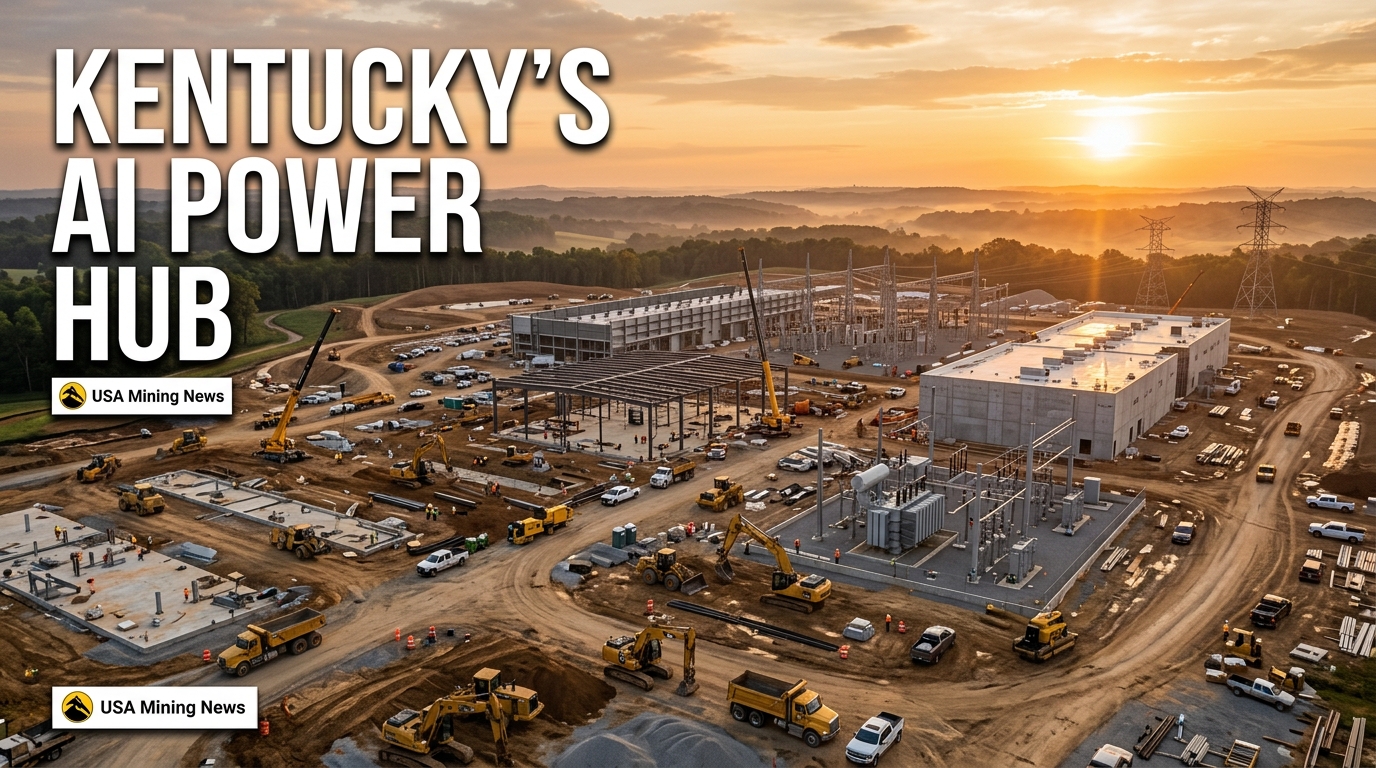
WASHINGTON – In a move set to profoundly impact the energy landscape and, by extension, the global mining sector, the U.S. Department of Energy (DOE) announced on July 29, 2026, a monumental private-sector partnership. This landmark initiative, valued at over $100 billion, aims to redevelop portions of the DOE’s Paducah Site in Western Kentucky into a cutting-edge data center campus, bolstered by substantial new affordable energy infrastructure. This project, positioned as one of the largest privately funded investments in Kentucky’s history, is projected to generate approximately 8,000 construction jobs and 600 permanent positions, signaling a significant shift in how federal assets are leveraged for economic growth and technological advancement.
For mining industry professionals and investors, this announcement extends far beyond a regional development; it underscores the escalating demand for energy resources and critical raw materials essential for powering the burgeoning artificial intelligence (AI) and high-performance computing (HPC) sectors. The scale of this endeavor suggests a sustained requirement for everything from natural gas and the metals needed for energy generation and transmission to the specialized minerals vital for advanced computing and battery storage technologies.
A New Energy Hub in Western Kentucky
The core of this partnership involves a consortium of prominent industry players. Brookfield has been selected to develop and operate the ambitious data center campus, while NextEra Energy will be responsible for building and owning the dedicated energy infrastructure. Supporting these primary developers are key regional entities: Big Rivers Electric Power Corporation, which will provide wholesale electric service; Jackson Purchase Energy Cooperative, handling retail electric service; and Paducah Power System, serving as a vital community partner. This collaborative framework demonstrates a multi-stakeholder approach to large-scale infrastructure development, blending federal land stewardship with private investment and local utility expertise.
The Paducah project is a flagship initiative of the DOE’s American Energy Hubs program, which aims to transform former DOE sites nationwide into centers of affordable energy production, advanced manufacturing, and technological innovation. This strategy not only revitalizes communities through increased tax revenue and job creation but also strengthens America’s energy security and technological leadership on a global scale. The selection of the Paducah Site itself was strategic, leveraging existing assets such as robust transmission capacity, water infrastructure, fiber connectivity, and readily available land, all critical components for a project of this magnitude.
Powering the AI Revolution: Infrastructure Details
Central to the Paducah partnership’s energy strategy is NextEra Energy’s plan to develop a substantial 2 gigawatts (GW) of new grid-connected natural gas-fired generation. This generation capacity is specifically designed to support a new 1.8 GW artificial intelligence and high-performance computing (HPC) innovation campus. Beyond generation, NextEra Energy will also undertake significant upgrades to existing transmission infrastructure and deploy an impressive 2.6 GW of battery energy storage. This dual-pronged approach to energy supply, combining natural gas generation with large-scale battery storage, addresses both the consistent baseload power requirements and the demand for grid stability and flexibility.
A significant aspect of the energy infrastructure development is its planned capacity, which is designed to exceed the campus’s immediate energy needs. This surplus electricity will be delivered to the regional grid, aligning with President Trump’s Ratepayer Protection Pledge. The intent is to help reduce energy costs for American families and businesses, demonstrating a commitment to broader economic benefits beyond the direct project footprint. Such a design principle highlights the integrated nature of modern energy infrastructure, where localized demand centers can also contribute to grid resilience and affordability for a wider consumer base.
Strategic Site Selection and Economic Revitalization
The choice of the Paducah Site is not coincidental but rather the result of careful strategic planning and assessment of existing federal assets. As Assistant Secretary for Environmental Management Tim Walsh noted, the DOE is "intently focused on finding ways to put federal land back to productive use for the American people." The Paducah Site's inherent advantages – particularly its existing transmission infrastructure, vital water resources, robust fiber connectivity, and the sheer availability of suitable land – made it an ideal candidate for such a large-scale undertaking. These pre-existing conditions significantly reduce development timelines and costs, making the site highly attractive for major private investment.
Furthermore, the project’s scope extends beyond simply building new infrastructure. It is designed to proceed while continuing vital environmental cleanup efforts at the former DOE site, ensuring long-term redevelopment is holistic and responsible. This commitment demonstrates a viable model for transforming legacy federal industrial sites into engines of future economic growth, fostering a legacy of innovation and community revitalization. Congressman Andy Barr (R-KY) emphasized the local support and advocacy for this investment, underscoring its potential for "lasting economic growth for Paducah and the Commonwealth for decades to come."
Key Players and Government Endorsement
The announcement showcased strong government backing, with key officials highlighting the project's strategic importance. U.S. Secretary of Energy Chris Wright emphasized the leveraging of federal assets for national advantage: "Thanks to President Trump, the U.S. government is leveraging its assets—like our federal lands—to add power generation, create jobs, and ensure the United States wins the AI race." He further stressed that the Ratepayer Protection Pledge underpins the twin goals of powering the AI revolution while simultaneously lowering electricity costs for consumers. This overarching policy directive ensures that technological advancement is coupled with tangible benefits for the American populace.
The selection process for the partners followed a Request for Offers (RFO) issued by the DOE in November 2025. This competitive process culminated in Brookfield being entrusted with the data center campus development and NextEra Energy with the critical energy infrastructure. The final power service agreement for the project remains subject to approval by the Kentucky Public Service Commission, ensuring regulatory oversight and transparency in the utility provisioning aspects of the development.
Broader Implications for Energy Demand and Mining
From the perspective of the mining industry, this massive undertaking at Paducah signals a critical inflection point. The escalating demand for electricity driven by AI and high-performance computing data centers is creating an unprecedented need for primary energy sources and the raw materials required to generate, transmit, and store that energy. While the immediate project incorporates 2 GW of natural gas-fired generation, the sheer scale of the 1.8 GW AI campus and the accompanying 2.6 GW of battery storage points to profound implications for various commodity markets.
-
Critical Minerals for Battery Storage: The deployment of 2.6 GW of battery energy storage will significantly increase demand for minerals such as
lithium, nickel ,cobalt ,graphite , andmanganese . These materials are the bedrock of modern battery technology, and projects of this magnitude underscore the urgent need for secure, diversified, and ethical supply chains for these critical minerals. The mining sector must expand exploration, develop new mines, and enhance processing capabilities to meet this burgeoning demand. -
Copper for Electrification and Data Infrastructure: The "upgrade existing transmission infrastructure" and the construction of a massive data center complex will require vast quantities of
copper . Copper is indispensable for high-voltage transmission lines, transformers, internal wiring within data centers, and advanced cooling systems. The digital economy, powered by AI, is intensely copper-intensive, driving consistent demand growth for this foundational industrial metal. -
Construction Materials: The approximately 8,000 construction jobs and the extensive physical footprint of the campus and energy facilities will necessitate substantial inputs of
iron ore (for steel),limestone (for cement and concrete),sand ,gravel , and other aggregates. These foundational materials, often overlooked, are critical enablers for any large-scale infrastructure project. -
Natural Gas and Energy Inputs: The 2 GW natural gas-fired generation capacity ensures a stable demand for
natural gas . While natural gas is a fossil fuel, its role as a flexible, lower-emission transitional fuel, especially when coupled with renewables and storage, remains vital for grid stability as intermittent energy sources expand. Further, the specialized metals and materials required for constructing advanced natural gas turbines and power plant infrastructure, such asnickel alloys andtitanium , will also see sustained demand. -
Rare Earth Elements and Advanced Materials: The "artificial intelligence and high-performance computing (HPC) innovation campus" implies sophisticated electronics. This will drive demand for
rare earth elements for advanced magnets and catalysts, semiconductor materials likesilicon , and other specialized materials used in servers, chips, and optical fiber.
The Paducah project vividly illustrates the direct link between global technological pursuits and the foundational role of the mining industry. Securing the raw materials required for the AI future is as critical as developing the software and hardware itself. Policy initiatives like the American Energy Hubs program, which accelerate infrastructure development, inadvertently place a renewed emphasis on the dependable supply of mined resources.
Outlook: A Roadmap for Future Development
Construction on the Paducah Site is expected to reach completion by 2031. This timeline allows for considerable planning and investment across the supply chain, particularly within the mining sector. The long-term economic impact of the project is expected to be transformative for Western Kentucky, creating a ripple effect that will support local businesses and communities for decades.
The Paducah partnership, mirroring a similar model announced at the Portsmouth Site, serves as a blueprint for future federal, state, local, and private-sector collaborations. Such partnerships are crucial for accelerating investment in critical infrastructure, revitalizing former industrial sites, and ensuring that the United States remains at the forefront of technological innovation and energy security. The success of this model will likely lead to its replication at other suitable federal sites, further amplifying the demand for energy resources and the mined materials that underpin them.
In conclusion, the DOE’s announcement regarding the Paducah Site is far more than a regional development story. It is a powerful indicator of the monumental energy and material demands of the coming AI age. For the mining industry, it represents a clear signal: the race to power America’s AI future is also a race to secure the critical minerals and traditional resources that make that future possible, cementing mining's indispensable role in the 21st-century economy.