The Federal Energy Regulatory Commission (FERC) has announced its commitment to take definitive action by June 2026 on reforms for large load interconnection, a directive issued by U.S. Secretary of Energy Chris Wright. This initiative, strongly commended by Deputy Secretary of Energy James P. Danly, aims to streamline the grid integration of major industrial and commercial consumers, support the co-location of generation and demand, and accelerate new power infrastructure to achieve American energy dominance and ensure affordable, reliable energy for the nation. For the mining industry, which depends heavily on substantial, consistent power supplies, these reforms promise to unlock bottlenecks, improve project viability, and strengthen domestic mineral production.
The energy landscape in the United States is undergoing a profound transformation, driven by an escalating demand for electricity from diverse sectors, including manufacturing, data centers, and critically, the mining industry. Against this backdrop, the Federal Energy Regulatory Commission (FERC) recently signaled a decisive move, announcing an intent to take action by June 2026 on a pivotal proceeding focused on large load interconnection reform. This initiative, stemming from a direct directive by U.S. Secretary of Energy Chris Wright, has been robustly endorsed by U.S. Deputy Secretary of Energy James P. Danly, highlighting its strategic importance for national energy policy and economic competitiveness.
Addressing America's Growing Energy Demand: FERC's Interconnection Reform
The announcement came on April 16, 2026, when Deputy Secretary Danly issued a statement following FERC's commitment. His remarks underscored the deep significance of the forthcoming reforms, framing them as essential to achieving President Trump’s overarching goal of American energy dominance. "FERC’s announcement today demonstrates Chairman Swett’s commitment to implement Secretary Wright’s directive that the Commission ensure the timely and orderly integration of large electric loads that deliver on President Trump’s goal of American energy dominance," Danly stated.
The "large load interconnection proceeding" is not merely a bureaucratic undertaking; it addresses a fundamental challenge facing the nation's bulk power system. As industries expand and new technologies emerge, the demand for significant, dedicated electrical power connections continues to grow. These large loads, which can include hyperscale data centers, manufacturing plants, and crucial to our readership, extensive mining and mineral processing facilities, often face protracted delays and complex regulatory hurdles in securing reliable grid connections. The current backlog in interconnection queues across various regional transmission organizations (RTOs) and independent system operators (ISOs) has become a notorious bottleneck, delaying billions of dollars in investment and impeding the deployment of new generation capacity.
Deputy Secretary Danly, drawing on his extensive experience as a former FERC commissioner and chairman, expressed clear expectations for the Commission's pending actions: "I expect that the Commission will act quickly and decisively to improve interconnection processes, support the co-location of load and generation, and accelerate the addition of new generation to ensure that supply is built alongside demand—delivering affordable, reliable, and secure energy for all Americans." This statement delineates a multi-faceted approach, targeting not just the procedural aspects of interconnection but also strategic grid planning and resource development.
The Critical Role of Large Loads and Grid Infrastructure
The term "large electric loads" encompasses any single point of consumption requiring a substantial amount of power, often measured in megawatts (MW) or hundreds of MWs. For the mining industry, this can include:
- New mine developments, particularly those involving extensive underground operations or open-pit projects with large fleets of electric vehicles and heavy machinery.
- Mineral processing facilities, such as concentrators, smelters, and refineries, which are inherently energy-intensive operations requiring continuous, high-capacity power.
- Specialized critical mineral processing plants, vital for battery materials, rare earths, and other advanced technologies, designed to bolster domestic supply chains.
- Upgrades or expansions of existing mines that integrate automation, electrification of equipment, or new beneficiation processes.
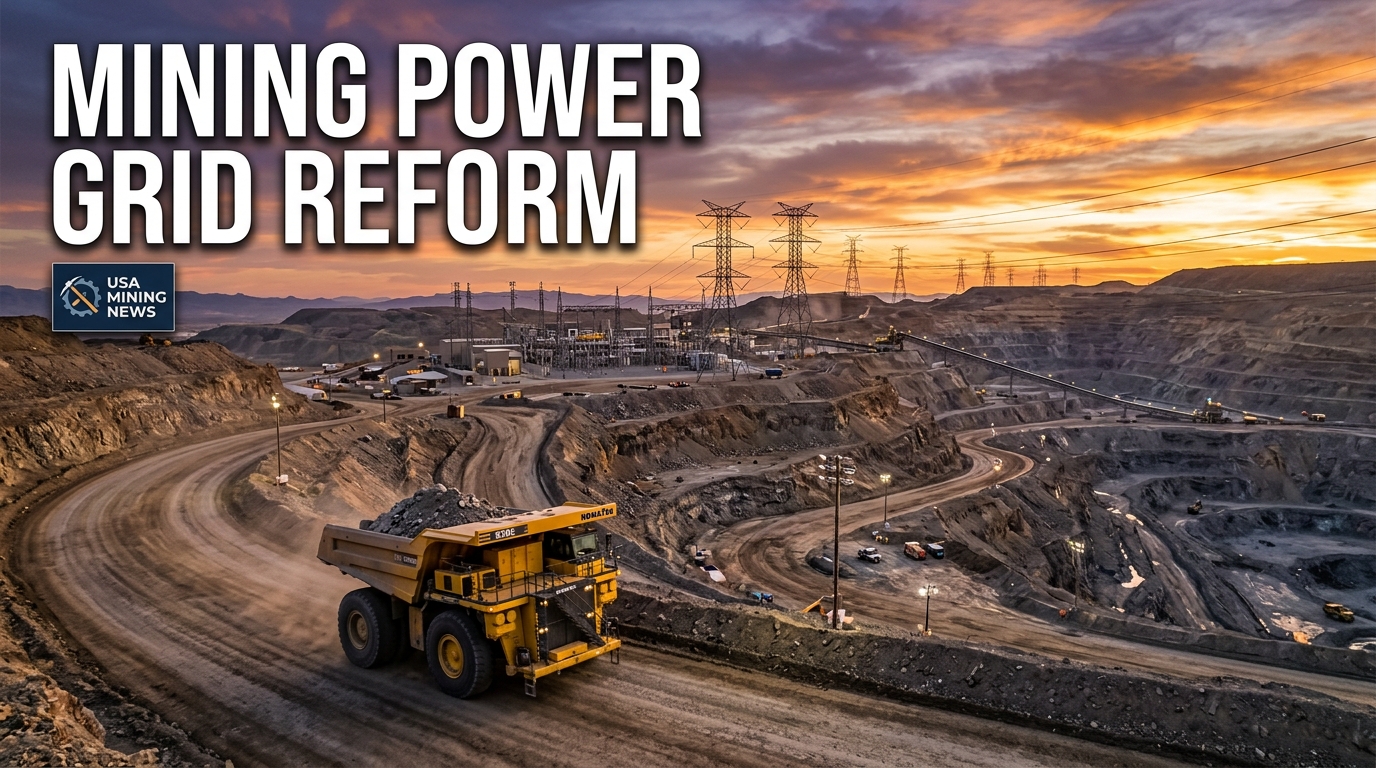
Connecting such substantial loads to the grid, especially in remote mining regions, poses significant engineering, financial, and regulatory challenges. The current interconnection process, historically designed for a slower pace of industrial expansion and a more centralized generation model, often struggles to accommodate the speed and scale of today's demand. Simplifying this process, as envisioned by Secretary Wright and Deputy Secretary Danly, would directly translate into reduced lead times for mining projects, allowing them to move from planning to operation more efficiently and predictably.
Co-location and Accelerated Generation: A Strategic Shift
A key focus of the anticipated FERC reforms is to "support the co-location of load and generation." This concept advocates for aligning new electricity demand directly with new power generation sources, minimizing the need for lengthy and costly new transmission lines. For the mining sector, this has profound implications:
- On-site Renewable Energy: Mines can become prime candidates for co-located solar, wind, or even small modular reactor (SMR) installations. Building generation at or near the mine site reduces reliance on external grid infrastructure, provides a more stable and potentially lower-cost power source, and enhances a project’s environmental credentials.
- Reduced Transmission Needs: One of the biggest hurdles for remote mining projects is the extensive transmission infrastructure required to bring power from distant generation sources. Co-location alleviates this, streamlining permitting and construction timelines.
- Improved Energy Security: A localized power source provides greater resilience against grid disturbances and price volatility, crucial for operations that cannot afford interruptions.
Coupled with this is the directive to "accelerate the addition of new generation." This acknowledges that simply streamlining load connections is insufficient without an adequate supply of power to meet that demand. The push for accelerated generation likely includes measures to expedite permitting for power plants, incentivize investment in diverse energy sources, and ensure that grid planning proactively accounts for future demand growth. By ensuring "supply is built alongside demand," the goal is to prevent energy shortages and keep electricity prices stable, both critical factors for the energy-intensive mining industry.
Implications for the Mining Industry: Powering Progress
For the USA Mining News readership – a professional and investment community keenly focused on the viability and growth of domestic mineral extraction – these forthcoming FERC actions represent a potential game-changer. Reliable, affordable, and readily available electricity is not just a utility but a fundamental input and often the single largest operating cost for many mining operations. The ability to seamlessly integrate substantial power demands into the grid directly influences:
- Project Feasibility and Timelines: Lengthy interconnection queues and associated costs can derail or significantly delay new mine developments and processing facilities. Streamlined processes will improve the predictability and financial modeling of these capital-intensive projects.
- Competitiveness: Lower, more stable energy costs resulting from efficient interconnection and co-located generation can significantly enhance the international competitiveness of U.S. mining companies, particularly for commodities like copper, lithium, nickel, and rare earths, where processing is highly energy-intensive.
- Critical Mineral Supply Chains: The U.S. aims to secure domestic supply chains for critical minerals essential for national security, economic growth, and the energy transition. Many of these projects require immense power. Removing energy infrastructure bottlenecks is paramount to realizing these strategic objectives.
- Sustainability Goals: For mining companies committed to reducing their carbon footprint, the ability to co-locate renewable generation or access a more robust, cleaner grid facilitates the adoption of sustainable operating practices and helps meet Environmental, Social, and Governance (ESG) targets.
The push for "affordable, reliable, and secure energy for all Americans" directly benefits the mining sector by ensuring that the foundational resource for industrial activity remains robust. Furthermore, the emphasis on American energy dominance inherently links to bolstering domestic industrial capacity, with mining playing a foundational role in providing the raw materials for energy infrastructure, manufacturing, and defense.
FERC's Mandate and Executive Vision
Deputy Secretary Danly rightly emphasized FERC’s critical role in ensuring the reliability of the nation’s bulk power system. As an independent agency, FERC regulates the interstate transmission of electricity, natural gas, and oil. Its decisions have far-reaching impacts on energy markets, infrastructure development, and consumer costs. Chairman Swett’s commitment to move forward on Secretary Wright's directive signifies a recognition at the highest levels of the energy regulatory framework that existing processes must evolve to meet modern demands.
This initiative aligns with a broader executive vision to enhance domestic energy capabilities and ensure the U.S. leads in energy production and technology. President Trump's goal of "American energy dominance" is a cornerstone of this policy, encompassing not only fossil fuels but also the development and deployment of all energy resources, supported by robust infrastructure. The mining industry, as the supplier of the foundational raw materials for all energy technologies – from coal and uranium to copper for transmission lines and lithium for batteries – is integral to this vision.
Looking Ahead: A New Era for Grid Integration
By June 2026, the mining industry and other large load consumers await the specifics of FERC’s actions with keen interest. While the exact scope of the reforms is yet to be outlined, the stated goals suggest a comprehensive approach that likely includes:
- Standardizing and simplifying interconnection study processes.
- Implementing stricter timelines and penalties for delays.
- Revising generator interconnection agreements to better reflect modern grid needs.
- Incentivizing grid enhancements and transmission planning that considers future large load growth proactively.
- Developing mechanisms to support and evaluate proposals for co-located generation and load.
The success of these reforms will hinge on FERC’s ability to navigate complex stakeholder interests, balance reliability imperatives with economic efficiency, and foster innovation in grid planning. The U.S. mining industry stands to be a significant beneficiary of these changes, empowering it to accelerate critical projects, reduce operational costs, and solidify its position as a vital contributor to the nation's energy security and industrial strength. As the deadline approaches, continued engagement from industry stakeholders will be paramount to shaping reforms that are practical, effective, and truly transformative for America’s energy future.