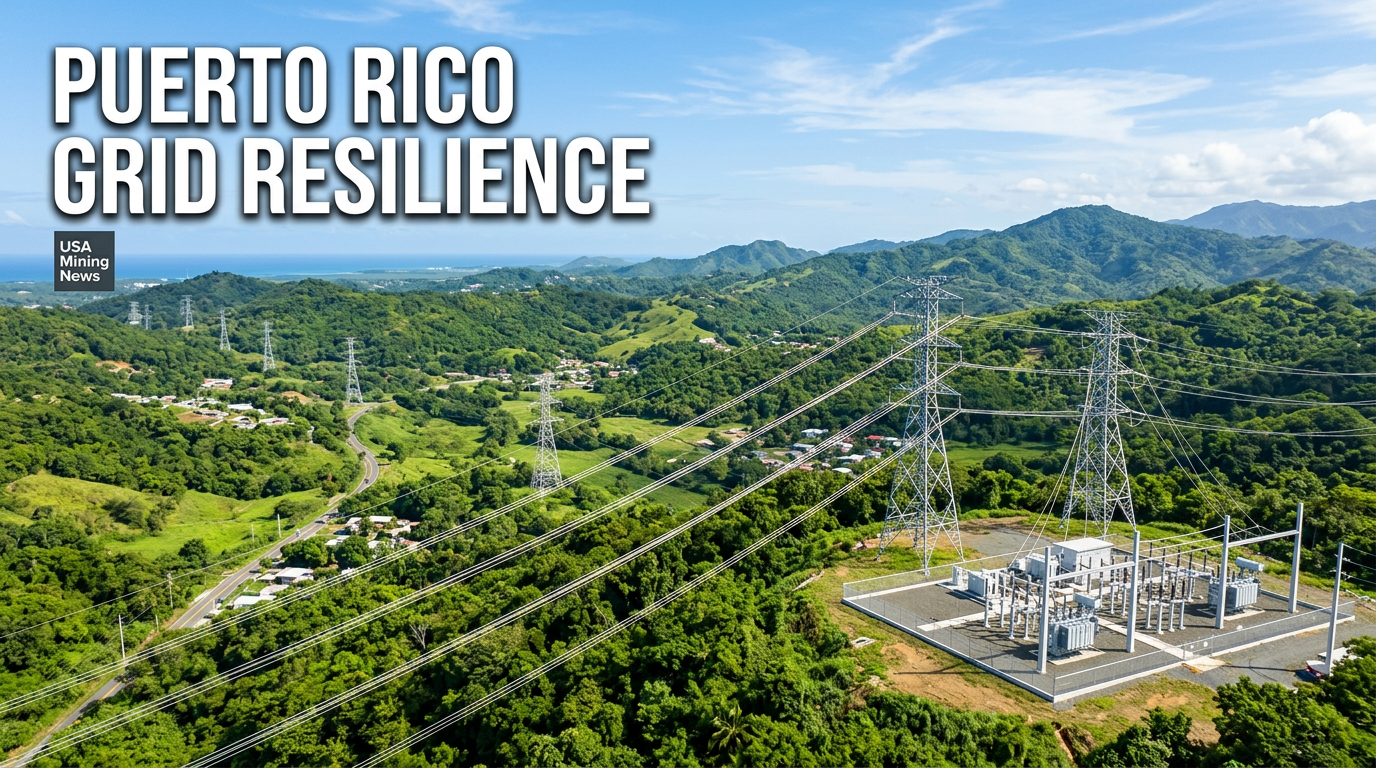
Federal Mandate Renews Push for Puerto Rico Grid Resilience Ahead of 2026 Hurricane Season
WASHINGTON — In a move signaling continued federal commitment to energy security and infrastructure resilience, the U.S. Department of Energy (DOE) announced on February 10, 2026, the renewal of two emergency orders aimed at bolstering Puerto Rico’s electric grid. These directives, which take effect immediately and extend through May 11, 2026, come as the island prepares for its demanding hurricane season later this year and anticipates a projected increase in energy consumption. This ongoing federal intervention underscores a proactive approach to address inherent vulnerabilities in critical infrastructure, a topic of increasing importance across global industrial sectors, including mining.
U.S. Secretary of Energy Chris Wright emphasized the critical nature of these actions: “The Department of Energy will continue modernizing Puerto Rico’s electric grid to ensure the island achieves long-term resilience and reliability.” Secretary Wright further noted, “Renewing these orders ensures critical work moves forward, urgent reliability challenges are addressed, and Puerto Rico’s grid is ready to withstand rising energy demand. Thanks to President Trump, these efforts are delivering real, lasting progress for Puerto Rico.” This sentiment highlights a broader policy focus on infrastructure investment and disaster preparedness, themes resonating within the mining industry as it navigates complex operational environments and supply chain dependencies.
Operational Directives and Tangible Outcomes on the Ground
Building upon prior actions initiated in May, August, and November 2025, the renewed emergency orders fall under Section 202(c) of the Federal Power Act. They are specifically designed to grant the Puerto Rico Electric Power Authority (PREPA) the necessary latitude to manage the island's dynamic energy landscape effectively. The core objectives of these orders are twofold:
- Optimized Generation Dispatch: Authorizing PREPA to dispatch specific generation units deemed essential for maintaining critical baseload capacity. This ensures a consistent power supply, crucial for industrial operations and daily life.
- Accelerated Vegetation Management: Directing immediate and extensive vegetation clearing along key transmission lines. This proactive measure aims to mitigate one of the primary causes of outages, particularly during Puerto Rico’s frequent storms and high winds, which can lead to damaged transmission infrastructure and potentially trigger wildfires.
These strategic interventions have yielded measurable improvements in Puerto Rico’s energy infrastructure. According to the DOE, its emergency actions have played a significant role in restoring up to 820 megawatts (MW) of baseload generation capacity. This has collectively elevated the island’s systemwide generation capacity to an impressive 6,460 MW. Such an increase in available power is a fundamental prerequisite for supporting economic growth and ensuring stability for the 3.2 million Americans residing on the island.
Beyond capacity restoration, the efficacy of these orders was demonstrated during a recent water crisis, where several power plants were able to operate without the usual water injection. This operational flexibility proved vital in maintaining electricity flow to consumers under unforeseen and challenging circumstances, showcasing the importance of adaptable energy solutions in vulnerable regions.
Federal-Local Collaboration and Proactive Governance
The success of these efforts is a testament to the robust collaboration between federal and local authorities. Puerto Rico Governor Jenniffer González-Colón lauded the federal support, stating, “The Department of Energy’s 202(c) emergency orders have been instrumental in preventing the widespread power outages Puerto Rico was expected to face, allowing us to increase our baseload generation capacity and advance grid stability measures.” She further expressed gratitude, noting, “Extending the orders is necessary to continue making progress and I thank President Trump and Secretary Wright for their unwavering commitment to ensure the island has an affordable, reliable supply of energy.”
This strong inter-governmental partnership is crucial for the effective execution of large-scale infrastructure projects. The DOE has committed to continued close coordination with Governor González-Colón and local authorities, ensuring sustained progress toward a truly reliable and secure electric grid for Puerto Rico. This multi-agency, multi-level approach provides a blueprint for managing complex infrastructure challenges, lessons that are highly applicable to the intricate planning and regulatory environments within which mining operations function globally.
Broader Implications for the Mining Industry
While Puerto Rico may not be a primary mining jurisdiction, the systematic effort to modernize and fortify its electric grid carries significant, albeit indirect, implications for the global mining industry. The stability and resilience of energy grids are fundamental pillars supporting all industrial activity, and mining is no exception.
- Demand for Raw Materials: Grid modernization projects, like that underway in Puerto Rico, are inherently material-intensive. The construction and maintenance of modern electricity infrastructure require vast quantities of mined commodities. Copper for cabling and transmission lines, aluminum for conductors and structural components, steel for towers and substations, and aggregates for foundations are all vital inputs. The sustained investment in infrastructure resilience globally, exemplified by Puerto Rico, creates consistent, long-term demand for these foundational metals and minerals, directly benefiting the mining sector.
- Energy Security and Commodity Prices: Reliable and affordable energy is a critical determinant of operational costs for mining companies worldwide. Disruptions to energy supply, whether from natural disasters or grid failures, can ripple through global supply chains, affecting the availability and pricing of essential commodities. By pre-empting widespread outages, the DOE's actions in Puerto Rico indirectly contribute to greater global supply stability and predictability, which is beneficial for commodity markets and investment planning in mining.
- Critical Minerals for Energy Transition: As part of grid modernization, there is an increasing global trend towards integrating renewable energy sources and energy storage solutions. Technologies such as utility-scale batteries, solar panels, and wind turbines rely heavily on critical minerals like lithium, cobalt, nickel, rare earth elements, and specialized ferroalloys. While these may not be directly sourced from Puerto Rico, the island’s push for a more resilient grid implicitly supports the broader energy transition narrative, driving demand for these essential mining products from producing regions worldwide.
- Climate Resilience in Operations: The emphasis on preparing for the 2026 hurricane season highlights the growing imperative for climate resilience in all industrial sectors. Mining operations, often located in remote or environmentally sensitive areas, are increasingly exposed to extreme weather events. The strategies employed in Puerto Rico—such as vegetation management to prevent storm-related outages and ensuring operational flexibility during crises—offer valuable lessons in risk mitigation and business continuity planning that can be adopted by mining companies globally to protect their assets and ensure uninterrupted production.
- Regulatory and Investment Environment: Government actions, particularly those involving emergency orders and significant investment, shape the broader regulatory and investment climate. A proactive governmental approach to infrastructure stabilization can signal a more predictable operating environment, potentially attracting direct foreign investment not just into energy but also into supporting industries and logistics that indirectly benefit from a robust power supply. For global mining investors, understanding these policy trends is key to assessing regional and national investment attractiveness.
The Path Forward: Sustained Progress and Long-Term Vision
The current renewal of emergency orders through May 11, 2026, marks the latest phase in a continuous effort to transform Puerto Rico’s energy infrastructure. It underscores the DOE’s unwavering commitment to achieving long-term resilience and reliability, moving beyond temporary fixes to establish a robust and modern grid capable of withstanding future challenges.
The ongoing collaboration between federal agencies and local authorities, combined with strategic operational directives, sets a precedent for how complex infrastructure vulnerabilities can be systematically addressed. For mining industry professionals and investors, this initiative in Puerto Rico serves as a powerful reminder of the indispensable link between stable, resilient energy infrastructure and global economic stability, reinforcing the vital role that mined materials play in building and sustaining the modern world. As the world increasingly grapples with climate change impacts and demands for energy security, the groundwork laid in Puerto Rico will continue to be watched closely as a model for essential infrastructure development.