Emergency Order Extends Life of Crucial Midwest Coal Plant Amidst Reliability Concerns
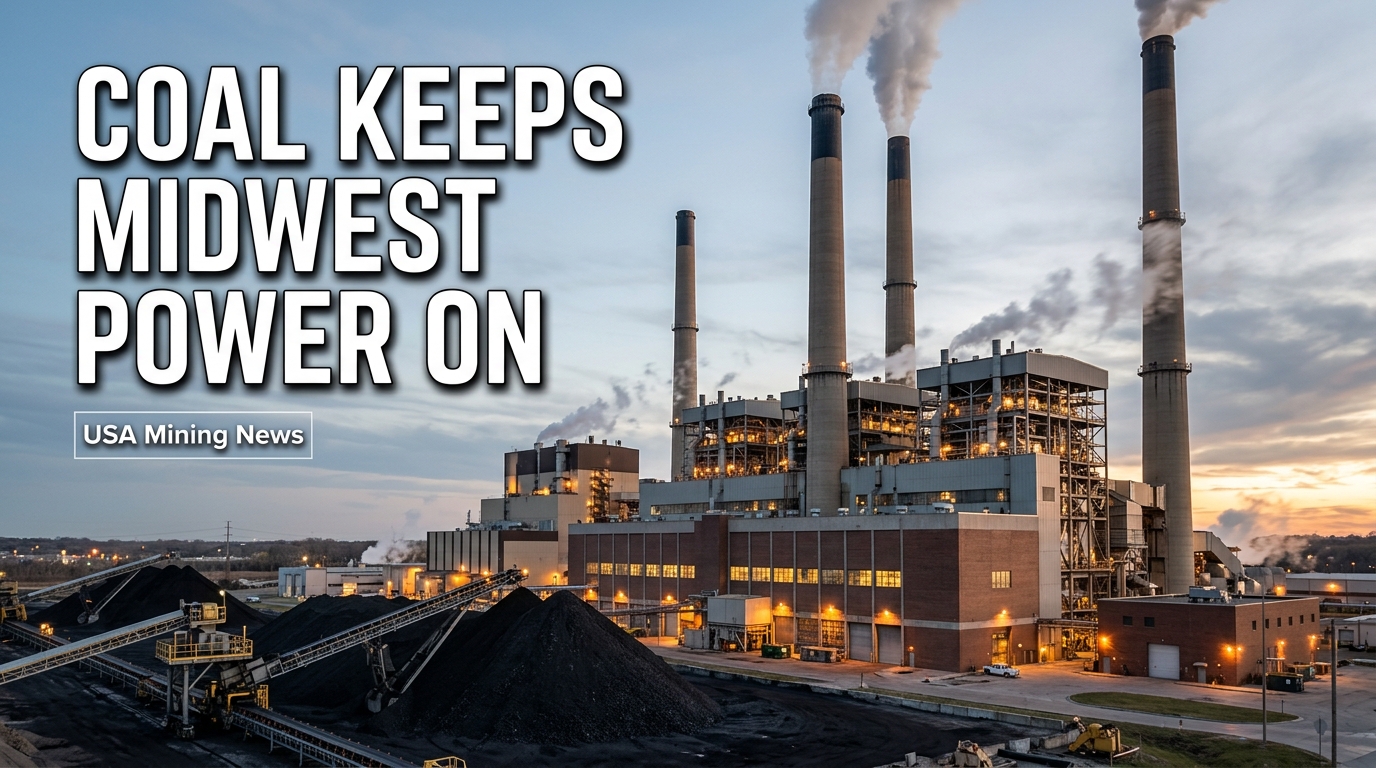
WASHINGTON D.C. – In a move underscoring the persistent challenges to grid stability and the continued reliance on conventional power generation, U.S. Secretary of Energy Chris Wright issued an emergency order on August 14, 2026, mandating the continued operation of the 1,420-megawatt (MW) J.H. Campbell coal-fired power plant in West Olive, Michigan. This directive, aimed at safeguarding energy supply and managing costs for American consumers and businesses, highlights a critical juncture for the nation’s energy infrastructure and carries significant implications for the thermal coal mining sector.
The order, effective from August 17, 2026, through November 14, 2026, directs the Midwest Independent System Operator (MISO), in coordination with Consumers Energy, to ensure the Campbell Plant remains available to operate. Furthermore, it specifies the use of economic dispatch to minimize costs, a crucial consideration for industrial consumers and households in the Midwest. This is not the first intervention for the Campbell Plant; it follows an original order issued by the U.S. Department of Energy (DOE) on May 23, 2025, with subsequent orders issued throughout 2025 and 2026, indicating an ongoing reliance on its capacity.
Secretary Wright Cites Grid Stability and Economic Imperatives
Secretary Wright articulated the administration's commitment to energy security and affordability, stating, "President Trump and the Energy Department remain committed to doing everything in our power to mitigate the possibility of power outages for American families and businesses." He emphasized the life-saving potential of maintaining operational coal plants during peak demand, asserting, "Ensuring coal plants such as the Campbell Plant are available to operate during periods of high electricity demand saves lives. Americans deserve access to affordable, reliable, and secure electricity regardless of whether the wind is blowing or the sun is shining."
The DOE's actions are a direct response to escalating concerns over power grid reliability, particularly in regions like the MISO territory, which spans across 15 U.S. states and the Canadian province of Manitoba. The Campbell Plant, with its significant baseload capacity, has proven critical to MISO’s operations, consistently running during periods of high energy demand and when intermittent renewable energy sources, such as wind and solar, experience low output. This operational performance underscores the plant's indispensable role in maintaining a stable and secure electricity supply.
The J.H. Campbell Plant: A Key Regional Asset
The J.H. Campbell coal-fired power plant, located in West Olive, Michigan, is a substantial power generation facility with a capacity of 1,420 MW. Its continued operation is vital for supporting grid resilience in a region facing increasing pressures. The plant was originally slated for retirement on May 31, 2025 – a full 15 years before the end of its scheduled design life. This accelerated shutdown timeline, typical of many coal plants in recent years, has been a contributing factor to the reliability challenges now being addressed by federal intervention.
Consumers Energy, the utility responsible for operating the Campbell Plant, and MISO, the independent system operator overseeing the grid, are now tasked with implementing the DOE's emergency order. Their coordination will be critical in ensuring the plant operates effectively and efficiently, contributing to the energy needs of the Midwest without undue cost burdens. The decision highlights the complex interplay between corporate decarbonization strategies, state-level energy policies, and federal oversight aimed at maintaining national energy security.
Underlying Reliability Challenges in the MISO Region
The emergency order comes against a backdrop of stark warnings from the North American Electric Reliability Corporation (NERC), the international regulatory authority whose mission is to assure the effective and efficient reduction of risks to the reliability and security of the North American bulk power system.
- 2025 Long-Term Reliability Assessment: Released in January 2026, NERC’s assessment painted a concerning picture for the MISO region, categorizing it as being at a "high risk of energy shortfalls over the next five years." The report explicitly stated that MISO faces "significant reliability challenges as projected resource additions do not keep pace with escalating demand forecasts and announced generator retirements." This imbalance creates a precarious situation, where the margin of available generation capacity over peak demand is diminishing rapidly.
- 2026 State of Reliability (SOR): Further reinforcing these concerns, NERC’s 2026 SOR, released on June 4, 2026, delved into major system events. In its technical discussion, NERC highlighted that "shoulder reasons have become increasingly challenging for bulk power system operators to manage, resulting in several recent instances of pre-contingent load shedding." This refers to the difficult management of transitional periods (typically spring and fall) when demand can be unpredictable and the system operators face tough decisions, sometimes necessitating controlled power outages to prevent wider grid collapse.
Adding to this, the DOE’s own Resource Adequacy Report previously outlined a dire projection: prior to President Trump’s election, the U.S. was on track to potentially experience 100 times more blackouts in 2030. This alarming forecast was attributed to the premature shutdown of reliable power generation sources, primarily baseload plants like coal, coupled with a steady increase in electricity demand across the country.
Policy Implications and the Broader Coal Landscape
The Trump administration has consistently prioritized grid reliability and the continued operation of conventional power plants, particularly coal, as central tenets of its energy policy. Secretary Wright’s statement and the series of emergency orders reflect this strategic emphasis. The administration credits its leadership with reversing the trend of premature coal plant shutdowns across the country. In 2025 alone, more than 17 gigawatts (GW) of coal-powered electricity generation were saved from going offline, a significant figure representing a substantial portion of the U.S. coal fleet.
This policy direction stands in contrast to the broader energy transition narratives that emphasize a rapid shift away from fossil fuels. While renewable energy sources continue to expand, the integration challenges they pose to grid stability – particularly their intermittency – have underscored the ongoing necessity of dispatchable, baseload power. Coal-fired plants, with their ability to provide consistent power regardless of weather conditions, are proving to be a critical stopgap in ensuring grid resilience during this transition period.
Impact on the Thermal Coal Mining Sector
For the thermal coal mining industry, this emergency order and the broader policy stance represent a vital lifeline. The continued operation of a 1,420-MW plant like J.H. Campbell, even for a temporary period, translates directly into sustained demand for thermal coal. When a plant of this size operates regularly, it consumes significant volumes of coal, supporting mining operations, transportation logistics, and the entire coal supply chain.
The decision to keep Campbell operational, along with the reported 17 GW of coal capacity saved in 2025, sends a clear signal to coal producers and investors: despite market pressures and environmental regulations, baseload coal power remains indispensable for national energy security in the near to medium term. This can influence investment decisions in existing coal mines, infrastructure upgrades for coal transport, and potentially even exploration for new reserves, particularly in regions that supply these critical plants. It also provides a measure of stability in thermal coal prices, which might otherwise be further depressed by continuous plant retirements. For a sector that has faced significant headwinds, such federal intervention offers a period of stability and a reaffirmation of coal's strategic value.
Future Outlook and Market Dynamics
The duration of the current emergency order is set until November 14, 2026. What happens beyond this date remains a key question for MISO, Consumers Energy, and indeed, the broader energy market. Given the repeated nature of these orders throughout 2025 and 2026, it is plausible that further extensions or similar directives for other critical coal plants could be issued if reliability concerns persist.
The ongoing tension between decarbonization goals and the immediate imperative of grid reliability will continue to shape commodity markets. While natural gas and renewable energy sources are projected to grow, the NERC assessments suggest that their expansion and integration may not be rapid enough to fully compensate for retiring baseload capacity without risking significant outages. This dynamic ensures that thermal coal, despite its environmental footprint, will continue to play a strategic role in the U.S. energy mix for the foreseeable future. Industry professionals and investors in the mining sector will be closely watching these developments, as they directly impact the long-term viability and market demand for thermal coal.
The emergency order for the J.H. Campbell plant is more than just a temporary reprieve; it is a clear indicator of the complex realities facing the U.S. power grid and a testament to the enduring, albeit evolving, role of coal in ensuring the nation’s energy security and economic stability.