WASHINGTON – In a decisive move to avert widespread power outages, the U.S. Department of Energy (DOE) issued an emergency order on July 26, 2026, to stabilize the power grid across 17 states. The directive, announced by U.S. Secretary of Energy Chris Wright, comes amidst scorching hot weather conditions that threatened to overwhelm regional energy infrastructure, underscoring the critical nature of energy security for American industries and households alike. The action is framed as a crucial step in strengthening a grid deemed vulnerable by the current administration, ensuring continuous power supply in a period of heightened demand.
The Immediate Response to Grid Vulnerability
The emergency order, issued pursuant to a request from the Southwest Power Pool, Inc. (SPP), grants significant authority to the grid operator for the specified duration. Specifically, SPP is directed to dispatch designated generation units and to order their operation as needed to maintain reliability across its vast service territory. Furthermore, the order authorizes SPP to deploy backup generation resources as a last resort. This critical measure is permissible either before declaring an Energy Emergency Alert (EEA) 3—the most severe alert level indicating actual or imminent load shedding—or during an EEA 3 event. The duration of this emergency measure is concise but targeted, taking effect on July 26, 2026, and expiring at 11:59 PM CDT on August 3, 2026.
The geographical scope of the order encompasses a significant portion of the central United States, covering 17 states. This regional focus highlights how interconnected power grids respond to localized stress points, even as the implications ripple nationally. For industries like mining, which are often situated in diverse geographical areas, the stability of these interconnected regional grids is paramount to operational continuity.
Strategic Utilization of Backup Generation
Secretary Wright emphasized the administration's proactive stance, stating, "The Trump Administration is tapping into an abundant supply of unused backup generation to maintain affordable, reliable, and secure power for hardworking American families and businesses." This statement reflects a broader policy narrative that critiques previous energy strategies. According to Secretary Wright, the "previous administration’s energy subtraction policies weakened the grid, leaving Americans more vulnerable during emergency events." He added, "Thanks to President Trump’s leadership, we are reversing those failures and using every available tool to ensure Americans have continued access to affordable, reliable, and secure energy to power and cool their homes."
A key detail highlighted by the DOE is the estimated availability of more than 35 gigawatts (GW) of unused backup generation nationwide. This figure is substantial, representing a significant reserve capacity that can be leveraged during peak demand or emergency situations. The ability to quickly bring this capacity online is crucial for grid operators like SPP to balance supply and demand, especially when conventional generation units might be under strain or undergoing maintenance, or when intermittent renewable sources are not producing optimally.
The political framing of this action is also noteworthy. On day one of his second term, President Trump declared a national energy emergency, attributing it to the "Biden administration’s energy subtraction agenda" which, according to the current administration, left the grid increasingly vulnerable to blackouts. This declaration set the stage for policies aimed at bolstering grid resilience and ensuring what the administration terms "affordable, reliable, and secure" electricity.
Economic Imperatives and the Cost of Outages
The urgency behind the DOE's emergency order is underscored by the substantial economic impact of power outages. Data from DOE’s National Laboratories indicates that power outages cost the American people an estimated $44 billion per year. This staggering figure illustrates that electricity is not merely a convenience but a fundamental pillar of economic productivity and national security. For energy-intensive industries, such as mining, these costs can escalate rapidly, encompassing not only lost production but also potential equipment damage, safety incidents, and supply chain disruptions.
The emergency order, by mitigating the possibility of power outages in the 17-state region, directly addresses this economic threat. It reflects a commonsense policy approach aimed at safeguarding the financial well-being of businesses and families by ensuring a stable and predictable energy supply. This emphasis on reliability is a core tenet for operations that cannot afford downtime.
Relevance to the Mining Sector: Grid Stability and Resource Demand
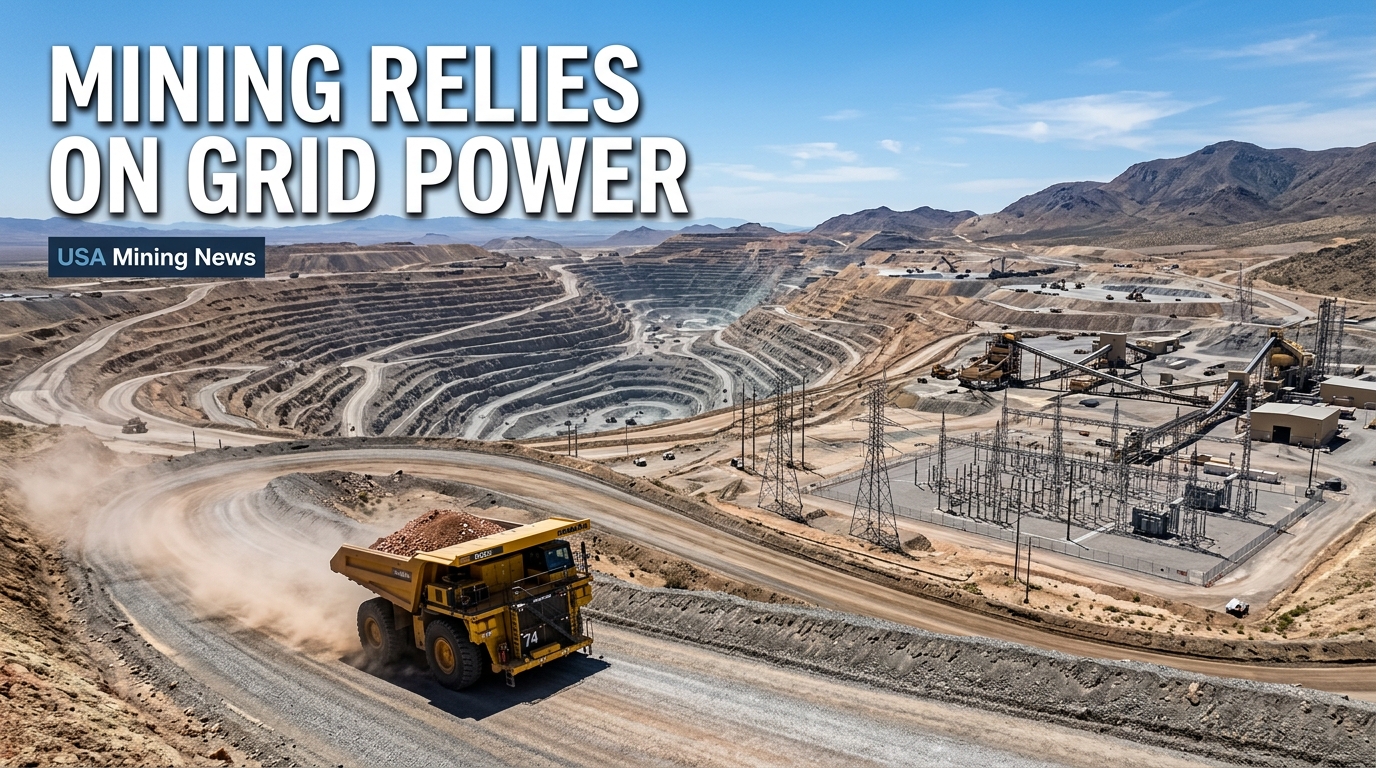
For the U.S. mining industry, the DOE’s emergency order and the broader discussion around grid stability are of paramount importance. Mining operations are inherently energy-intensive, requiring continuous and substantial power for a multitude of processes: from drilling, blasting, and material handling (haul trucks, conveyors) to crushing, grinding, flotation, and refining. Any interruption in power supply can have immediate and severe consequences:
- Production Losses: Equipment downtime directly translates to lost tons of ore extracted and processed, impacting revenue and commodity supply pipelines.
- Safety Risks: Power failures can compromise ventilation systems in underground mines, disrupt communication, and disable critical safety equipment, posing significant risks to personnel.
- Equipment Damage: Sudden power cuts or surges can damage sensitive electromechanical equipment, leading to costly repairs and extended periods of non-operation.
- Increased Operational Costs: Restarting complex processing plants after an outage can be time-consuming and energy-intensive, adding to operational expenses. Furthermore, relying on expensive, site-specific backup generators for extended periods can significantly increase energy costs.
- Investment Decisions: The reliability of national and regional grids is a key factor for mining companies when making long-term investment decisions regarding new projects or facility expansions. Areas with unstable power grids present higher operational risks and financing challenges.
The administration's focus on bolstering grid resilience, even through emergency measures, highlights the foundational role of reliable energy in maintaining industrial output. This emphasis also subtly reinforces the demand for a broad range of mineral resources essential for energy infrastructure itself. Strengthening and modernizing the grid, whether through new transmission lines, substations, or diverse generation assets, requires vast quantities of metals such. Copper, aluminum, and steel are vital for transmission and distribution. Enhanced backup generation, whether traditional thermal plants or advanced energy storage solutions, requires specific materials: nickel, lithium, cobalt, and graphite for batteries; and various metals for gas turbines and diesel generators.
In a related development, just two days prior to this emergency order, on July 24, 2026, the DOE announced the launch of an Initial Screening Application for Critical Mineral and Material Funding. This initiative directly connects the administration's energy security agenda with the strategic importance of domestic mineral supply chains. It underscores the recognition that reliable power, regardless of its source, depends on a secure and robust supply of the raw materials that build the energy infrastructure.
A Shifting Energy Policy Landscape
The narrative advanced by the current administration, particularly regarding the "national energy emergency" and the critique of prior "energy subtraction policies," signals a recalibration of national energy strategy. This shift could have significant implications for the future direction of energy infrastructure development, impacting everything from permitting processes for new power plants to incentives for specific types of generation. An administration prioritizing "affordable, reliable, and secure energy" often translates into a policy environment that favors large-scale, dispatchable power sources—both traditional and potentially new technologies—that can guarantee consistent output, a factor directly influencing demand for relevant mined materials.
Such a policy framework would likely emphasize not just the efficiency of power generation but also the robustness of the transmission and distribution networks. This holistic approach to grid security means sustained demand for the essential minerals and metals that form the backbone of energy infrastructure. From the foundational materials for concrete and steel in power plants to the specialized metals in transformers and circuit breakers, the mining industry remains an indispensable partner in achieving national energy goals.
Future Outlook and Industry Implications
While the emergency order to the Southwest Power Pool is a temporary measure, expiring in just over a week, its underlying message is enduring. The vulnerability of the U.S. power grid to extreme weather and high demand periods remains a significant national challenge. The current administration's proactive, and politically charged, response underscores a commitment to addressing these vulnerabilities head-on.
For the mining industry, this commitment translates into a sustained and strategic demand for its products. Whether the future grid relies more on traditional thermal generation bolstered by significant backup capacity, or on a more diversified portfolio requiring advanced materials for energy storage and smart grid technologies, the need for a robust domestic supply of minerals and metals will only intensify. The emphasis on "energy security" and "reliability" positions the mining sector as a critical enabler of national infrastructure resilience and economic stability. As policymakers continue to grapple with the complex challenges of powering a modern society, the strategic importance of the mining industry in supplying the fundamental building blocks of energy infrastructure will remain in sharp focus.