Emergency DOE Order Bolsters Mid-Atlantic Grid Amidst Reliability Concerns: Implications for Mining
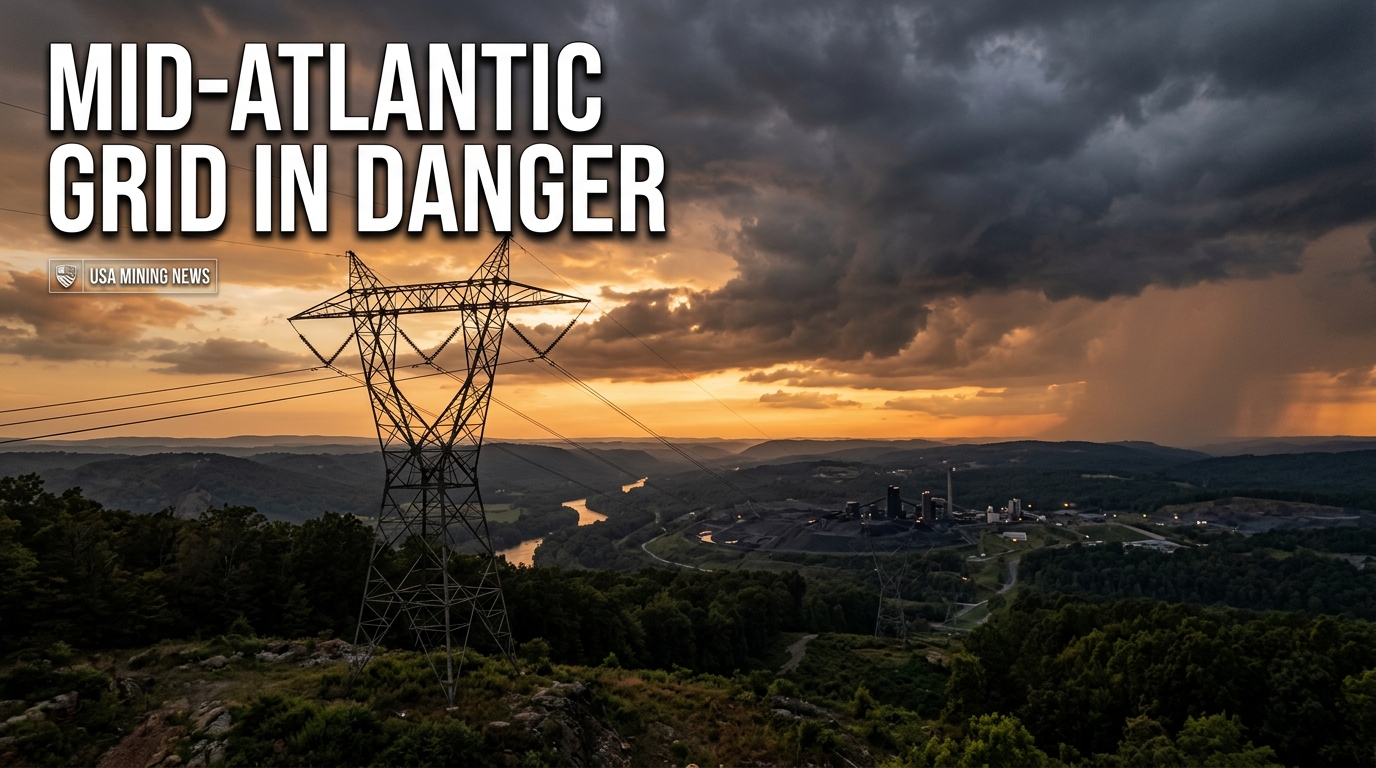
WASHINGTON – In a decisive move underscoring mounting concerns over national grid stability, the U.S. Department of Energy (DOE) issued an emergency order on September 17, 2026, aimed at preventing widespread blackouts across the Mid-Atlantic region. This directive, targeting PJM Interconnection, L.L.C. (PJM), highlights the fragility of the nation's electricity infrastructure in the face of environmental challenges and evolving energy policies. For the mining industry, a sector critically dependent on uninterrupted power for its operations, this action serves as a stark reminder of the escalating risks associated with grid instability and the profound impact it can have on production, safety, and profitability.
U.S. Department of Energy Intervenes to Safeguard Mid-Atlantic Grid
The emergency order, issued by the U.S. Department of Energy on September 17, 2026, was a direct response to an application submitted by PJM Interconnection on September 16, 2026. The primary objective was to mitigate the risk of blackouts in the Mid-Atlantic region, a critical industrial and population hub, ahead of anticipated hot weather conditions and planned transmission outages. These factors combined to create what the DOE described as "stressed system conditions," necessitating immediate intervention.
U.S. Secretary of Energy Chris Wright emphasized the critical nature of the order, stating, “Today’s order will help secure reliable electricity access for millions of American families and businesses across the Mid-Atlantic by making additional power generation, including back-up power, available to use as needed.” The order, temporary in nature, was effective upon issuance on September 17, 2026, and remained in effect through September 18, 2026, illustrating a rapid, short-term response to an imminent threat.
PJM Interconnection's Mandate and Authority
PJM Interconnection, one of the nation's largest Regional Transmission Organizations (RTOs), is responsible for operating the wholesale electricity market and managing the high-voltage transmission grid in 13 states (Delaware, Illinois, Indiana, Kentucky, Maryland, Michigan, New Jersey, North Carolina, Ohio, Pennsylvania, Tennessee, Virginia, West Virginia) and the District of Columbia. The DOE's emergency order specifically directed PJM to:
- Dispatch Specified Resources: PJM was authorized to call upon certain power generation resources within its footprint and order their operation as needed to maintain grid reliability. This includes both traditional and potentially less frequently dispatched facilities.
- Utilize Backup Generation: As a measure of last resort, PJM was explicitly authorized to direct backup generation resources to operate. This authority could be invoked before declaring an Energy Emergency Alert (EEA) 3 or during an EEA 3. An EEA 3 signifies a maximum emergency level where system operators are actively implementing controlled service interruptions to prevent a complete system collapse.
- Engage Local Utilities: PJM was empowered to direct its Transmission Owners and Electric Distribution Companies to implement the emergency order as necessary, ensuring a coordinated response across the entire grid network.
The ability to tap into backup generation and impose directives on a broad range of entities underscores the severity of the anticipated stress on the grid and the commitment to maintaining supply, even under emergency conditions.
Secretary Wright's Perspective: Grid Reliability and Policy Implications
Secretary Wright's remarks extended beyond the immediate crisis, offering a pointed critique of past energy policies and highlighting broader structural challenges to grid reliability. He noted the natural decrease in solar power generation during late summer and early fall due to fewer daylight hours, contrasting it with the grid's reliance on intermittent sources.
“It should come as no surprise that during the end of summer and early fall, there are fewer hours of daylight—and therefore, less power generation from solar power,” Secretary Wright commented. He further referenced warnings from organizations like the North American Electric Reliability Corporation (NERC), which have cautioned against the "potential dangers late summer temperature spikes can pose to the grid when leaders prematurely retire reliable power sources." Wright termed these "energy subtraction policies," arguing they have made the grid "more vulnerable to blackouts when the sun doesn’t shine or the wind doesn’t blow." This perspective suggests a federal administration committed to utilizing all available tools, including traditional dispatchable power, to prevent blackouts, even as the energy transition continues. The DOE estimates that more than 35 GW of unused backup generation remains available nationwide, a significant capacity that could be critical in preventing future grid failures.
The Broader Context: Stressed Grids and Energy Security Challenges
The Mid-Atlantic emergency order is not an isolated incident but rather indicative of a national trend. The U.S. power grid, a complex and aging network, faces unprecedented pressures from multiple directions:
- Extreme Weather Events: Climate change contributes to more frequent and intense weather phenomena, including heatwaves, winter storms, and severe precipitation, all of which strain generation and transmission infrastructure.
- Evolving Energy Mix: The rapid integration of renewable energy sources, while critical for decarbonization, presents operational challenges due to their inherent intermittency. Without sufficient dispatchable backup and energy storage, grid operators struggle to balance supply and demand in real-time.
- Retirement of Dispatchable Power: Economic factors and environmental regulations have led to the premature retirement of coal-fired and, in some cases, nuclear power plants, reducing the baseload capacity and operational flexibility crucial for grid stability.
- Transmission Infrastructure Limitations: Investment in transmission lines has not always kept pace with new generation development or demand growth, creating bottlenecks and limiting the ability to move power efficiently.
Organizations like NERC have repeatedly sounded alarms about resource adequacy risks, particularly during peak demand periods. Their assessments often highlight vulnerabilities in various regions of North America, pointing to a need for robust planning, diversification of generation sources, and infrastructure upgrades to maintain reliability.
Implications for the Mining Industry: Powering Operations and Supply Chains
For the mining industry, the DOE's emergency order and the broader issues of grid reliability are not theoretical concerns; they represent tangible operational and financial risks. Mining operations are inherently power-intensive, relying on a continuous and stable electricity supply for a vast array of critical processes:
- Extraction and Processing: Equipment such as crushers, grinders, conveyors, and smelters consume immense amounts of electricity. Any interruption can halt production, leading to significant material losses and operational downtime.
- Safety and Ventilation: Underground mining operations depend on constant power for ventilation systems, lighting, and emergency egress, making grid reliability a direct safety imperative for personnel.
- Water Management: Pumping systems essential for dewatering mines and managing tailings require continuous power to prevent environmental hazards and maintain operational integrity.
- Automation and Digitalization: Modern mines are increasingly reliant on digital technologies, automated equipment, and remote monitoring, all of which require uninterrupted power and stable network connectivity.
A blackout, even a temporary one as averted in the Mid-Atlantic, can have cascading effects. Production stoppages lead to lost revenue, increased operational costs due to restart procedures, and potential damage to equipment. For publicly traded mining companies, such disruptions can impact stock performance and investor confidence. Furthermore, the Mid-Atlantic region includes states like Pennsylvania and West Virginia, significant for coal mining, and others involved in industrial minerals processing, making reliable power directly relevant to critical resource supply chains.
Beyond direct operational impacts, grid instability influences energy costs and investment decisions. Miners must factor in the cost of potential downtime or, increasingly, invest in their own backup generation capabilities, adding to capital expenditures. The debate over the nation's energy mix also directly impacts the demand for various mined commodities—coal for thermal power generation, copper and rare earths for renewable energy components, and lithium for battery storage. A consistent policy direction that balances decarbonization with grid reliability is vital for long-term planning within the mining sector.
The Role of Backup Generation and Dispatchable Power
Secretary Wright's mention of 35 GW of unused backup generation nationwide highlights a critical component of grid resilience that is often overlooked in the push towards a fully renewable energy landscape. This capacity, largely comprising natural gas, coal, and potentially older oil-fired peaker plants, offers dispatchable power—meaning it can be brought online quickly and run consistently when needed, irrespective of weather conditions.
The ability of PJM to direct the operation of these resources, even as a "last resort," underscores their value in preventing catastrophic grid failures. For the mining industry, which often requires significant and predictable power loads, the continued availability and strategic deployment of dispatchable power sources are paramount. This scenario reinforces the argument for a diverse energy portfolio that includes both intermittent renewables and reliable baseload generation, ensuring that heavy industries can continue to operate efficiently and safely.
Future Outlook: Navigating Energy Transitions and Grid Resilience
The short-term emergency order in the Mid-Atlantic provides a momentary reprieve but does not resolve the underlying systemic issues. The U.S. power sector faces a complex balancing act: decarbonizing the grid to combat climate change while simultaneously ensuring it remains reliable, resilient, and affordable.
The future will likely see continued debates around:
- Investment in Transmission: Significant upgrades and expansion of the transmission grid are necessary to integrate more renewable energy efficiently and strengthen inter-regional transfer capabilities.
- Energy Storage: Advances in battery storage and other energy storage technologies will be crucial for firming up intermittent renewable generation.
- Role of Dispatchable Power: The continued necessity of fossil fuel-based generation as a bridge or backup, alongside the development of advanced nuclear and carbon capture technologies, will remain a key discussion point.
- Demand-Side Management: Implementing smart grid technologies and demand-response programs to better manage electricity consumption during peak periods.
For mining companies and investors, closely monitoring these developments is essential. Grid reliability directly translates to operational stability, predictable energy costs, and reduced risk. As the energy transition unfolds, understanding the interplay between policy, technology, and infrastructure will be crucial for navigating the evolving landscape and securing the necessary power for an industry foundational to global supply chains. The DOE's recent emergency order is a clear signal that grid resilience is now a top-tier national priority, with profound implications for every power-dependent sector.