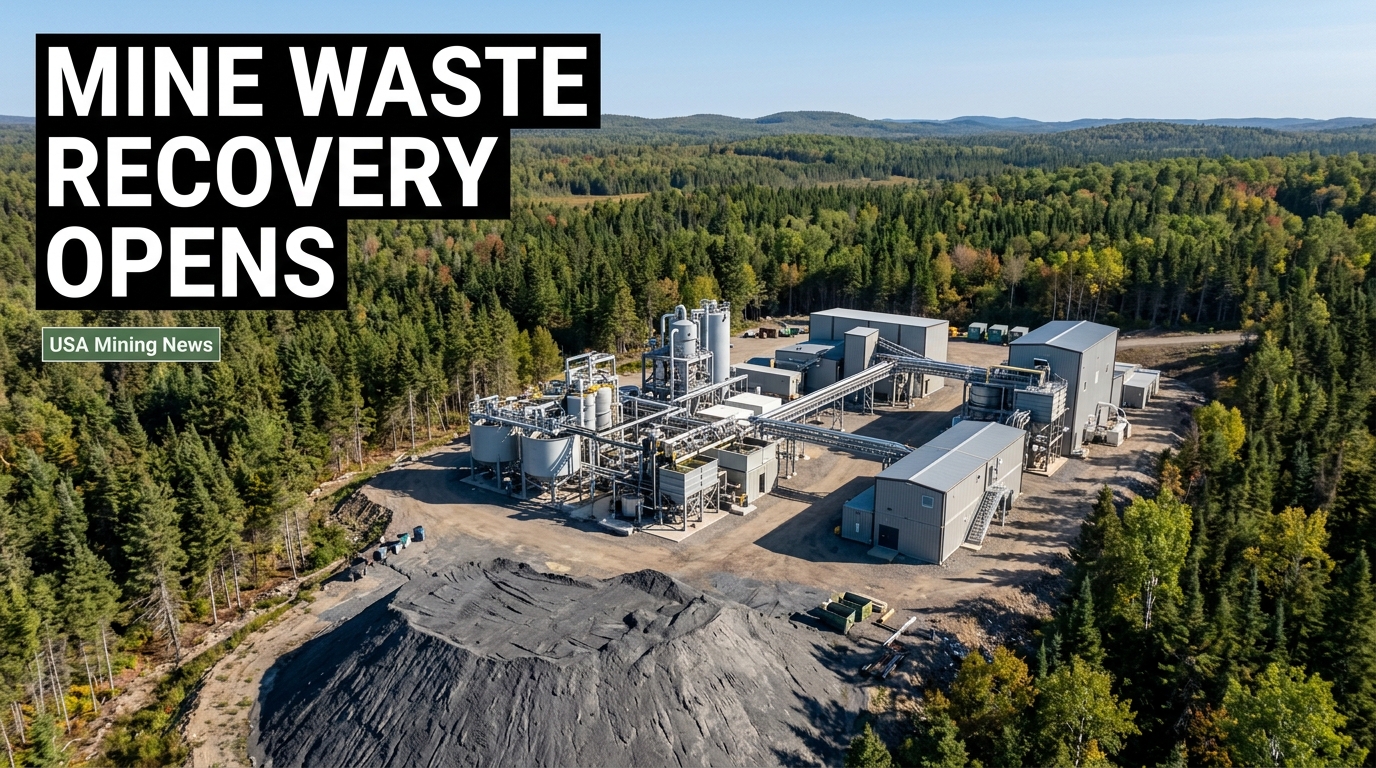
In a notable development for sustainable mining practices, Fulcrum EnviroTech, a wholly owned subsidiary of Fulcrum Metals, announced on June 10, 2026, a groundbreaking agreement with Test Design Implement Solutions (TDI). This partnership is set to establish and operate a stand-alone pilot plant in Ontario, Canada, dedicated to processing historical mine waste materials through a pioneering cyanide-free leach technology. The initiative marks a pivotal operational step in evaluating the potential for precious and critical metals recovery from legacy mine sites, addressing both environmental stewardship and economic opportunity within the sector.
A New Era for Mine Waste Reprocessing in Ontario
The agreement between Fulcrum EnviroTech and TDI underscores the mining industry’s escalating commitment to responsible resource management and the reclamation of value from previously discarded materials. For decades, mine waste, often in the form of tailings or waste rock, has posed significant environmental challenges and represented untapped economic potential. This pilot plant aims to transform that paradigm, demonstrating a viable, environmentally sound method for reprocessing these materials.
Central to this innovative approach is the technology developed by Extrakt Process Solutions, which specializes in cyanide-free metal recovery processes. Cyanide has long been the industry standard for gold extraction due to its efficiency and cost-effectiveness; however, its inherent toxicity presents considerable environmental risks and regulatory hurdles. The adoption of a cyanide-free method represents a significant advancement, aligning with global trends towards greener mining technologies and enhancing the social license to operate for projects in sensitive areas. Providing crucial support for this ambitious program is Bechtel Energy Technologies & Solutions, leveraging its existing strategic alliance with Extrakt, which highlights the collaborative nature of this technological leap.
The Teck-Hughes Pilot Plant: Technical Specifications and Objectives
Designed to process up to 2.4 tonnes per day (tpd) of material, the pilot facility is strategically located in Ontario, a province with a rich mining heritage and numerous legacy waste sites. The initial phase of operations will focus on material sourced directly from Fulcrum’s Teck-Hughes project. This controlled application will involve approximately 12 pilot batches, conducted over a concentrated period of four weeks.
The primary objective of this intensive pilot program is to generate comprehensive operational, metallurgical, and engineering data. This data is critical for validating the technology’s efficacy at a larger scale and for de-risking the transition from laboratory-scale experimentation to potential commercial application. Such insights will inform future development options, including potential full-scale commercial reprocessing facilities. Furthermore, the flexibility built into the plant’s design will allow for the assessment of other mine waste samples, including those from third-party sources, signaling a broader vision for this reprocessing platform.
Cyanide-Free Technology: A Paradigm Shift for Environmental Stewardship
The deployment of Extrakt’s cyanide-free technology holds particular significance for the Canadian mining landscape. Fulcrum Metals holds exclusive rights to deploy this innovative process across legacy gold mine waste sites within Ontario’s historically prolific Timmins and Kirkland Lake mining districts. These regions are renowned for their extensive gold production, collectively yielding more than 110 million ounces of gold over the past century. Correspondingly, these districts are estimated to contain in excess of 70 legacy waste sites, representing substantial environmental liabilities and, paradoxically, untapped reservoirs of residual metals.
The shift away from cyanide processing is not merely a technical upgrade; it is a strategic move towards enhanced environmental performance and reduced regulatory burden. By mitigating the risks associated with cyanide, companies can improve community relations, streamline permitting processes, and potentially access more favorable financing. This aligns with a broader industry effort to minimize environmental footprints and promote a circular economy where waste is viewed as a resource, not merely a disposal challenge.
Roles and Responsibilities in a Collaborative Endeavor
The successful execution of this intricate pilot program relies on a clearly defined division of labor among the key partners:
- Test Design Implement Solutions (TDI): TDI is tasked with the critical responsibilities of supplying, installing, commissioning, and ultimately operating the pilot facility. Furthermore, TDI will retain ownership of the sophisticated equipment, demonstrating its long-term commitment to the venture and potentially facilitating future deployments.
- Extrakt Process Solutions: As the innovator behind the core technology, Extrakt will provide non-commercial licensing for its proprietary cyanide-free metal recovery process, ensuring the pilot plant operates with the latest and most effective methods.
- Bechtel Energy Technologies & Solutions: Leveraging its established alliance with Extrakt, Bechtel will continue to provide essential support for the program, contributing its expertise in large-scale project management and engineering solutions.
- Fulcrum Metals: Fulcrum’s primary responsibilities encompass strategic site selection for the pilot plant, comprehensive program management, and direct operational oversight. Several potential locations are currently under rigorous review to optimize logistics and efficiency.
A forward-thinking aspect of the contract includes flexible equipment lease options. These provisions are designed to permit the continued use of the facility and its technology for additional testing and expanded exploration beyond the initial program, ensuring sustained momentum and flexibility for future development.
Market Implications and Future Outlook
Ryan Mee, CEO of Fulcrum Metals, emphasized the profound significance of this agreement, stating, “This is a significant milestone for Fulcrum, which creates a pathway to commercializing Teck-Hughes while establishing a platform that is able to support future mine waste recovery opportunities.” He further expressed Fulcrum’s enthusiasm, noting, “Fulcrum is excited to be working with TDI, Extrakt and Bechtel on this next phase of the project, which represents an important step towards unlocking significant value from historic mine waste assets through a scalable and capital-efficient business model.”
This pilot program holds substantial implications for the broader mining industry. Successfully demonstrating the operational and economic viability of cyanide-free processing for legacy mine waste could ignite a rapid expansion of similar projects worldwide. It addresses a dual challenge: mitigating environmental liabilities associated with abandoned mine sites while simultaneously creating new revenue streams from previously uneconomic resources. The concept of a “scalable and capital-efficient business model” is particularly appealing, as it suggests that such projects could be replicated without requiring prohibitive upfront investments, thereby attracting a wider range of investors and operators.
Beyond the immediate focus on the Teck-Hughes project, the establishment of this adaptable pilot platform positions Fulcrum EnviroTech, and by extension Fulcrum Metals, as a leader in sustainable resource recovery. The ability to assess other mine waste samples, including those from third-party sources, opens avenues for contractual processing services, further cementing the commercial viability and long-term potential of this technology. By turning historical environmental burdens into modern economic assets, this initiative is poised to set new standards for responsible mining and contribute to the supply of precious and critical metals vital for a growing global economy.
Ultimately, the partnership between Fulcrum EnviroTech, TDI, Extrakt, and Bechtel represents more than just a technological pilot; it embodies a strategic shift towards a more sustainable and economically astute future for the mining industry. As the world increasingly demands responsibly sourced materials, innovations like cyanide-free processing of mine waste will be crucial in defining the next generation of mining operations.