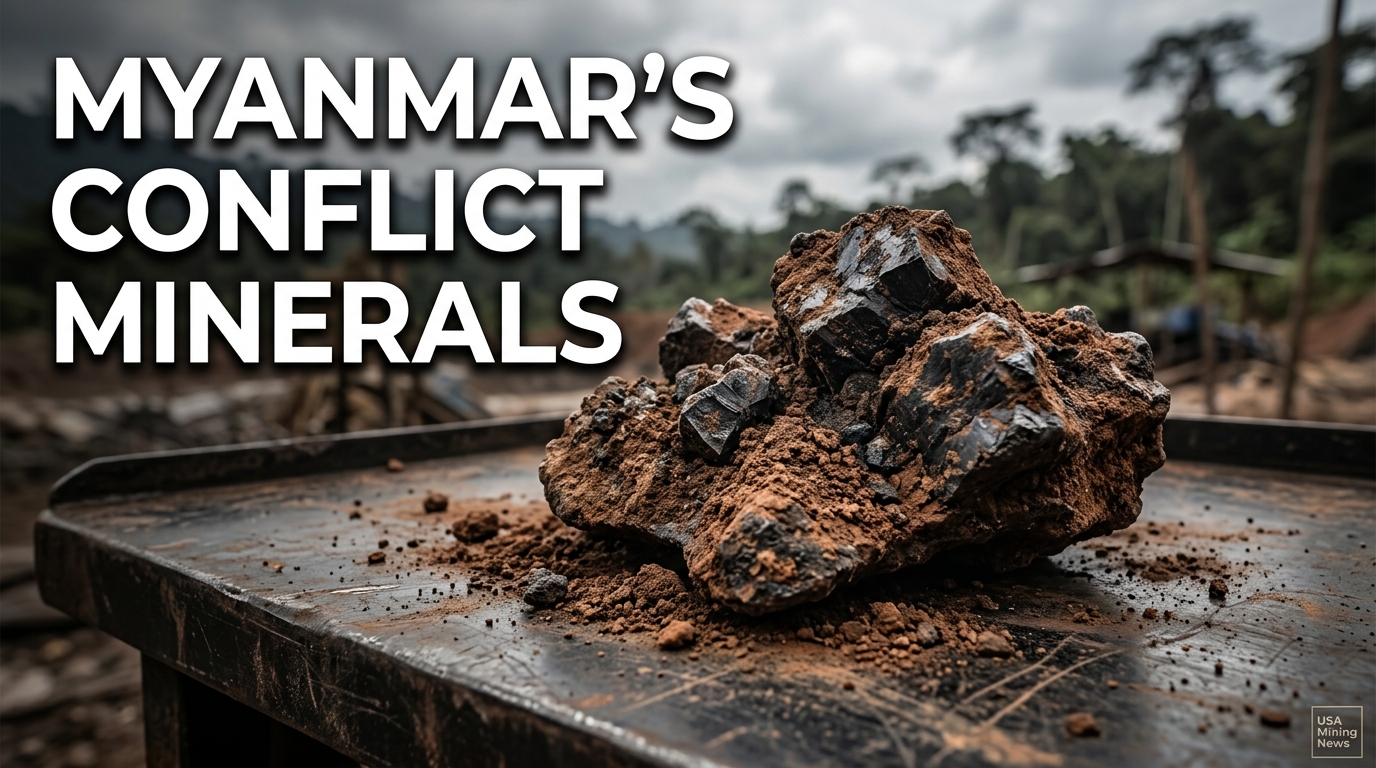
The protracted civil war in Myanmar continues to exert a profound and complex influence on the nation's vital mineral economy, presenting an intricate web of challenges for global industry stakeholders. While conflict typically disrupts economic activity, the mining sector in Myanmar demonstrates a resilient, albeit deeply problematic, continuity. An analysis by Alejandro Gonzalez, published on September 11, 2026, underscores this critical dynamic: the conflict has not ceased Myanmar’s mining operations, but it has fundamentally altered control mechanisms and exacerbated the opacity of revenue streams, raising severe questions regarding supply chain due diligence.
Myanmar's Mineral Sector Amidst Prolonged Conflict
Myanmar, a nation richly endowed with natural resources, including significant deposits of tin, tungsten, rare earth elements, jade, and gold, has long been a key, albeit often controversial, player in global mineral supply chains. The current civil conflict, intensifying since the military coup in February 2021, has fractured governmental control and empowered various armed groups across different regions. This fragmentation means that mining activities, from artisanal small-scale operations to larger industrial endeavors, often fall under the de facto jurisdiction of non-state actors or local militias, rather than a single, recognized central authority.
The persistence of mining amidst such instability is a common feature in conflict-affected regions globally. Minerals often serve as a primary funding source for warring factions, enabling them to procure weapons, sustain forces, and maintain local governance structures. In Myanmar's context, this means that revenues generated from mineral extraction – whether through direct control of mining sites, taxation of operations, or involvement in illicit trade – are redirected from state coffers and instead fuel the ongoing conflict. This stark reality places a heavy burden on international buyers, who risk inadvertently contributing to humanitarian crises and exacerbating regional instability through their purchasing decisions.
A Resilient, Yet Opaque, Mining Economy
The analysis by Gonzalez highlights that the conflict has fostered a "resilient" mining economy, largely by adapting to the prevailing conditions of instability. This resilience, however, comes at a significant cost to transparency and ethical sourcing. The primary mechanisms enabling this continuity are the changing patterns of control over mineral-rich territories and the deep opacity surrounding financial flows.
Areas previously under central government administration may now be controlled by ethnic armed organizations (EAOs), People's Defense Forces (PDFs), or local militias. Each group may impose its own regulations, taxes, or even direct operational management on mining activities within its sphere of influence. This creates a patchwork of fragmented authority, where legal frameworks are inconsistent, poorly enforced, or entirely absent. For example, a tin mine operating in one region might be "taxed" by a local armed group, while a jade concession in another area might be directly operated by an entity linked to the military junta or a rival ethnic force. The lack of a unified, verifiable regulatory body means that:
- Revenue Accountability is Minimal: There is little to no oversight on how mining revenues are collected or spent. Funds often bypass legitimate government channels, making it nearly impossible to determine if they are financing illicit activities or human rights abuses.
- Operational Standards are Compromised: Environmental regulations, labor laws, and safety standards, if they exist at all, are frequently ignored in conflict zones. This leads to increased risks of ecological damage, forced labor, child labor, and unsafe working conditions, which are endemic concerns in many unregulated mining environments.
- Supply Chains Become Untraceable: Minerals extracted under these conditions often enter complex, multi-layered supply chains, passing through numerous intermediaries before reaching international markets. This deliberately obscures their origin, making it exceptionally difficult for end-users to ascertain the provenance of their materials.
The Due Diligence Imperative for Global Supply Chains
For the global mining industry and the downstream sectors that rely on these minerals – from electronics and automotive manufacturing to construction and defense – the situation in Myanmar presents a formidable supply chain due diligence dilemma. The opaque nature of Myanmar's mineral economy elevates the risk of sourcing "conflict minerals" or materials linked to severe human rights violations.
International frameworks and national legislation, such as Section 1502 of the Dodd-Frank Wall Street Reform and Consumer Protection Act concerning conflict minerals (tin, tantalum, tungsten, and gold originating from the Democratic Republic of Congo and surrounding countries), set precedents for responsible sourcing. While Myanmar is not explicitly listed under such legislation, the ethical and reputational risks associated with sourcing from conflict-affected areas are universally recognized. Companies face scrutiny from consumers, investors, non-governmental organizations, and regulatory bodies to ensure their supply chains are clean.
The challenges for due diligence include:
- Verification of Origin: Determining the exact mine site and the controlling entity for a given mineral batch is exceptionally difficult when official records are nonexistent or unreliable.
- Assessment of Labor Practices: Monitoring labor conditions in remote, conflict-ridden areas is dangerous and often impossible. Reports of forced labor, debt bondage, and dangerous working conditions are common in such contexts.
- Financial Transparency: Tracing payments and ensuring that revenues do not directly or indirectly benefit armed groups is a Herculean task given the prevalence of informal economies and illicit financial flows.
- Reputational Risk: Companies found to be sourcing minerals linked to conflict or human rights abuses face severe brand damage, investor backlash, and potential legal repercussions.
Industry leaders and investors are increasingly aware that neglecting these due diligence responsibilities can lead to significant financial penalties, divestment pressures, and a loss of social license to operate.
Key Minerals and Geopolitical Stakes
Myanmar’s mineral wealth is not just economically significant; it holds considerable geopolitical importance. Its deposits of rare earth elements, critical for high-tech industries including electric vehicles, renewable energy, and defense applications, are particularly noteworthy. As global demand for these strategic minerals surges, the fragmented control over their extraction in Myanmar adds a layer of complexity to international efforts to secure reliable and ethically sourced supplies.
Tin and tungsten, essential for electronics and industrial manufacturing, also represent critical exports. Jade, largely destined for the Chinese market, funds a substantial portion of the illicit economy and is a major driver of localized conflict and corruption within Myanmar. The continued, albeit destabilized, flow of these minerals indicates that despite the turmoil, economic incentives remain powerful enough to sustain mining operations, albeit under conditions far removed from international best practices.
Navigating a Fragmented Regulatory Landscape
The traditional model of a sovereign state regulating its mining sector has largely collapsed in many parts of Myanmar. This creates a vacuum, often filled by various armed actors. For any company attempting to operate or source responsibly, this environment presents an unprecedented regulatory conundrum. There is no single, reliable entity to engage with for permits, environmental assessments, or labor agreements across all regions.
Moreover, the legitimacy of any permits or concessions issued by the military junta or by a local armed group is highly questionable under international law and by many national governments. This legal ambiguity poses significant risks for foreign direct investment, as property rights and operational security cannot be guaranteed. Companies attempting to maintain a presence or source from Myanmar must grapple with the ethical dilemma of potentially legitimizing or enriching actors implicated in severe human rights abuses.
Future Outlook and Industry Implications
The analysis published on September 11, 2026, serves as a stark reminder that the conflict in Myanmar is not a temporary blip but a fundamental reshaping of its economic landscape, particularly its mineral sector. For the mining industry, the implications are profound and long-lasting:
- Increased Risk Premiums: Any future investment or sourcing from Myanmar will inherently carry significantly higher risk premiums due to political instability, fragmented control, and ethical concerns.
- Diversification of Supply: Companies reliant on minerals from Myanmar may accelerate efforts to diversify their supply chains, seeking alternative, more stable, and transparent sources globally.
- Heightened Due Diligence Requirements: Even if a resolution to the conflict emerges, the legacy of opaque operations and fragmented control will necessitate exceptionally rigorous and transparent due diligence processes for years to come.
- Ethical Sourcing as a Competitive Advantage: For companies that successfully navigate these challenges or commit to only sourcing from verifiable, conflict-free origins, strong ethical sourcing practices could become a key differentiator and a source of competitive advantage.
- Advocacy for Robust Governance: Industry bodies and responsible companies will likely increase their advocacy for international standards and support for robust governance structures in post-conflict Myanmar, should a stable government emerge.
In conclusion, the situation in Myanmar underscores a critical challenge facing the global mining industry: how to balance the imperative for raw material supply with an unwavering commitment to ethical sourcing and human rights. As the conflict continues to evolve, the ability of companies to adapt to this complex environment while upholding their social and ethical responsibilities will be paramount. The detailed analysis from September 2026 offers a vital, albeit sobering, insight into a mineral economy irrevocably reshaped by war.