Shifting Gears: Indonesia's Nickel Industry Eyes Processing Frontier
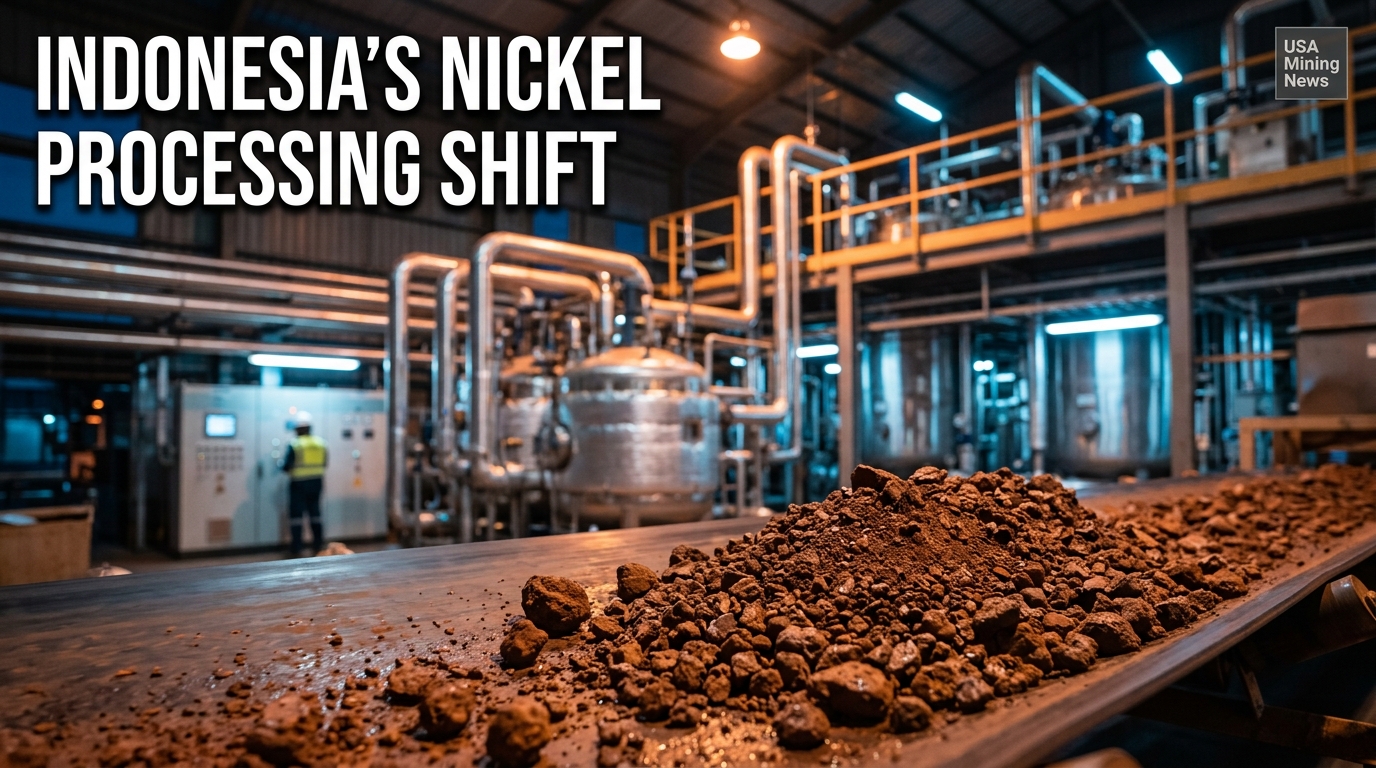
Jakarta, Indonesia – July 27, 2026 – Indonesia, long recognized as the undisputed leader in global nickel supply, is currently navigating a significant strategic pivot within its formidable mining sector. The primary challenge, once rooted in the logistics and scale of raw material extraction, has decisively shifted downstream, now centering on the complex and capital-intensive realm of mineral processing. This critical transition, highlighted in a recent analysis by GlobalData's Prasanna Lakshmi and Mining Technology editor Alejandro Gonzalez, underscores the urgency for Jakarta to prioritize the development of more economical, environmentally sound, and highly efficient processing technologies for its vast laterite nickel reserves.
For investors, policymakers, and industry stakeholders worldwide, the trajectory of Indonesia's nickel processing capabilities will dictate not only the nation's economic future but also the stability and sustainability of global supply chains for critical industrial metals and battery materials. The stakes are profoundly high as the world transitions towards cleaner energy, with nickel playing an indispensable role in electric vehicle (EV) batteries and high-performance alloys.
Indonesia's Ascendancy in Global Nickel Supply
Over the past decade, Indonesia has strategically leveraged its immense natural resources to become the dominant global supplier of nickel. This ascendancy has been largely catalyzed by a series of deliberate government policies, most notably the implementation and enforcement of raw ore export bans. These policies, designed to compel domestic value addition, spurred unprecedented investment in smelters and processing facilities across the archipelago, particularly in key mining regions such as Sulawesi.
The result has been a dramatic increase in the production of various nickel products, including nickel pig iron (NPI) primarily used in stainless steel manufacturing, and more recently, intermediate products like mixed hydroxide precipitate (MHP) and nickel matte, crucial precursors for battery-grade nickel sulfate. This vertical integration strategy has transformed Indonesia from a mere raw material exporter into a manufacturing powerhouse, significantly enhancing its geopolitical and economic influence in the global metals market.
However, this rapid expansion has not been without its complexities. The sheer volume of new processing capacity, predominantly utilizing the Rotary Kiln Electric Furnace (RKEF) method for NPI production, has at times led to concerns about market oversupply and associated price volatility. Moreover, the environmental footprint of some of these early-stage processing operations has drawn scrutiny, particularly from environmentally conscious end-users and investors.
The Evolving Challenge: From Ore to Advanced Materials
The core of the challenge facing Indonesia today is no longer about locating or mining nickel ore. The country possesses extensive reserves of lateritic nickel, which represents approximately 60% of the world's total terrestrial nickel resources. The significant investments made in mining infrastructure over the past decade mean that the capacity to extract ore is largely robust and well-established.
Instead, the bottleneck and the frontier for innovation now lie firmly in how this ore is transformed into higher-value products. As GlobalData's Lakshmi and Mining Technology's Gonzalez observe, the focus has shifted towards mastering sophisticated processing techniques that can meet the stringent requirements of advanced industries, particularly the burgeoning EV battery sector. This demand requires nickel products with specific purity levels and material characteristics that traditional NPI production typically cannot achieve directly.
The transition necessitates not just an expansion of processing capacity but a fundamental improvement in the efficiency, cost-effectiveness, and environmental performance of these operations. This challenge is multi-faceted, encompassing technological innovation, significant capital expenditure, skilled workforce development, and robust environmental governance.
Technical Imperatives: Cheaper, Cleaner, More Efficient Laterite Processing
The analysts' report specifically emphasizes three crucial areas for improvement in laterite processing:
- Cheaper Processing: Laterite nickel ores are complex and can be energy-intensive to process. The dominant RKEF technology, while effective for NPI, consumes a significant amount of electricity, often sourced from coal-fired power plants, leading to higher operational costs and a larger carbon footprint. High-Pressure Acid Leaching (HPAL) facilities, while capable of producing battery-grade precursors like MHP, are characterized by substantial capital costs and intricate operational demands, including considerable acid and reagent consumption. Reducing these operational expenditures – through energy optimization, lower reagent consumption, and improved material handling – is paramount. This includes exploring alternative energy sources, such as renewable energy, and enhancing process flows to minimize waste and maximize resource utilization.
- Cleaner Operations: Environmental sustainability has emerged as a non-negotiable aspect of modern mining and processing. Both RKEF and HPAL technologies present distinct environmental challenges. RKEF plants generate considerable greenhouse gas emissions and solid waste (slag), necessitating advanced mitigation strategies. HPAL operations, while generally having lower direct emissions, produce large volumes of acidic wastewater and potentially hazardous tailings that require rigorous management and disposal strategies, often involving deep-sea tailings disposal (DSTD) or complex terrestrial impoundments. The industry is under increasing pressure to adopt closed-loop systems, improve waste recycling, transition to cleaner energy, and implement advanced pollution control technologies to meet global ESG standards and secure market access for its products.
- Enhanced Efficiency: Improving processing efficiency translates directly to higher recovery rates of valuable metals from the ore and better product quality. For RKEF, this means optimizing furnace operations and energy recovery. For HPAL, addressing issues like autoclave material degradation, improving solid-liquid separation, and reducing residue volumes are critical. Advances in mineralogy, process control automation, and artificial intelligence-driven optimization can play a vital role in enhancing throughput, reducing downtime, and consistently producing high-quality intermediate products suitable for further refining into battery precursors.
Navigating Environmental and Market Pressures
The drive for "cheaper, cleaner, and more efficient" processing is not merely a technical ambition; it is an economic necessity dictated by evolving market dynamics and increasing environmental scrutiny. Global automotive manufacturers and battery producers are increasingly demanding nickel sourced through sustainable and transparent supply chains. Companies unable to demonstrate robust ESG credentials risk losing market share, particularly in the premium EV segment.
Furthermore, the global nickel market, while projected to see sustained growth driven by the EV revolution, remains sensitive to supply fluctuations and cost structures. Indonesia's ability to produce nickel products competitively, both in terms of cost and environmental impact, will be crucial in maintaining its position against other nickel-producing regions such as the Philippines, Russia, and Canada.
Regional Focus: Sulawesi and the Heart of Development
The island of Sulawesi, pictured prominently on resource maps, remains at the epicenter of Indonesia's nickel processing endeavors. Its rich laterite deposits have attracted billions in foreign and domestic investment, leading to the proliferation of integrated mining-to-processing complexes. As the challenge shifts, Sulawesi will likely become a crucible for the innovative processing technologies and practices required to meet the imperatives of cost, cleanliness, and efficiency. The successes and failures here will offer critical lessons for the broader Indonesian mining sector.
The Path Ahead: Innovation and Strategic Investment
Addressing Indonesia's new nickel challenge requires a concerted effort from all stakeholders. This includes continued strategic investment in research and development for advanced metallurgical processes, fostering partnerships with international technology providers, and robust government support through favorable policy frameworks and incentives for sustainable practices.
The future of Indonesia's nickel industry hinges on its capacity to evolve beyond raw material extraction and basic smelting. By embracing innovation in laterite processing, Indonesia can solidify its role not just as the world's largest nickel supplier, but as a responsible and resilient provider of critical materials essential for the global energy transition. The coming years will undoubtedly define whether Indonesia can successfully master this intricate processing frontier, setting a new benchmark for resource-rich nations in the 21st century.