The global mining industry is undergoing a significant transformation, driven by technological advancements aimed at enhancing safety, efficiency, and sustainability. Among these, Artificial Intelligence (AI) stands out, rapidly moving beyond early-stage hype to deliver tangible, operational value. As of June 15, 2026, the discussion around "AI in mining" has matured, focusing less on futuristic autonomous fleets and more on practical deployments that fundamentally improve safety in demanding environments, particularly underground.
For many mining executives and engineers, the concept of AI has long conjured images of fully autonomous operations, sophisticated predictive digital twins, and command centers orchestrating real-time decisions across vast networks. While these ambitions are indeed progressing, the more immediate and operationally impactful AI applications in 2026 are found in systems designed to bolster visibility, sharpen proximity detection capabilities, and facilitate more effective collision-risk management. These systems are not replacing human decision-making; rather, their core value lies in strengthening the information available to workers, delivering clearer, faster, and more consistent operational insights where situational awareness is often compromised.
The Evolving Landscape of AI in Mining Safety
The true essence of AI in contemporary mining safety is its capacity to transform raw camera feeds, diverse sensor data, and equipment signals into actionable operational intelligence. This paradigm shift is critically important in underground mines, which present inherent challenges such as confined spaces, perpetual darkness, pervasive dust, moisture, and constantly changing geological conditions. In these settings, heavy equipment frequently operates in close proximity to personnel, visibility is often severely restricted, and communication infrastructure must robustly withstand relentless vibration, abrasion, moisture, and potential physical damage. It is precisely in these challenging conditions that AI-enabled systems are proving indispensable, allowing operators to reduce blind spots, accurately identify both people and equipment, prioritize alarms intelligently, and enable timely interventions crucial for preventing incidents involving vehicle-to-person or vehicle-to-vehicle contact.
The effectiveness of any AI-enabled system, however, is fundamentally contingent on the reliability and quality of the sensor data it processes. For mining operators committed to safety, the journey towards AI-driven safety enhancements begins not with sophisticated algorithms, but with ensuring robust, consistent visibility and sensing capabilities that can perform without compromise under the most rigorous real-world operating conditions.
Foundational Element: Reliable Camera Visibility
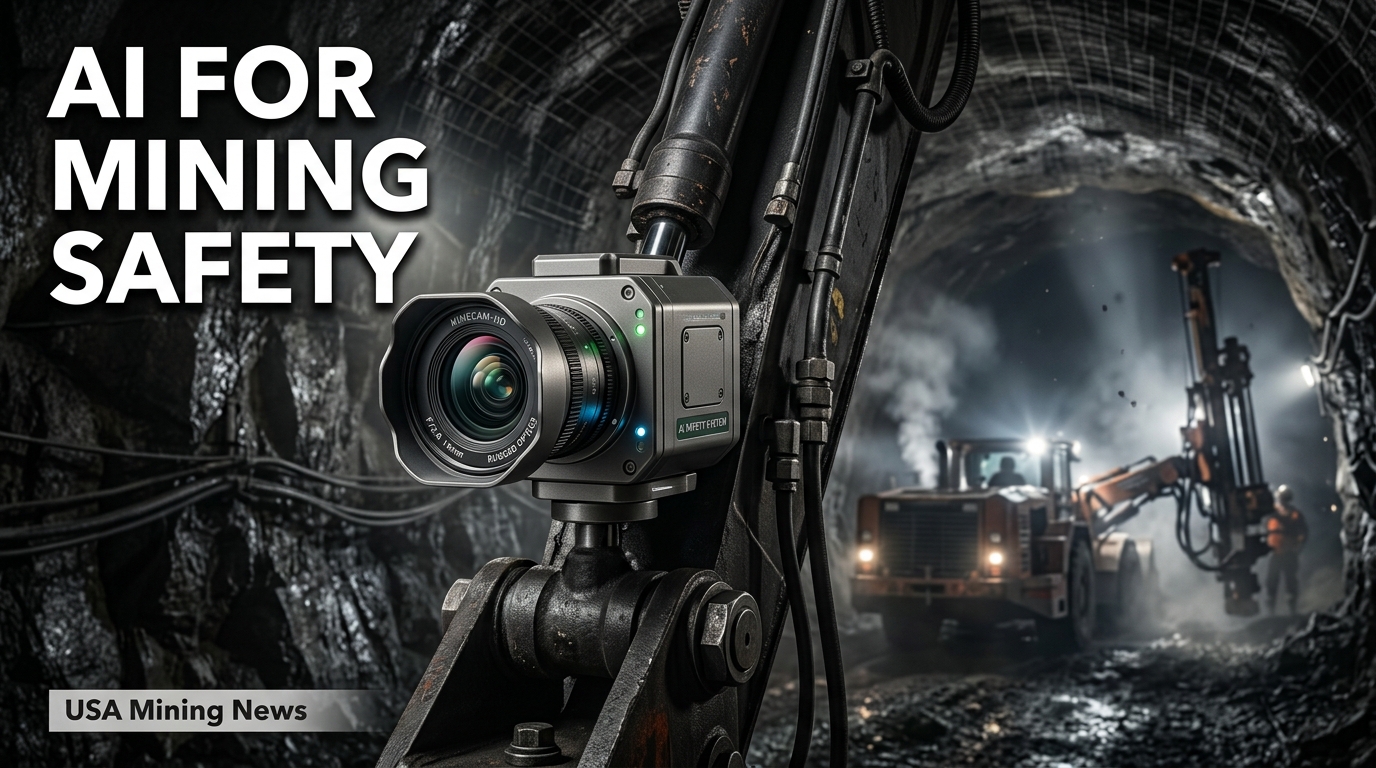
Before AI can undertake complex tasks such as classifying hazards, detecting personnel, or triggering critical alerts, it requires an unobstructed and clear view of the operating environment. This seemingly basic requirement is, in fact, one of the most significant historical impediments in mining. Camera-based safety and monitoring systems have long been recognized for their potential value across various mining operations—from haulage routes and loading zones to drilling sites, conveyor transfer points, chutes, and remote operating areas. Yet, a persistent challenge has been the maintenance of image clarity. Exposure to dust, mud, water, grease, and oil can rapidly obscure camera lenses, rendering them ineffective.
Traditionally, cleaning these cameras demanded manual intervention, a process that inherently exposes workers to potential hazards, often requires specialized access equipment, and can interrupt production flows. In areas that are remote or difficult to reach, a compromised camera quickly becomes a "blind camera," eliminating a crucial source of operational oversight. Addressing this foundational problem is ExcelSense, a company that has developed rugged, self-cleaning camera technology specifically engineered for dirty, high-impact industrial environments. Their ToughEye™ camera systems are meticulously designed to sustain clear optical performance without the need for traditional wipers, cleaning fluids, nozzles, or the regular manual upkeep that has plagued conventional camera systems.
For mine operators, this innovation translates directly into fewer manual interventions, leading to more reliable, consistent visibility. Crucially, it ensures superior data quality for subsequent AI and automation systems. Therefore, maintaining camera clarity should be regarded not merely as a maintenance responsibility, but as an essential prerequisite for unlocking the full performance potential of AI-enabled solutions. In applications where vision-based systems are employed for detecting personnel, identifying equipment, monitoring stockpile conditions, or recognizing material blockages, the consistency and quality of the incoming image feed are paramount. Suboptimal visibility can significantly escalate the likelihood of missed detections, generate inaccurate alerts, and ultimately erode operator confidence in the system. Conversely, clear and reliable image capture provides the indispensable foundation upon which effective AI deployment in any challenging mining environment must be built.
Advanced Sensing and Data Fusion for Enhanced Safety
Modern mine safety systems are increasingly sophisticated, integrating an array of sensing, monitoring, and communication technologies to construct a comprehensive operational picture. This multi-layered approach often combines data from cameras, proximity tags, radar, LiDAR, Global Positioning Systems (GPS) or Global Navigation Satellite Systems (GNSS), inertial sensors, machine telemetry, and robust communication networks. Each of these technology types contributes a distinct form of operational intelligence, offering a mosaic of data points that, when synergized, provide a far more complete and nuanced understanding of mine conditions than any single technology could achieve in isolation.
Cameras, for instance, offer crucial visual context, enabling operators to "see" the environment. Radar and LiDAR technologies complement this by providing precise object detection and distance measurement capabilities, even in conditions of low visibility. Proximity systems are designed to identify when tagged personnel or equipment enter predefined risk zones, generating alerts when boundaries are breached. Simultaneously, machine telemetry provides vital data on equipment parameters such as speed, steering angle, gear selection, and overall operating status. The convergence of these diverse inputs creates an unrivaled situational awareness, empowering operators with a holistic view of the dynamic mine environment.
The challenge, however, lies in interpreting these multiple, complex data streams effectively. This is where AI plays an increasingly critical role. Instead of simply displaying a video feed or sounding a generic alarm when a pre-set threshold is exceeded, AI-enabled systems are engineered to intelligently interpret and contextualize this deluge of data. They can effectively distinguish between people, vehicles, inanimate objects, and ambient background noise. This advanced capability supports sophisticated functions such as precise pedestrian detection, comprehensive blind-spot monitoring, and accurate object classification. Furthermore, AI intervenes to significantly reduce the occurrence of "nuisance alarms" by adding crucial context to detected events.
For mining operators, this ability to reduce false positives is a critical advancement, as alarm fatigue represents a very real and dangerous operational risk. If workers are inundated with too many alerts that are perceived as irrelevant or inaccurate, they are highly likely to begin ignoring them, negating the safety benefits. The primary objective of applying AI in this context is not to amplify the volume of alerts, but to drastically improve their relevance, accuracy, and ultimately, their operational value, ensuring that warnings captivate attention when genuinely warranted.
Proximity Detection: A Cornerstone of Underground Safety
Among the most impactful practical applications of advanced sensing and AI in mining, proximity detection systems stand out as delivering clear and immediate safety value. At their most fundamental, these systems accurately identify when people, vehicles, or equipment approach too closely to one another, triggering warnings or even automated interventions. In underground mining environments, the combination of restricted visibility and omnipresent tight spaces significantly elevates the risk of "struck-by," "pinning," and "crushing" incidents. In such contexts, the additional layer of awareness provided by advanced proximity detection is not merely beneficial; it is essential for preventing severe injuries and fatalities.
The Mine Safety and Health Administration (MSHA), a key regulatory body in the United States, has consistently highlighted the interactions between personnel and mobile equipment as a formidable safety risk within the mining sector. Pinning, crushing, and struck-by incidents represent some of the most critical hazards that these advanced proximity detection systems are designed to mitigate. By providing real-time alerts and, in some cases, automatically slowing or stopping equipment when hazardous proximities are detected, these systems create a vital buffer, allowing workers and operators to react appropriately and avoid dangerous situations. This application of AI and integrated sensing exemplifies how technology can safeguard human life in inherently high-risk industrial environments.
The Broader Industry Impact and Future Trajectory
The practical, AI-driven advancements in visibility, sensing, and proximity detection detailed here carry profound implications for the mining industry globally. Firstly, the most immediate "why this matters" is the undeniable improvement in safety. Reducing incidents involving mobile equipment, particularly in underground operations where visibility is consistently poor, directly translates to fewer injuries, fewer fatalities, and a better working environment for mining personnel. This not only fulfills a moral imperative but also minimizes the significant financial and reputational costs associated with safety incidents including regulatory fines, operational stoppages, and litigation.
Secondly, these technologies contribute notably to operational efficiency. By reducing nuisance alarms and providing more accurate, timely information, operators can focus on their tasks without unnecessary distractions or the need to investigate false positives. This leads to smoother operations, less downtime, and ultimately, enhanced productivity. The ability to maintain clear camera feeds without manual intervention, as with ExcelSense’s ToughEye™ systems, further reduces maintenance costs and associated production interruptions.
Looking ahead, the ongoing integration of these practical AI applications is paving the way for even more advanced functionalities. As the industry gathers more reliable data from these foundational systems, the efficacy of future predictive analytics, condition monitoring, and even advanced automation will continue to improve. These practical deployments are building the bedrock of data quality and operational trust necessary for the eventual widespread adoption of fully autonomous fleets and truly intelligent mining operations. The industry is moving towards a future where robust, context-aware safety systems are not just a luxury but a standard, intrinsically woven into the fabric of daily mining operations, ensuring greater safety and sustainability for years to come.