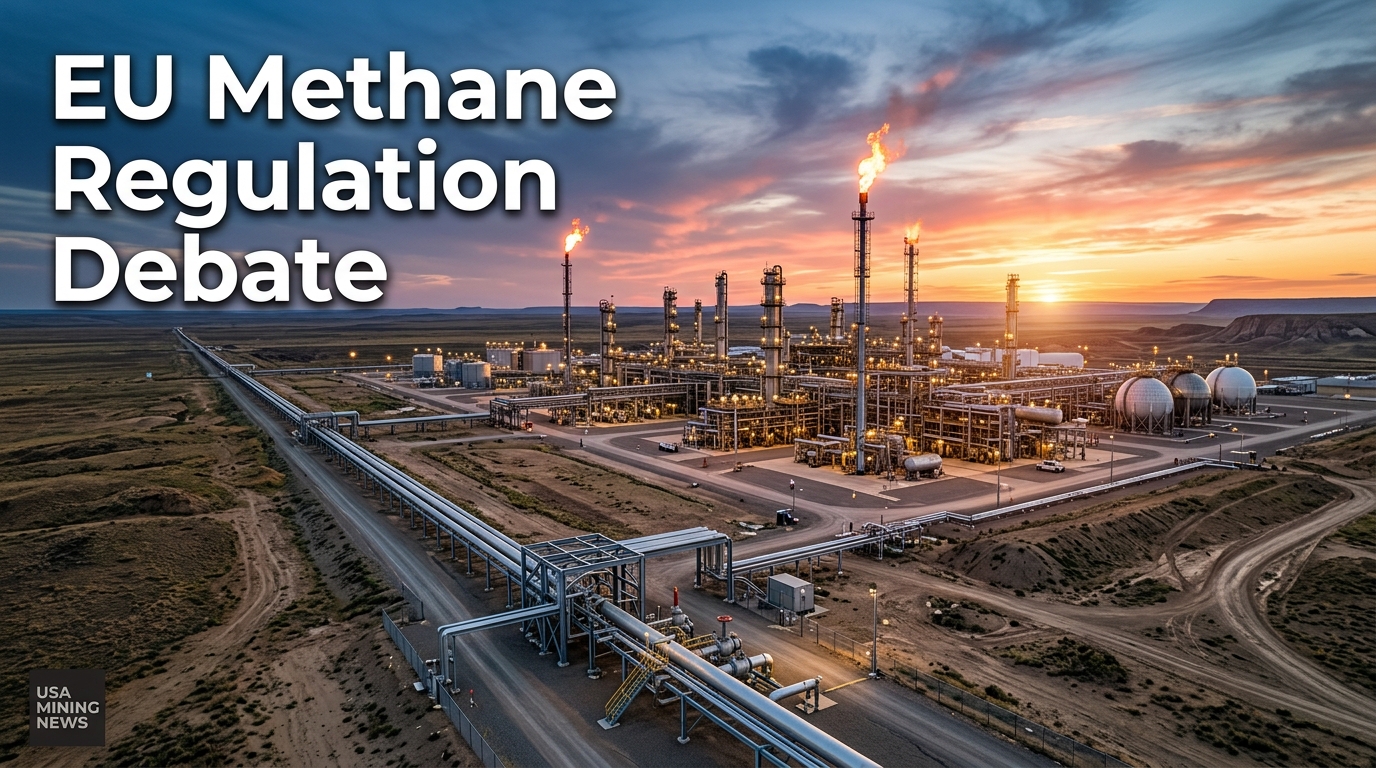
WASHINGTON D.C. – In a significant development for global energy markets and environmental policy, Kazakhstan and Guyana have officially joined an expanding international coalition calling on the European Union to postpone the implementation of its Methane Regulation (EUMR) and introduce targeted modifications to the ambitious legislation. This strategic alignment, announced on October 23, 2026, brings together six crucial energy-exporting nations – Algeria, Nigeria, Qatar, the United States, Kazakhstan, and Guyana – in a unified stance aimed at fostering a more pragmatic and workable compliance framework for the EU.
The coalition's primary objective is to eliminate what it perceives as unnecessary barriers to energy exports into Europe, thereby providing greater regulatory certainty for energy suppliers, including prominent American producers and exporters. This initiative underscores a growing international consensus that while methane emission reduction is a vital environmental goal, its implementation must not inadvertently jeopardize global energy security or disrupt established trade relationships.
A Growing International Consensus Against Precipitous Implementation
The core demand from this diverse group of energy powerhouses is a dual approach: a delay in the EUMR's effective date and carefully considered revisions to its text. The signatories contend that such an approach is essential to create a regulatory environment that is both effective in achieving its environmental objectives and practical for the global energy industry to adhere to. The U.S. Department of Energy, a key advocate in this coalition, has welcomed the European Parliament’s recent action to advance a three-year delay of EUMR implementation. This move, seen as a positive step, is now being encouraged for swift final adoption through critical trilogue negotiations involving the European Parliament, the European Council, and the European Commission.
The coalition's concerns are deeply rooted in the current state of the regulation’s reporting, verification, and compliance framework. They argue that significant gaps persist, leading to a lack of clarity and certainty for energy producers and importers. Without definitive guidelines and established requirements, companies face immense challenges in preparing for compliance, a situation that the coalition warns could put Europe’s energy security, competitiveness, and access to reliable energy supplies at considerable risk. The existing uncertainty hinders investment planning and operational adjustments, potentially stifling the very energy supply lines Europe depends upon.
Key Players and Their Stakes
The expanded coalition now comprises a broad and geographically diverse group of nations, each with significant stakes in the European energy market:
- Algeria: A major natural gas supplier to Southern Europe.
- Nigeria: A significant exporter of crude oil and natural gas, including Liquefied Natural Gas (LNG), particularly to European markets.
- Qatar: A global leader in LNG exports, playing an increasingly vital role in Europe's gas diversification strategy.
- United States: A rapidly growing exporter of crude oil and LNG, instrumental in stabilizing European energy supplies amidst recent geopolitical shifts.
- Kazakhstan: A pivotal Central Asian nation, representing a crucial source of crude oil for European refineries.
- Guyana: An emerging South American oil producer, whose rapidly expanding output is becoming an important factor in global crude markets.
The addition of Kazakhstan and Guyana expands the geographical representation of the coalition across Central Asia and South America, reinforcing the international call for a pragmatic approach to EUMR implementation. This initiative was originally launched on June 24, 2026, through an open letter signed by Algeria, Nigeria, Qatar, and the United States. Their combined voices, now strengthened, carry substantial weight in the ongoing dialogue with EU policymakers.
From the U.S. perspective, Assistant Secretary for International Affairs Kaveh Farzad of the U.S. Department of Energy articulated the strategic importance of this effort. "American energy exports play a vital role in supporting our allies and driving economic growth," Farzad stated. "The growing coalition on this initiative underscores the importance of a pragmatic approach that provides regulatory certainty and ensures reliable energy continues to reach our European allies." This statement highlights both the economic interests of American producers and the geopolitical imperative of securing energy supplies for European partners.
The Economic and Strategic Imperative: Fueling Europe
The economic leverage of this coalition is undeniable. The figures from 2025 clearly illustrate Europe's deep reliance on these nations for its energy needs:
- In 2025, Kazakhstan, the United States, Nigeria, and Guyana collectively accounted for approximately 37% of the EU’s crude oil imports by volume. This significant share underscores how any regulation affecting these suppliers could have widespread ramifications for Europe’s industrial base, transportation sector, and overall economic stability.
- During the same period, Algeria, Qatar, Nigeria, and the United States were collectively responsible for nearly 50% of the EU’s natural gas imports, including critical LNG supplies. Given Europe’s intensified efforts to diversify its natural gas sources, particularly after recent geopolitical events, these nations are indispensable partners in maintaining the continent's energy security.
These substantial import volumes underscore the critical importance of ensuring that the EUMR, while aiming to strengthen methane performance, does not inadvertently restrict access to these diverse and vital sources of energy. Any disruption or increased cost due to an unworkable regulatory framework could lead to higher energy prices, reduced industrial competitiveness, and potential supply shortages across the European Union.
Unpacking the EU Methane Regulation (EUMR) Concerns
The core of the coalition's apprehension lies in the practical application of the EUMR. While the overarching goal of reducing methane emissions—a potent greenhouse gas—is widely supported, the proposed regulation’s details regarding reporting, verification, and compliance have raised red flags. Energy producers, particularly those operating across diverse geographical and regulatory landscapes, require clear, consistent, and achievable standards.
The "significant gaps" cited by the coalition likely refer to ambiguities in methodology for measuring and reporting methane emissions, uncertainty regarding acceptable verification protocols, and a lack of precise guidance on how non-compliance will be assessed and rectified. Without these frameworks firmly in place, producers are left to guess at the EU's expectations, leading to potential missteps, compliance failures, and ultimately, a breakdown in trust and trade. This uncertainty directly impacts investment decisions, as companies are hesitant to commit capital to projects that face unpredictable regulatory hurdles or disproportionately high compliance costs.
Such delays in establishing clear requirements place energy producers and importers in a precarious position. The lack of clarity and certainty impedes their ability to make necessary operational adjustments, implement new technologies, or negotiate long-term supply contracts with confidence. Consequently, the coalition argues, Europe risks undermining its own energy security by making it harder and more expensive for reliable suppliers to meet its demand. This could force the EU to rely on less diverse or less stable energy sources, or face higher prices for compliant energy.
Broader Implications for the Global Mining and Energy Sectors
While the immediate focus of the EUMR is on oil and natural gas, the implications of this regulation and the international response reverberate across the broader mining and energy sectors. For the mining industry, particularly those involved in energy-intensive operations or extracting fossil fuels, such as coal, the precedent set by the EUMR is significant. Coal mining, for instance, is a known source of methane emissions, and future regulations might expand to cover such operations more comprehensively. Furthermore, the cost and availability of energy are critical inputs for virtually all mining activities, from extraction and processing to transportation. Any policy that impacts global energy prices or supply chains will directly affect the profitability and operational viability of mining projects worldwide.
Regulatory certainty is a golden standard for capital-intensive industries like mining and energy. Unclear regulations deter investment in new resource development, upgrade projects, and even methane abatement technologies themselves. Companies need a stable policy environment to assess risks and returns. The EUMR saga highlights the delicate balancing act between ambitious environmental targets and the practical realities of industrial operations and global supply chains. It also underscores the increasing trend of linking market access to environmental performance, a trend that all sectors of the mining industry must monitor closely.
The Path Forward: Trilogue and Targeted Adjustments
The path forward now lies primarily in the hands of the European Union’s legislative bodies. The encouragement for "swift final adoption" of the three-year delay by the European Parliament signals a window for constructive engagement. The upcoming trilogue negotiations, involving the European Parliament, the Council of the European Union, and the European Commission, will be crucial. This is where the specific details of the EUMR can be refined to address the concerns raised by the coalition.
The call for a "pragmatic approach" and "targeted changes" implies a desire for a compliance framework that:
- Utilizes methodologies for methane measurement and reporting that are scientifically robust, technologically feasible, and harmonized with existing international standards where possible.
- Establishes clear, consistent, and reasonable timelines for implementation, allowing sufficient time for companies to adapt, invest in new technologies, and build internal capacity.
- Recognizes and provides flexibility for diverse operational realities across different regions and types of energy infrastructure, avoiding a one-size-fits-all approach.
- Incentivizes innovation in methane abatement technologies rather than solely imposing punitive measures for non-compliance.
The international coalition believes that by working collaboratively, the EU can achieve its environmental goals without unduly penalizing its key energy suppliers or compromising its own energy security. This dialogue is pivotal not only for the future of European energy but also for setting a precedent for how global environmental regulations can be implemented in a manner that supports sustainable development and maintains stable international trade relations.
Conclusion
The unified call from Kazakhstan, Guyana, Algeria, Nigeria, Qatar, and the United States for a delay and targeted changes to the EU Methane Regulation represents a critical juncture in the global energy transition. It underscores the complex interplay between environmental aspirations, economic realities, and geopolitical imperatives in securing reliable energy supplies. For industry professionals and investors in the mining sector, this development serves as a powerful reminder that regulatory frameworks, even those focused on specific commodities like oil and gas, can have far-reaching impacts on energy costs, supply chain stability, and the overall investment climate. A balanced, pragmatic approach, as advocated by this influential coalition, is essential to foster environmental stewardship without inadvertently jeopardizing the foundational energy security upon which global industries, including mining, depend.