Kenorland Minerals Concludes Initial Drilling at Western Wabigoon, Unveiling Promising Gold Indicators in Ontario
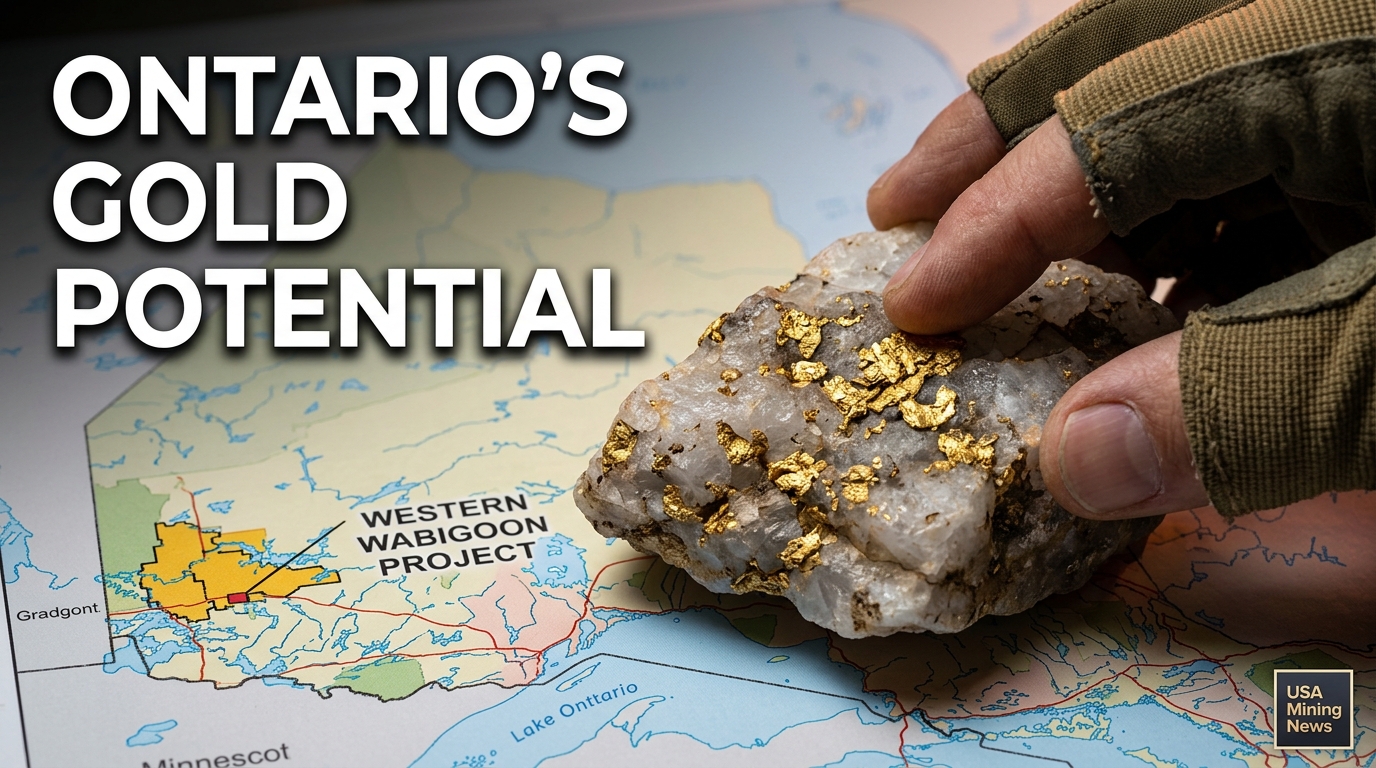
In a significant development for the North American gold exploration sector, Kenorland Minerals announced on July 10, 2026, the successful completion of its initial diamond drill program at the Western Wabigoon Project. Located in the highly prospective north-western Ontario region of Canada, this project is being advanced by Kenorland under a strategic option agreement with a subsidiary of Centerra Gold, a testament to the growing interest majors hold in high-potential junior-led exploration initiatives. The summer 2026 campaign, a crucial early-stage exploration effort, involved a substantial 4,089 meters of drilling across nine holes, meticulously targeting the W2 area, a zone that has consistently delivered compelling evidence of gold mineralization through earlier trenching and shallow drilling efforts.
The primary focus of this intensive drilling operation was a 3-kilometer-long gold-in-till and heavy mineral concentrate (HMC) anomaly, situated along the aptly named Sorry Mac Trend. This anomaly represents a significant geophysical and geochemical signature, often indicative of underlying bedrock mineralization within glaciated terrains. The anticipated assay results from this program, expected in the third quarter of 2026, will be pivotal in shaping the immediate future and strategic direction of the Western Wabigoon Project, offering the industry a clearer picture of its economic potential.
A Strategic Foothold in Ontario's Gold Landscape
Ontario has long been a cornerstone of Canada's mining industry, boasting a rich history of gold discovery and production, particularly in its northern regions. The province's geological setting, characterized by ancient greenstone belts and extensive fault systems, provides an exceptionally fertile environment for world-class gold deposits. For a junior explorer like Kenorland Minerals, securing and advancing projects within such a prolific jurisdiction, especially with the backing of a major like Centerra Gold, offers a strategic advantage. Option agreements, common in the mining industry, allow majors to fund exploration and earn an interest in a project, de-risking the initial capital outlay for juniors while potentially securing future growth opportunities. This partnership model is particularly effective in early-stage exploration, enabling systematic and detailed work to progress without immediate demands on the junior's balance sheet.
The Western Wabigoon Project itself is situated within the broader Manitou-Dinorwic Deformation Zone, a regional structural corridor known to host various gold occurrences. Kenorland's systematic exploration approach in this area, which included geochemical surveys conducted between 2024 and 2025, has highlighted the W2 area as the primary target within a larger 19-kilometer trend of gold-in-till and HMC anomalies. This extensive trend suggests a significant, district-scale mineralizing system, making the initial drill results from W2 all the more critical for validating the broader potential of the project area.
The Summer 2026 Campaign: Drilling into Potential
The recently concluded summer 2026 drill program was designed to probe beneath the surface anomalies, translating geochemical and geophysical targets into direct geological observations in bedrock. The 4,089 meters drilled across nine holes represent a substantial effort for an initial program, demonstrating Kenorland's commitment to thoroughly evaluate the W2 target. Earlier exploration work, including trenching and shallow drilling, had already provided tantalizing hints of gold at W2, setting a high bar for this follow-up program.
The systematic drilling strategy aimed to delineate the geological structures and mineralization styles responsible for the surface anomalies. The geological framework of the area is characterized by north-east and north-north-east structural patterns, typically associated with regional faulting and shearing within volcanic rocks. These structures often serve as conduits for mineralizing fluids, making their identification and characterization paramount in gold exploration. The proximity of these structures to the Bretz Lake felsic pluton also adds another layer of geological complexity and potential, as intrusive bodies often play a crucial role in forming gold deposits.
Preliminary Insights and Geological Evidence
While the definitive assay results are still pending, Kenorland's geologists have already made several encouraging observations during the core logging process. Crucially, the drilling work has confirmed the existence of north-north-east and north-east-trending shear zones, structures believed to intersect within the W2 target area. The intersection of such regional-scale shear zones is often a prime location for gold deposition, as these geological "crossroads" can create enhanced permeability and chemical traps for mineralizing fluids.
Furthermore, the exploration teams recorded various alteration styles and sulphide mineralisation along the length of the tested area. Alteration minerals, such as sericite (noted in a substantial sericitised granodiorite intrusion in the northern zone), along with the presence of sulphides like pyrite and arsenopyrite, are common pathfinders for gold deposits. The observation that the mineralized system remains open to the north and south-west is also highly significant, suggesting that the current drill program may have only sampled a portion of a much larger, continuous system.
Perhaps the most visually compelling finding was the notation of visible gold in drill-hole 26DFDD005, located towards the south-west section of the target area. While caution must always be exercised before assay results are confirmed, visible gold in core is an undeniable direct indicator of gold mineralization and often fuels investor excitement. This particular occurrence suggests further potential for the extension of the mineralized system beyond the currently defined limits.
The lithologies encountered during drilling were diverse, including interbedded mafic volcanic flows with intrusive rocks, and in the northern zone, felsic volcanic rocks alongside a substantial sericitised granodiorite intrusion. This varied geological environment further supports the potential for a robust mineralizing system. Specific styles of mineralization observed included a visible-gold bearing quartz vein with sulphides, shear-hosted arsenopyrite-pyrite assemblages, and massive sulphide zones. These are all characteristic mineralization types found in significant gold deposits globally, adding confidence to the project's geological prospectivity.
Beyond the diamond drilling, the exploration campaign also involved the collection of 157 HMC samples and comprehensive geological mapping. The mapping efforts successfully confirmed previous exposures of mineralization in the area, providing valuable ground-truthing to the interpretations derived from drilling and geochemical surveys. The combination of these exploration techniques offers a multi-faceted approach to understanding the complex controls on gold mineralization at Western Wabigoon.
Market Implications and Investor Outlook
For investors and industry professionals, Kenorland's progress at Western Wabigoon is noteworthy for several reasons. Firstly, early-stage exploration success, particularly the identification of visible gold and confirming strong structural controls, can significantly de-risk a project and attract further investment. Given the current strong market fundamentals for gold, driven by geopolitical uncertainties and inflation concerns, new discoveries are highly sought after by producers looking to replenish diminishing reserves.
The involvement of Centerra Gold, a mid-tier producer with operations in North America and Central Asia, lends considerable credibility to the project. Their decision to option Western Wabigoon reflects a strategic foresight to secure potential future ounces through partnerships with exploration specialists. This collaborative model benefits both parties: Kenorland gains access to funding and expertise, while Centerra expands its exploration pipeline in a cost-effective manner. The previously reported surface sampling results, with gold assays as high as 7.75 grams per tonne, further underscored the project's high-grade potential, making it an attractive proposition for both companies.
Furthermore, Kenorland's broader strategy, highlighted by its acquisition of additional mineral claims in northern Ontario in March of this year, signals a growing commitment to the region. This expansion of its land position around Western Wabigoon suggests a belief in the district-scale potential and a desire to consolidate control over prospective ground. Such proactive land management is a hallmark of successful exploration companies aiming to build significant resource endowments.
The Path Forward: Awaiting Key Data
The immediate future of the Western Wabigoon Project now hinges on the forthcoming assay results. These chemical analyses of the drill core samples will provide the definitive quantitative data on gold grades and distributions within the intersected zones. Upon receipt and thorough review of this essential data, Kenorland Minerals and Centerra Gold will jointly make decisions regarding the subsequent steps for the project. These decisions could range from further infill drilling to delineate known mineralization, step-out drilling to test extensions, or even preliminary economic studies, depending on the robustness of the results.
The collaborative decision-making process between Kenorland and Centerra Gold ensures that the project's advancement will be guided by both exploration expertise and strategic resource development considerations. The mining industry will be eagerly awaiting the Q3 2026 announcement of these assay results, as they hold the key to unlocking the full potential of what appears to be a very promising gold prospect in north-western Ontario. The Western Wabigoon Project stands as a prime example of how systematic, data-driven exploration, combined with strategic partnerships, continues to uncover new opportunities in established mining jurisdictions.