By Andrew Seale
July 6, 2026 | 11:15 am
Western Canada Braces for Intensified Wildfire Season in 2026
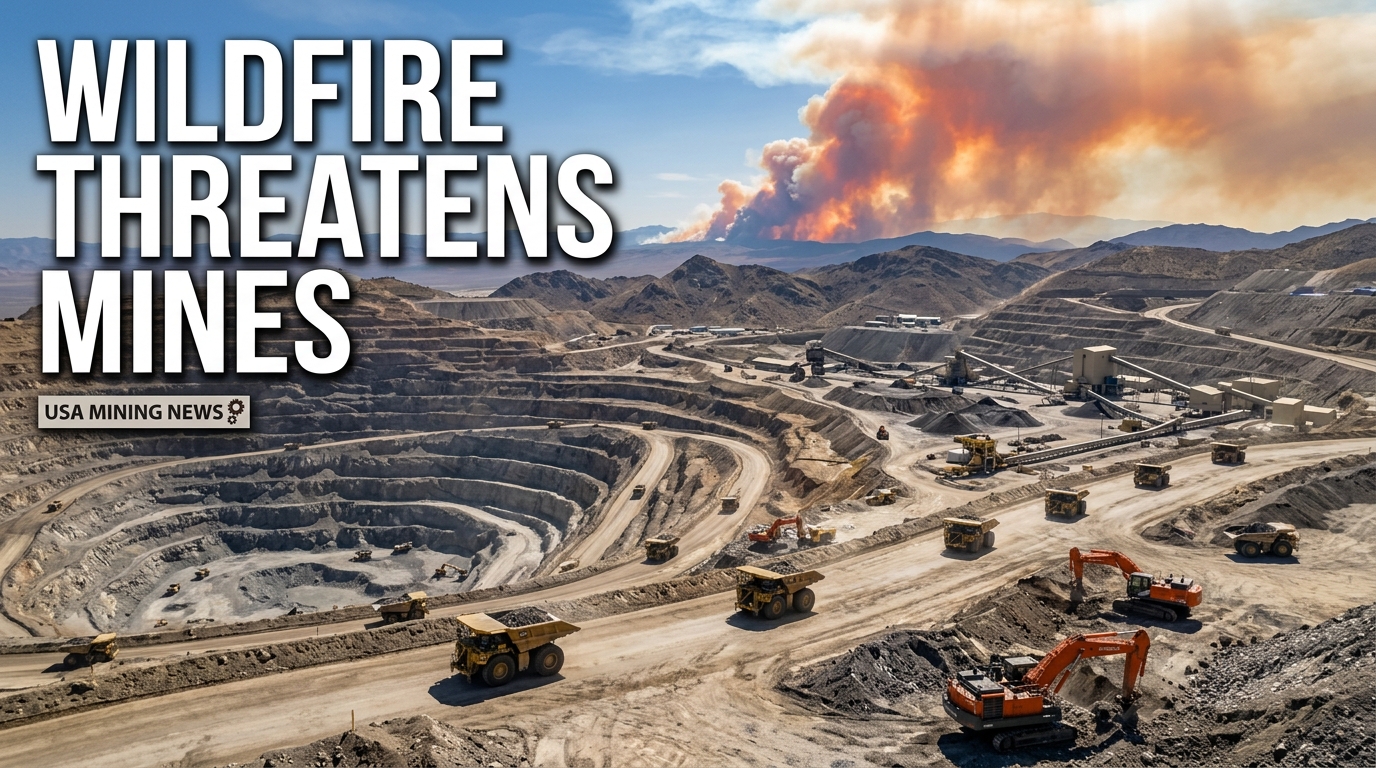
The mining industry across Western Canada is currently confronting a pressing environmental challenge: increasingly severe wildfire seasons. With persistent drought conditions observed across significant portions of British Columbia and meteorologists forecasting a warmer-than-average summer amplified by a looming, potent El Niño, mining companies operating in vital resource regions are meticulously preparing for a 2026 wildfire season that could extensively test their operational resilience and safety protocols.
This escalating threat affects a diverse range of commodity operations, from coal and copper to gold, nickel, potash, and uranium, underscoring the broad regional vulnerability. The imperative for robust wildfire risk management has never been more critical, as historical data and expert projections converge on a challenging outlook for the coming months.
El Niño's Amplifying Effect and Regional Vulnerabilities
Critical climate indicators point to an elevated risk profile for the current year. Forrest Tower, a spokesperson for the B.C. Wildfire Service, noted in an interview that certain areas of the province have experienced below-normal snowpack levels and limited spring precipitation. These variables are well-known precursors to heightened wildfire risk, creating a landscape potentially primed for rapid ignition and spread should conditions align.
"We’re not seeing as many early wildfire starts this year as we have for the past three years," Tower commented, cautioning that this respite could be temporary. "It could take a two-day period with a large number of ignitions and from that point on, that’s basically what we’re dealing with for the rest of the summer." This underscores the unpredictable, rapid onset potential of large-scale fire events.
The severity of the forecast is further compounded by a seasonal outlook released in June by Environment and Climate Change Canada. It predicts that the current El Niño, a climate pattern characterized by the warming of Pacific Ocean surface temperatures, is expected to be very strong. This phenomenon is anticipated to significantly alter regional weather patterns, amplifying drought conditions and warm winds – factors that directly contribute to a more intense wildfire season. "Once we have fire on the landscape, then all the other conditions come into play, and it just makes those fires more difficult to put out," Tower explained to The Northern Miner.
The B.C. Wildfire Service has identified several areas of particular concern for the 2026 season:
- The Chilcotin region
- The Cariboo region
- The Thompson-Okanagan region
These regions are home to significant mining assets. For instance, Teck Resources (TSX: TECK.A/TECK.B; NYSE: TECK) operates its Highland Valley Copper project within the Thompson-Okanagan area, located 17 kilometers west of Logan Lake and 50 kilometers southwest of Kamloops. This direct exposure places a major base metals producer squarely within a high-risk zone for potential wildfire activity.
Industry's Uneasy History: Past Interruptions and Growing Concerns
Wildfire seasons across Western Canada have demonstrably intensified over the past five years, culminating in a record year in 2023. During that season, British Columbia alone recorded over 2,240 fires that burned approximately 2.84 million hectares. Alberta experienced over 1,080 fires, and Saskatchewan tallied roughly 500 wildfires. This unprecedented scale marked a significant turning point for the mining industry.
Raul Munoz, a mining leader at risk adviser Marsh, highlighted the profound shift in perspective. While wildfire risk has always been a consideration, the 2023 season elevated the discussion. "It shifted the discussion from occasional perils that would happen to now something that is being discussed at more of a board level," Munoz told The Northern Miner. He further elaborated that "Wildfires can significantly affect operations even when the fire doesn’t touch the site," emphasizing the broad impact of regional events.
Evidence of this impact is abundant:
- Teck Resources: The Vancouver-based miner had to suspend operations at its Highland Valley Copper project in August 2021 due to direct wildfire risk and an evacuation order issued by the District of Logan Lake. The company stated it "closely monitors wildfire risks across our operations and has comprehensive management plans in place, with employee health and safety being the top priority."
- Artemis Gold (TSX-V: ARTG): The company evacuated all non-essential personnel from its Blackwater gold and silver mine in British Columbia in both 2023 and 2024 due to regional wildfires, demonstrating a recurring pattern of disruption.
- Osisko Development (TSX; NYSE: ODV): In 2024, the company temporarily paused non-essential activities at its Cariboo Gold project in British Columbia and removed staff following a local wildfire evacuation order.
- Cameco (TSX: CCO; NYSE: CCJ): The uranium producer evacuated all non-essential personnel from its Cigar Lake uranium mine in northern Saskatchewan in 2021 in response to encroaching wildfires.
These incidents underscore a crucial operational vulnerability. Even when the fire does not directly damage mine infrastructure, the widespread nature of these events inevitably triggers evacuations, major highway closures, and disruptions across key resource corridors. This pressure is not merely an inconvenience; it is creating operational bottlenecks that are directly influencing mine planning, emergency preparedness, and capital allocation decisions within the sector.
The Business Interruption Challenge: Power, Logistics, and Personnel
Intensifying wildfires are increasingly disrupting vital access roads and critical power infrastructure, presenting complex challenges to ongoing mining operations. Power reliability, in particular, has become a growing concern for many remote operations that depend on long transmission corridors. These corridors, often traversing vast wilderness areas, can be highly vulnerable to wildfire activity hundreds of kilometers from the mine site itself.
As Munoz pointed out, even if a mine site remains outside a direct evacuation zone, damage to transmission assets can lead to prolonged power outages, interrupting production and jeopardizing critical systems such such as ventilation, dewatering, and communications. In response, some companies are actively evaluating backup generation capacity and other contingency measures to maintain essential services during extended outages. BC Hydro, the province's main utility, also employs preventative measures, including applying fire retardant and installing fire-resistant steel-mesh pole wraps coated with heat-activated barriers, alongside regular inspections.
Logistically, wildfire-related road closures can severely impact supply chains, delaying the delivery of crucial equipment, materials, and personnel, while also impeding the transport of concentrate or mined product to market. This can lead to significant cost escalations and missed production targets. Beyond infrastructure, the health and safety of personnel remain paramount. Mining companies must develop and enforce robust evacuation plans, ensure staff well-being in smoky conditions, and address the broader implications of rising temperatures on outdoor working conditions, especially with the sustained heat expected from El Niño.
The Financial and Strategic Implications: Insurance and Long-Term Planning
The financial ramifications of increasingly severe wildfire seasons are substantial and are garnering significant attention from the insurance sector. The 2023 Okanagan and Shuswap wildfires alone resulted in over $720 million in insured losses for Canadian providers. The 2024 Jasper wildfire further compounded this with estimated insured losses of $1.3 billion. These staggering figures highlight the mounting economic burden.
As a result, insurance providers are now asking mining companies detailed questions about their wildfire exposure and preparedness, a level of scrutiny similar to that which environmental, social, and governance (ESG) issues received several years ago, as noted by Munoz. While coverage remains available, insurers are placing much greater emphasis on:
- Business continuity planning
- Emergency response procedures
- Robust assessment of climate-related risks
This evolving landscape means that comprehensive risk management strategies are no longer merely advisable but are increasingly becoming a prerequisite for securing adequate and affordable insurance. The risks, Munoz explains, extend beyond direct fire damage, encompassing the drier, hotter conditions created by El Niño. "We’re starting to see that temperature rise across the world, particularly in some of the northern latitudes," he said, posing a critical question for boardrooms: "How is the company dealing with rising temperatures for staff and working conditions outdoors?" This indicates that companies must look holistically at climate change's broader impacts on their operations and workforce.
Adapting to a Fiery Future: Proactive Mitigation and Mine Design
The intensifying focus on wildfire risk is fundamentally changing how mining projects are conceptualized, planned, built, and operated. The industry is moving beyond reactive measures toward proactive mitigation and long-term adaptation. This involves integrating wildfire resilience into the earliest stages of project development.
"[Wildfire mitigation] starts back in the planning of a new facility," indicating a paradigm shift towards 'designing for fire.' This includes considerations for site layout, vegetation management around infrastructure, water access points for firefighting, the selection of fire-resistant building materials, and the redundancy of critical systems like power and communications. For existing operations, this translates into expanded budgets for preventative maintenance, enhanced monitoring technologies, and more frequent drills to ensure that emergency response teams are well-prepared.
The requirement for comprehensive management plans, as noted by Teck Resources, extends to integrating climate science into operational foresight, understanding potential shifts in wildfire seasonality, intensity, and geographic reach. This proactive approach aims to safeguard not only physical assets and production capacity but, most importantly, the safety and well-being of the mining workforce.
Conclusion: Resilience Through Comprehensive Preparedness
As Western Canada stares down a potentially challenging 2026 wildfire season, the mining industry is at a critical juncture. The convergence of persistent drought, a powerful El Niño, and a clear trend of escalating fire activity demands an elevated level of preparedness and strategic foresight. From major commodity producers like Teck Resources and Cameco to rising juniors, the lessons of past seasons are driving fundamental shifts in operational planning, risk assessment, and capital expenditure.
The increased scrutiny from insurers, coupled with the profound operational and financial impacts of disruptions, underscores the vital importance of robust business continuity plans and proactive climate risk mitigation. Ultimately, the resilience of Western Canada's mining sector in the face of these worsening environmental challenges will hinge on its ability to innovate, adapt, and integrate comprehensive wildfire preparedness into every facet of its operations, safeguarding both the industry's future and the safety of its personnel.