Middle East Tensions Ground Bullion Shipments Out of Dubai, Rattling Global Markets
Dubai, a linchpin in the global precious metals market, is experiencing unprecedented disruptions to its bullion trade, as escalating geopolitical tensions in the Middle East have led to the grounding of passenger flights carrying gold and silver. This critical development, reported on March 4, 2026, has sent ripples through the international precious metals industry, challenging established supply chains and raising immediate concerns among traders and logistics providers.
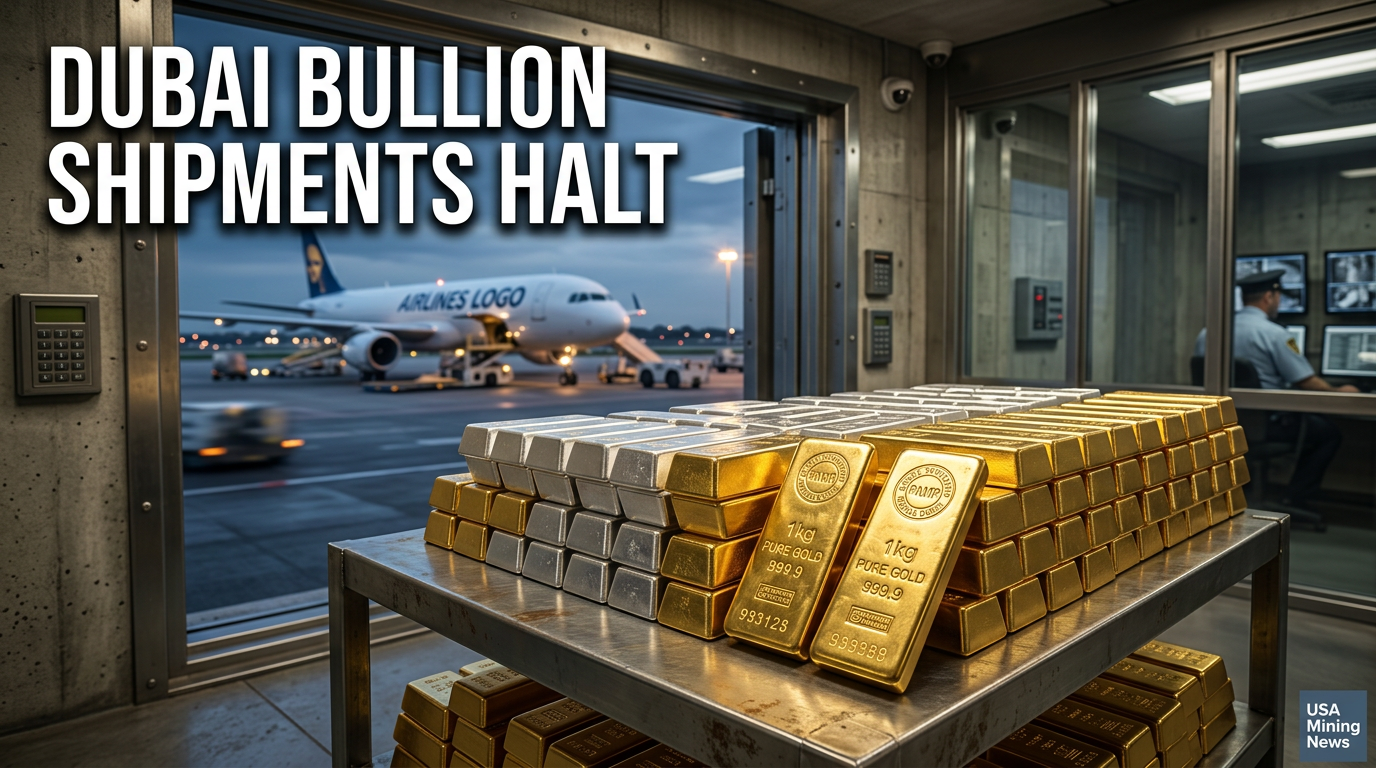
The immediate cause of the disruption is a partial closure of UAE airspace, prompted by a recent wave of Iranian missile attacks which also triggered responses from US and Israeli forces. This has effectively halted operations at Dubai’s airports, impacting the traditional method of transporting high-value commodities like gold and silver in the cargo holds of commercial passenger planes, a method renowned for its efficiency and cost-effectiveness.
Dubai's Pivotal Role in the Global Bullion Trade
The United Arab Emirates, and specifically Dubai, holds an exceptionally crucial position within the global metal market ecosystem. Its strategic geographical location, coupled with its sophisticated logistics infrastructure and free-zone policies, has cemented its status as a vital hub for precious metals. Dubai serves multiple critical functions:
- Refining and Exporting: The UAE is a major center for gold refining, with a significant portion of its output directed towards the insatiable demand from Asian buyers, notably India and China.
- Transit and Conduit: Beyond its refining capabilities, Dubai acts as an essential conduit for bullion shipments originating from traditional financial centers like Switzerland and London. These metals often undergo re-export or processing in Dubai before reaching their final destinations across Asia, Africa, and beyond.
- Market Liquidity: The emirate's robust trading infrastructure contributes significantly to global market liquidity for gold and silver, facilitating efficient price discovery and transaction execution.
Bloomberg's reporting, citing industry insights, clearly underscores this indispensable role. Any impediment to Dubai’s operations, therefore, has immediate and far-reaching implications for the availability and pricing of precious metals globally.
The Mechanics of Bullion Transportation and Current Disruptions
The economics of transporting high-value commodities like gold and silver dictate specific logistics strategies. Traditionally, gold is moved between major trading hubs with remarkable efficiency and cost-effectiveness via passenger aircraft. This method allows for transit at less than an estimated $1/ounce per trip, a figure that highlights its economic attractiveness compared to dedicated cargo charters or more secure but slower modes of transport.
However, this method is not without its operational nuances. While economical, the volume a single passenger flight can carry is inherently limited. This limitation is not solely due to physical space but also by stringent insurance caps on tonnage. These caps are put in place to manage the immense value concentrated in bullion shipments, mitigating the financial risk associated with potential loss or theft. Consequently, large consignments often require multiple flights, creating a complex, interdependent network of daily movements.
The recent partial closure of UAE airspace has shattered this intricate network. The grounding of commercial flights, a consequence of aggressive geopolitical maneuvers by Iran and subsequent military responses from the US and Israel, has directly impacted the flow of precious metals. Flightradar24, a leading flight tracking service, reported that these strikes have affected more than 12,300 flights globally, a stark indicator of the wide-ranging operational paralysis.
With air transport suspended, traders and logistics companies are confronting severe challenges. Efforts are currently concentrated on rerouting consignments originally intended for transit through Dubai. However, viable alternatives are scarce. Transporting high-value cargo overland, particularly across international borders in the Middle East, is fraught with significant security risks and logistical complexities. Lars Johansson, a seasoned consultant and veteran of the precious metals logistics industry, was cited by Bloomberg emphasizing the "complex challenges" introduced by overland transportation, especially given the necessity of navigating multiple national jurisdictions and varied security landscapes. This renders overland shipping an unfeasible and highly undesirable alternative for such high-value commodities.
Immediate Market Reactions and Regional Impact
The disruption has already started to manifest in market behavior. Metals Focus managing director Philip Newman noted a discernible increase in premiums for bullion in Saudi Arabia on Monday, March 2, 2026. This rise in premiums serves as a clear indicator of immediate supply concerns and a potential tightening of product availability in regional markets.
The indefinite pauses in metal shipments through Dubai pose an immediate threat to the operational continuity of many businesses. For downstream markets, particularly in India, which is one of the world's largest gold consumers and heavily reliant on UAE-sourced metal, the situation is particularly critical. Any prolonged suspension beyond the current "temporary" expectation could severely challenge traders by creating stock shortages, driving up local prices, and potentially disrupting festival season buying or industrial demand cycles.
Broader Implications for the Precious Metals Industry
The current situation in Dubai serves as a stark reminder of the intrinsic link between geopolitics and global supply chains, especially for commodities like gold and silver that transcend mere industrial utility to hold significant monetary and cultural value. For the broader precious metals industry, the implications extend beyond immediate logistical headaches:
- Supply Chain Resilience: The incident highlights the vulnerability of highly centralized logistics hubs. Industry participants will likely re-evaluate supply chain resilience, potentially exploring diversification strategies to mitigate future shocks.
- Risk Management: Traders and investors face increased counterparty risk and volatility. The costs associated with rerouting, insurance adjustments, and potential delays will erode margins and complicate hedging strategies.
- Premium Volatility: Localized supply disruptions can create significant arbitrage opportunities or, conversely, widen inter-market price differentials, leading to increased price volatility in regional markets.
- Operational Costs: Even temporary disruptions incur significant operational costs for logistics providers, refiners, and traders, impacting their bottom lines and potentially leading to higher end-user prices.
The reliance on passenger aircraft for high-value cargo, while economical, also exposes the industry to the broader geopolitical events that impact commercial air travel, demonstrating a critical point of systemic risk.
Navigating Uncertainty: Outlook and Next Steps
While industry analysts and logistics experts currently project the disruptions to be temporary, the unpredictability of geopolitical conflicts means a prolonged suspension remains a tangible risk. Should the airspace restrictions persist or intensify, the challenges for traders in India and other pivotal Asian markets dependent on UAE-sourced bullion would escalate significantly.
For now, the focus across the industry is on adaptive logistics – identifying new transit routes, securing alternative modes of transport where feasible, and closely monitoring the security landscape. This event underscores a critical imperative for the global precious metals industry: the need for robust risk assessment and diversified operational strategies to safeguard against the inherent volatilities of a globally interconnected yet politically fractured world. The ability of Dubai to swiftly re-establish its full operational capacity will be a key determinant for restoring stability to bullion flows, but the incident will undoubtedly precipitate a re-evaluation of just-in-time logistics strategies in the face of persistent geopolitical risks.