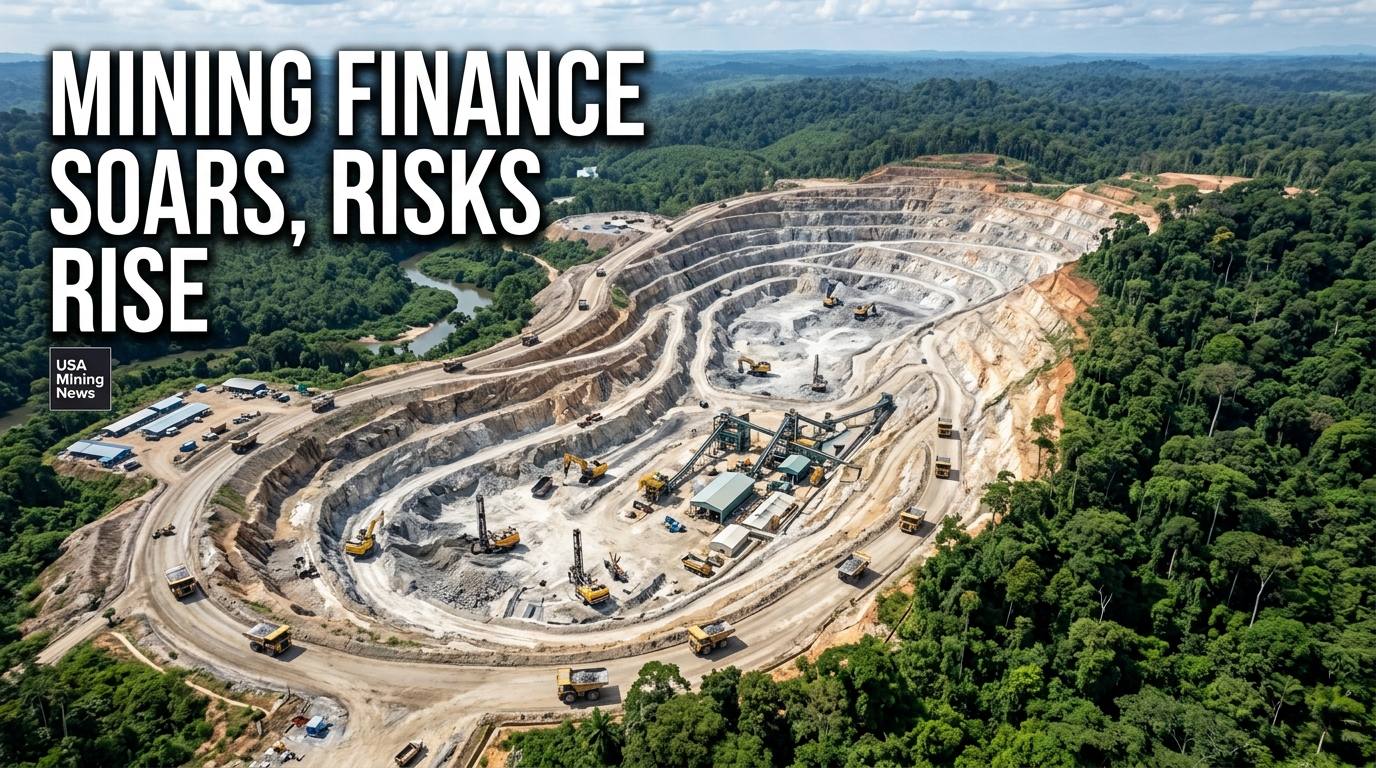
As the global demand for minerals continues its ascent, driven by the accelerating energy transition and technological advancements, financial flows into the mining sector are reaching unprecedented levels. A recent analysis, however, casts a critical light on where much of this capital is being deployed and the associated environmental and social risks. According to the "Banking on Biodiversity Collapse 2026" report, published on October 15 by the Forests & Finance coalition, bank financing for metal and mineral mining in tropical forest-rich regions soared by an alarming 55% between 2016 and 2025, culminating in $36.7 billion in funding last year alone.
This substantial increase in financial backing for operations in some of the planet’s most ecologically vital areas has ignited fresh discussions within the industry regarding the efficacy of environmental safeguards, waste management protocols, and the transparency of supply chains. The report serves as a stark reminder of the intricate balance required between meeting the world's mineral needs and preserving irreplaceable biodiversity, a challenge that is increasingly under the scrutiny of investors, regulators, and civil society alike.
Tracing the Financial Influx: $363 Billion Over a Decade
The "Banking on Biodiversity Collapse 2026" report provides a comprehensive overview of financial commitments, tracking a staggering $363 billion in commercial credit extended to mining companies operating across forest-rich regions over the decade spanning 2016 to 2025. This extensive analysis encompasses various financial mechanisms, including direct lending and underwriting by a multitude of global financial institutions. The geographical scope of the report is notably concentrated on critical biodiversity hotspots, specifically highlighting operations in South America, Southeast Asia, and Central and West Africa.
The coalition behind the report argues that this burgeoning financial support necessitates a far greater level of scrutiny concerning the environmental, social, and governance (ESG) risks inherent in mining expansion within these sensitive ecosystems. The sheer volume of capital flowing into these regions underscores a critical juncture for the mining industry and its financial partners. As global commodity markets continue to demand increased production, the onus is on these institutions to ensure that capital is deployed responsibly, adhering to the highest standards of environmental protection and social equity. This involves a robust due diligence process that goes beyond conventional financial metrics, deeply integrating ecological and community impact assessments.
Key Commodities Driving Investment Growth
The report meticulously breaks down the financing trends by commodity, revealing significant shifts aligned with global economic and technological priorities. Unsurprisingly, minerals critical to the energy transition and advanced manufacturing dominate the growth figures:
- Copper: As a foundational metal for electrification and renewable energy infrastructure, copper attracted the largest share of identified financing. Funding for copper mining in tropical forest regions rose by 42% over the decade, climbing from $14.5 billion in 2016 to $20.6 billion in 2025. This sustained investment reflects copper’s indispensable role in everything from electrical grids and wiring to electric vehicles (EVs) and wind turbines, positioning it as a cornerstone commodity for the decarbonization efforts worldwide.
- Lithium: Perhaps the most dramatic surge was observed in lithium financing. Essential for the burgeoning electric vehicle battery market, funding for lithium projects in these regions skyrocketed by an astonishing 1,113%. This propelled lithium financing from a relatively modest $170 million in 2016 to a substantial $2 billion in 2025. This exponential growth mirrors the rapid expansion of EV manufacturing and the global race to secure raw materials for next-generation energy storage solutions.
- Nickel: Another critical component in EV batteries, as well as stainless steel production, nickel financing also experienced robust growth. The report indicates an increase of 183% for nickel operations, reaching $1.6 billion in 2025. The demand for high-purity nickel, particularly Class 1 nickel, is projected to continue its upward trajectory as battery technologies evolve and market penetration for EVs deepens.
These figures collectively highlight the profound impact of the global energy transition on mining investment patterns, directing significant capital towards the extraction of these key minerals. However, the concentration of these deposits in ecologically sensitive regions creates a complex dynamic, challenging the industry to innovate in sustainable extraction and processing.
The Grota do Cirilo Case Study: A Microcosm of Macro Concerns
To illustrate the tangible risks associated with this surge in financing, the Forests & Finance coalition spotlights Brazil’s Grota do Cirilo lithium operation, owned by Sigma Lithium, as a critical case study. This operation, located in a tropical forest-rich area, encapsulates many of the environmental and social challenges flagged by the report.
The report raises several specific concerns regarding the Grota do Cirilo project:
- Environmental Licensing: Questions have been posed regarding the rigor and adequacy of the environmental licensing processes for the operation, suggesting potential gaps in the regulatory oversight or the implementation of mitigation measures.
- Water Access: Concerns around water access highlight the potential for mining operations to strain local water resources, impacting nearby communities and ecosystems, particularly in regions already susceptible to water stress.
- Waste Management: The report specifically addresses waste management practices at the site, an area frequently identified as a significant environmental risk in mining. This includes the responsible disposal and long-term stability of tailings and waste rock.
- Community Consultation: The report also flags issues concerning consultation with the nearby Baú Quilombola community. Effective and culturally appropriate engagement with Indigenous peoples and local communities is a cornerstone of achieving a social license to operate, and any perceived shortcomings can lead to significant operational delays and social conflict.
Furthermore, the coalition cites specific concerns related to waste-rock management and slope stability at the Grota do Cirilo operation. Notably, a reported slope failure near a kindergarten in December 2025, coupled with subsequent inspections of waste piles, casts a serious shadow on the operational integrity and safety protocols in place. Such incidents raise critical questions about how mining operators are monitoring geotechnical conditions, managing waste facilities, and meticulously documenting compliance with environmental requirements. These findings at Grota do Cirilo serve as a stark reminder that inadequate planning or oversight in these areas can have severe consequences, threatening both the environment and the safety of local populations.
Industry Implications: Balancing Demand with Responsible Development
The "Banking on Biodiversity Collapse 2026" report carries significant implications for the global mining industry, its financial partners, and governmental regulators. In an era increasingly defined by ESG considerations, reports of this nature heighten scrutiny from multiple stakeholders:
- Increased Investor Scrutiny: Financial institutions are under mounting pressure from their own investors, often institutional funds with stringent ESG mandates, to ensure their portfolios are not contributing to environmental degradation or social injustice. This report provides tangible data points that will likely inform future investment decisions and risk assessments for projects in sensitive regions.
- Regulatory Pressures: The findings may prompt host governments to strengthen their environmental and social regulatory frameworks, demanding more rigorous impact assessments, stricter compliance monitoring, and greater transparency from mining companies. International bodies and NGOs will also leverage such reports to advocate for higher global standards.
- Reputational Risk: For individual mining companies and the broader industry, associations with environmental damage or community conflicts can inflict severe reputational harm, leading to investor divestment, consumer backlash, and difficulties in securing future project financing or social license to operate.
- Supply Chain Transparency: The report’s emphasis on supply chain transparency underscores the growing expectation that companies understand the entire lifecycle of their products, from extraction to end-use, and ensure ethical and sustainable practices at every stage. This is particularly relevant for critical minerals, where demand is high but extraction methods can be controversial.
The challenge for the mining industry is to demonstrate that it can meet the escalating global demand for critical minerals while simultaneously upholding its commitments to environmental stewardship and social responsibility. This is not merely a philanthropic endeavor but an increasingly vital component of long-term business viability and shareholder value creation.
Navigating Forward: Enhanced Safeguards and Transparency
Looking ahead, the findings of the "Banking on Biodiversity Collapse 2026" report strongly suggest an imperative for both mining companies and their financial backers to enhance safeguards and elevate transparency across their operations. The path forward will likely involve a multifaceted approach:
- Strengthened Environmental Safeguards: This includes implementing advanced technologies for environmental monitoring, adopting best practices for waste management, and prioritizing biodiversity protection and ecological restoration efforts. Companies will need to demonstrate not just compliance but proactive stewardship.
- Robust Community Engagement: Genuine and ongoing consultation with local communities, including Indigenous populations, is paramount. This goes beyond mere permitting requirements, aiming to build trust, share benefits equitably, and mitigate social impacts proactively.
- Enhanced Due Diligence for Financial Institutions: Banks and underwriters will need to integrate more comprehensive ESG risk assessments into their financing decisions. This involves scrutinizing project-specific impacts, assessing company track records, and ensuring robust monitoring and enforcement mechanisms are in place.
- Supply Chain Traceability: The demand for verifiable sustainable sourcing will continue to grow, pushing companies to invest in technologies and processes that ensure full traceability of minerals from mine to market. This transparency helps to de-risk supply chains and builds consumer confidence.
The report by the Forests & Finance coalition serves as a crucial data point in the ongoing dialogue about sustainable mining. It highlights the inherent tension between the urgent global need for critical minerals to fuel the energy transition and the equally urgent need to protect the planet’s remaining biodiversity. For the mining industry, addressing these concerns is not simply a matter of compliance but a strategic imperative that will define its social license to operate and its long-term success in a rapidly changing world.