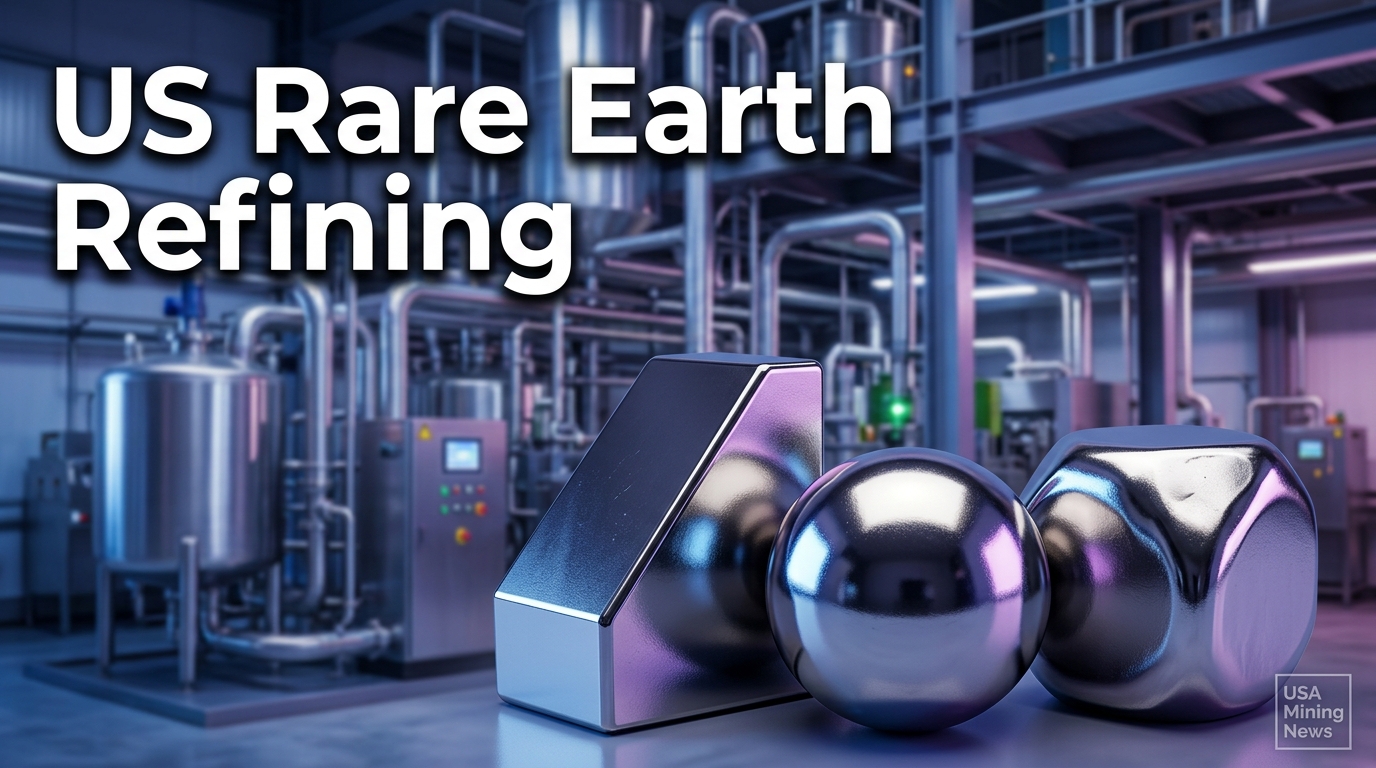
In a significant move poised to reshape the global rare earth supply chain, Massachusetts-based critical minerals refiner Nth Cycle announced on Wednesday, May 20, 2026, a groundbreaking joint development and licensing agreement with Ionic Rare Earths (IonicRE) (ASX:IXR). This strategic partnership aims to establish advanced, end-to-end rare earth refining operations within the United States and, eventually, expand globally. The initiative is a direct response to the urgent need for robust, diversified supply chains for critical minerals, which are indispensable to modern technologies ranging from electric vehicles to defense systems.
A Pivotal Partnership for Domestic Refining
Under the terms of the agreement, Nth Cycle will integrate its patented electro-extraction technology into IonicRE's rare earth recycling and refining operations. This collaboration is designed to create what the companies describe as the first production pathway that fundamentally bypasses China for two critical aspects: the long-loop recycling of rare earths into high-purity forms, and the generation of chemical agents used to purify rare earth swarf into oxides for new magnet manufacturing. The integration is slated to commence in Q4 2026 at IonicRE’s facility in Belfast, marking a concrete step towards domestic autonomy in rare earth processing.
The urgency for such initiatives is underscored by the current geopolitical landscape and the prevailing lack of diversified processing capabilities. Historically, the rare earth industry has been heavily concentrated, with significant implications for global manufacturing and national security. This partnership represents a concerted effort by private enterprise to de-risk these essential supply chains.
Addressing the ‘Hidden Dependency’ on China
The core challenge this partnership seeks to overcome is China's overwhelming dominance in rare earth refining. Currently, China refines approximately 90% of the world's rare earth elements, whether sourced from ore or end-of-life materials. A crucial yet often overlooked aspect of this dominance lies in the refining process itself. Recovery of rare earths typically involves a precipitation step, which is heavily reliant on oxalic acid—a chemical reagent primarily produced in China. This creates what Nth Cycle refers to as a "hidden dependency" for all domestic refiners attempting to establish operations onshore. While building refining capacity in the U.S. might reduce the physical processing done in China, it does not alleviate the reliance on Chinese-produced reagents, perpetuating a critical vulnerability.
The Nth Cycle and IonicRE collaboration directly targets this bottleneck. The two companies will work to replace the conventional precipitation step in IonicRE’s flowsheet with Nth Cycle’s closed-loop electro-extraction process. This innovative approach utilizes electricity to generate the necessary chemicals, effectively eliminating the need for externally sourced oxalic acid. By converting recycled rare earth feedstocks into high-purity oxides—the solid powders essential for magnet metal production—the process promises to deliver genuinely independent refining capabilities.
"Rare earth refining in the U.S. has made progress but building a resilient supply chain in the West requires solving every point of dependence, not just the most visible ones," stated Megan O’Connor, CEO of Nth Cycle, in a news release. O’Connor further emphasized, "Nth Cycle’s technology closes one of the largest remaining links to Chinese chemical supply chains in the rare earth refining process." This statement highlights the profound strategic importance of addressing every facet of supply chain vulnerability, however subtle they may appear.
Nth Cycle's Electro-Extraction: A Technological Solution
Nth Cycle’s proprietary electro-extraction technology is central to this paradigm shift. Unlike traditional hydrometallurgical methods that often involve extensive chemical inputs and generate considerable waste, electro-extraction offers a more sustainable and self-reliant alternative. By leveraging electricity to produce the required chemical agents in a closed-loop system, the technology not only reduces external dependencies but also has the potential to lower operational costs and environmental footprint. This is a critical factor for the long-term economic viability and public acceptance of new refining facilities in Western nations.
The integration of this system into IonicRE's Belfast facility by Q4 2026 is a significant milestone. It will pave the way for processing various rare earth feedstocks, including the crucial "rare earth swarf." Swarf, essentially a metallic waste product generated during the magnet manufacturing process, contains valuable rare earth elements that can be recovered and repurposed. The ability to efficiently recycle such materials further enhances the circular economy principles being adopted by the critical minerals sector, reducing reliance on virgin material extraction.
Nth Cycle's technology platform is also notable for its versatility. As O’Connor pointed out, "because our electroextraction platform works across rare earths, nickel, cobalt, copper, and beyond, every application of our system accelerates the critical mineral supply chains our economy and national security depend on." This broad applicability suggests that the partnership with IonicRE could be a precursor to wider adoption across diverse critical mineral sectors, further fortifying Western supply chains against external pressures.
Strategic Implications for Supply Chain Resilience
The implications of this partnership extend far beyond the immediate commercial interests of Nth Cycle and IonicRE. For the broader mining industry and national economies, it represents a tangible step towards genuine supply chain resilience. The phrase "domestic refining genuinely viable" used by Tim Harrison, CEO of IonicRE, encapsulates the strategic importance of this development. "Nth Cycle gives us a technology pathway that lowers our operating costs and removes one of the most critical of those vulnerabilities. That is exactly the kind of partnership that makes domestic refining genuinely viable," Harrison remarked, underscoring the dual benefit of cost efficiency and reduced geopolitical risk.
The establishment of end-to-end rare earth refining capabilities that are independent of China’s reagent supply marks a significant turning point in the global race for critical mineral supremacy. It strengthens the argument for onshore processing, creating high-value jobs and bolstering industrial security. As global demand for permanent magnets—essential for electric vehicles, wind turbines, and advanced electronics—continues to soar, securing diversified and reliable sources of processed rare earths becomes paramount.
Nth Cycle's Broader Market Impact and Financial Backing
This joint development and licensing agreement with IonicRE builds on Nth Cycle’s growing momentum and market validation. In March, Nth Cycle signed a binding 10-year agreement with global commodities giant Trafigura, valued at $1.1 billion. This landmark deal was finalized in Tokyo at the first Indo-Pacific Energy Security Ministerial and Business Forum, demonstrating significant private sector confidence in Nth Cycle’s technology and its potential to deliver on a large scale. The Trafigura agreement, covering various critical minerals, provides substantial financial backing and market access, reinforcing Nth Cycle's position as a key innovator in the critical minerals refining space.
The $1.1 billion commitment from a major player like Trafigura indicates a clear recognition of Nth Cycle’s electro-extraction platform as a scalable and economically attractive solution for processing a range of critical minerals. This prior deal provides a strong foundation for the partnership with IonicRE, suggesting a robust financial and operational framework supporting the ambitious goal of establishing independent rare earth refining in the U.S.
The Path Forward for a De-risked Future
The collaboration between Nth Cycle and IonicRE signals a crucial shift in the global strategy for critical minerals. By integrating Nth Cycle's electro-extraction technology at the Belfast facility, the U.S. is moving closer to creating a truly independent rare earth supply chain—one less susceptible to geopolitical leverage or supply shocks. The ability to recycle and refine rare earths without relying on foreign-produced chemical reagents is a monumental step towards securing national economic and security interests.
As the Q4 2026 integration timeline approaches, the mining and critical minerals industries will be closely watching the progress of this partnership. Success here could serve as a blueprint for similar initiatives worldwide, fostering a more diversified and resilient global supply of essential materials. This joint effort is not merely about refining rare earths; it’s about refining the future of critical mineral supply chains, ensuring stability and independence for the technologies that power tomorrow’s world.