In an era defined by an accelerating global demand for critical minerals and an imperative to decarbonize industrial operations, the mining sector is actively seeking innovative extraction and processing technologies. Traditional methods, reliant on extensive excavation and energy-intensive processing, face mounting scrutiny over their environmental footprint. Against this backdrop, companies are exploring novel approaches that promise to deliver essential commodities with reduced physical impact.
The Urgent Need for Sustainable Extraction
The global energy transition, coupled with burgeoning demand for electric vehicles, renewable energy infrastructure, and advanced electronics, has placed unprecedented pressure on the mining industry to secure a stable and sustainable supply of critical minerals. From copper and nickel to lithium and rare earth elements, these commodities are the bedrock of modern technological advancement. However, the extraction of these metals often comes at a significant environmental cost, including land disruption, extensive water usage, and substantial greenhouse gas emissions. Regulators, investors, and communities are increasingly demanding that mining operations adopt practices that minimize their ecological footprint while maximizing efficiency.
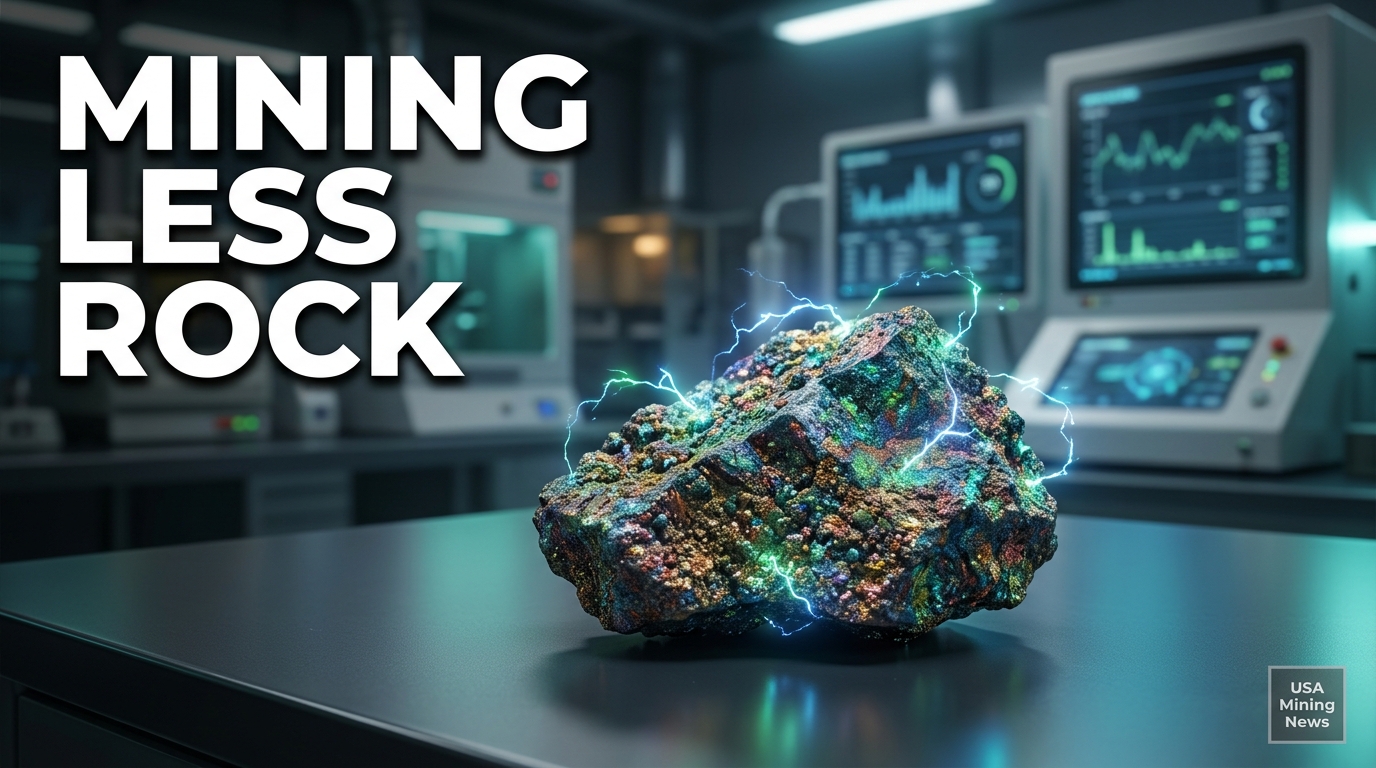
This industry-wide challenge has spurred a surge in research and development into technologies that can fundamentally alter the extraction paradigm. Among the most promising avenues are advancements in hydrometallurgy, bioleaching, and, notably, electrified extraction methods that seek to reduce or even eliminate the need for traditional excavation. These innovations are not merely incremental improvements; they represent a potential paradigm shift toward "metal extraction without the mine," a concept that could redefine the economics and environmental impact of mineral recovery.
Thunderstone's "Metal Extraction Without the Mine" Paradigm
At the forefront of this technological shift is US-based Thunderstone, a company developing electrified mining technology poised to revolutionize how metals are recovered. Eric Wasson-Burns, CEO of Thunderstone, articulated the core philosophy behind their approach in a Q&A with Alejandro Gonzalez, published on May 28, 2026, describing it as enabling "metal extraction without the mine."
Operationally, this concept signifies a fundamental pivot from conventional physical excavation to advanced fluid control. Thunderstone's technology is designed to enhance fluid movement through ore bodies, making it initially applicable to existing heap leach operations and tailings ponds. In these settings, the system aims to manage risk and significantly improve recovery rates by addressing zones where lixiviant flow is typically restricted or non-existent.
For longer-term scenarios, Thunderstone envisions a future where fully in-situ mining becomes viable. This process would entirely eliminate the need for traditional above-ground or underground excavation. Instead, a network of subsurface electrodes would be strategically installed underground to directly leach deposits in place. These electrodes would stimulate and precisely direct the flow of liquids through the ore, enabling a highly controlled and localized liquid recovery system that bypasses the need for heavy machinery and extensive land disturbance.
Electrified Flow Control: A Novel Approach
Thunderstone's methodology employs high-voltage electrical discharge to manipulate liquid permeability within geological formations, a technique that significantly distinguishes it from established methods such as hydraulic fracturing or conventional in-situ recovery (ISR). Wasson-Burns elaborates that their technology utilizes a range of voltages to influence fluid movement without resorting to the high fluid pressure or mechanical force inherent in existing hydraulic and comminution technologies.
The underlying mechanism, currently under extensive laboratory exploration, focuses on operations within unconsolidated geological formations. At the pore and fracture scale, high-voltage discharges are theorized to achieve two critical outcomes: increasing the diameter of existing pore necks and connecting previously isolated flow networks. This dual action effectively enhances or discourages preferential flow pathways that are native to the original geology, providing a dynamic control over fluid distribution that was previously unattainable.
Furthermore, at lower voltages, Thunderstone's system can operate within an osmotic and ionic flow regime. In this mode, ions and accompanying water are directionally moved through a solid matrix within an electric field. This allows for exceptionally precise control over the hydrodynamics without inducing significant changes to the underlying hydrogeology of the site. A crucial observation from their research is the significant reversibility of the ore: once the electric field is removed, the material reportedly behaves and flows exactly as it did originally. This reversibility has profound implications for environmental impact and site reclamation, as it suggests minimal permanent alteration to the geological structure.
Benchmarking Against Traditional Methods
While Thunderstone’s technology is still in its early de-risking phase, preliminary results suggest considerable advantages over conventional extraction methods. Wasson-Burns highlights the technology's effectiveness in targeting "the most clogged-up portions of mine heaps that currently provide next to no economic value." These areas, typically inaccessible due to stagnant fluid flow, become economically viable as Thunderstone’s system creates the necessary lixiviant flow.
Early laboratory testing has demonstrated promising performance indicators. The company has observed pregnant leach solution (PLS) concentrations that are on par with, or even in excess of, standard industry baselines. This includes success even in challenging geology dominated by minimally active clay-like flow regimes, which typically impede efficient leaching. By unlocking these previously inaccessible areas and generating a high-concentration, high-purity PLS, the technology also promises to significantly reduce downstream refining efforts.
The enhanced purity of the extracted solution streamlines the entire processing chain, offering several economic and environmental benefits. Operators could realize better price points for their commodities and benefit from fewer energy-intensive process steps, preserving profit margins. This reduction in the intensive processing typically required by conventional leaching contributes directly to the decarbonization goals of the mining industry, lowering both operational costs and the carbon footprint associated with mineral production.
Laboratory Progress and Geological Suitability
The development of Thunderstone’s technology is currently progressing through its early stages, with testing primarily concentrated at the laboratory scale. These trials have focused on surface-based ores, specifically those found within 1–30 meters of the surface, with a primary emphasis on nickel laterites. Such ores are particularly relevant given nickel's critical role in electric vehicle batteries and other energy transition technologies.
To date, comprehensive trials have been conducted on meter-scale columns, where the system has successfully stimulated fluid flow. Crucially, these tests have not encountered significant limitations attributable to ore density or poor native flow characteristics, suggesting a robust application across various challenging geological conditions. Thunderstone has also not identified any inherent structural limits within the geological materials tested, which is a positive indicator for broader applicability.
Operationally, the process is ideally suited for high-porosity geologies, particularly those exhibiting greater than 10% porosity. Nickel laterites, which often feature tortuous pathways that restrict traditional fluid movement, represent a prime target geology for Thunderstone’s electrified approach. By actively manipulating fluid pathways through electrical impulses, the technology can overcome natural geological impediments, making previously uneconomical ore bodies viable for extraction.
Market Implications and Future Outlook
The potential for Thunderstone’s electrified mining technology to scale up has significant implications for the critical mineral supply chain, particularly against the backdrop of an increasingly fragmented energy and geopolitical landscape. The ability to extract more metal with less rock, and to do so with a lower environmental impact, addresses several pressing industry concerns:
- Critical Mineral Security: By making previously inaccessible or uneconomical deposits viable, Thunderstone could contribute to diversifying supply sources and strengthening domestic critical mineral production, reducing reliance on potentially unstable foreign markets.
- Decarbonization and ESG: The reduction in excavation, heavy machinery use, and energy-intensive downstream processing aligns perfectly with the mining industry's environmental, social, and governance (ESG) goals. Lower carbon emissions, reduced land disturbance, and more efficient water use are key benefits.
- Cost Efficiency: Streamlined processing, higher recovery rates from existing assets (heap leach pads, tailings), and potentially lower capital expenditure for new projects (due to reduced need for traditional infrastructure) could significantly lower operational costs.
- Social License to Operate: Minimizing the physical footprint of mining operations can help companies gain and maintain their social license to operate, a critical factor in project development and community relations.
As the technology moves beyond laboratory-scale testing, the next steps will likely involve pilot projects at industrial sites, demonstrating its efficacy and scalability in real-world operational environments. The successful deployment of technologies like Thunderstone's could fundamentally reshape the economics and sustainability of critical mineral extraction, offering a pathway to meet growing demand while mitigating environmental and social impacts.
Thunderstone’s CEO, Eric Wasson-Burns, and his team are charting a course for a future where advanced fluid control, driven by electrical stimulation, could become a cornerstone of sustainable mining. Their efforts represent a significant stride towards realizing the vision of "metal extraction without the mine," a concept with profound implications for the critical minerals sector and the global energy transition.