In a pivotal development poised to reshape the global steel industry's sustainability efforts, mining giant Rio Tinto and leading steel producer China Baowu have announced the successful conclusion of industrial-scale trials of hydrogen-based direct reduced iron (DRI) production. These trials, conducted in China, showcase the potential for significantly reducing carbon emissions in steelmaking by utilizing mid-grade iron ores from Western Australia's Pilbara region as a feedstock.
The announcement, made on June 15, 2026, marks a crucial milestone in the joint efforts of two global industry leaders to decarbonize one of the world's most carbon-intensive sectors. The implications extend far beyond the immediate technical achievement, signalling a tangible pathway for the expanded use of diverse iron ore sources and accelerating the transition towards green steel production.
A Decisive Step Towards Green Steel
The recently concluded trials were rooted in a broader collaboration aimed at exploring and implementing decarbonization technologies across the steel value chain. Specifically, the industrial-scale testing took place at Baowu’s Baoshan Iron & Steel Zhanjiang Steel Operations in China. This location, representing a significant operational footprint for China Baowu, provided a robust environment for evaluating the novel processes under real-world conditions.
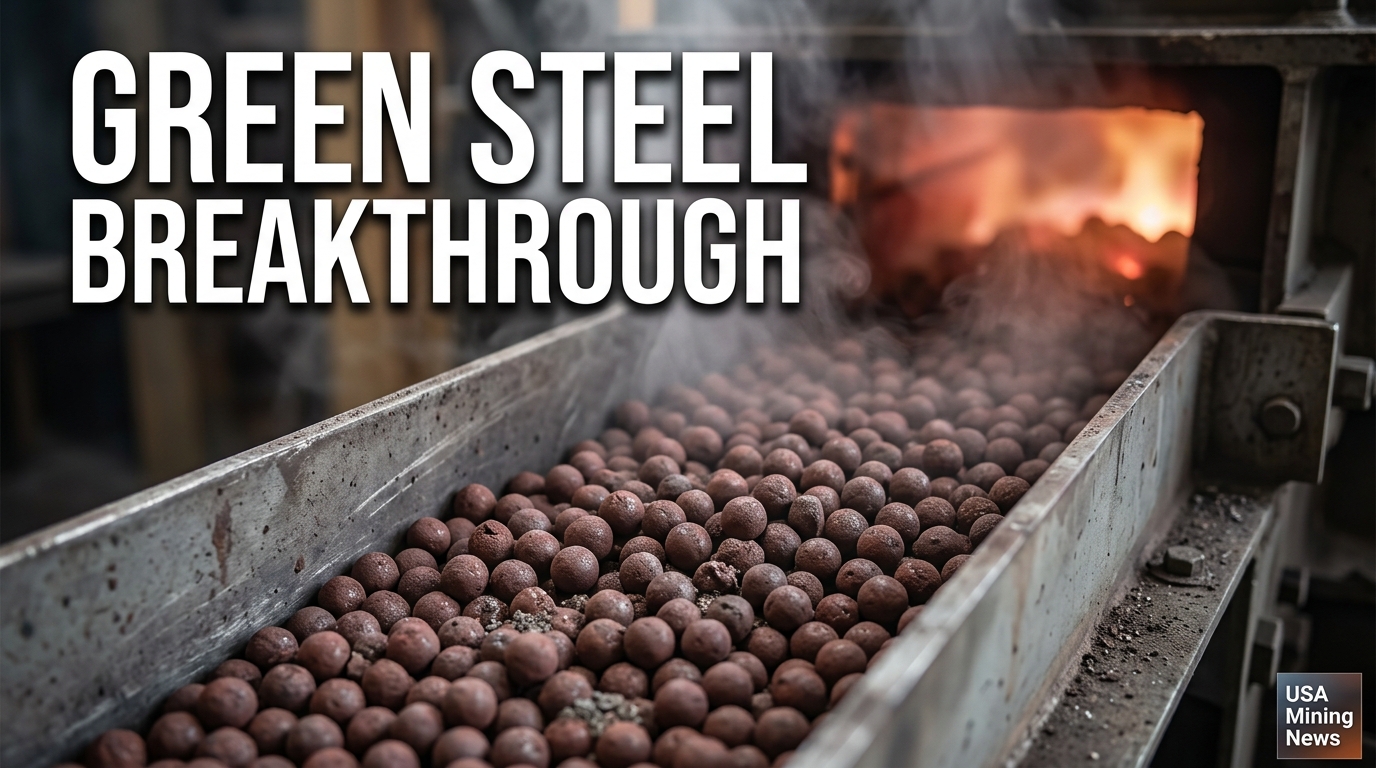
At the core of the breakthrough was the use of a hydrogen-based shaft furnace to produce Direct Reduced Iron (DRI). What sets these trials apart is the feedstock: pellets containing one-third of Rio Tinto’s Pilbara Blend ore. The Pilbara Blend, synonymous with Western Australia's vast iron ore deposits, is typically associated with traditional blast furnace steelmaking. However, demonstrating its viability, even in a blended form, for hydrogen-based direct reduction, significantly broadens the scope of future iron ore utilization.
The process did not stop at DRI production. The resulting DRI was subsequently transformed into steel using a basic oxygen furnace, a testament to its quality and compatibility with existing steelmaking infrastructure. Further validation occurred with the testing of this steel in a small-scale 500kg electric smelting furnace. This comprehensive demonstration from ore to finished steel, utilizing a lower-emissions pathway, underscores the technical feasibility and commercial potential of the integrated approach.
Technical Deep Dive: The Hydrogen-DRI Process
Direct Reduced Iron (DRI) represents a critical alternative to traditional blast furnace ironmaking, which relies heavily on coke (derived from coal) as a reductant, leading to substantial carbon dioxide emissions. In the conventional blast furnace route, iron ore is reacted with carbon monoxide generated from coke at high temperatures, producing molten iron. The hydrogen-based DRI process, conversely, employs hydrogen as the primary reducing agent.
In a hydrogen-based shaft furnace, iron ore pellets are exposed to hydrogen gas at elevated temperatures. The hydrogen reacts with the oxygen in the iron ore, reducing it to metallic iron (DRI) and producing water (H2O) as a byproduct, rather than carbon dioxide. This chemical pathway inherently offers a path to near-zero emissions if the hydrogen itself is produced from renewable energy sources (often termed "green hydrogen").
A key aspect emphasized by these trials is the successful utilization of "mid-grade ores from Western Australia’s Pilbara region." Current direct reduction methods typically necessitate high-grade iron ore with superior chemical composition and physical properties. The ability to effectively process mid-grade Pilbara Blend ore for hydrogen-based DRI is a significant advantage. This expands the available feedstock options for DRI production, making decarbonization pathways accessible to a broader range of iron ore producers and steelmakers. It also potentially adds significant value to a wider spectrum of iron ore products, reducing the industry's historical reliance on premium high-grade fines and pellets.
The sequence of production involved:
- Pelletisation: Turning finely ground iron ore into sturdy, uniform pellets suitable for the shaft furnace. The trial pellets contained one-third Pilbara Blend ore.
- Hydrogen-based Shaft Furnace: Reducing the iron oxide in the pellets to metallic iron (DRI) using hydrogen.
- Basic Oxygen Furnace (BOF): Using the produced DRI as feedstock to make crude steel. While BOFs are traditionally part of the blast furnace route, their integration with direct reduced iron can still offer emissions reductions compared to purely virgin iron production.
- Electric Smelting Furnace (ESF): Further refining the steel in a small-scale 500kg electric smelting furnace. Electric smelting, particularly when powered by renewable electricity, is crucial for achieving truly low-carbon steel. Combining hydrogen-DRI with electric melting technologies forms the bedrock of many "green steel" strategies globally.
These processes demonstrate a compelling vision for low-carbon steelmaking, directly addressing the industry's urgent need to curb its substantial carbon footprint, which accounts for approximately 7-9% of global anthropogenic CO2 emissions.
Strategic Partnership and Shared Vision
The collaboration between Rio Tinto and China Baowu is not a recent phenomenon but rather a long-standing strategic alliance. The two companies have collaborated for more than 50 years on research and technology innovation within the steel-making sector, reflecting a deep mutual commitment to advancing the industry.
The joint initiatives specifically focused on decarbonization began in 2020, encompassing multiple phases of projects aimed at developing and implementing sustainable technologies. The current trials fulfilled a pivotal aspect of a formal Memorandum of Understanding (MoU) signed in 2023 between China Baowu and Rio Tinto, explicitly aimed at exploring decarbonization technologies for the steel value chain.
Mao Xiaoming, Baowu Low Carbon Centre executive deputy director and Baowu Central Research Institute deputy director, underscored the significance of the achievement. “These trials represent pragmatic actions implemented under the Climate Partnership MoU between China Baowu and Rio Tinto. The successful industrial-scale trials help both parties advance understanding in lower-emissions iron and steel-making technologies,” said Mr. Xiaoming. “More importantly, they reflect the strong technical collaboration between Baowu and Rio Tinto, combining our respective expertise across iron ore, process innovation and industrial application.”
This statement highlights the synergy between Rio Tinto’s expertise as a premier iron ore producer and Baowu’s unparalleled leadership in steel manufacturing, process innovation, and industrial deployment. Such integrated efforts are crucial for translating laboratory breakthroughs into industrial-scale solutions.
Rio Tinto's vast operational scale was further highlighted last month when it dispatched its eight-billionth tonne of iron ore from the Pilbara region, with that specific shipment heading to its long-term partner Nippon Steel Corporation. This demonstrated capacity and global reach underscore Rio Tinto's intrinsic role in the global iron ore supply chain and its influential position in driving industry-wide change.
Implications for the Iron Ore Market and Beyond
The successful trials hold profound implications for the global iron ore market. By proving the efficacy of mid-grade Pilbara ores as a feedstock for hydrogen-based DRI, Rio Tinto could unlock additional value from its extensive resource base. Previously, lower-grade ores might have faced challenges in demand for cleaner steelmaking pathways, which traditionally favored blast furnace feed or specific high-grade DRI feed. This development creates new market opportunities and could influence future investment decisions in mine planning, processing infrastructure, and product development.
For the broader steel industry, the trials provide concrete evidence that decarbonization is not just an aspiration but an increasingly achievable reality. The demand for "green steel" from end-users, particularly in automotive, construction, and durable goods sectors, is growing. Technologies like hydrogen-DRI are essential for steelmakers to meet these demands and navigate stricter environmental regulations and carbon pricing mechanisms globally.
China, being the world's largest steel producer and consumer, plays an outsized role in global emissions. Baowu's leadership in these trials, therefore, has significant national and international ramifications. Its success in scaling these technologies could accelerate China's own ambitious climate targets and influence steelmaking practices worldwide.
Collaborations of this nature also set a precedent for further cross-value chain partnerships. The complexity of decarbonizing heavy industries necessitates integrated solutions, where miners, steelmakers, technology providers, and energy companies coalesce their expertise and resources. This trial demonstrates a successful model for such collaboration.
Looking Ahead: The Future of Sustainable Steelmaking
While these trials represent a significant leap forward, the journey towards widespread adoption of low-carbon steelmaking technologies is still in its early stages. The next steps for Rio Tinto and China Baowu will likely involve further optimization of the process, scaling up the technology to commercial-sized operations, and addressing the economic viability of green hydrogen production at scale.
Critical challenges remain, including:
- Cost of Green Hydrogen: Currently, green hydrogen (produced via electrolysis using renewable energy) is more expensive than traditional grey hydrogen (produced from natural gas). Cost reduction through technological advancements, economies of scale, and supportive policies will be vital.
- Infrastructure Development: Establishing robust infrastructure for producing, transporting, and storing large volumes of hydrogen will require significant investment and coordination.
- Capital Investment: Retrofitting existing steel plants or building new hydrogen-DRI facilities requires substantial capital expenditure.
- Market Acceptance: While demand for green steel is growing, ensuring global market acceptance and appropriate pricing mechanisms will be necessary for widespread adoption.
Despite these challenges, the successful culmination of these trials positions Rio Tinto and China Baowu at the forefront of the industry's decarbonization efforts. It underscores their commitment to innovation and sustainability, providing tangible proof that a low-carbon future for steelmaking is not just possible but increasingly within reach. As the global mining and metals industry grapples with the imperative of climate action, these collaborative breakthroughs offer a clear and compelling vision for a more sustainable future.