Sandvik and Rio Tinto Forge Alliance for Next-Generation Autonomous Drilling Systems
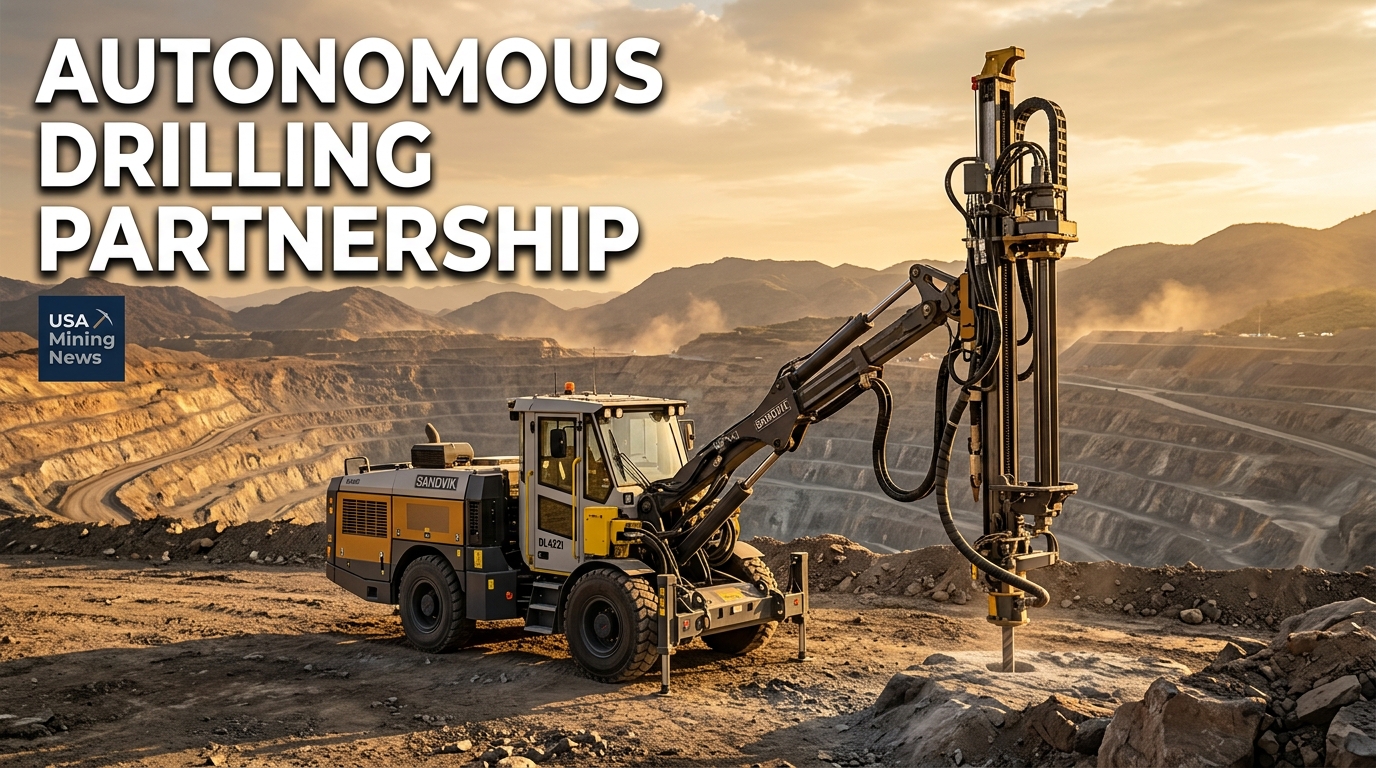
June 1, 2026 – In a move set to significantly advance automation in the global mining sector, leading equipment manufacturer Sandvik has announced a strategic partnership with mining giant Rio Tinto. The collaboration, unveiled on June 1, 2026, focuses on integrating and enhancing autonomous drilling systems (ADS) for open-pit operations, with a particular emphasis on achieving robust interoperability and multi-rig, multi-site remote capabilities. This initiative is poised to redefine efficiency and safety benchmarks across the industry.
The joint development agreement combines Rio Tinto's substantial prior experience in autonomous deployments and remote operations, particularly at its vast iron ore sites, with Sandvik's cutting-edge AutoMine automation technology. This fusion of operational expertise and technological prowess is designed to foster a more integrated and flexible future for autonomous mining fleets.
A Strategic Alliance for Enhanced Autonomy
The core objective of this partnership is the co-development of advanced interoperability and autonomous capabilities essential for sophisticated remote, multi-rig, and multi-site autonomous operations. This goes beyond mere automation; it aims to create an ecosystem where different drill models can seamlessly operate on common autonomous platforms, providing greater flexibility and standardization for large-scale mining operations.
Petri Virrankoski, President of Surface Drilling at Sandvik, underscored the strategic importance of this endeavor, stating, “This joint development reflects Sandvik’s commitment to improving safety and productivity through open, interoperable automation.” His remarks highlight a growing industry trend towards open standards and collaborative innovation, moving away from proprietary, siloed systems that can hinder broader adoption and integration.
The project's development timeline is structured in a methodical, phased approach. Initial development and prototyping will commence at Sandvik's specialized facilities in Finland. This phase will leverage Sandvik's deep engineering expertise and its long-standing track record in developing robust mining equipment and automation solutions. Following successful internal development and validation, the project will transition to Rio Tinto’s formidable operation centre in Perth, Australia, where extensive field trials and rigorous testing will be conducted under real-world mining conditions. Rio Tinto’s Perth operations are well-known for their advanced remote control and operational oversight capabilities, making them an ideal proving ground for such sophisticated autonomous systems.
Unpacking the Technical Collaboration
This collaboration is founded on leveraging the distinct strengths of both companies. Sandvik brings its market-leading AutoMine automation technology, a comprehensive system that enables autonomous control of various mining equipment, including drills, loaders, and trucks. AutoMine is renowned for its scalability, safety features, and ability to optimize fleet performance in underground and surface operations. The system's modular architecture is well-suited for the incremental development required for interoperable solutions.
Rio Tinto, on the other hand, contributes invaluable operational intelligence derived from its significant investments and successful deployments of autonomous systems across its vast portfolio, particularly within its iron ore operations. The company has been at the forefront of remote operations, managing extensive fleets of autonomous haul trucks and other equipment from control centers hundreds of kilometers away from the mine sites. This practical, real-world experience is critical for shaping autonomous drilling solutions that are not only technologically advanced but also operationally robust and scalable.
The technical focus on "interoperability" is a critical differentiator. Traditionally, autonomous systems from various vendors have operated as discrete islands, often requiring complex and costly custom integration or leading to vendor lock-in. By co-developing solutions that allow "different drill models to run on common autonomous platforms," this partnership seeks to break down these barriers. This means a mine site employing drills from various manufacturers could potentially manage them all through a single, standardized autonomous control system, significantly simplifying fleet management, maintenance schedules, and overall operational planning. This vision addresses a long-standing challenge for mining companies seeking to maximize flexibility and minimize integration complexities across their diverse equipment fleets.
The Imperative of Interoperability in Modern Mining
The concept of interoperability is gaining increasing traction as mining companies globally accelerate their digital transformation strategies. In an industry marked by colossal capital expenditure and long asset lifecycles, the ability to integrate heterogeneous equipment and systems is paramount for sustainable long-term growth and operational agility. Proprietary systems, while effective for specific applications, often create bottlenecks when companies attempt to scale automation or integrate new technologies. An open, interoperable framework provides several compelling advantages:
- Enhanced Flexibility: Miners can select best-of-breed equipment from different suppliers without being constrained by automation compatibility issues.
- Reduced Total Cost of Ownership: Standardized platforms can reduce training requirements, simplify maintenance, and streamline software updates across an entire fleet.
- Future-Proofing: An open architecture allows for easier integration of future technological advancements, ensuring that current investments remain relevant.
- Optimized Data Flow: Seamless data exchange between various machines and control systems enables more holistic operational insights, predictive maintenance, and real-time decision-making.
This initiative by Sandvik and Rio Tinto represents a tangible commitment to fostering this open ecosystem, promising tangible benefits not just for the partners, but for the broader mining industry seeking to unlock the full potential of digital and autonomous operations.
Driving Safety and Productivity in Open-Pit Environments
The primary motivations behind the widespread adoption of autonomous technologies in mining are consistently cited as safety and productivity. Open-pit drilling operations, while fundamental to mineral extraction, involve inherent risks related to heavy machinery, blasting, and dynamic operational environments. Autonomous drilling significantly mitigates these risks by removing human operators from the immediate vicinity of these hazards. Remote operations allow personnel to manage multiple drill rigs from safe, ergonomically designed control centers, improving working conditions and reducing exposure to dust, noise, and vibration.
Beyond safety, the productivity gains from autonomous drilling are substantial. Autonomous drills can operate around the clock, unaffected by shift changes or fatigue, leading to higher utilization rates. Precision drilling, often enhanced by GPS and advanced navigation systems, optimizes the blasting process, resulting in better fragmentation, reduced energy consumption in downstream comminution, and improved overall recovery rates. The ability to manage "multi-rig and multi-site autonomous operations" from a single control point also means greater operational control, quicker adjustments to changing conditions, and more efficient resource allocation across a mining complex. This enhanced flexibility translates directly into more predictable project timelines and optimized output.
For Rio Tinto, which operates some of the world’s largest open-pit iron ore mines, the scale of potential impact is immense. Even marginal improvements in drilling efficiency and safety across thousands of drill meters annually can translate into significant cost savings and capacity increases. Similarly, for Sandvik, its reputation as a provider of robust and intelligent drilling solutions will be further solidified, opening new market opportunities for its advanced automation offerings.
Broader Industry Implications and Future Outlook
The partnership between Sandvik and Rio Tinto serves as a significant bellwether for the future direction of mining automation. As leading players in equipment supply and mineral production, their collaborative efforts set a precedent and demonstrate a clear path towards more integrated and interoperable autonomous solutions. Other global mining companies, observing these developments, are likely to accelerate their own adoption strategies, pushing for similar levels of flexibility and standardization from their technology providers.
The successful implementation of multi-site, multi-rig autonomous drilling platforms could foster a paradigm shift in how mine sites are managed and operated. It lays the groundwork for fully integrated autonomous mine-to-port solutions, where all stages of the mining value chain communicate and cooperate seamlessly. This vision includes autonomous loading, hauling, processing, and even rail or port logistics, all orchestrated from centralized control centers.
Looking ahead, the collaboration will undoubtedly face challenges, including the complexities of integrating software and hardware from multiple sources, ensuring robust cybersecurity protocols for remote operations, and navigating evolving regulatory frameworks. However, the combined expertise and commitment of Sandvik and Rio Tinto suggest a high probability of success for this ambitious undertaking.
Ultimately, this partnership underscores a crucial trend: the future of mining is intelligent, interconnected, and increasingly autonomous. By focusing on open, interoperable platforms, Sandvik and Rio Tinto are not just developing new technology; they are helping to build the foundational infrastructure for the next generation of safe, productive, and sustainable mining operations worldwide.