Navigating 2050: Systemiq and ERM Report Projects Critical Mineral Demand and Environmental Crossroads for Mining
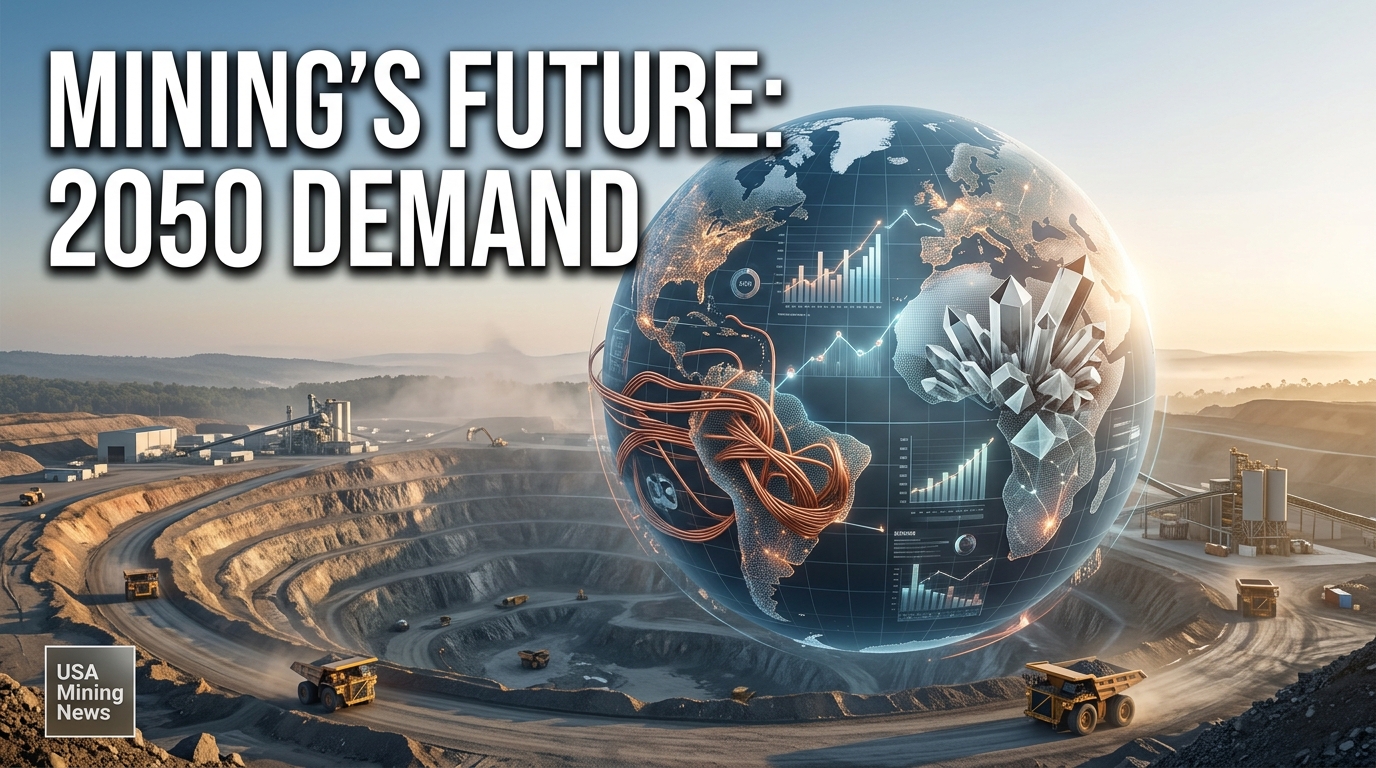
The global mining industry stands at a pivotal juncture, grappling with escalating demand for critical minerals essential for the energy transition while simultaneously confronting mounting environmental and social pressures. A comprehensive new report, "Future Prospects," released on October 15, 2026, by sustainability strategists Systemiq and environmental consultancy ERM, offers a stark look into how today's decisions will shape the future of global mining and metals systems through to 2050. Developed in close partnership with the International Council on Mining and Metals (ICMM) and supported by the Gordon and Betty Moore Foundation, the study provides invaluable insights for industry stakeholders, policymakers, and investors seeking to navigate an increasingly complex operational landscape.
Drawing on the expertise of more than 20 interviews with industry professionals and collaboration with ICMM member companies, the report outlines three distinct future scenarios—Fracture, Flywheel, and Space Race. These scenarios are not presented as forecasts but as critical tools designed to test assumptions regarding different levels of technological innovation and government action. A central, undeniable conclusion emerges across all modeled pathways: the supply of mined materials will need to expand significantly to meet future global needs.
Projecting the Future of Mining: The Systemiq and ERM Report's Scenarios
The "Future Prospects" report serves as a foundational analysis for understanding the challenges and opportunities facing the mining sector over the next quarter-century. By constructing three distinct scenarios, Systemiq and ERM provide a framework for decision-makers to consider various future states of mineral supply, ecosystem health, and societal well-being. Each scenario – Fracture, Flywheel, and Space Race – is characterized by differing assumptions about the pace of technological innovation, the degree of global collaboration, and the nature of government action in response to climate change and resource scarcity.
- Fracture: This scenario likely represents a future characterized by limited innovation, geopolitical fragmentation, and a focus on national security priorities. Such an environment could lead to less coordinated efforts on sustainability and resource management.
- Flywheel: This scenario suggests a more balanced future, potentially driven by moderate technological advancements and cooperative governance. It implies a steady, but perhaps not revolutionary, progression towards more sustainable practices.
- Space Race: While not fully detailed in the provided information, this scenario title hints at an accelerated pace of innovation and potentially a more aggressive pursuit of new resource frontiers or technologies, possibly under competitive global dynamics.
A key finding, consistent across all three scenarios, is that strategies centered on material efficiency, substitution of materials, and recycling, while crucial for reducing overall demand and mitigating environmental footprints, cannot eliminate the fundamental need for new primary mining. This conclusion underscores the persistent reliance on virgin materials to meet the burgeoning requirements of a global economy undergoing significant transformation.
Unavoidable Demand Surge: Copper and Lithium in Focus
The energy transition, driven by the global imperative to decarbonize, is a primary catalyst for the projected surge in demand for specific critical minerals. The report highlights copper and lithium as prime examples, commodities indispensable for renewable energy technologies, electric vehicles, and modern infrastructure. The projected increases are substantial, even under the more favorable "Flywheel" scenario, which presumably reflects a more managed and sustainable transition.
- Under the Flywheel scenario, copper supply is projected to be 25% above current levels by 2050, while lithium supply will need to be a staggering 180% higher than present-day output.
- In the more challenging Fracture scenario, where innovation and cooperation are constrained, these figures escalate further: copper demand is projected to increase by 40%, and lithium by an astonishing 240%.
These figures are not merely statistics; they represent immense challenges and opportunities for the mining sector. Meeting such ambitious production targets will require significant capital investment, technological innovation, and streamlined permitting processes. For investors, these projections highlight the long-term growth potential of companies positioned to deliver these critical minerals. For mining operators, they underscore the urgency of developing new projects and expanding existing operations, often in increasingly complex geological and geopolitical environments.
Environmental Pressures and Operational Headwinds
The drive to increase mineral output comes with significant environmental implications, which the report meticulously details. The geographic distribution of existing mining infrastructure already places considerable stress on vulnerable ecosystems and water resources. Systemiq and ERM report that nearly 38% of current mining and metals facilities are located in areas already experiencing high or extremely high water stress, or in arid regions. This existing vulnerability suggests that future expansion, particularly in critical resource-rich but water-scarce regions, could exacerbate these issues.
The environmental impacts vary considerably depending on the strategic approach taken by the industry and governments:
- In a scenario characterized by limited innovation and national security priorities (akin to the "Fracture" scenario), water consumption in mining could be 70% higher and deforestation 40% higher than modeled 2050 baselines. This paints a grim picture of environmental degradation and heightened resource competition.
- Conversely, a future defined by more balanced governance and robust innovation could lead to significantly reduced impacts, with a potential 35% reduction in water use and a 25% decrease in deforestation compared to the baseline. This highlights the transformative potential of sustainable practices, advanced technologies, and collaborative policy frameworks.
Beyond environmental concerns, the report also sheds light on operational challenges that directly impede the industry's ability to meet future demand. The timeline for bringing new mines into operation is notoriously long, often extending up to 20 years from discovery to full production. This lengthy lead time means that investment, technology, and partnership decisions made today will profoundly shape the industry's capacity and outcomes by 2050. Furthermore, the report notes that 60% of mining projects currently in development are facing delays, with permitting issues cited as the primary cause in nearly half of these cases. Community opposition, often linked to environmental and social concerns, is another significant factor contributing to these delays, increasing both project permitting complexities and operational costs.
Strategic Imperatives for Industry Leaders
The findings from the Systemiq and ERM report present several strategic imperatives for leaders across the mining value chain. The intertwining of environmental risks, community relations, and regulatory hurdles is increasingly affecting the viability and cost-effectiveness of new projects. This necessitates a proactive and integrated approach to sustainability, moving beyond mere compliance to genuine stewardship and stakeholder engagement.
For mining companies, this means prioritizing:
- Sustainable Resource Management: Investing in technologies and practices that minimize water consumption, reduce land disturbance, and promote biodiversity.
- Enhanced Stakeholder Engagement: Building trust and securing social license to operate through transparent communication, equitable benefit sharing, and responsive community relations.
- Innovation and Technology Adoption: Accelerating the development and deployment of advanced mining techniques, automation, and digital solutions that improve efficiency and reduce environmental footprints.
- Strategic Investment: Allocating capital towards projects that demonstrate strong environmental, social, and governance (ESG) performance, recognizing that these factors are increasingly critical for long-term value creation and access to finance.
For governments and regulatory bodies, the report underscores the need for:
- Streamlined and Predictable Permitting: Developing efficient and transparent regulatory frameworks that balance environmental protection with the urgent need for mineral supply.
- Cross-Border Collaboration: Fostering international cooperation on critical mineral supply chains, technology transfer, and environmental standards.
- Incentivizing Sustainable Practices: Creating policy mechanisms that reward responsible mining and support innovation.
The Broader Industry Context: Why This Matters
The "Future Prospects" report is more than just a set of projections; it is a call to action for an industry at the forefront of global transformation. The ICMM's partnership in this study is particularly significant, as it represents a commitment from many of the world's leading mining companies to collectively address these challenges. The funding from the Gordon and Betty Moore Foundation further highlights the recognition from philanthropic organizations of the mining industry's critical role in achieving broader sustainability goals.
For USA Mining News readers, these insights are crucial. The projected increases in demand for minerals like copper and lithium directly impact investment strategies, commodity market forecasts, and the long-term outlook for domestic mining projects. The growing influence of environmental and social factors on project development means that ESG considerations are no longer ancillary but central to corporate strategy and shareholder value. Companies that fail to adapt to these evolving dynamics risk project delays, increased operational costs, and diminished social license to operate.
Looking Ahead: Navigating a Complex Future
The Systemiq and ERM report unequivocally demonstrates that the global mining industry must embark on a path of unprecedented growth and transformation simultaneously. The decisions made today—in terms of investment, technological innovation, and partnership building—will irrevocably shape the industry's capacity to deliver the materials vital for the future while managing its environmental and social footprint. The scenarios presented are not deterministic prophecies but rather powerful analytical tools, urging stakeholders to test their assumptions and proactively plan for a future characterized by both immense demand and significant environmental pressures.
As the industry moves towards 2050, success will hinge on its ability to embrace innovation, champion sustainable practices, and cultivate robust relationships with communities and governments. The path ahead is challenging, but with strategic foresight and collaborative action, the mining sector can fulfill its essential role in building a sustainable future while mitigating the risks highlighted in this critical assessment.