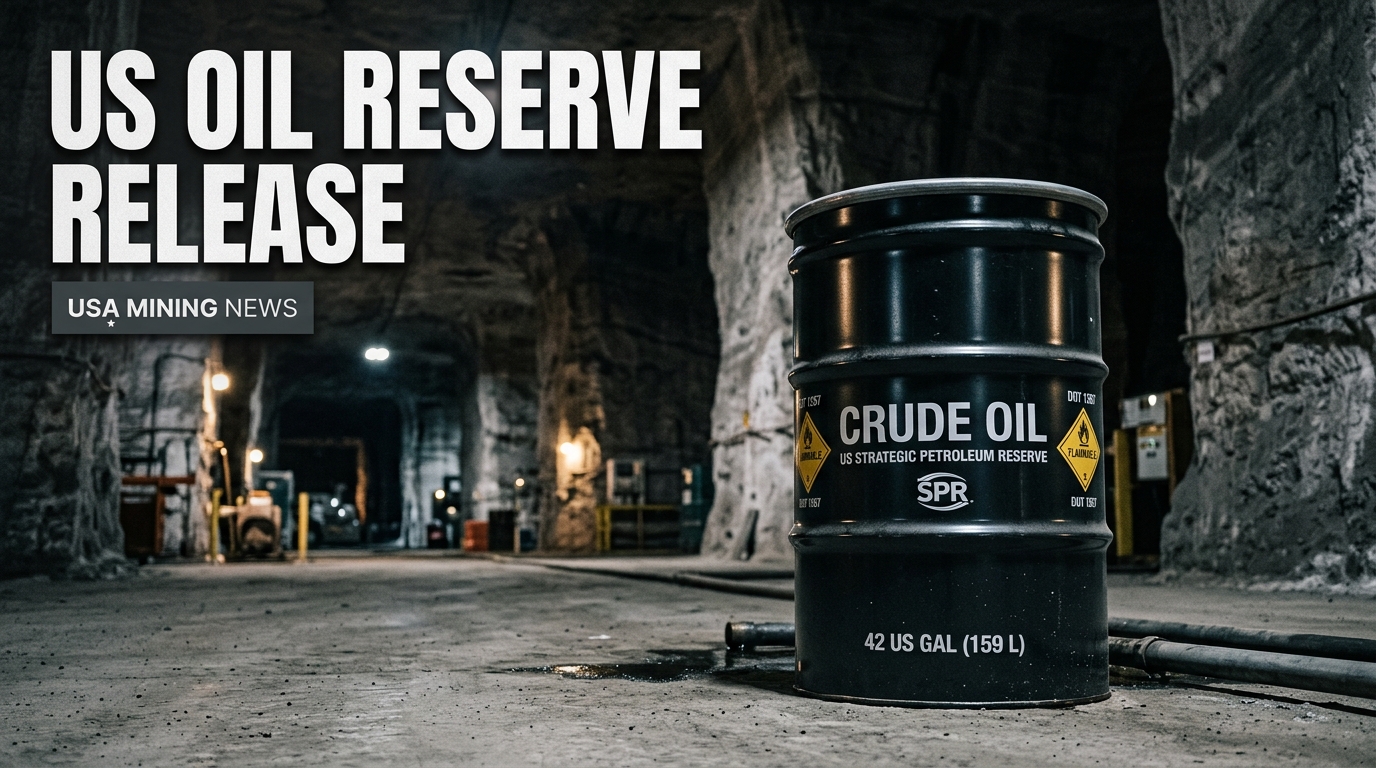
U.S. DOE Continues Strategic Petroleum Reserve Release to Stabilize Global Oil Markets
WASHINGTON – On September 29, 2026, the United States Department of Energy (DOE) issued a crucial Request for Proposal (RFP) for an exchange of up to 40 million barrels of crude oil from the nation's Strategic Petroleum Reserve (SPR). This move signifies the DOE's continued execution of the 172-million-barrel release previously announced by President Trump, aligning with the broader 400-million-barrel commitment coordinated among member nations of the International Energy Agency (IEA). The action underscores a proactive strategy by the U.S. government to address short-term supply disruptions, bolster global energy security, and ensure the stability of international oil markets.
U.S. Secretary of Energy Chris Wright emphasized the leadership role of the United States in these concerted efforts. "With today’s actions, the United States continues to lead the coordinated efforts to stabilize oil markets for the benefit of Americans and people around the world," Secretary Wright stated. He further noted the exemplary fulfillment of commitments by the United States and Japan, while urging other European member countries to deliver on their pledges, many of whom have thus far released only a fraction of their promised crude oil and petroleum products. Secretary Wright also highlighted the economic benefits, crediting President Trump for advancing a series of large-scale SPR exchange solicitations at "record speed," which not only moved critical crude oil supplies into the market but also ensured the SPR's replenishment, saving taxpayers more than $3 billion.
The Strategic Petroleum Reserve and the Exchange Mechanism
The Strategic Petroleum Reserve, established in the 1970s following the Arab oil embargo, serves as the world's largest emergency supply of crude oil. Its primary purpose is to mitigate the economic impacts of severe oil supply disruptions. The SPR's crude oil is stored in massive underground salt caverns at four sites along the Gulf Coast of Texas and Louisiana, offering a cost-effective and secure storage solution.
The core of the DOE’s current strategy lies in its crude oil exchange authority. Under this mechanism, the DOE offers crude oil to private companies, which then agree to return the borrowed barrels with an additional "premium" quantity at a later date. This premium can range, and in prior exchanges, the DOE has achieved a significant 25 percent premium in returned barrels. This innovative approach offers several advantages:
- Immediate Market Supply: It injects critical crude oil into the market swiftly when global supplies are tight or disrupted, helping to moderate price spikes.
- Inventory Expansion: The premium barrels returned by participating companies increase the SPR's overall inventory, effectively expanding the reserve over time.
- No Cost to Taxpayers: Unlike direct sales or purchases, the exchange mechanism ensures that the reserve is refilled and even expanded without direct financial outlay from the taxpayer, generating billions in savings.
This current RFP, soliciting up to 40 million barrels, is a testament to the effectiveness and efficiency of this exchange model. It builds upon five previous solicitations that collectively awarded more than 133 million barrels across four completed exchanges, demonstrating the SPR's capability for rapid, large-scale crude delivery under emergency authorities.
Key Players, Locations, and Timelines
The principal entity driving this initiative is the U.S. Department of Energy (DOE), acting under its emergency exchange authorities. U.S. Secretary of Energy Chris Wright is the public face of these announcements, articulating the administration's strategic rationale. The broader framework of these releases is rooted in commitments initiated by President Trump, emphasizing the continuity of energy security policies across administrations. The International Energy Agency (IEA) plays a crucial coordinating role, ensuring that the U.S. actions are part of a larger, global effort by major oil-consuming nations to stabilize energy markets.
The crude oil offered in this exchange will originate from two of the SPR's strategically important storage facilities:
- Big Hill, Texas: Located in Jefferson County, Texas, Big Hill is one of the largest SPR sites, with significant storage capacity and strategic connectivity to major Gulf Coast refineries and transportation networks.
- Bryan Mound, Texas: Situated in Brazoria County, Texas, Bryan Mound is another cornerstone of the SPR, also featuring substantial storage capacity and crucial access to pipelines serving the region.
These sites are integral to the logistical agility required for rapid crude oil disbursement.
The timeline for this specific solicitation is highly accelerated, reflecting the urgency of market stabilization efforts:
- RFP Issued: September 29, 2026
- Bids Due: No later than 11:00 A.M. Central Time on Tuesday, October 6, 2026
While this new RFP moves through the bidding process, deliveries for previously awarded exchanges are already scheduled for November and December 2026, highlighting the continuous operational cycle of SPR management. The efficiency of this process is critical; successful bidders, typically major oil trading houses, refiners, and integrated energy companies, are responsible for the logistical complexities of transporting the crude from the SPR sites to their facilities and eventually returning the premium barrels.
Broader Market and Industry Context: Implications for Mining
While the immediate focus of SPR releases is the crude oil market, their implications ripple across the entire global economy, profoundly impacting sectors like mining. For the mining industry, stability in energy markets is not merely a macroeconomic concern; it is a fundamental operational necessity.
The mining sector is one of the most energy-intensive industries globally, with operations heavily reliant on petroleum products and electricity.
- Fuel for Heavy Machinery: Diesel fuel powers the vast fleets of haul trucks, excavators, loaders, and drills that are the workhorses of both surface and underground mines. Fluctuations in crude oil prices directly translate into volatile and often higher diesel costs, impacting operational expenditure (OpEx) significantly. A large open-pit mine can consume millions of gallons of diesel annually.
- Electricity Generation: Many remote mining operations rely on on-site power generation, often fueled by natural gas or diesel, which are tied to broader hydrocarbon markets. Even grid-connected mines are affected by wholesale electricity prices, which are influenced by the cost of fossil fuels.
- Transportation Costs: Moving ore from mine to processing plant, then transporting refined metals or bulk commodities to market, involves extensive logistics, much of which is fuel-dependent (rail, shipping, trucking). Stable fuel prices are crucial for predictable freight costs.
- Input Costs for Materials: The production of many mining inputs, such as explosives, tires, lubricants, steel, and other construction materials, is also energy-intensive. Stable crude prices help moderate the costs of these essential supplies.
- Global Economic Stability: Perhaps the most significant indirect impact stems from crude oil's role as a bellwether for the global economy. Stable oil prices contribute to economic predictability and growth, which in turn drives demand for mined commodities—from industrial metals like copper and aluminum to bulk commodities like iron ore and metallurgical coal used in manufacturing and infrastructure development. Conversely, sharp oil price spikes can trigger inflation, consumer spending reductions, and industrial slowdowns, dampening demand for raw materials and negatively affecting miners' revenues.
By stabilizing oil markets, the DOE's actions contribute to a more predictable and favorable operating environment for mining companies, enabling better long-term planning, investment decisions, and capital allocation for exploration and development projects. This is particularly relevant given the global push for critical minerals, where energy security and a stable economic environment are paramount for securing new supplies.
Future Outlook and Implications for the Industry
The ongoing commitment by the U.S. to leverage its Strategic Petroleum Reserve highlights a continued dedication to global energy market stability. For the mining industry, this translates into a more secure and predictable energy landscape, albeit with ongoing monitoring required.
The DOE's ability to not only supply the market in times of need but also to ensure the long-term expansion of the SPR through premium exchanges is a significant policy achievement. This strategic approach offers a blueprint for how nations can manage critical resource reserves, potentially drawing parallels to discussions around strategic reserves for critical minerals, a growing focus for governments aiming to secure supply chains for the energy transition.
Looking ahead, the success of these U.S.-led coordinated efforts will hinge on the full participation of all IEA member nations. Secretary Wright's call for European countries to fulfill their commitments underscores the ongoing challenges in achieving unanimous global action, reflecting broader geopolitical dynamics that influence commodity markets.
For mining companies and investors, these developments reinforce the importance of integrating energy market forecasts into their financial models and operational strategies. While direct exposure to crude oil prices may vary, the overarching impact on operational costs, commodity demand, and macroeconomic stability makes these SPR actions a critical factor to watch in the broader mining investment climate. The immediate solicitations and scheduled deliveries for late 2026 indicate a continuous effort to manage supply dynamics, offering some reassurance of a proactive approach to potential energy market disruptions.
Conclusion
The U.S. Department of Energy's issuance of an RFP for a 40-million-barrel crude oil exchange from the Strategic Petroleum Reserve on September 29, 2026, represents a significant, multifaceted effort. It solidifies the nation's commitment to stabilizing global oil markets, fulfills international obligations, and strategically replenishes and expands the SPR at no direct cost to taxpayers. By ensuring a more predictable and stable energy environment, these actions indirectly, yet profoundly, support the operational and financial health of the global mining industry. As the world continues to navigate complex geopolitical and economic landscapes, the proactive management of strategic reserves like the SPR remains a vital tool for fostering stability and enabling essential industrial sectors, including mining, to thrive.