In a strategic move set to reshape the regional aluminium landscape and bolster global supply chain resilience, Trafigura, a prominent multinational commodity trading company, announced on May 7, 2026, the signing of a pivotal term sheet with the Egyptian Aluminium Company (Egyptalum) and Metallurgical Industries Holding (MIH). This agreement lays the groundwork for the establishment of a new, state-of-the-art primary aluminium smelter and an accompanying anode plant in Egypt, marking a substantial commitment to industrial expansion in the North African nation.
Strategic Partnership Unlocks Egyptian Aluminium Potential
The collaboration between Trafigura, Egyptalum, and MIH is designed to create a new company specifically tasked with overseeing the development and subsequent operation of these advanced facilities. At the core of this partnership, Trafigura will assume a multi-faceted role, providing not only crucial financial backing as a minority equity investor and a debt provider but also ensuring long-term operational stability through its commitments as a long-term offtake and feedstock supply partner. This comprehensive involvement underscores Trafigura’s vested interest in the success and sustained output of the project.
The total investment projected for this ambitious undertaking is estimated to range significantly, from $750 million to $900 million. This substantial capital injection highlights the scale of the development and the confidence placed in Egypt’s industrial potential and its strategic geographical position. For Trafigura, a company with over two decades of operational presence in Egypt as a major supplier of metals, including alumina, and liquefied natural gas, this project represents a deepening of its established ties and a strategic expansion within a familiar and critical market.
Doubling Capacity at Nag Hammadi
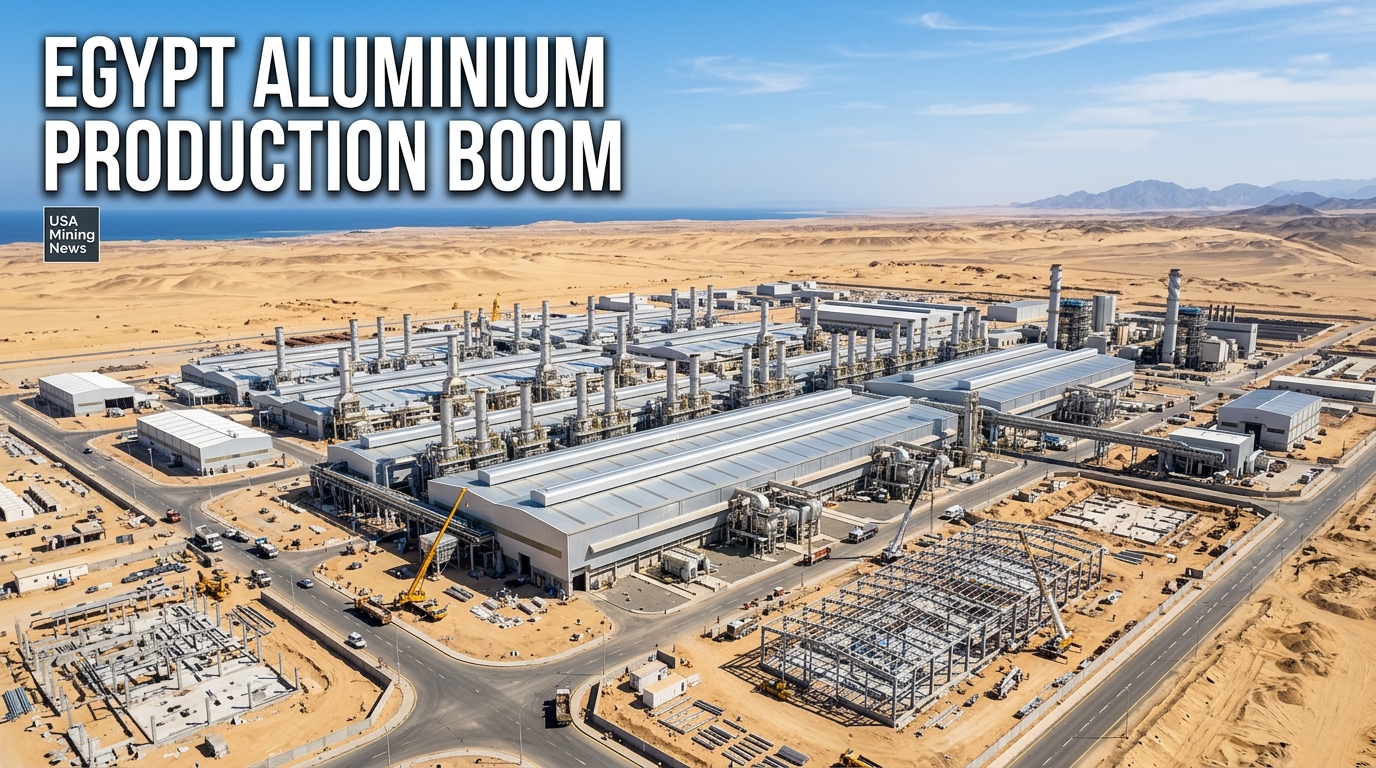
The new facilities are slated for construction at Egyptalum’s existing Nag Hammadi site, a location already central to Egypt’s aluminium production. The project details reveal an impressive scale of operations: a primary aluminium smelter designed to achieve an annual production capacity of 300,000 tonnes, complemented by an adjoining anode plant capable of producing 150,000 tonnes per annum. The integration of an anode plant is particularly significant, as anodes are critical consumable components in the Hall–Héroult electrolytic process used to produce primary aluminium, ensuring a captive and reliable supply for the smelter operations.
Upon completion, these new facilities are projected to nearly double the Nag Hammadi location’s current annual production capacity, signaling a transformative phase for Egyptalum. Mahmoud Abdelaleem Agour, CEO of Egyptalum, emphasized the profound implications of this partnership:
“This term sheet marks a defining moment for Egypt Aluminium. By partnering with a global commodity leader of Trafigura’s calibre – as both a strategic investor and long-term offtake partner – we are laying the foundation for Egyptalum to emerge as a leading primary aluminium producer not only in Egypt but across the wider region. The expansion at Nag Hammadi will nearly double our production capacity, generate significant export revenues and create lasting value for our shareholders, our workforce and the communities we serve. We look forward to progressing this partnership towards financial close.”
The CEO’s statement clearly articulates the anticipated benefits: establishing Egyptalum as a regional leader, generating substantial export revenues for the Egyptian economy, and creating enduring value for stakeholders, employees, and local communities. This expansion is critical for Egypt's industrial growth, enhancing its capacity to process raw materials into higher-value products and strengthening its position in the global metals value chain.
Addressing Global Supply Chain Dynamics and Diversification
The timing of this project is particularly pertinent, arriving at a juncture where the global aluminium market has experienced significant shifts. Over the past decade, aluminium inventories outside China have seen a dramatic decrease, plummeting by an estimated six million tonnes. This reduction has resulted in notably low stock levels globally, contributing to market tightness and highlighting the urgent need for new sources of primary aluminium. The new Egyptian smelter is strategically positioned to address this deficit, providing an essential source of primary aluminium that will contribute to enhancing global supply chain diversification and resilience.
The emphasis on downstream processing is also a key takeaway from this initiative. Primary aluminium is a foundational material for myriad industries, ranging from automotive and aerospace to construction and consumer electronics. By adding significant primary production capacity, Egypt will be better equipped to serve both its domestic industrial needs and international markets, reducing reliance on potentially volatile global supply chains. This move aligns with a broader industry trend towards securing reliable, geographically diversified sources for critical industrial metals, mitigating risks associated with concentrated production or geopolitical instabilities.
Trafigura's Expanding Global Footprint and Commodity Strategy
This investment in Egypt is not an isolated event but rather a consistent thread in Trafigura’s overarching corporate strategy to secure long-term metal supplies globally. The commodity giant has been actively expanding its footprint in various critical mineral and metal projects worldwide. For instance, the company recently made an investment in a smelter project in Indonesia, signifying a similar approach to directly secure capacity in key production hubs.
Trafigura’s strategic commodity focus extends beyond traditional base metals. In March 2026, the company signed a binding take-or-pay offtake agreement with Smackover Lithium to secure battery-grade lithium carbonate from the South West Arkansas project in the United States. This move into the battery metals sector underscores Trafigura’s agility and foresight in adapting its portfolio to meet the evolving demands of the global energy transition, ensuring a diversified and robust supply network for the industries of the future.
The role of commodity traders like Trafigura has evolved significantly beyond simple intermediation. By acting as minority equity investors, debt providers, and crucial long-term offtake partners, these firms play an instrumental role in de-risking large-scale industrial projects. They provide vital capital, logistical expertise, and market access, enabling the development of new production capacities that might otherwise struggle to secure funding or market integration. This integrated approach ensures both capital deployment and guaranteed market access and raw material supply, creating a robust ecosystem for complex industrial ventures.
Economic and Geopolitical Implications for Egypt and the Region
For Egypt, this project carries substantial economic weight beyond direct production figures. The significant investment, potentially up to $900 million, will stimulate economic activity across various sectors, from construction and engineering during the development phase to logistics and ancillary services during operation. The generation of export revenues will be a welcome boost to Egypt's balance of payments, while the creation of "lasting value for our workforce" implies direct and indirect job creation, fostering skill development and contributing to local economic stability.
Strategically, increasing primary aluminium production enhances Egypt's industrial self-sufficiency and strengthens its position as an industrial powerhouse in North Africa and the wider Middle East. The availability of locally sourced primary aluminium can attract further downstream investments in manufacturing industries within Egypt, creating an industrial cluster effect. Furthermore, in a world increasingly focused on the security of critical raw material supplies, a diversified and robust aluminium sector provides Egypt with enhanced geopolitical leverage and economic resilience.
The success of such energy-intensive operations as aluminium smelting in Egypt is also intrinsically linked to the country’s energy policy and infrastructure. While specific energy sources for the new smelter were not detailed in the announcement, access to competitive and reliable energy is paramount. Egypt has been developing its natural gas resources and diversifying its energy mix, which could provide a stable foundation for industrial growth, particularly for energy-intensive sectors like aluminium production.
Outlook: Towards Financial Close and Operation
The signing of the term sheet marks a critical milestone, but the next significant step is progressing towards financial close. This phase typically involves finalizing detailed agreements, securing all necessary financing, and obtaining regulatory approvals. Given the scale and strategic importance, this process can be complex, but the commitment from all parties suggests a strong impetus to move forward efficiently.
Once financial close is achieved, the project will transition into the engineering, procurement, and construction (EPC) phase, followed by commissioning and ramp-up to full production capacity. While specific timelines for construction and operation were not provided, large-scale industrial projects of this nature typically span several years from groundbreaking to commercial operation, often involving advanced engineering and project management techniques to ensure efficiency and adherence to timelines.
The long-term impact on global aluminium markets from this 300,000 tpa capacity expansion will be to further diversify supply, easing some of the pressure on global inventories and offering a more stable source of primary metal. This commitment from Trafigura and its Egyptian partners signals a robust belief in the enduring demand for aluminium and the strategic importance of securing its supply. As the project moves toward realization, it will undoubtedly be closely watched by industry stakeholders, analysts, and investors keen on understanding the evolving dynamics of the global aluminium sector and the strategic role of integrated commodity trading houses in shaping its future.