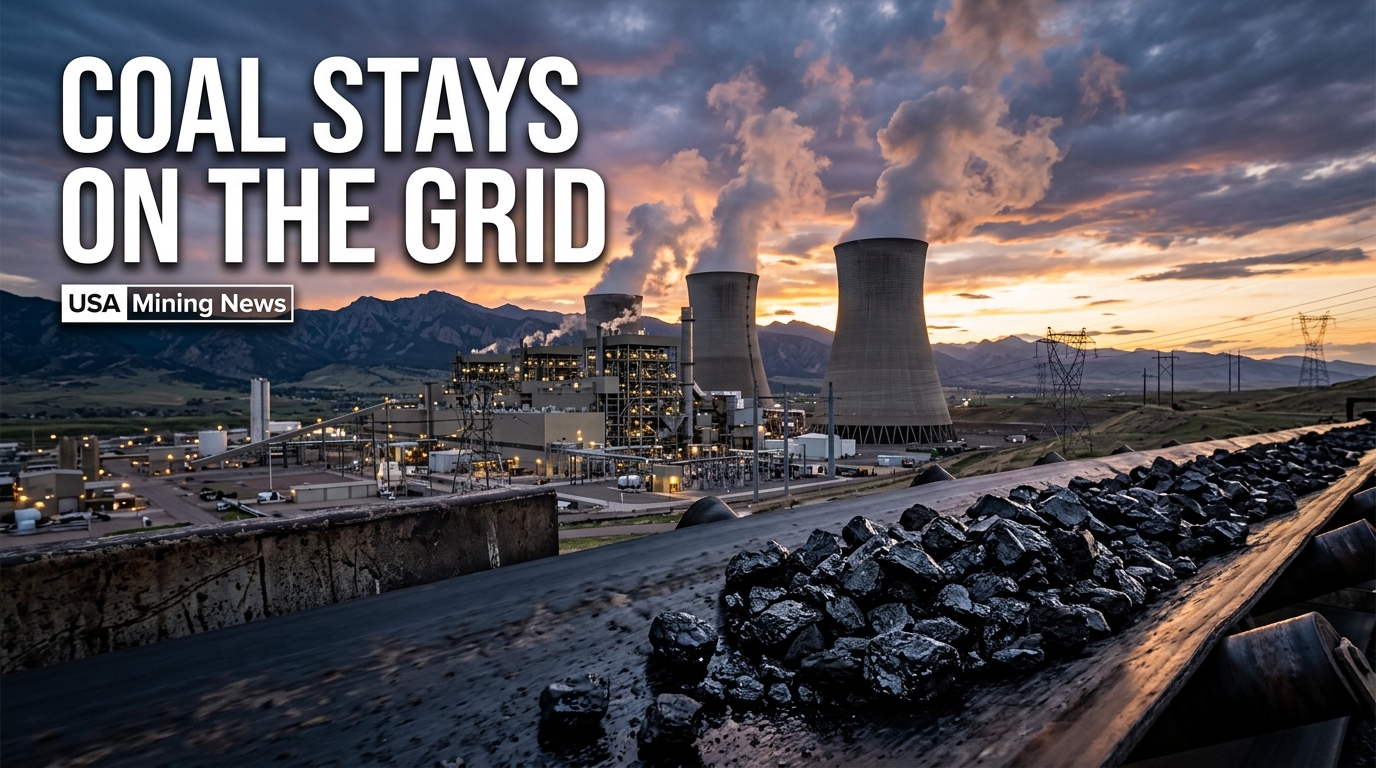
WASHINGTON, D.C. – In a move underscoring the pressing concerns over national grid stability and energy affordability, U.S. Secretary of Energy Chris Wright on June 26, 2026, issued an emergency order directing key energy providers to keep Unit 1 of the Craig coal-fired power plant in Colorado operational. This decisive action, effective from June 29, 2026, through September 26, 2026, marks a forceful intervention against the planned retirement of a crucial baseload generation asset, signaling a continued federal commitment to maintaining a diverse and robust energy supply, particularly during periods of peak demand.
The order mandates Tri-State Generation and Transmission Association, which operates the Craig Station, along with co-owners Platte River Power Authority, Salt River Project, PacifiCorp, and Public Service Company of Colorado (a subsidiary of Xcel Energy), to undertake all necessary measures to ensure Craig Unit 1 remains available for operation. Furthermore, the Southwest Power Pool (SPP), the regional transmission organization overseeing parts of the Western Interconnection, has been directed to employ economic dispatch of Craig Unit 1, thereby minimizing costs to electricity ratepayers.
A Critical Intervention for Grid Stability
The latest directive is not an isolated incident but rather the third such emergency order concerning Craig Unit 1. The unit was initially scheduled for permanent shutdown at the close of 2025. However, facing escalating concerns about the reliability of the regional power grid, Secretary Wright previously issued similar emergency orders in December 2025 and again in March 2026, compelling Tri-State and its partners to defer the retirement of Unit 1. This sequence of interventions highlights a sustained federal apprehension regarding the accelerated pace of thermal generation retirements and their potential impact on energy security.
Secretary Wright articulated the administration's rationale, stating, “Taking reliable generation off the grid compromises energy reliability and needlessly raises energy costs for Americans. During peak summer demand, Coloradans deserve continued access to affordable, reliable, and secure energy to power and cool their homes.” This statement encapsulates the core tenets of the administration’s energy policy advocating for a balance between environmental goals and the practical necessities of grid resilience and economic stability for consumers. The phrase "affordable, beautiful, clean coal generation" from the Department of Energy's announcement, while politically charged, underscores the administration's specific focus on the value proposition it perceives in maintaining coal assets.
Key Players in the Colorado Energy Landscape
The Craig Station, located in Moffat County, Colorado, is a significant part of the state’s energy infrastructure. Its continued operation directly impacts several key utilities responsible for serving millions of customers across the Western U.S.:
- Tri-State Generation and Transmission Association: A wholesale power supplier to 42 electric cooperatives and public power districts across four states (Colorado, Nebraska, New Mexico, and Wyoming), Tri-State is the primary operator of the Craig Station. Its energy portfolio has been undergoing a transition, but the federal directive compels it to maintain Craig Unit 1.
- Platte River Power Authority: A not-for-profit wholesale generation and transmission utility that provides electricity to the municipal utilities of Estes Park, Fort Collins, Longmont, and Loveland, Colorado.
- Salt River Project (SRP): One of Arizona’s largest utility companies, SRP serves over one million customers with electricity and water. Its stake in Craig Unit 1 is part of a broader diversified generation portfolio.
- PacifiCorp: A major utility in the Western U.S., PacifiCorp serves customers in six states (Oregon, Washington, California, Utah, Wyoming, and Idaho) through its Pacific Power and Rocky Mountain Power divisions.
- Public Service Company of Colorado (a subsidiary of Xcel Energy): Xcel Energy is a vertically integrated electric and natural gas utility serving customers in eight Western and Midwestern states, including a significant presence in Colorado.
The involvement of the Southwest Power Pool (SPP) is crucial. As a regional transmission organization, SPP coordinates the bulk electric power system in a multi-state region, ensuring reliable energy delivery. Its direction for economic dispatch of Craig Unit 1 means the unit will be utilized when it can provide the most cost-effective power to meet demand, further highlighting the administration’s emphasis on cost containment for ratepayers.
National Policy Reversal: A Lifeline for Coal Power
The emergency orders for Craig Unit 1 are reflective of a broader federal policy under President Trump's leadership aimed at preventing the premature retirement of coal-fired power plants. The Department of Energy (DOE) proudly reported that in 2025 alone, more than 17 gigawatts (GW) of coal-power electricity generation were "saved" nationwide from scheduled shutdowns. This represents a significant reversal from previous trends that saw hundreds of coal plants shuttered over the last decade due to economic pressures, environmental regulations, and the rise of natural gas and renewable energy sources.
This policy shift directly counters the trajectory established during the Biden administration, which largely favored an accelerated transition away from fossil fuels. The DOE’s perspective, as noted in the press release, emphasizes the potential consequences of such retirements. According to the DOE’s Resource Adequacy Report, blackouts were on track to potentially increase 100 times by 2030 if the U.S. continued to take reliable power offline at the pace observed during the preceding administration. This stark warning underpins the urgency and justification for the current administration's interventions.
Expert Warnings on Resource Adequacy
The federal government's actions are also supported by independent assessments from leading industry bodies. The North American Electric Reliability Corporation (NERC), the international regulatory authority responsible for ensuring the reliability of the bulk power system in North America, issued a critical warning in its 2025 Long-Term Reliability Assessment. NERC's report specifically highlighted that the WECC-Rocky Mountain assessment area—where the Craig Station is located—faces substantial challenges. These challenges include an aging thermal resource fleet, which is susceptible to unplanned outages, further exacerbated by persistent supply chain issues and limitations in vendor availability for critical parts and maintenance.
These warnings from NERC and the DOE underscore a growing consensus among grid operators and industry analysts about the deteriorating reserve margins and the heightened risk of reliability incidents across various regions. The intermittency of some renewable energy sources, coupled with the retirement of dispatchable baseload power plants like coal and nuclear facilities, creates a volatile environment where the grid struggles to maintain stability, especially during extreme weather events or periods of high demand.
Implications for the U.S. Mining Industry
For the U.S. coal mining industry, these emergency orders and the broader policy direction represent a critical, albeit potentially temporary, reprieve. The thermal coal sector has faced immense headwinds for years, with declining demand from the power sector leading to numerous mine closures, job losses, and significant market consolidation. The decision to keep Craig Unit 1 operational, and similar actions for other coal plants, directly translates into continued demand for thermal coal.
Producers of sub-bituminous coal, particularly those in the Powder River Basin (PRB) in Wyoming and Montana, which typically supply Western U.S. power plants, stand to benefit from these extended lifespans. While Craig Unit 1's consumption might only represent a fraction of total national demand, the cumulative effect of saving 17 GW of coal-fired capacity in 2025 is substantial. It provides a measure of stability for coal producers, allowing them to better plan production, maintain existing operations, and perhaps even defer decisions on mine closures. It also reinforces the role of coal in the nation's energy mix, at least for the foreseeable future under the current administration, offering a glimmer of hope to a sector that has been under siege. The mining services industry, including equipment suppliers, logistics providers, and maintenance contractors, will also see extended contractual opportunities associated with these prolonged plant operations.
Navigating the Energy Transition: A Complex Path Forward
The narrative surrounding the Craig Unit 1 order encapsulates the profound complexities of the ongoing energy transition in the United States. While there is a broader societal and economic momentum towards decarbonization and the adoption of renewable energy technologies, the reality of maintaining a reliable, affordable, and secure electricity grid requires careful management of existing assets.
The emergency orders for Craig Unit 1, while limited in duration through September 26, 2026, raise important questions about long-term energy planning and policy consistency. They highlight the tension between ambitious decarbonization goals and the practical challenges of grid management, especially in regions facing reliability concerns due to an aging infrastructure and rapid energy portfolio shifts. The temporary nature of this order means that while the coal industry gains a temporary extension, the underlying questions about the plant's ultimate fate and the broader energy mix for the Western Interconnection will re-emerge. For mining industry professionals and investors, these developments underscore the ongoing relevance of thermal coal in certain pivotal contexts and the critical, often politically charged, role it continues to play in balancing energy objectives. The future of the U.S. power grid, therefore, remains a complex and evolving landscape, where pragmatism, economics, and policy interventions will continue to shape the destiny of various energy sources, including coal.