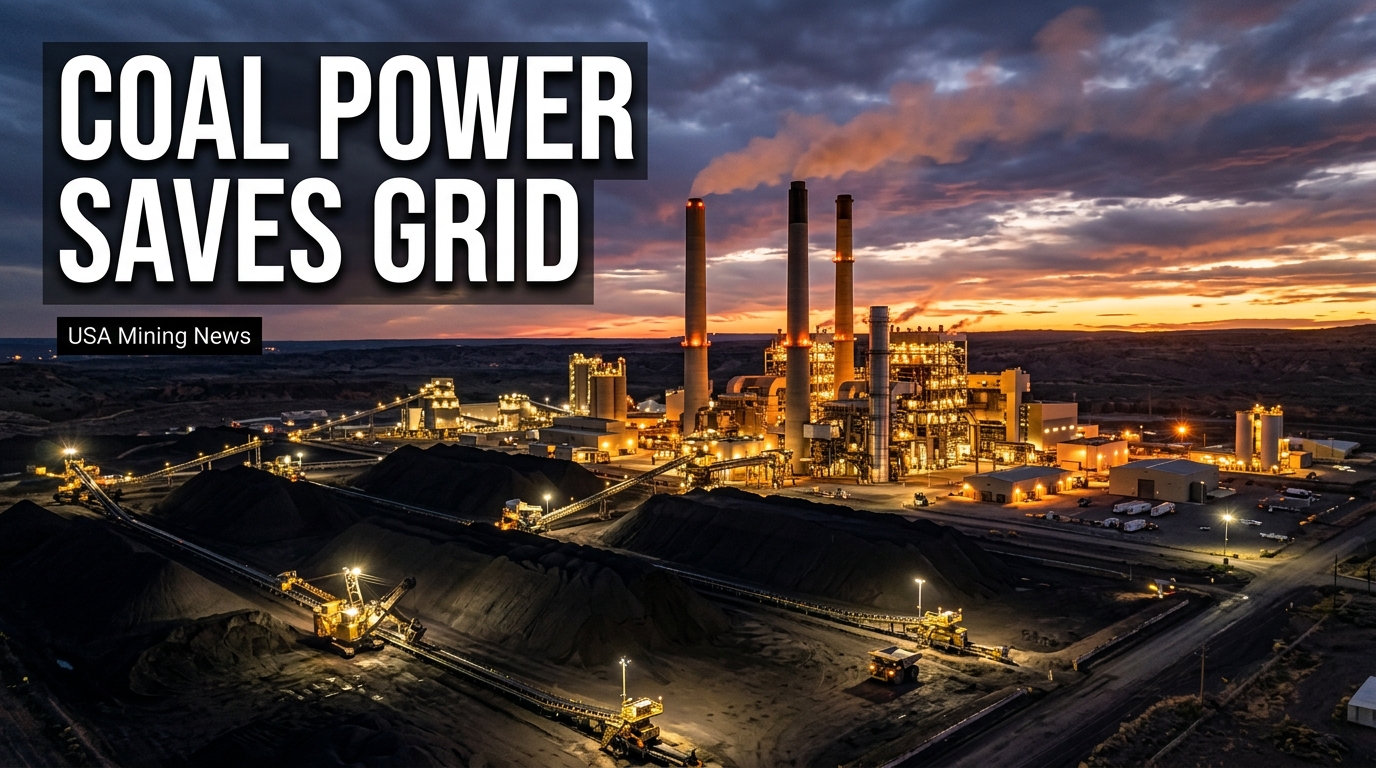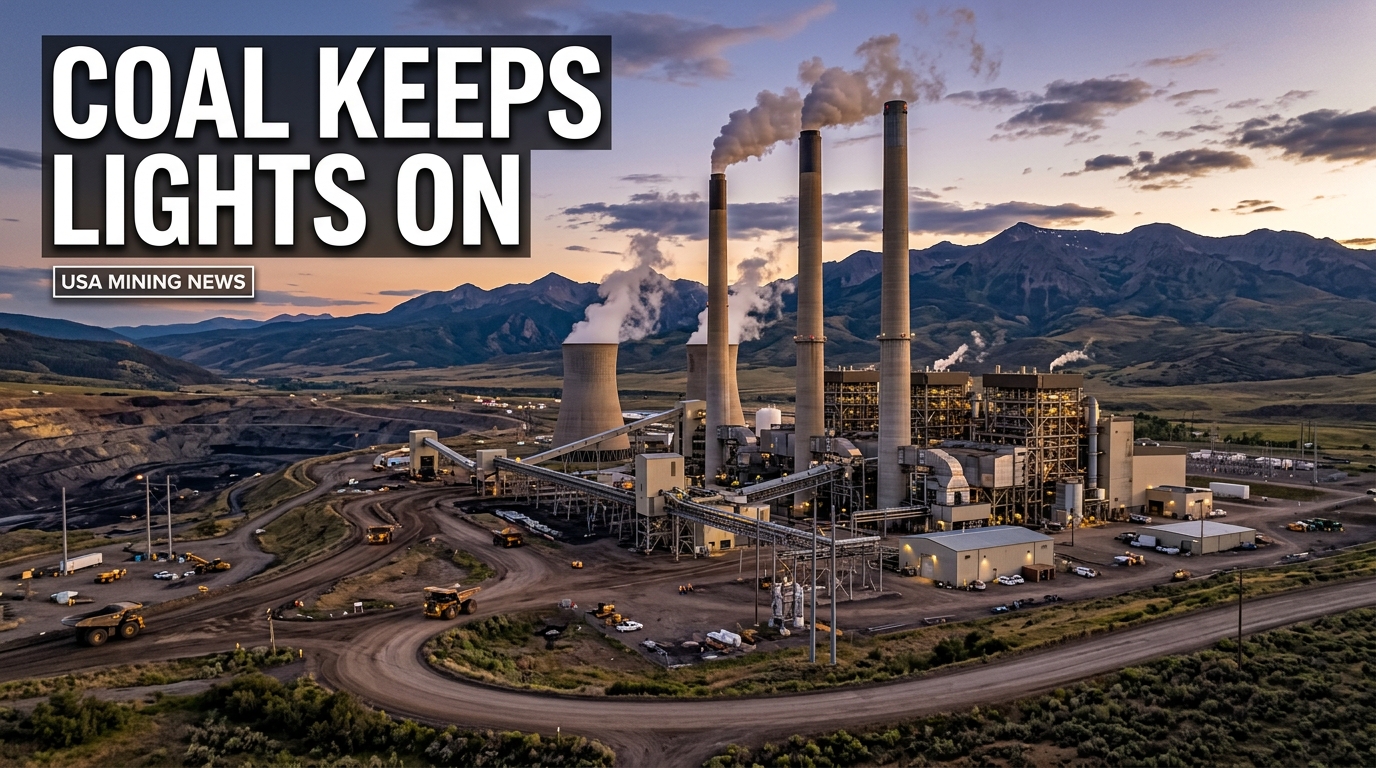
WASHINGTON D.C. – In a pivotal decision underscoring the ongoing tensions between energy transition goals and grid reliability, U.S. Secretary of Energy Chris Wright, acting under the authority of the Trump Administration, issued an emergency order on September 25, 2026. This directive mandates the continued operation of Unit 1 at the Craig Station coal plant in Craig, Colorado, through December 25, 2026. The move is designed to ensure Americans maintain access to what the administration describes as "affordable, reliable, and secure electricity," a critical concern for both residential and industrial consumers nationwide. This intervention, not the first for Craig Unit 1, highlights a broader federal strategy to prevent the premature retirement of coal-fired generation assets, directly impacting the demand landscape for the U.S. thermal coal mining industry.
Federal Intervention Secures Craig Unit 1 Amidst Grid Concerns
The emergency order, effective from September 27, 2026, to December 25, 2026, directs Tri-State Generation and Transmission Association, the primary operator and owner, along with co-owners and regional transmission organizations including Southwest Power Pool (SPP), Platte River Power Authority, Salt River Project, PacifiCorp, and Public Service Company of Colorado, to take all necessary measures to keep Craig Unit 1 operational. SPP, in particular, has been instructed to employ "economic dispatch" of the unit, a crucial step to mitigate the risk of blackouts while simultaneously minimizing costs to electricity ratepayers.
This latest intervention marks the third such order concerning Craig Unit 1 within a year. The unit was initially slated for shutdown at the end of 2025 as part of broader decarbonization efforts. However, Secretary Wright previously issued emergency orders in December 2025 and twice earlier in 2026, directing Tri-State and its partners to ensure the plant's availability. These consecutive orders reflect a persistent concern within the Department of Energy regarding the stability of the regional grid and the potential consequences of removing significant baseload generation capacity.
Secretary Wright articulated the administration's stance, stating, “For over the past decade, state and federal leaders have harmed Coloradans’ wallets and energy security with efforts to force reliable generation off the grid. The Trump Administration will continue taking action to ensure we don’t lose critical generation sources. Americans deserve access to affordable, reliable, and secure energy to power their homes all the time, regardless of whether the wind is blowing or the sun is shining.” This statement clearly frames the administration's actions as a corrective measure against policies perceived to undermine energy security and affordability in favor of intermittent renewable sources.
The Broader Context: A National Trend to Preserve Coal Power
The decision regarding Craig Unit 1 is not an isolated incident but rather indicative of a broader federal strategy championed by President Trump. Since 2025, the administration claims to have saved more than 17 gigawatts (GW) of coal-fired electricity generation capacity from premature retirement across the country. This effort represents a significant policy reversal compared to previous administrations, which often encouraged the decommissioning of coal plants to reduce carbon emissions.
The emphasis on "affordable, reliable, and secure electricity" reflects a focus on energy independence and grid resilience, often prioritizing these attributes over accelerated decarbonization targets. For the mining industry, particularly the thermal coal sector, these federal interventions offer a crucial, albeit potentially temporary, reprieve. It signals a governmental willingness to utilize all available generation resources, including coal, to maintain stability and prevent widespread power outages, especially during periods of extreme weather or high demand.
Operational Imperatives: Reliability in the Western Electricity Coordinating Council (WECC)
The continued operation of Craig Unit 1 is deemed a vital asset for maintaining reliability within the Western Electricity Coordinating Council (WECC) Rocky Mountain region. WECC is one of North America's largest reliability coordinators, overseeing the interconnected electric power system across 14 U.S. states, two Canadian provinces, and a portion of northern Mexico. The region’s diverse geography and rapidly changing weather patterns, combined with the increasing penetration of variable renewable energy sources, have amplified concerns about grid stability.
The Department of Energy's order specifically highlights the necessity of Craig Unit 1 to address "elevated reliability risks in the region during atypical weather" and to "reduce the risk of power outages that could threaten public health and safety." Coal-fired power plants, by their nature, provide baseload generation – a steady, dispatchable supply of electricity that can operate continuously, independent of weather conditions. This makes them particularly valuable during peak demand periods or when renewable generation, such as wind and solar, is curtailed due to lack of wind or sunlight. The mandate for SPP to utilize "economic dispatch" further underscores the cost-effectiveness and operational flexibility that coal units can offer in balancing the grid and minimizing overall system costs.
Implications for the Mining Sector: A Lifeline for Thermal Coal
For the U.S. mining industry, particularly thermal coal producers, this series of emergency orders is immensely significant. Each decision to keep a coal plant operational translates directly into sustained demand for mined coal. The Craig Station, located in northwestern Colorado, relies on coal sourced from nearby mines, primarily in the Powder River Basin or local Colorado mines. Maintaining Unit 1's operation provides continued economic activity for these mining operations, supporting jobs and investment in a sector that has faced significant headwinds for over a decade.
The broader strategy to save 17 GW of coal capacity since 2025 suggests a potential stabilization, if not a resurgence, of demand for thermal coal beyond what many industry analysts had predicted. Mining companies that have continued to invest in and operate thermal coal assets may find their strategic decisions validated by these federal interventions. It also influences decisions regarding capital expenditure, exploration, and development within the coal sector. The emphasis on "energy security" by the administration provides a powerful rhetorical and policy framework that supports the continued role of domestic coal resources in the national energy mix.
Moreover, these interventions offer a degree of predictability for coal transport logistics, including rail and trucking, which are vital components of the coal supply chain. The longer coal plants remain operational, the more stable the demand for these crucial support services, which in turn benefits related heavy equipment and logistics providers within the mining ecosystem.
Stakeholders and Their Roles
The emergency order implicates a range of key players within the Western U.S. electricity market:
- Tri-State Generation and Transmission Association: As the primary owner and operator of Craig Station, Tri-State is directly responsible for ensuring Unit 1's operational readiness and compliance with the emergency order. Tri-State serves 43 member cooperatives across Colorado, Wyoming, Nebraska, and New Mexico.
- Southwest Power Pool (SPP): SPP is directed to manage the economic dispatch of Craig Unit 1. While typically operating in the central U.S., SPP's involvement here highlights inter-regional reliability coordination. Its role is crucial in integrating Craig Unit 1's output efficiently into the broader grid to maximize reliability benefits and cost savings.
- Platte River Power Authority, Salt River Project, PacifiCorp, and Public Service Company of Colorado: These entities are co-owners of Craig Unit 1, sharing in its output and operational responsibilities. Their continued collaboration is essential for the plant's sustained operation, even as some of these utilities also pursue long-term decarbonization goals.
The mandate from the Department of Energy overrides previous retirement plans, placing federal energy security imperatives above individual utility or state-level environmental targets in the immediate term.
Looking Ahead: Navigating Energy Policy and Grid Needs
The current emergency order for Craig Unit 1 is set to expire on December 25, 2026. The crucial question for industry observers, investors, and policymakers alike is what will happen beyond this date. Given the pattern of multiple extensions and the strong rhetoric from Secretary Wright, it is plausible that further orders may be issued to keep Craig Unit 1, and potentially other coal plants, operational if reliability concerns persist.
This situation underscores the complex balancing act facing the U.S. energy sector: how to transition to cleaner energy sources while maintaining a resilient, affordable, and reliable electricity grid. The Trump Administration's actions clearly indicate a preference for preserving existing dispatchable capacity, particularly coal, to address immediate reliability challenges. This approach provides a lifeline for the coal mining industry, offering a window of opportunity to continue supplying fuel to essential baseload generation assets.
However, the long-term trajectory for coal power in the U.S. remains subject to evolving federal and state policies, technological advancements in energy storage, and the economics of competing generation sources. For now, the latest order for Craig Unit 1 serves as a tangible example of how federal policy can directly intervene to support traditional energy sources in the name of national energy security, presenting both opportunities and uncertainties for the American mining industry.