The quest for domestic critical minerals, essential for industries ranging from defense to renewable energy, has long been challenged by the slow and often costly process of geological exploration. However, a significant technological leap forward is on the horizon, poised to revolutionize how mining companies identify and evaluate these vital resources. On June 24, 2026, synthetic biology company Fieldstone Bio announced a pivotal collaboration with hyperspectral imaging specialist TerraCore and the Massachusetts Institute of Technology (MIT), revealing their selection by the U.S. Department of Energy’s (DOE) ARPA-E (Advanced Research Projects Agency-Energy) to develop a groundbreaking drill core analysis system. This initiative, funded through ARPA-E’s ROCKS program, promises to dramatically accelerate critical mineral discovery by providing rapid, non-destructive onsite characterization, slashing assay times from weeks or months to mere hours.
Revolutionizing Critical Mineral Discovery: A New Approach
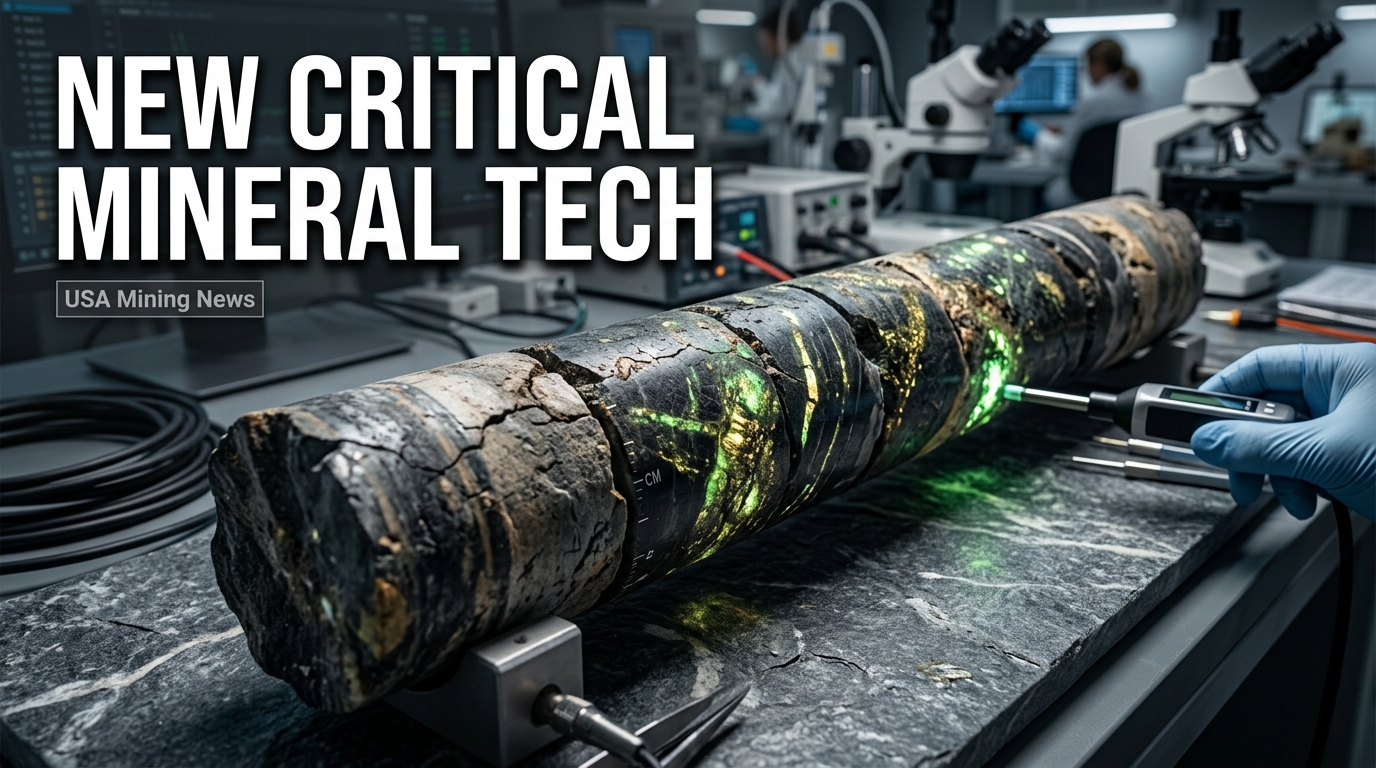
At the heart of this innovation is a field-deployable system designed to deliver precise, quantitative data on critical mineral distribution directly from drill cores at the exploration site. The technology addresses a fundamental industry bottleneck: the trade-off between speed and accuracy in mineral analysis. Currently, mining exploration teams typically face a stark choice: rely on slower, highly accurate laboratory assays, or opt for faster, less direct onsite methods. This new approach, spearheaded by Fieldstone Bio, is engineered to close that gap.
The system integrates two sophisticated technologies:
- Engineered Microbial Sensors: These specialized microbes are designed to react specifically to target metals, producing a distinct, readable signal when a critical mineral is present. This biological sensing mechanism offers high sensitivity and specificity.
- Compact Hyperspectral Cameras: Already a common tool in modern mining workflows, these cameras are adept at translating the microbial signals into high-resolution, quantitative maps of metal distribution along the entire length of a drill core.
The synergy of these components allows for a direct measurement of metal content, moving beyond indirect mineral proxies. This capability promises to transform decision-making in exploration, enabling real-time adjustments that can significantly de-risk projects and optimize drilling programs.
Addressing a Critical Industry Bottleneck
The conventional method for characterizing critical minerals involves laboratory assays such as fire assay and Inductively Coupled Plasma – Mass Spectrometry (ICP-MS). While these methods are celebrated for their sensitivity and accuracy, they necessitate shipping samples off-site and enduring significant wait times, often extending to several weeks or even months due to laboratory queues. This delay means that crucial geological data often arrives long after key strategic decisions on drilling location or depth have already been made.
Faster, on-site alternatives do exist, including handheld X-ray fluorescence (XRF) devices. However, these methods typically infer metal content indirectly through mineralogical proxies rather than directly measuring the metal itself. This indirect approach can introduce uncertainties, making confident, high-stakes decisions based solely on these readings challenging for exploration companies and investors.
Fieldstone Bio’s system aims to overcome this long-standing dilemma. As Patrick Stone, CEO of Fieldstone Bio, succinctly stated, “In exploration, the data that would change your next decision often arrives after you’ve already made it. When you can measure what’s in a core while you’re still standing at the drill site, the economics change. You can tighten your intervals, stop chasing dead ends, and put your next meters where they actually count. That’s what this technology is built to do.” This direct, sensitive, and rapid core-length metal mapping at the drill site represents a paradigm shift, enabling explorers to make data-driven decisions swiftly and efficiently.
The ROCKS Program and Strategic Imperatives
The funding for this ambitious project comes from the U.S. Department of Energy’s ARPA-E, specifically through its ROCKS (Rapidly & Optimally Characterizing K-value for Subsurface) program. This program is designed to support high-risk, high-reward research and development that seeks to accelerate technological breakthroughs in energy sciences. For the mining sector, the ROCKS program's focus aligns perfectly with the overarching national strategy to bolster domestic critical mineral supply chains.
The United States currently heavily relies on imports for a vast array of critical minerals—those elements essential for modern technologies, from electric vehicle batteries and advanced electronics to defense systems and renewable energy infrastructure. The goal of initiatives like this ARPA-E funding is to identify and characterize domestic sources of these critical minerals, thereby reducing geopolitical supply chain vulnerabilities and strengthening national defense, energy independence, and manufacturing competitiveness. By facilitating faster and more accurate discovery, this technology directly contributes to these strategic objectives.
Engineering Biology Meets Geological Exploration: The MIT Roots
The scientific foundation for Fieldstone Bio’s innovative approach traces back to pioneering research conducted at MIT. Specifically, researchers in the laboratory of Dr. Christopher Voigt, a highly regarded figure in synthetic biology and co-founder of Fieldstone Bio, developed the engineered reporter technology that makes microbial signals readable by hyperspectral imaging from a distance. This foundational work, which enables the critical detection mechanism, was recently published in the prestigious scientific journal Nature Biotechnology, underscoring its scientific rigor and breakthrough nature.
Fieldstone Bio has since licensed this cutting-edge technology from MIT and has already demonstrated its practical capabilities. The company has successfully developed sensors capable of detecting gold, copper, molybdenum, and arsenic with impressive parts-per-billion (ppb) sensitivity. This level of precision is crucial for identifying even subtle concentrations of valuable minerals.
“Engineered biosensors have been difficult to use in the field because their signals needed specific, sensitive and expensive specialized equipment,” explained Dr. Voigt, who is also the Head of the Department of Biological Engineering at MIT. “Making those signals visible to widely-available HSI cameras is what turns a laboratory technique into a field tool. Pointing it at the critical minerals this country needs to source domestically is exactly the kind of problem it should be solving.” His perspective highlights the critical pivot from a laboratory curiosity to a powerful field instrument, enabled by smart integration with existing imaging technologies.
Field Validation and Future Expansion
A crucial phase of the ARPA-E funded program involves rigorous field validation to ensure the technology’s robustness and accuracy under real-world conditions. For this, Fieldstone Bio has partnered with Scout Discoveries, an exploration company actively advancing new targets across the Western USA, including significant gold prospects. Scout Discoveries will contribute active drill sites and provide freshly extracted core samples, allowing the consortium to test and refine the system in operational environments that mimic typical exploration scenarios. This hands-on validation with real-world geological materials is indispensable for bringing the technology to market readiness.
Beyond initial validation, the program also includes an ambitious expansion of the sensor library. Fieldstone Bio will develop new microbial sensors specifically targeting rare earth elements (REEs) and nickel, two classes of critical minerals whose domestic supply is of paramount importance to the U.S. economy and national security. The project mandate further includes building the fully integrated system necessary for seamless on-site deployment, ensuring it fits into standard core-handling workflows without disruption.
Environmental safety is also a key consideration. The work is meticulously designed to prevent the release of any engineered microbes into the environment. The biosensors are applied directly to core samples within contained workflows, mitigating any potential ecological concerns and ensuring responsible implementation of this advanced biotechnological tool.
Changing the Economics of Exploration
The implications of this accelerated characterization technology for the economics of mineral exploration are profound. By delivering reliable data in hours, exploration companies can:
- Optimize Drilling Programs: Swift feedback allows for immediate adjustments to drill hole spacing, depth, and direction, leading to more targeted and efficient drilling campaigns. This can reduce the number of “dead ends” and ensure that drilling meters are spent where they are most likely to yield economic discoveries.
- Reduce Project Timelines: Shortened assay cycles can shave weeks or even months off the exploration phase of a project, significantly accelerating the path from discovery to resource definition and potential mine development. This speed can improve project Net Present Value (NPV) and attract investment more readily.
- Improve Capital Efficiency: Faster decision-making translates directly into more efficient use of capital. Companies can pivot quickly, reallocate resources from unproductive areas, and focus investments on the most promising targets.
- Enhance Risk Management: With more complete and timely data, geological models can be refined earlier, reducing geological risk and providing greater confidence for subsequent stages of project development and financing.
These economic advantages ripple through the entire mining value chain, benefiting not only exploration companies but also investors, equipment suppliers, and downstream users of critical minerals.
The Road Ahead: Next Steps and Outlook
The collaboration between Fieldstone Bio, TerraCore, and MIT, backed by the strategic funding from the U.S. Department of Energy, marks a significant milestone in mining innovation. As the project progresses through field validation and sensor library expansion, the industry will keenly watch for the deployment of this integrated system.
This technology has the potential to redefine the operational landscape of critical mineral exploration, making it faster, more cost-effective, and ultimately, more successful. For a nation striving for greater resource independence and a secure supply of the materials underpinning its future economy, tools that speed up discovery are not merely enhancements—they are strategic necessities. The successful development and widespread adoption of this rapid core characterization system could usher in a new era of critical mineral exploration, significantly contributing to the resilience of U.S. defense, energy, and manufacturing sectors for decades to come.